The creation of the European Link Coalition: a major change in direction for research into the Link

The creation of the European Link Coalition: a major change in direction for research into the Link

The creation of the European Link Coalition: a major change in direction for research into the Link
29.01.2019
Europe
The creation of the European Link Coalition: a major change in direction for research into the Link
Domestic animals

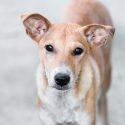
It has been shown that in Western Europe and the United States, pets are generally considered family members. There are, however, countries in Europe where domestic animals are multiplying unchecked in the streets, so they have come to be regarded as pests and treated as such.

The study “Making the Link” (21), the first ever conducted in these countries, explores the links between endemic maltreatment of animals and abuse of humans. The study of certain factors revealed that the deterioration of the status of an animal in society has led to a
« transfer of aggression »
, with animal abuse also being correlated with violence and abuse towards people and families. A decrease in empathy has also been observed among abusers.

Empathy is the ability to penetrate the emotional world of others. It has been shown that its absence predicts an insensitive response to exposure to violence and abuse. This evokes a Cycle of Abuse learned from exposure to violence and the experience of violence, exerted and doubled against homeless animals, with degraded status and easy access, and when the problem is not resolved, it’s passed on to the next generation.

The European Link Coalition

Organizations from various European countries have now come together to form the European Link Coalition (22). A forum has been set up in which each country can share information on the latest developments in the application of the Link, and other countries can learn from these experiences. Given the rich diversity of cultures in Europe, the possibility of unification of strategic programs is increased.

The nations have come together to create the « European Link » coalition and as a new awareness is emerging among the people and authorities in Europe, animal abuse is no longer an isolated issue.
It is becoming more revealing as a deeper discomfort affecting society, and the study of this association breaks the cycles of abuse
; the abuse of individuals is revealed more and more with the abuse of animals, by association, it becomes a socially detestable thing.

«The story of the » European Link « Coalition is a bit like a river, it starts with a quiet brook, which gets stronger and stronger as the countries come together, until it becomes a river wider and powerful. An ocean of change is waiting …»

And before the « European Link » coalition?

While previous initiatives in Europe, for some 20 years, revolved around the identification by veterinarians of indicators associated with human violence and abuse, success has been limited in this area. The reasons given are the confidentiality and concern of veterinarians of their commercial interests. As Nathalie Norden of VOOV in Sweden suggests:

«Veterinarians and other veterinary clinic staff are generally very motivated to participate, but they are still reluctant to take action. They are not sure which injuries to detect, how to intervene, and what the consequences will be for those at risk, whether human or animal. This is the goal of our project: to train veterinary clinic staff and implement an action plan for the whole establishment (before, during and after a suspected case). Unfortunately, veterinarians are relatively less likely to report suspected cases of animal abuse due to financial concerns. This situation is highly dependent on the management of each animal care centre and their attitude towards the reporting of animal welfare problems or animal abuse in general.»Nathalie Norden

Today we are seeing a change of course: now, the first responders in cases of animal abuse are carrying out research on possible associated cases of abuse on human beings.

In the United Kingdom, an agreement between the RSPCA * and the NSPCC * helped advance child protection through the reporting of potential associated cases. Earlier, 86% of these cases of abused children remained unknown to the authorities. In referring to the link between animal abuse and abuse, these cases regarding children had previously been « hidden ». This process is currently being improved, and expanded allocations identify a potential « danger » associated with a case of animal abuse. It can be hoped that a large number of cases of children and vulnerable adults, hitherto ignored, can now be reported and taken care of.

*RSPCA : Royal Society for the Prevention of Cruety to Animals
*NSPCC : National Society for the Prevention of Cruelty to Children


Sources

21 Journal of Interpersonal Violence.
22 European Link Coalition

Tragic revelations about Ula, Morgan’s daughter

Tragic revelations about Ula, Morgan’s daughter

Tragic revelations about Ula, Morgan’s daughter
26.01.2019
Tenerife
Tragic revelations about Ula, Morgan’s daughter
Exploitation for shows

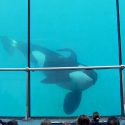
Ula, whose birth was celebrated with fanfare by the Loro Park dolphinarium, is now probably between life and death. The small orca seems to be beset by infections of all kinds. One more tragedy unfolds before the public eye, lulled by the lies from the managment of the Spanish dolphinarium.

Morgan was rescued in 2010 on a beach in the Netherlands, treated, but never released. A capture announced… Contrary to the current law on free-born orcas, Loro Park allowed Morgan, barely pubescent, to become pregnant, giving birth to Ula. In nature, she could have counted on the help of her aunts, sisters and mother. The baby would have been surrounded by the affection from her siblings in their pod, a family group guided by the matriarch. There, locked in a pool, there is nothing that allows for a maternal attachment, northe least of support for a young mother from her family in these important moments.

According to Loro Park, mother and daughter were very close in the first consecutive days at birth, and Morgan reported exemplary maternal instincts, not leaving her little one, Ula swimming at her side. Shortly after, however, the park separated the mother from her daughter, first of all on the pretext that she had too little milk, then it was for safety reasons… After only three days! Ula is isolated from her mother, bottle-fed by a human in a position that is unnatural…

Ula was photographed by a whistle-blower from the public stands. The images, which we also received, were analysed at the request of One Voice’s partner Voice of The Orcas by specialists, including Ingrid Visser, who has been working with us for many years. Not surprisingly, they all confirm what we were dreading.

Currently, Ula is kept in a separate pool, under a tent that protects her from the sun. She has photo-toxic lesions on the skin, a malformation of the head, and a sick left pectoral fin. On her tail, we can distinguish injection marks, probably antibiotics.

«I have never seen anything like it in nature, such as the deformation of the skull and the pathologies along the body are what we can see on this poor baby. I’m really sad for her and her mother, Morgan. This underlines how much the detention of these animals in places like Loro Park are a mistake.»Ingrid Visser, marine biologist at the Orca Research Trust

$(document).ready(function(){ $(‘.diaporama’).bxSlider(); });

One Voice is a long-time partner of the Free Morgan Foundation, and a member of Dolphinaria-Free Europe, a European coalition that fights for dolphins and orcas held by dolphinariums. In France, we continue our fight against these water parks and to attack the state for failing to publish a new order prohibiting captive breeding and cetacean exchange between dolphinariums.

Please sign our petition to close the dolphinariums and allow the transfer of these captive animals to marine sanctuaries.

China clones’ monkeys so they can deprive them of sleep

China clones’ monkeys so they can deprive them of sleep

China clones’ monkeys so they can deprive them of sleep
25.01.2019
Chine
China clones’ monkeys so they can deprive them of sleep
Animal testing

They are still so small, these macaques born after cloning to study sleep disorders. But they already show high levels of anxiety.

La Chine vient de cloner cinq singes à partir d’un macaque aux gènes modifiés présentant des troubles du sommeil. C’est une première. Peut-on s’en vanter? Ils se blottissent les uns aux autres, perdus… et vont subir l’horreur. #ExpérimentationAnimale pic.twitter.com/4vDbRlr28a

— One Voice (@onevoiceanimal) 24 janvier 2019

They are clutching each other, eyes haggard. Their fear is legitimate, their incomprehension as well. At their age, these little monkeys should be safe in their mother’s arms. A mother, they will never know, what became of her after the sordid operations that she suffered for the sake of cloning?

Chinese researchers were able to clone monkeys a few months ago and have just started again. They assure us that the experiments that these monkeys will undergo will be supervised by an ethics committee according to international standards. There is something to shudder about for these animals who, if they survive the invasive experiments that await them, they will be experimented on for years to come without a moment’s respite.

2018, Zhong Zhong et Hua Hua, les premiers primates non humains à être clonés

These sensitive and intelligent animals have no place in laboratories. And beyond the years of immense suffering that awaits them, there are many moral questions to be asked, scientists using animal cloning will have to be one of them!

In China, no legislation exists to protect animals. In 2008, our legal team worked on a text with Chinese associations. It had been suggested to the politicians who wanted to make things happen. Since then, our Chinese partners are fighting with all their might, but what resistance!

It’s up to all of us to continue the mobilization in France, as in the world with our partners.

Like us, write to the Chinese Embassy to express all your indignation:

For the attention of His Excellency,

Mr. ZHAI Jun,

Ambassador of the People’s Republic of China in France

20 Rue Monsieur

75007 Paris

or by mail:chinaemb_en@mfa.gov.cn

Ula, the Jewel of the Sea caged

Ula, the Jewel of the Sea caged

Ula, the Jewel of the Sea caged
24.01.2019
Tenerife
Ula, the Jewel of the Sea caged
Exploitation for shows

Morgan’s baby will be called Ula, « jewel of the sea » in Celtic, although the baby is destined to never see the sea. The local press does not have enough outstanding words to sing about “the wonderful happiness of the mother and her baby in the pools of Loro Park » and the fantastic leaps they would give to science. Yet this is not the first orca to be born in Tenerife and each time, the same disastrous scenario is repeated: the rejection of the baby by a mother too young and inexperienced.

As expected, the beginnings of little Ula were difficult. Removed from Morgan on the third day of his birth, on the pretext that she did not give her enough milk, « a team of 15 caregivers and 3 veterinarians, assisted by Belgian and American experts » we have kept a 24/7 vigil whilst bottle-feeding. Now cameras are watching Ula at night, while the trainers occupy her « with learning sessions, games and above all affection« , in the absence of Morgan.

The baby is already undergoing scientific tests, as a columnist explains: « The best zoo in the world (sic) collaborates with experts from the University of Denmark to determine when the echolocation begins in young orcas« , a very useless research to help free orcas, but who cares.

Loro Park will also be working with the University of Zurich to study communication learning in orcas, another « unknown subject in science « according to the Spanish zoo, which has probably not read the abundant literature already published on this theme, « and how the baby adopts the sounds of the dialect from the group« .

The dialect of the group? There is little doubt that the two Kohana and Skyla females and their half-brothers, Keto and Tekoa, all born captive and loaned by SeaWorld in 2006, have never been able to acquire any dialect whatsoever. As for Morgan, captured very young and quickly impregnated by humans at the dolphinarium Harderwijk, she probably has only a few bits of the language of her Norwegian tribe.

Still, her daughter should be near her. So far not all has been gained. Today, we learn, « carers are studying mother-daughter behaviour and are making sure that they are as often as possible together. Special sessions are planned to bring her closer to Mum Morgan, under the direct supervision of Loro Park’s director Wolfgang Kiessling. He is so proud and happy of the great success that Ula represents. »

Could their separation not only be due to the lack of milk? In fact, until January, no picture showed Morgan and Ula together. It is only recently that we have seen them look at the junction of two pools or stay side by side but at a safe distance, while vigilant trainers stand ready to intervene.

As a precaution, no doubt, because when an orca rejects its child through inexperience of motherhood, it may also harm that child.

In 2010 already, Kohana had sharply rejected her first baby, forcing the trainers to feed by hand the frail little Adan. This unfortunate one is still surviving, as discreet as possible to escape the blows from the bosses of the pool. In 2012, the same Kohana gave birth and again rejected her daughter, called Victoria. Weakened by the same blood line of the SeaWorld orcas, Vicky died at the age of 10 months.

This will not prevent Loro Park from explaining again and again that the birth of Adan, Victoria and Ula today « confirms the well-being of the orcas hosted (sic) by Loro Park ».

One would almost laugh at such a denial of reality if the suffering of seven orcas was not the consequence. One Voice calls for the transfer of these victims of human greed to the Whale Sanctuary Project or other similar structures that can guarantee them a dignified life.

Sources: El Cotarro and Loro Park

Stop palm oil being used in fuels!

Stop palm oil being used in fuels!

Stop palm oil being used in fuels!
23.01.2019
Paris
Stop palm oil being used in fuels!
Natural habitat

This Monday January 21st 2019 in Paris, we were gathered alongside the associations ANV COP21, Canopée, Greenpeace, Friends of the Earth, and SumOfUs before the French representation of the European Commission. Other similar meetings were held in Berlin, Madrid, Rome and Brussels, our partners did the same. On this occasion, the Commission in Paris received us to make sure that they would bring the vote of the French Parliament made back in December 18th to a European level and to put an end to subsidies for palm oil being used in fuels.

The trees are being cut down, burned, the bulldozers are taking possession of places and all in an atmosphere of terrifying noises. The inhabitants of this rainforest, the orangutans, are trying to prevent this irreparable damage of their home as best they can, but what can they do? Apart from making a barrier with their bodies?

The mothers stand between their hanging nests and these screaming metal machines. Desperately trying to save their little ones, their way of life, the only possible one. But they are killed in the operation. Because what is the weight of an orang-utan mother compared to the weight of industrial lobbies?

In Malaysia and Indonesia, the last of the orangutans are dying! As such they are listed in Appendix 1 of CITES: that is, they are amongst the most endangered of all species on Earth. They are being extinguished one by one, because they can only live in the trees of this primary forest, the lungs of the planet, and it is disappearing before our very eyes. There is no longer room for them. It is in Asia that this is happening, but France has its share of responsibility here as well.

The agribusiness and cars

This nightmare has been going on for a long time because of the agri-food industry. Should we really add this to fuels? Because now it is created and enriched with palm oil, and it is called cynical bio-fuel. Last December on the 13th, an action before the National Assembly, yet they have not made their move.

Nous sommes avec les @amisdelaterre, @Canopee_asso, @APEnvironnement devant @AssembleeNat pour dire stop à l’#huiledepalme dans les carburants. #orangsoutans pic.twitter.com/eYvfO08aG7

— One Voice (@onevoiceanimal) 13 décembre 2018

And a few days later, it was done! The two chambers of parliament voted against the government’s advice, which, for its part, is still trying to keep afloat the idea and at all costs the project of the fuel giants, like Total. This project of a « bio » refinery is huge in France and must be abandoned! Now that the National Assembly and the Senate have agreed, what will happen next?

Our leaders must be aware that every decision made in defiance of the planet and its nonhuman inhabitants is a short-sighted decision that we will not stop fighting against. Animals are not worthless sub-beings just because we see no use for them! They have the desire to live and the rights that we must defend or at least obtain for them!

During our meeting on Monday 21stJanuary 2019, members of the French Representation to the European Commission assured us that they would carry the vote of the French Parliament and that of the people at a European level. This is a great victory for orangutans and for biodiversity. Let’s hope that all the member countries carry the same message.

To give more weight to this fight for biodiversity against palm oil biofuels, please sign the petition supported by a dozen associations of which we are a part of.

Photo: SumOfUs – GUENOLE-LE-GAL-2576 – Mobilization #NotInMyTank in Paris on 21/01/2019

A unified mobilization from Paris to Rome to tell the EU to: STOP using palm oil in fuels!

A unified mobilization from Paris to Rome to tell the EU to: STOP using palm oil in fuels!

A unified mobilization from Paris to Rome to tell the EU to: STOP using palm oil in fuels!
21.01.2019
Paris
A unified mobilization from Paris to Rome to tell the EU to: STOP using palm oil in fuels!
Natural habitat

A coalition of NGOs has mobilized today in five European capitals – Paris, Berlin, Madrid, Rome and Brussels – to ask the European Union to put an end to subsidies for palm oil being used in fuels.

In Paris, 75 people gathered in front of the European Commission’s representation. Activists from ANV COP21, Canopée, Friends of the Earth, One Voice, SumOfUs and Greenpeace, have installed a « rainforest », with fake oil palms and people dressed as orangutans. The leaders of the associations were even received in Paris inside of the premises of the Commission, right in front of the National Assembly. During the interview, it was confirmed to them that the message would be brought to the European level.

The protesters also handed over to the European Commission petitions from a dozen European organizations – including Canopée, Friends of the Earth and SumOfUs – having collected more than 500,000 signatures calling for the end of European subsidies for palm oil in fuels.

Last May, the European Parliament passed a law to end the incorporation of raw materials into fuels that are « high risk » for the climate, such as palm oil. This law proposes to cap and then eliminate controversial products and asks fuel distributors for more transparency. The European Commission must ratify that this will be a delegated act, expected by the 1st February.

In France, agrofuels are responsible for 75% of the palm oil consumed. According to NGOs, these « biofuels » are in fact three times more harmful to the climate than conventional fuels because of the deforestation they cause. Oil palm plantations are ravaging the world’s last primary tropical forests and the precious biodiversity they harbour.

For Muriel Arnal, founding president of One Voice, « The fact that biofuels can contain palm oil is unthinkable at so many levels … First of all, for orangutans who are dying from the disappearance of their habitat and to add to
the absurdity of this situation, it’s all for ecological pretences! How can one dare to turn a blind eye?  »

For Sylvain Angerand, president of Canopée Forêts Vivantes and spokesperson of the federation of Friends of the Earth France for this campaign: “The National Assembly has removed the tax advantage allowing the incorporation of palm oil into fuels, but Total, owner of the biorefinery in La Mède, has announced that it wants to call into question the vote of the deputies by asking to be made exempt tax duties. If the Commission does not settle this clearly and allows an exception here, it is certain that Total will rush to abuse this loophole”.

« The European Union has been under pressure from lobbies for years to support the use of palm oil in fuels, and has managed to move this industry from destruction to an ecological alternative, » said Fatah Sadaoui , campaign manager at SumOfUs. « Yet, hundreds of thousands of people have mobilized to say to the EU: we do not want to be complicit in the destruction of tropical forests, so we do not want more palm oil in our fuel tanks. The European Commission must act as quickly as possible to save the last orangutans, the tropical forests and the communities that live and depend on them.  »

Clément Sénéchal, Greenpeace France’s Forests and Climate campaigner, says: « The production of agrofuels in palm oil is ravaging forests, while they are one of the best protections against climate change. It is urgent to end this false solution. We are counting on the European Commission today to hear the expectations of citizens and to resist the calls from the multinationals, such as Total, who favour their destructive profits.  »

Additional Information


Pictures:

Please find photos of the
event here: https: //www.flickr.com/photos/


Petitions:

https: //actions.sumofus.org/a/ …
https: //www.act.transportenvir…

SumOfUs is a global group of consumers, workers and investors campaigning for corporate accountability. More than 14 million people have led more than 50 million shares worldwide with SumOfUs since its launch.
www.sumofus.org/fr


One Voice
is a radical association (taking the issues at the source), they have been advocating for animals since 1995. Active on all fronts of animal suffering in France and around the world, the association fights against the exploitation of animals in circuses, dolphinariums and
laboratories, from fashion to hunting etc. It fights against strays and works in consultation with the authorities to obtain exemplary sentences of torturers of animals and place their victims into safety. Nonviolent, One Voice believes in the uniqueness of fighting and wants to be the same voice for animals and the planet. As animal, human and environmental issues are closely linked, only a global approach will provide a world living in peace for future generations!
www.one-voice.fr

Greenpeace is an international network of independent organizations that act on the principles of non-violence to protect the environment, biodiversity and promote peace. It is based on a movement of committed citizens to build a sustainable and equitable world. www.greenpeace.fr

Share on

Little Grey and Little White, soon to be free!

Little Grey and Little White, soon to be free!

Little Grey and Little White, soon to be free!
21.01.2019
Islande
Little Grey and Little White, soon to be free!
Exploitation for shows

Moving two young belugas from an aquarium in China to a bay in Iceland is not easy! Thanks to hard work, Little Grey and Little White will be able to travel by air, on land and at sea, to reach the beluga sanctuary of Klettsvik Bay, off the south coast of Iceland. A wonderful process of releasing belugas that have been kept in captivity, which will have taken several months … if not years to achieve.

Belugas, such delicate and fragile beings

Captured in Russia when they were very young, Little Grey and Little White are now twelve years old. They have lived most of their lives in captivity in the Shanghai Aquarium.

Belugas have the greatest difficulty surviving in captivity, let alone breeding. Perhaps that is why China agreed to release these two 4-meter-long ladies weighing in at 900 kg each. For now, they are unable to survive alone. But now it’s the end of the tunnel for Little White and Little Grey. Circling nonstop in a tiny pool is soon to be behind them. We have known this since June 2018, and we are rejoicing for them.

Little White & Little Grey, deux femelles #bélugas de 12 ans, vont être libérées dans quelques mois de l’#aquarium de Shanghai, pour bénéficier du magnifique espace naturel du #sanctuaire islandais @BelugaSanctuary! #StopCaptivité @WHALES_org @SeaLifeTrust https://t.co/MzEl7CHuBc

— One Voice (@onevoiceanimal) 28 juin 2018

A project that puts a smile on your face

Since last summer, everything has been done to prepare for their arrival. The Sea Life Trust’s « Beluga Whale Sanctuary » takes shape off the south coast of Iceland, in one of the bays on the Heimaey Island. It is there that Keiko, the trained orca used to play in the film series « Save Willy! » was able to taste the freedom and to find large spaces.

If all goes well, Little White and Little Grey will be able to live another 40 to 50 years in the 32,000 m² bay with depths up to 10 meters.

10,000 kilometres to go before freedom!

If all goes well, because they still have to cross almost 10,000 miles, by air, on land and by sea before arriving. Thirty hours of travel, under painkillers and half covered with water. The stress that this trip brings will not be easy.

In the meantime, to ensure a brighter future for them, the humans who care for them are trying to train them for their future life at sea. Splashing about in a tiny aquarium does not allow them to strengthen their fins nor to be able to hold their breath long enough.

#WhaleHelloPlane! We’re relocating two #beluga #whales with transport partner @Cargolux_Intl to the world’s first @SeaLifeTrust #belugasanctuary! Our policy manager Rob Lott was there when a very special plane was unveiled! #BelugaFlight
Track it here: https://t.co/66A9dHdl2O pic.twitter.com/GjGVpkFX3A

— WDC (@WHALES_org) 13 janvier 2019

A project that is emerging thanks to many organizations

This project is the will and results of many humans, the Whale and Dolphin Conservation, CargoLux (in charge of air transport), and many others!

Dr. Lori Marino, a specialist in neurobiology and cetacean behaviour with whom we work on an ad hoc basis, is a long-time friend of the association. She has been involved in this project for a long time and plans to create another sanctuary in North America, the Whale Sanctuary Project, a major project she presented to us at the Superpod 6 conference. Belugas, dolphins and orcas such as Morgan and Lolita.

Dre Lori Marino explique le @whale_sanctuary et revient sur le nombre de cétacés captifs dans le monde. #Superpod6 #BlackfishEffect pic.twitter.com/KFKLCxpwWZ

— One Voice (@onevoiceanimal) 18 juillet 2018

One Voice follows closely these two projects of marine sanctuaries. We are still hoping for a new ministerial decree to emerge and ban dolphinariums. A decree prohibiting trade and reproduction in captivity would suffice for us, like the previous one. But it is urgent that the state take its share of responsibility on this subject. We fight this in the interest of cetaceans currently captive in France, like (Wikie, Inouk, and others), but we would much rather not have to go that far … or so often.

Please sign and share our petition to definitively close the French dolphinariums!

The United States and Australia: Pioneer Territories in The Link Research

The United States and Australia: Pioneer Territories in The Link Research

The United States and Australia: Pioneer Territories in The Link Research
18.01.2019
France
The United States and Australia: Pioneer Territories in The Link Research
Domestic animals

The United States and Australia, pioneering countries, who already have thirty years of research experience concerning the Link.

The National Link Coalition: A pioneering American institution in the promotion of the Link

Today, it is increasingly recognized that animal abuse is a potential indicator of aggressive or violent behaviour towards humans, and a variety of initiatives are emerging around the world in favour of measures and procedures. These measures and procedures take this gathered knowledge into account in order to prevent the escalation of violence within families and society. The National Link Coalition, headquartered in the United States, is a pioneer in promoting the Link internationally. The coalition is led by a steering committee of US specialists in the prevention of all forms of domestic violence, and its mission is to promote policies and practices to improve the safety of people and animals. National Link Coalition groups have been formed in 20 US states. (8)

There is little doubt that animal abuse is often linked to other forms of interpersonal violence. This discovery is now firmly established in the literature on domestic violence and criminology, whether the perpetrators are students, offenders, criminals, partners of battered women, or children (9).

Most of the previous studies were based on convenience samples * and cross-sectional data. In a study conducted in 1999, Arluke and his colleagues compared the criminal record of 153 individuals convicted of animal abuse with those of a control group of 153 individuals who did not abuse animals, with correspondence on the subject. Gender, age, socio-economic status and street or neighbourhood (10). Animal abusers were at least three times more likely to have a criminal record and at least five times more likely to have committed a crime or violent offense.

In the first US animal cruelty study, based on a representative sample of the adult national population, researchers (11) analysed data from the 2001-2002 national epidemiological survey on alcohol-related problems (NESARC). This survey covered 43,093 residents aged 18 and
over, excluding residents of specialized institutions and a comparison was made between those who reported having abused animals and those who had never abused them, concerning 31 different antisocial behaviours. Individuals who admitted to mistreating animals were significantly more likely than others to have exhibited all of these antisocial behaviours. The strongest links between antisocial behaviour and animal cruelty have been observed in individuals guilty of robbery or assault, arson, harassment or
threats
.

This study also indicates a significant relationship between cruelty to animals and a number of psychiatric disorders such as alcohol-related disorders, pathological gambling, behavioural disorders, antisocial personality disorders, and many other disorders. personality (obsessive compulsive disorder, paranoid disorder and histrionic
personality disorder *
).

These links were observed even after taking into account a number of relevant socio-demographic variables:

  • Age,
  • Sex,
  • Ethnic
    origins,
  • The
    level of education,
  • Income,
  • The
    family situation,
  • The
    region and place of residence, in urban or rural areas.

In a 2009 study of 860 undergraduate students, DeGue and DeLillo found that 60% of students who witnessed or participated in acts of animal cruelty during their childhood were also abused. witnesses of domestic violence at home (12). Those who have been directly abused or neglected have the highest probability of abusing animals. Those who have witnessed acts of animal abuse are eight times more likely
to have abused animals, and 30% of those exposed to domestic violence have also experienced animal abuse. However, only about 30% of those who experienced domestic violence also experienced animal abuse.

«Animal abuse may therefore be a more reliable indicator of family violence than the other way around.» In all cases, animal abuse is a strong indicator of multiple forms of violence against family members.

Australian input into the Link research

Research conducted in Australia has essentially confirmed the results observed in other countries, predominantly in the United States and the United Kingdom. Several books and articles have been devoted to this work (12 to 20). The Link research in Australia was conducted by a small team of researchers. These include Gullone, who has demonstrated a connection between animal cruelty on the one hand and harassment and bullying of teenagers, domestic violence and witnessing acts of cruelty to animals committed by persons of significant importance to the witness (12 to 16). Dr. Tania Signal, among others (19), conducted a significant number of studies in Australia and contributed significantly to Australian research (13). Groups and resources (20) to study the Link in a concrete way have been developed across the country. A relatively new project called Lucy’s project was launched (19).

*Convenience sample: the subjects in the study are chosen for practical reasons, and because the researcher did not find it useful to choose subjects that are representative of the global population.

*Histrionic personality: Personality disorder characterized by a marked tendency to dramatization or theatricality. Frequently it is easy to be influenced by others or by circumstances.

Sources

8 http: //nationallinkcoalition.o …
9 Flynn, Clifton P., Understanding Animal Abuse: A Sociological Analysis, Lantern Books, 2012.
10 Arluke, A., Levin, J., Luke, C. and Ascione, F. (1999), « The Relationship of Animal Abuse to Violence and Other Forms of
Antisocial Behavior ». Journal of Interpersonal Violence, 14: 963-75.
11 Vaughn, Michael G., Qiang Fu, Matt DeLisi, Kevin M. Beaver, Brian E. Perron, Katie Terrell and Matthew O. Howard (2009), « Correlates of Cruelty to Animals in the United States: Results from the National Epidemiological Survey on Alcohol and Related Conditions. Journal of Psychiatric Research 43: 1213-18.
12 DeGue, Sarah and David DeLillo (2009), Is Animal Cruelty a Red Flag for Family Violence? Investigating Co-occurrence Violence toward Children, Partners and Pets.  » Journal of Interpersonal Violence 24: 1036-56.
13 Clifton Flynn, Professor of Sociology and Rector at the University of South Carolina, Spartanburg, SC, USA.
12 Gullone, E. (2012), Animal Cruelty, Antisocial Behavior and Aggression: More than a link. Palgrave Macmillan Ltd., Hampshire.
13 Gullone, E. and Clarke, J. (2008), « Human-Animal Interactions: The Australian Perspective. » In F. Ascione (et al.), The International Handbook of Theory and Research on Animal Abuse and Cruelty (pp. 305-335). West Lafayette, Indiana: Purdue University
Press.
14 Gullone, E. (2012), « Animal cruelty and family violence ». In Reyes, C.L. and Brewster, M.P. (et al). Animal Cruelty and the
Criminal Justice System (pp. 237-262), Durham, NC, Carolina Academic
Press.
15 Gullone, E. and Robertson, N. (2008), « The relationship between bullying and animal abuse in adolescents: The importance of witnessing animal abuse ». Journal of Applied Developmental Psychology, 29, 371-379.
16 Thompson, K. and Gullone, E. (2008), « Prosocial and antisocial behaviors in adolescents: An investigation into associations with attachment and empathy ». Anthrozoos, 21, 123-137
17 Volant, A., Johnson, J., Gullone, E. and Coleman, G. (2008), « The relationship between family violence and animal abuse ». Journal of Interpersonal Violence, 23, 1277-1295.

18 https://scholar.google.com.au/…
19https://pursuit.unimelb.edu.au…
20 http://www.mysavinggrace.org.a…

A superficial reform to better maintain hunting?

A superficial reform to better maintain hunting?

A superficial reform to better maintain hunting?
15.01.2019
France
A superficial reform to better maintain hunting?
Domestic animals

A draft decree proposes to modify the conditions of practice for hunting with hounds, whereas 82% of French society asks for its abolition. Tradition cannot justify barbarism, it is time for France to take its responsibilities in terms of respect for animals. Let us take part in a public consultation to demand the outright abolition of this cruel and outdated practice, and not a cosmetic reform that will only perpetuate this heartless « leisure activity ».

More than a year after a deer was slaughtered at the Croix-Saint-Ouen and even though the vast majority of the country is opposed to this archaic and cruel practice, the State is submitting a draft decree modifying the 18thMarch 1982 « concerning the exercise of hunting and is aiming to limit incidents at the end of hunting close to inhabited areas ».

What is in this text?

A superficial reform, even cosmetic, of hunting with hounds, horns and screams. Instead of banning it and replying to the request of 82% of the French who oppose it, the State decides to keep it away from view and « limit » by six tenths the number of dogs allowed to chase these poor targeted animals. Dogs are piled into transport boxes, into the back of vans, stored as equipment, without water or food. They don’t waste a minute in the morning … Who cares for these dogs, used as tools to hunt and living by with the whip?

The stag of the Croix-Saint-Ouen and the one at Pont-Sainte Maxence, the hunters who were filmed by our cameras, the hunters who were pardoned because the stags were too close to villages, finally stabbed, drowned…, an all too common practice that we have become aware of. To prohibit the hunting of an animal until the limit of housing is not enough, it is only a way to allow these morally indefensible practices to persist against the majority view, it’s not enough. It will not alleviate the suffering of these sentient beings.

Tradition cannot justify barbarism

The huntsmen revel about a book about sociology (Hunting with hounds (La Chasse à courre), its rites and stakes) that describes their practices in every detail. But sociologists do not judge. A « total social fact » does not mean that it is good or morally acceptable. Ethics and modernity must prevail over barbarism, even if it were codified! Anthropologists keep repeating: a tradition changes over time and can be abandoned. Especially if the times have changed to the point that it becomes antiquated, obsolete or old fashioned. Traditions are the roots of a society, by nature changing and not its limiting framework.

We urge you to participate in a number of public consultations to block this ministerial draft order on hunting with hounds, which will only reinforce the practice for years again, by giving the argument to the huntsmen that they will have been « reformed ». Let’s ask the ministry to abolish the hunt altogether!

Take part in removing traps that drown!

Take part in removing traps that drown!

Take part in removing traps that drown!
14.01.2019
France
Take part in removing traps that drown!
Wildlife

In the context of the ongoing hunting reform, the Ministry of Ecological and Solidarity Transition finally takes animals into account. A consultation is underway for a draft decree for the removal of traps that drown. Join with us to participate in the abolition of these traps, this decree must be validated!

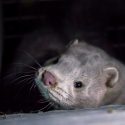
Finally, a draft decree that we support wholeheartedly! It will allow for traps that drown animals that are classified as pests « likely to cause damage » to be banned. In other words, mainly the nutria and muskrats, but they can still trap other animals, including our companions such as mink for example. Death by drowning, it’s hard to anything worse.

Four and a half years ago, the National Council of Hunting gave an unfavourable opinion towards the suppression of this type of trap, but since then, civil society has changed and no longer wants this. Our systematic opposition to all situations that cause suffering to animals is supported by more and more citizens. The barbarism of humans is no longer accepted. The Ministry of Ecological and Solidarity Transition finally seems to take this into account, at least for this particular subject and bypassing the opinion of hunters. This is one of the demands we made in our petition supported by more than 166,000 people, for a radical reform of hunting: the ban on traps that kill.

Admittedly, this is only a first step. If this project is adopted, only this method will disappear, not the trapping of nutria and muskrats … But this small advance allows to move towards a more emphatic society. We will have already taken the first step forward if this is well and truly published. Let’s take part in this public consultation!