Response to the Marineland trainers

Response to the Marineland trainers

Response to the Marineland trainers
18.05.2017
Antibes
Response to the Marineland trainers
Exploitation for shows

The new legislation of May 3rd, 2017. In addition to imposing some measures aimed at making the deprivation of Freedom imposed on captive cetaceans a little less painful, this has been a major surprise to the dolphinariums: The end of breeding captive individuals – An import ban – and ultimately, the end of captivity in France.

The announcement came as a bomb to the dolphinariums, especially to Marineland of Antibes. And for good reason, it sounds the death knell for a lucrative industry, especially for the British pension fund
Arle Capital Partners, the main shareholder of Parques Reunidos, now a multinational owner of Marineland, which had a net profit in 2014 of 5.5 million Euros.

In an open letter in reaction to the passing of the decree the trainers of the Marineland Park protested against the accusations of maltreatment which did not support the case according to them, neither on scientific grounds.

Yet many scientific studies attest to the evidence that is no longer disputed, except for the dolphinariums themselves: dolphins born or living in captivity lead a much shorter and morose existence than that of their free cousins. Captivity deprives them of their: physiological needs, their complex social organization, and their extraordinary emotional capacities, which in many respects surpass those of humans. In addition to informing them about their environment, a dolphins sonar acts as a decoder of emotions that gives them access to a sensory world that we cannot even imagine.

In their letter the trainers assert their love of the dolphins but the cruel and painful character of their captivity has little to do with the feeling of real attachment that trainers may experience for captive dolphins. The trainers for their part certainly like dolphins. The repentant trainers of this industry like John Hargrove, former trainer at Sea World and Marineland, provides an enlightening testimony on this subject and speaks of a blindness, of a form of profound naivety which has led them, despite all the love they bore to the dolphins, to become complicit in their ordeal.

But if we do not doubt the love of trainers for dolphins, they still remain in a relationship of domination and exploitation of animals that have not chosen to be there and whose living conditions in pools prohibit their basic natural needs. Depriving them of their abilities to express themselves, namely to use their sonar to understand the vast world around them, to hunt in groups, to dive up to 100 meters deep, to traverse a hundred kilometres a day, to surf the waves, and to choose their partners sometimes for life …

Strangely, of all these privations, the only one that seems intolerable in the eyes of the trainers is the very one which perpetuates their sad fate, generation after generation:

Reproduction, often obtained through artificial insemination and imposed on dolphins that have no choice or even incestuously. How many stillbirths? (The Orca Freya in Antibes had at least 4 stillbirths). How many infanticides? (The young Aicko at Planète Sauvage or the little Aloa at the Parc Asterix) How many kidnaps and separations from their mothers? Like the dolphin Femke who is currently suffering from grief at Parc Asterix since her son Ekinox was taken away and transferred to another dolphinarium?

The trainers of Antibes claim that thanks to the dolphinariums, visitors learn to respect the animal world. But there is no respect for coercion and deprivation of liberty. The message transmitted by dolphinariums is that it is acceptable to enclose physiologically large animals in tiny pools, which does not represent travelling in the vast oceans. Recent work demonstrates evidence already provoked by common sense that captive live animal shows cause children to believe that this is reality and do not allow them to develop a respectful and empathic relationship with the living world.

In the relation of the trainer with the animal, even with the best intentions, there is no respect. The animal still remains subject to human domination.

You, the trainers of Marineland, who « live with these dolphins and orcas every day », do not share their prison. Every day, you enter the pools and every day unlike dolphins you are free to go out and go home, return to the ones you love and to the ones you have chosen. You, who know how deeply the dolphin’s psychology and emotional capacities are close to us, you who obviously love them, you who cannot show more empathy? Would you exchange your place with theirs? If the answer is no, then instead of fighting us, help us give them the keys to a new life.

A life where their instincts, their physiological behaviours, their extraordinary cognitive and affective abilities will be free to be expressed again. Captive dolphins have already regained their freedom, it is possible. To set up new programs to rehabilitate these orcas and dolphins back to the wildlife, all of the good energies and efforts will be necessary; yours would have all its meaning. As you say in your letter, you owe them everything, so in reality you do owe them something.

May this generation of captive dolphins be the last but not necessarily a generation sacrificed.

We protect what we love.

We love what we understand.

Love knows no prison.

Share on

The Emergency of Femke: Refers the case to the courts

The Emergency of Femke: Refers the case to the courts

The Emergency of Femke: Refers the case to the courts
16.05.2017
Parc Asterix, France
The Emergency of Femke: Refers the case to the courts
Exploitation for shows

Femke, a female dolphin held by Parc Asterix, has been at her worst ever since her son was taken away. To try to help, One Voice launches an emergency legal procedure.

Femke was captured by the captivity industry off the coast of Florida nearly 40 years ago. Since 2008, she has been locked up in Parc Astérix. Last year, Ekinox, her only son, was sent to another dolphinarium. Since then, her wellbeing has continued to decline.

Concerned about her, One Voice called Dr. Pierre Gallego, a veterinarian specializing in marine mammals. He went to Parc Astérix and his conclusions are without doubt: in addition to multiple skin lesions, Femke’s body exhibits alarming symptoms including excessive overweight and blistering in the abdomen and neck. She probably suffers from muscular atrophy, which prevents her from moving properly. She swims very little and very slowly, allowing herself to float most of the time. The way she makes her turns also suggests a mobility problem from the head or the spine and she finds it very difficult to dive and stay under water. She is regularly found in a prostrate position in a corner of the pool; this is not normal behaviour and can be a sign of suffering or depression.

He concludes his observation:
« It is my professional opinion that the physical and mental health of Femke is extremely alarming and requires urgent specialist veterinary expertise. Moreover, the situation in which Femke is held in captivity is not at all appropriate.  »

Faced with this alarming situation, on 24th April 2017, One Voice sent the prefecture of Amiens a request for an expert opinion. Faced with their silence and the urgency of the situation, One Voice applied to the courts for a referral on 15th May 2017. The recent decree that officialises the closure of dolphinariums should not let us forget the dolphins that are still captive. And contrary to the comments of the dolphinariums, that the absence of reproduction does not harm their well-being. Remembering that it is the possibility of a normal sexual behaviour that is important for dolphins, not access to reproduction.

Dr. Gallego, to whom we asked this question, confirmed it. In captivity, cetaceans are often under contraception to avoid inbreeding and it is often by insemination that pregnancies are caused.
« Contraception has no effect on the natural behaviour of cetaceans and does not prevent them from having normal sexual behaviour that can fulfil all the necessary social functions. It is my professional opinion as a veterinary expert in cetaceans that breeding is by no means a key element for the welfare of cetaceans in captivity.  »

Muriel Arnal, President of One Voice: « The wise decision taken by France is currently being relayed throughout the world, from Saint Lucia to Turkey or even Germany. Everywhere, our counterparts and partners in the fight for the closure of the dolphinariums welcome this courageous commitment. But this immense progress, which aims to raise awareness, must also benefit cetaceans that suffer most. Femke is one of them. Her situation is extremely worrying. We must act for her.  »

Arielle Moreau, animal rights lawyer and consultant for One Voice: « There are animal species for which captivity is a real punishment. This is not only the case for humans but also for cetaceans such as orcas and dolphins. They are not stuffed animals or toys but beings with a high sensitivity and with needs to match their performance. To deprive them of liberty for our own pleasure is not worthy of a civilized society. With this decree, France returns to its tradition of freedom and a country of human rights. « 

Share on

The end of a slave trade

The end of a slave trade

The end of a slave trade
10.05.2017
France
The end of a slave trade
Exploitation for shows

It’s a historic victory! A much deserved reward after One Voice’s relentless battle which began some years ago. The ministerial decision which has just been taken marks a major turning point. Soon, dolphinariums will be just a sad memory. Feedback on our campaign…

Since the 3rd of May, the fate of the French marine circuses is sealed. The Minister of the Environment has banned the reproduction of orcas and captive dolphins, as well as exchanges between parks, signifying the eventual closure of dolphinariums. Even if the fight for those who are still held continues, One Voice – member of the coalition, Dolphinaria Free Europe – is delighted with this result in which it has worked relentlessly over the last several years.

This brave statute comes along at the same time as the industry was requesting new installations which would impose further animal suffering which One Voice has been opposing for the last 20 years. Recap of a year of fighting towards victory…

  • April 2016: One Voice learns that the industry is attempting to renegotiate the the ruling of the 24th of August 1981, regulating dolphinarium activity. The globally recognised New Zealand biologist, Ingrid Visser, is invited to visit the French sites by One Voice. She is particularly concerned about the state of Galeo, detained at Port-Saint-Père…
  • May 2016: publication of Ingrid Visser’s report, translated by a court certified translator, and transmission of case documents to the Minister for the Environment. Complaint filed on behalf of Galeo.
  • June 2016: Application to the tribunal for a visit in a bailiff’s presence of the Port-Saint-Père marine park. Libération publishes an article by Corine Pelluchon, philosopher, exposing the truth about dolphinariums and to save Galeo.
  • August 2016: the Bailiff visit takes place, but the dolphinarium attacks One Voice with an interim order before the findings can be used.
  • October 2016: visit to the dolphinarium with Naomi Rose, Doctor in Biology and American specialist in marine mammals. An urgent report concerning Aicko (Port-Saint-Père) provokes a new complaint; discovery of Femke’s state (Park Asterix), monitoring is initiated.
  • November 2016: the death of Aicko (6 years old), emergency procedure launched for expertise into the conditions of his death. Meeting at the Ministry, handing over of all produced reports: explicit request to ban reproduction in captivity and exchanges between dolphinariums.
  • February 2017: a judicial expert is appointed by the High Court of Nantes, where the president looks at One Voice’s arguments and raises the issue of the fundamental rights of dolphins, a first in France!
  • February 2017: One Voice runs its campaign as part of the public consultation opened by the Minister of the Environment on the revision of the 1981 ruling. More than 16,000 citizens protest at our request regarding this consultation…
  • March 2017: a meeting of experts (lawyers and specialised veterinarians) at Port-Saint-Père as part as the legal expertise consultation.
  • April 2017: the park visits being reopened, Femke is seen (Park Asterix), evaluation of her critical state by Doctor Pierre Gallego, specialist cetacean veterinarian; our video is shown abroad (more than 1 million views). Final contacts with the minister, sending of arguments in a letter / file on the 13th of April.
  • May 2017: final decision by the Ministry. Victory! The reproduction and transfer of cetaceans between parks is now banned. The dolphinariums are going to have to close.

One Voice continues its fight for captive dolphins. They won’t be replaced but their plight is still ongoing. An emergency proceeding has been launched regarding Femke, for whom we are very concerned.

Dr. Jane Goodall joins animal welfare associations to call for the release of surviving primates from a German laboratory

Dr. Jane Goodall joins animal welfare associations to call for the release of surviving primates from a German laboratory

Dr. Jane Goodall joins animal welfare associations to call for the release of surviving primates from a German laboratory
09.05.2017
Allemagne
Dr. Jane Goodall joins animal welfare associations to call for the release of surviving primates from a German laboratory
Animal testing

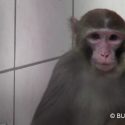
L’éthologue de renommée internationale Jane Goodall, dame commandeure de l’ordre de l’Empire britannique, fondatrice de l’Institut Jane Goodall et Messagère de la paix des Nations Unies, s’est jointe aux groupes de protection animale en Allemagne, au Royaume-Uni et en France (Ärzte gegen Tierversuche e.V., Cruelty Free International et One Voice) pour saluer la fin des expériences neuroscientifiques controversées pratiquées sur des singes à l’Institut Max-Planck de cybernétique biologique (IMP) à Tübingen, et demande que les animaux survivants soient libérés dans un sanctuaire.

Internationally renowned ethologist Jane Goodall, Dame Commander of the Order of the British Empire, Founder of the Jane Goodall Institute and United Nations Messenger of Peace, joined animal welfare groups in Germany, United Kingdom and France (Ärzte gegen Tierversuche eV, Cruelty Free International and One Voice) to help see the end of the controversial neuroscience experiments practiced on monkeys at the Max Planck Institute for Biological Cybernetics (IMP) in Tübingen, and asks that the surviving animals are released in a sanctuary.

In recent years, the IMP has become the target of media and public controversy following a long campaign by the association Ärzte gegen Tierversuche eV and the publication, in 2014, of videos shot by hidden cameras that revealed the extreme suffering of primates, victims of neuroscientific experiments including severe water deprivation and physical and psychological constraints (1). And a campaign led by One Voice in France, the home country of some of the primates.

Two years later, in 2016, the IMP announced that it would stop using primates as part of these controversial experiments. Despite a first initiative of the Institute to place some surviving monkeys into a sanctuary, no information on the real destiny and fate of these animals has been made public. It is feared that the IMP has sent at least ten of them to other European laboratories to continue to be used in experiments.

Dr. Jane Goodall gave an inspiring lecture in December in Tübingen organized by Ärzte gegen Tierversuche. She spoke passionately about the use of primates in invasive and cruel experiments and said, « I welcome the news that these disturbing experiments on monkeys at the
Max Planck Institute for Biological Cybernetics (IMP), in Tübingen, Germany, will no longer take place. Nevertheless, I am saddened to learn that the monkeys were not released into a sanctuary but instead sent to other laboratories, probably for use in other experiments. I join forces with Cruelty Free International, Ärzte gegen Tierversuche and One Voice to demand that their situation be made public and urges the Max Planck Institute to organize the immediate transfer of these monkeys to a sanctuary. These poor beings have suffered enough and deserve to live the rest of their lives far from the privations and confinement of the laboratories.  »

In November 2016, One Voice, Ärzte gegen Tierversuche eV and Cruelty Free International submitted their application to Mr Klaus Tappeser, President of the Administrative District of Tübingen, requesting the publication of information on the current situation and the fate of all primates held by the IMP.

Notes

1.
(https://www.crueltyfreeinterna… …)

Here
is what the monkeys of the Max Planck Institute for Biological
Cybernetics have been subjected to:

  • Highly
    invasive surgeries involving the implantation of electrodes and / or
    brain input devices into the brain.
  • Deprivation
    of water to compel them to do what researchers want.
  • Physical
    constraints (including for example the use of a collar and a post) to
    force them out of their cages and « acclimatize » to the
    restraint (restraint chair called « primate chair » where
    they are held by the neck and body in an abnormal and uncomfortable
    position.
  • Thirsty,
    the monkeys are held by the electrodes and reduced to immobility by
    the compression device so that researchers can record their brains by
    looking at computer screens or thrust levers. This can last up to
    five hours a day, five days a week.
  • Monkeys
    have been held for years and continuously used in this type of
    research.

For more information, please
contact:

Ärzte-gegen-Tierversuche
e.V

One
Voice – Muriel Arnal, President, Phone: 00 33 6 79 83 1661

Cruelty
Free International Media Office: +44 (0) 207 619 6978 or +44 (0) 7850
510 955 or Email: media@crueltyfreeinternational.org

Share on

A Tilikum amongst the lions

A Tilikum amongst the lions

A Tilikum amongst the lions
08.05.2017
France
A Tilikum amongst the lions
Exploitation for shows

On the 7th of May at Doullens, Chirkane attacked his trainer in front of a hundred or so spectators. One Voice is categorically against his euthanasia. Join us in in our fight to place him under our care and into a sanctuary.

The lion is a wild and dangerous animal, who can deny this? Despite being born in captivity, he hasn’t lost his DNA as far as we are aware. At the age of six, a lion is already an adult, roaming with his friends then resting in the sun, under the Serengeti sky. But in a circus, he has no bushland, no open space, no sun. He has nothing but the cage and the circus ring.

The attack that Chirkane is being blamed for is no crime. It was a moment of frustration, not an attack with intention to kill*. What is not natural, on the other hand, is to lock up a feline in a tiny cage and to only let him out for training and shows under a noisy big top. It’s to inflict him with endless lorry travel. What is criminal, is to deny him everything that makes him a lion. Chirkane had enough and simply wanted to be a lion, in the same way as the orca Tilikum, who killed his SeaWorld trainer, just wanted to be an orca. A real one.

But sadly the Tilikum of the ring is not an orca. He is not worth millions of dollars. Circuses and zoos produce as many lion cubs like Chirkane as cats produce litters. When they malfunction we throw them away and replace them.

He wanted to « dominate »? No, in the circuses, it is the trainers who want to dominate! Chirkane just wanted to say stop. Sunday was the one show too far. Suddenly, he couldn’t stand the bullying orders anymore. He couldn’t stand to return to his cage, to wait on the urine soaked sawdust for the next hostile session. So he did as lions do: he neutralised the intruder so that he would leave him alone. He reacted like a lion. And we want to kill him for that.

One Voice, who regularly warn of the dangers of circus animals, is deeply sorry for the trainer for whom it wishes a rapid and total recovery.

If proof were necessary, this drama proves to us once again that wild animals have no place in the circus. It is urgent that France bans this outdated practice, as have so many other countries in the world.

To ask for Tilly the Lion’s freedom, and for him to be immediately assigned into One Voice’s care, please write to the
Environment Minister.

* « Lions are excellent wild predators that have no place in the circus. The predator instinct is deeply engrained in felines (even in domestic cats). Every animal can be subject to a moment of aggressive behaviour, whether that be caused by a lack of well-being, by pain or by stress. But the consequences of such an attack can vary depending on whether we are talking about a Chihuahua or a lion.

* « Lions are excellent wild predators that have no place in the circus. The predator instinct is deeply engrained in felines (even in domestic cats). Every animal can be subject to a moment of aggressive behaviour, whether that be caused by a lack of well-being, by pain or by stress. But the consequences of such an attack can vary depending on whether we are talking about a Chihuahua or a lion.

In the lion’s case, there was no fatal attack; it was just a moment of irritation. If a lion intends to kill, he would kill via the throat in seconds ». Dr Pierre Gellego, consultant veterinarian.

A planned end to dolphinariums in France!

A planned end to dolphinariums in France!

A planned end to dolphinariums in France!
06.05.2017
A planned end to dolphinariums in France!
Exploitation for shows

Associations united in their fight, The Animal Code, Dolphin Connection, One Voice, Cetacean Network and Sea Shepherd have received with joy and relief the definitive text of the new « dolphinariums » decree, signed on May 3 by Ségolène Royal for the Ministry of Foreign Affairs and the Environment.

Sometimes welcomed openly by other associations, the text submitted for public consultation last February has been fought for right up until the last moment by these associations. Disappointed with the scope of improving the written text that dates from 1981, they demanded a repeal and the dismantling of the dolphinariums. These demands, the lobbying action, files and reports provided as well by a very strong public support (more than 16,000 comments on 4,500 pages of public consultation) were listened to. This represents a victory for environmental democracy and for the animal cause.

Indeed, among the advances in this final text, which is to improve several points and conditions of detention of captive cetaceans (orcas and
dolphins) in 4 French dolphinariums. A major modification was introduced by the Minister at our request: in six months, when this
text is fully implemented, French law will prohibit the captive detention of all cetaceans, except those already held. Clearly, this means the end of breeding programs, trade or importation, programs maintaining a deadly system, tearing apart the families of cetaceans that are exploited. Without a possible renewal, it simply means the end of the circus of marine life on our territory, and this French
advance is historic.

The Dolphin Connection, through Christophe Wszolek, declares: « We consider that captivity no longer has a place in our modern societies and that this new version of the decree goes in the right direction and opens the way for definitive cessation of captivity.  »

Muriel Arnal, One Voice rejoices: « Without letting ourselves be lured by a smoke screen that did not in any way regulate the purpose and the cruelty of the delphinarium circuit, we fought against all odds for a fair stand. Our struggle and the support of the French people has borne fruit. This is the end to an unworthy slavery of our time, and our gratitude to those who have contributed to its demise.”

Sandra Guyomard of Cetaceans Network, salutes for her part the arbitration rendered by Ségolène Royal: « A fair decision, a step for a
dolphinariums free France. The real show is to seen in the wild
.  »

Lamya Essemlali of Sea Shepherd also welcomes this decision: « Captivity is the unworthy legacy from another era. It is time that France, like
many other countries finishes and looks to the future. We are pleased
to see today that it is taking the right path
.  »

Anne-Sophie Riing of Animal Code: « Our decision to refuse the first decree was difficult to make and we had hesitated for a long time, fearing
that we had already reached a current political limit, we are happy that France is now ready today to finally turn the page. We sincerely
thank all the actors who have participated in this breakthrough, on the other hand, we regret that the cetaceans still in captivity will continue to have to perform in shows.  »

This text undoubtedly marks a new era in France and all over Europe for this much-maligned leisure industry. « Our associations thank
those who supported their fight, refusing the compromise of certain measures and wanting ethics and freedom for cetaceans. We think of
the orcas and dolphins who remain prisoners, even though this decree provides for many positive provisions, improving their conditions and the follow-up care they will receive. For them, we will still go to court and continue to work on rehabilitation solutions in
sanctuaries. But today we think especially of all those who will not
be born into captivity tomorrow
.  »

Share on

One Voice fights against illegal breeders

One Voice fights against illegal breeders

One Voice fights against illegal breeders
05.05.2017
Oise
One Voice fights against illegal breeders
Domestic animals

[Thedepartment of Oise, 60] This Friday, May 5, early in the morning, the Gendarmerie in collaboration with the Zoé Cell of One Voice and its partners, also in support is the Departmental Directorate of Protection of Persons and Populations (DDPP). They are all mobilized to seize a couple of breeders, who are repeat offenders.

For years, this couple has been the subject of lawsuits by One Voice. Supervised since 2004, these breeders are duly registered in the LOF (the French Origins Book, guaranteeing purebred dogs), had been the subject in 2011 for yet another seizure of animals in danger, illustrated well by a potent video report. The investigators then found 46 dogs of all ages (Bordeaux dogs and bulldogs in particular) all in terrible living conditions: locked in their cages, these animals had never been let out, obviously lacking care. They could hardly walk out of their hell.

Brought to justice for in particular serious abuse and acts of cruelty against domestic animals, continuation of a business classified as non compliant and incompetent. All this despite formal notices for breeding activities without a certificate of capacity and the being heavily fined with a prison sentence of 6 months for the breeder.

The follow-up from the Zoé Cell an investigation and intervention group of the One Voice association, highlighted the need to act again.
These people have in fact continued their activity, in total violation with a prohibition to keeping animals who were beaten (an offense punishable by 2 years in prison and 30 000 € fine).

It is not yet clear how many animals will be affected by this seizure. The full investigation will determine the nature of these new
offenses, adding to a very heavy liability for exploiting animals in
unworthy conditions.

French law has recently tightened its requirements in face of multiple abuse of animals on breeding farms, pet shops and Internet sales. But the multi-billion-euro domestic animal trade in France still generates numerous accounts of abuse and trafficking that must be fought against on a daily basis. One Voice is demanding a stop to the pet trade on the Internet, through classified ads, in salons and pet shops and the call for more resources for the authorities.

Muriel Arnal, president of One Voice, says, « What these breeders are practicing in is not a trivial matter. One Voice is hoping this time for an exemplary judgment in order to put an end to a long and painful affair. »

Share on

Dolphinarium decree: not passed as ‘discretely’ as intended

Dolphinarium decree: not passed as ‘discretely’ as intended

Dolphinarium decree: not passed as ‘discretely’ as intended
04.05.2017
Antibes
Dolphinarium decree: not passed as ‘discretely’ as intended
Exploitation for shows

Whilst France was preoccupied with the debate between the two presidential candidates, Ségolène Royal was signing the far from unanimous dolphinarium statute… A drama for the dolphins, and a total disregard to the outcome of the public consultation, which One Voice will not let pass.

Breaking news: An immense victory! The statute has just been published, we had demanded right up until the last minute that dolphin reproduction be banned, and this measure has been added! More than 16,000 people had protested on the Minister’s website against the original statute at our request. We were heard! 4,500 pages of comments opposed this draft statute, the result of the public consultation from February this year. Animal rights, as well as the environment, may be the gaping holes in the candidate’s programmes, but the French are no less committed.

The timing

As with any unpopular measure, the right moment had to be chosen to push through this statute. What better than a televised debate between the two candidates in the final round of the presidential election, keeping the whole of France busy. It was right at the beginning of that evening on the third of May, that it was announced by the Minister of the Environment that Madame Royal, several days before her departure, had signed the statute, an unexpected gift to the captivity industry. This is despite the expert’s opinions, despite the opinion of the French public, and despite the opinion of personalities such as Nicolas Hulot, who we must congratulate for his unambiguous tweet:
« Our civilisation should no longer tolerate dolphin captivity. It is time to finish with the #dolphinariums« 

Notre civilisation ne devrait plus tolérer la captivité des dauphins. Il est temps d’en finir avec les #delphinariums pic.twitter.com/DTiYsQdjEt

— Nicolas Hulot (@N_Hulot) 20 avril 2017

Smoke and mirrors

We could believe that this statute signifies an improvement for captive cetaceans. But who can consider that increasing the depth of the pools by 1 metre will change the dolphin’s daily lives? That to be obliged to ask the opinion of a commission for their reproduction (but not be obliged to act upon it) will limit this reproduction? These « measures » are ridiculous. On the 27th of April, Marineland declared that its four orcas will be the last to be held in their pools, confirming that the ban on detaining orcas, like the other measures, had been taken with the backing of the captivity industry, curbing the pressure on the dolphinariums. It is pointless to demonstrate in front of their gates, the statute has been enacted and they now have 3 years to comply…

The only possible predicament is the definitive end to cetacean exploitation. The dolphins need only one thing: freedom. But the real change brought about by this statute is that it clearly authorises the creation of new dolphinariums, and by legitimising them, it assures the continuity of their activity. Even if the lack of popularity of these types of projects allows us to hope that this will not be the case, the fact remains that years of work will be again needed to discuss this text. We cannot let this industry continue. It is essential to support its evolution and to obtain the end of dolphin and orca exploitation.

We will have two months to launch an appeal to the State Council from the date of this statute’s publication. One Voice will not give up. You can support our action by signing and sharing our petition