Pardoned turtle doves!

Pardoned turtle doves!

Pardoned turtle doves!
11.09.2020
France
Pardoned turtle doves!
Wildlife

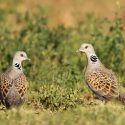
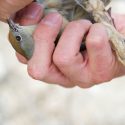
For turtle doves, getting this decree suspended was a matter of the utmost urgency. Especially when you consider that their species is in serious danger of extinction (habitat loss, disappearance of insects, noise, poaching and… hunting)! What is the sense of priorities of this ministry, which is supposed to protect nature, and which already has its wrist slapped by the European Union for France’s failure to comply with the Birds Directive? Following our request and that of the LPO, the Council of State has now handed down its decision, and it’s in favor of the turtle doves, who have been saved from the slaughter!

A lobby so powerful that it even insinuates itself into prefectoral and ministerial decisions

On the day of the hearing, we learned that 68% of vertebrates had disappeared from the earth’s surface in less than 50 years… And yet, we were questioning the Council of State once again on an issue concerning the right or not to kill tens of thousands of these birds, peacefully living in our country.

Thousands of turtle doves are already dead, and data is still unreliable!

On the morning of September 10, 6,287 turtle doves had already died under this decree. By the end of the hearing, this figure, updated daily, had risen to 6,368! What is often overlooked, however, is the fact that these already astronomical figures fall far short of reality, by the very admission of those concerned, since they are declarative: hunters must enter their catches themselves into the « ChassAdapt » application. In other words, a computer revolution… without a foregone conclusion.

The Ministry’s decree made no sense, turtle doves are going to live!

Muriel Arnal, founding president of One Voice, declares:

« How could the State expose turtle doves, on the brink of extinction, to hunters who, let’s not forget, kill them for their leisure time? The data provided is unreliable, as we have demonstrated. Hunting – this hobby – only aggravates a very worrying situation for these birds, which belong to the common heritage of mankind. It’s high time we went beyond mentalities and changed actions! Today, the Council of State has ruled in our favor, which is a huge relief ».

Our team on site pointed out the highlights of the trial and the inconsistencies of the Ministry and transcribed them on our Twitter feed. After analyzing the evidence and the two contradictory opinions, the Council of State ruled against the public prosecutor, and therefore in favor of the turtle doves!

The fight for the birds goes on. The prefects and ministers would do well to remember this before issuing new decrees concerning hunting of any kind, whether by shooting, glue or digging out: we’ll be there. So much so, in fact, that we’ll be back at the Council of State for the hearing against traditional hunting (six decrees on bird trapping) on September 16, 2020 at 10am.

New investigation: Only four mink farms left in France – let’s close them down!

New investigation: Only four mink farms left in France – let’s close them down!

New investigation: Only four mink farms left in France – let’s close them down!
31.08.2020
France
New investigation: Only four mink farms left in France – let’s close them down!
Fashion

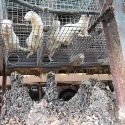
The images we reveal were filmed in August 2020 and show how the last four fur farms in the country look like. They are better guarded, some are having work done on them – indicating that fur farms are not going to vanish totally from France tomorrow – but the horror in the cages remains.There are fewer mink in the ‘fur farm of horrors’ in Eure-et-Loir: not all the cages are occupied and there is no longer any overcrowding. But the air in them continues to be unbreathable and the droppings still pile up like stalagmites, and as for the poor mink … We are asking that they be shut down before the end of the year by ministerial decree and for the worst of the four, the one in Eure-et-Loir, to be shut down immediately! We are submitting an additional complaint relating to ‘the fur farm of horrors’.

Fur farms in France: the horror that never ends

In 2017 we revealed images of six of the 11 mink farms still in operation in France. We showed the full horror: tiny wire-mesh cages that injure paws, the absence of water even though mink feed while swimming, overcrowded cages leading to fights and injuries. No checks on waste discharge despite these establishments supposedly being regulated (because of their impact on the environment), with harmful consequences for nature and biodiversity. The following year the French animal-rights organization L214 revealed new images of one of them, which has since closed.

In 2019, in the midst of discussions with the ministry on this matter, we released images of four of the five fur farms still operating. We showed stomach-churning images of cannibalism, of mummified corpses, of dozens of babies dying or in agony in the worst of the farms in France, the one in Eure-et-Loir. In response the authorities and the couple running the farm announced that there had been a sudden outbreak of disease, which was of course « exceptional » and obviously had ended!

Mink farms, premises that are little documented yet subject to epidemics

However everywhere in the world mink exhibit injuries and infections, which are little studied and yet recur and are similar on all fur farms.

More than a million mink have also been affected by Covid19 in Europe alone, slaughtered on farms in the Netherlands, Spain and Denmark for the simple reason that humans exploit them and subject them to prison conditions conducive to the spread of this type of scourge.

«There are still four mink farms in France – 4! The Netherlands have decided to shut down 160 and Finland is considering doing likewise in the case of its 700 fur farms. In France, despite meeting after meeting, nothing, absolutely nothing is happening. And during this time, in Eure-et-Loir, mink, still alive but with putrefying flesh, drag themselves over the wire-mesh floor of their cages to reach a few drops of water» Muriel Arnal, One Voice Founding President

Meetings with the relevant authorities at all levels

At the end of 2019 a round table in Brussels organized by MEPs provided the opportunity to show images of this ‘worst fur farm in Europe’ to representatives of furriers and to have discussions with them and the MEPs.

When lockdown ended we arranged a meeting with a representative of the National Association of Veterinary Surgeons following a statement from the Federation of Veterinarians of Europe and announcements from Irish and Bulgarian vets. We are still waiting for the measures announced by the Ministry of Ecology following the meetings on wildlife held in captivity to be taken.

August 2020 – a new investigation, an additional complaint and requests for close-down!

This Summer there are only four fur farms still in operation. Many of the cages are empty or contain only one mink, in particular at Montarlot-lès-Rioz and, in Eure-et-Loir, at Champrond-en-Gâtine. But everywhere there are mutilated mink: eyes, teeth, tails, paralysed and necrotic legs, skin diseases … And piles of droppings, causing real and lasting soil pollution.

«As a veterinarian I am appalled by what I’ve seen from these French fur farms, it runs counter to everything I know about animal welfare, from keeping wild species like mink in small battery cages, to the insanitary conditions and the very obvious stereotypies which are likely to be the result of mental distress, the brain’s way of coping with a deprived and inadequate environment. The mink with necrotic hind quarters is really shocking because for an animal to get to that state, it will have been left untreated for at least several days. It looks like both hind legs, the pelvic region and caudal abdomen are affected, and the legs are clearly paralysed which also appears to impede its ability to get to food or water. It is likely this happened with an injury of some sort, and from the point this occurred, the animal would have been in intense pain, as well as no doubt being psychologically traumatised if this was injury from an attack, which is one plausible explanation. This animal should have been separated and treated immediately that the initial injury occurred, but that has clearly not happened and it has been left to get in a state where now it requires immediate euthanasia. » Professor Alastair Macmillan, Veterinary advisor to Humane Society International

France is way behind its neighbours; the people are waiting for change!

Since 2017 we have been urging the Ministry of Ecology to publish a decree shutting down all the mink farms in France. This year how will the State justify its failure to act when many countries in Europe have introduced legislation? 

The last fur farm in Bosnia-Herzegovina closed in July, the Netherlands will have shut down its 160 fur farms by April 2021 and Finland is also planning to shut down its 700 fur farms once and for all!

In France more than half a million people have already signed the referendum for the animals, one of the measures of which relates to fur farms! The French people are with us: 77% of them are in favour of a ban on farming animals for their fur.

We are asking for the ‘fur farm of horrors’ in Eure-et-Loir to be shut down immediately, submitting an additional complaint, and also demanding a decree providing for the dismantling of the other three farms by the end of 2020.

Sign our petition to save thousands of mink! Year by year French fur farms are closing down solely because of such pressure and the reaction to the images that have been published.

The waiting has lasted long enough: we want action now. Let no-one tell us that it’s complicated: there are only four of them! 

Support us

A gang attempts to trap a wolf in the Alps

A gang attempts to trap a wolf in the Alps

A gang attempts to trap a wolf in the Alps
13.08.2020
France
A gang attempts to trap a wolf in the Alps
Wildlife

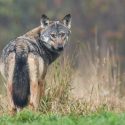
A few kilometres from the border between France and Italy the Écrins massif contains a majestic national park, home to thousands of species of animal, including mammals, birds and insects. Wolves are among the animals living in this protected area, between Huez, Briançon and Gap. Since they returned to France over the Italian Alps they have been constantly targeted by farmers, local politicians and representatives of the State. A few days ago a gang tried to trap and butcher one of these wolves, whose natural regulatory rôle is so beneficial to the ecosystems of our mountains. We are complaining in order to ensure that there can be no doubt that such crimes will not go unpunished.

The wolves living in the Écrins National Park are constantly persecuted by local farmers and poachers! Last year we had already submitted a complaint against the ‘Front de libération du Champsaur’ (Champsaur Liberation Front) for conspiracy to destroy a protected species and conspiracy to attempt to destroy a protected species. Then this Summer, only a few days short of that sordid anniversary, it happened again.

“Out of love for his animals” he reckons – but he won’t get away with it!

A sheep-farmer who also runs a shop, an inn and a bed-and-breakfast ‘denounced’ himself in the local press :

«One night we went on patrol, with a live ewe as bait. We waited twelve hours. Nothing. We got fed up so put everything back in the van. And that’s when we saw it: as we were leaving it was 20 metres behind us, sitting watching us.»

Even attempting to harm a wolf is a serious offence!

We submitted a complaint about this on 31 July this year, because luring wolves with a view to killing them violates the ban on destroying animals belonging to protected species and constitutes an offence under the environment code. Destroying an animal belonging to a protected species is punishable by two years’ imprisonment and a fine of 150,000 Euros, which is doubled if the offences are committed in the heart of a National Park; and if there has been conspiracy to commit the offence (i.e. if it was planned by several people) the punishment is seven years’ imprisonment and a fine of 750,000 Euros. The environment code states that attempting to commit such a crime is subject to the same penalties. In fact it is deemed to be a serious offence.

Illegal and totally illogical persecution

Each year more and more wolves are moving into and settling in France, with no attack on a human ever being recorded. Yet each year the State authorizes an increasing number of them to be killed despite the fact that in theory they are protected. This year the size of their territory has remained the same and their numbers have not increased. We have written to the Minister of Ecology to request that the shooting of wolves be suspended.

Until wolves are properly protected in our country we will fight every step of the way to ensure that there can be no doubt that such crimes will not go unpunished. The wolves and all the animals in the Alps must be able to benefit from vast territories in order to live free, and humans from being happy about it! Our complaint relating to conspiracy to destroy animals of a protected species in the heart of a national park or a natural reserve was submitted on 31 July 2020.

Translated from the French by Patricia Fairey

Hunting dogs in the Dordogne: the fight continues!

Hunting dogs in the Dordogne: the fight continues!

Hunting dogs in the Dordogne: the fight continues!
06.08.2020
Dordogne
Hunting dogs in the Dordogne: the fight continues!
Domestic animals

Despite the gross mistreatment of these dogs, the Prefect of the Dordogne implicitly refuses to order their seizure as a matter of urgency. One Voice is taking the matter to the highest level of government and filing a new complaint relating to the dogs and two donkeys.

We are still committed to bringing Richard Mandral, an abusive breeder in Périgord, to justice.

He has got away with it for far too long!

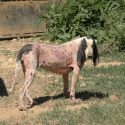
Since our initial findings in Spring 2019, and despite the release of sixteen dogs in February this year, the fate of the animals kept by Mr Mandral has not improved. Hunting dogs do not seem to benefit from the same protection in the Dordogne as in the rest of France. Or is it the hunters who are benefiting – from the privilege of mistreating them with impunity? However mistreatment isn’t a strong enough word, because Mr Mandral’s dogs continue to suffer in appalling conditions. And they’re not the only ones! In fact two donkeys are also now suffering neglect at the hands of this man, who is not at all interested in looking after the animals in his care nor concerned about the current court procedure.

The investigation continues

The new images that our investigators have brought back clearly show that the dogs’ situation has not changed but also that, despite the notice served again him to reduce the number of dogs kept, Mr Mandral is continuing to allow them to breed!

As for the donkeys, their hooves have not been trimmed for several months, which causes them a lot of pain and could even kill them. One of them is already unable to walk.

One Voice denounces the Prefect’s failure to act

Therefore One Voice has submitted a fresh complaint, this time to the Public Prosecutor in Périgueux requesting that the dogs and donkeys be seized as a matter of urgency in view of this imminent danger and the Prefect’s failure to act.

And in view of this intolerable lack of action, of which dogs exploited for hunting are the primary victims, we have also submitted an application for a judicial review against the Prefect of the Dordogne and alerted the Prime Minister, the Minister of Justice and the Minister of Agriculture and Food to the situation.

What is unfolding before our very eyes is a scandal and we shall fight to the end to ensure that justice is done and that no more dogs suffer at the hands of this huntsman!

No liming in 2020-2021? If the hunters attack they will once again find us blocking their path

No liming in 2020-2021? If the hunters attack they will once again find us blocking their path

No liming in 2020-2021? If the hunters attack they will once again find us blocking their path
29.07.2020
Europe
No liming in 2020-2021? If the hunters attack they will once again find us blocking their path.
Wildlife

The Court of Justice of the European Union was challenged once again by the Council of State on the ‘Birds’ directive following our complaint. And Barbara Pompili is now very seriously considering banning liming for the 2020-2021 season. It’s no great surprise that the hunters are up in arms. But if they attack the Ministry of Ecology, Sustainable Development and Energy we shall once again be there to defend the birds and show our support for this paradigm shift, which we have been calling for for years.

A cruel ‘game’ finally reaching its end

Hunters in five departments in the south-east of France insist on continuing their cruel tradition, which consists in killing birds by trapping them using glue smeared on branches, a practice known as liming. Terrified, all the poor birds that become stuck struggle, are injured and sometimes die in these traps, which, moreover, are not selective. These specialist hunters can repeat until they’re blue in the face that they release the small birds belonging to species they are not targeting, but by then the harm has already been done: many die from their injuries or from stress, or are used as decoys to attract other birds and are held captive for months. Poaching isn’t mentioned but everyone knows that it exists.

Last year, following our request to the Council of State relating to the 2018 decrees, the European Union had clearly called France to order on the ‘Birds’ directive.

Was the message of the European Court of Justice heard?

At the end of April 2020 the European Court of Justice once again responded favourably to our request for a ban on liming in France, submitted as part of our complaint about the decrees of 2019 on these traditional ways of hunting birds (by liming but also using cage traps, stone-traps, claps nets and other types of net). On that occasion the Council of State once again asked Europe to take it up with the Ministry of Ecology, Sustainable Development and Energy.

Whereas her predecessors had scarcely been appointed when they rushed to sign the decrees concerned, Barbara Pompili recently spoke out in favour of reducing the quota of birds trapped using lime to zero for the 2020-2021 season. And for a good reason! This decision is the culmination of the years of fighting the Ministry of Ecology, Sustainable Development and Energy, which wouldn’t budge. We are therefore delighted about the announcement by the new Minister of this long-awaited change.

The hunters are in ‘complete disagreement’ – and who could have thought that they would react otherwise when their sadistic pastime could be taken away from them? – and are expected to take legal steps to protect liming. We have already faced down the elected representatives supporting this lobby at the European level. We shall not hesitate to go into the attack once again if it proves necessary. Meanwhile, to urge that traditional hunting be banned, please sign our petition!

Translated from the French by Patricia Fairey

Six bulls tortured to death: bullfighting resumes in France

Six bulls tortured to death: bullfighting resumes in France

Six bulls tortured to death: bullfighting resumes in France
27.07.2020
France
Six bulls tortured to death: bullfighting resumes in France
Exploitation for shows

Bullfighting is the torture, in front of an audience of all ages, of animals that have been rendered almost harmless, followed by their systematic slaughter. Yesterday, 26 July 2020, the first novillada since the end of lockdown took place in France. Our investigators went along and came back with images of horrendous violence. Fans were able to forget the coronavirus by taking pleasure in watching young men who had barely reached adulthood massacre six bulls.

First novillada of the year

A novillada is one of the first bullfights of a young torero straight out of a bullfighting school. Last year we had infiltrated the school at Nîmes and shown everyone how children are taught, sometimes forced, to kill terrified calves.

Bulls, horses, all are losers in the arena.

If the horses were to see the bull, the violence, the blood, they would rear up and try to escape. But they are trained in blind obedience to the orders of the picadors, who lead them into danger. Their eyes shielded, they have no choice but to obey or they will be punished. That’s how these people love animals: submissive and docile, utilitarian. Whether being attacked by bulls fighting for survival or being mistreated by their riders, the horses too are the victims of bullfighting.

Sometimes six to one, armed and organised, they humiliate and kill.

This year nothing has changed. Once again cruelty revealed itself in the full light of day, among the sound of cicadas. Six bulls died one after another among shouts of « hurray » and « bravo ». Mutilated, drained of much of their blood in terror and despair before their corpses are dragged all around the arena to satisfy the bloodlust of the spectators, thirsty for gratuitous violence.

Our investigator on the spot provides the following analysis: «The bulls refuse to fight. They try to flee from a confrontation. They merely react to the humans around them, who are goading them to fight. But they are motivated by fear alone: that’s the only choice they have. Defend themselves and respond to horrific pain.»

Of course it mustn’t be thought to be dirty!

One after the other they will try to escape, then, backed into a corner, goaded on all sides, they will be forced to enter the horrific trap set by these human primates and will die in unspeakable agony. Where is the Culture of which our ministers speak in this perverse ‘tradition’ of taking pleasure in watching a creature die a slow and painful death?

Paradoxically it is the puntilla, a sort of dagger with a short broad blade, that will be plunged between the horns and driven into the skulls of these poor condemned creatures to end their suffering. During the final circuit of the arena the droppings will be collected: the ground must not be dirty for the slaughter to come.

To show that you want to put an end to bullfighting in France and close down bullfighting schools so that children are no longer induced to kill, please share the images from our investigation and sign our petition!

Translated from the French by Patricia Fairey

Increase in the number of wolves in France slows: One Voice demands a stop to their slaughter

Increase in the number of wolves in France slows: One Voice demands a stop to their slaughter

Increase in the number of wolves in France slows: One Voice demands a stop to their slaughter
22.07.2020
France
Increase in the number of wolves in France slows: One Voice demands a stop to their slaughter
Wildlife

According to the latest figures issued by the wolf-lynx network of The French Office for Biodiversity based on the annual winter survey, the increase in the number of wolves in France is slowing down and their territories do not cover large geographical areas. On Monday 20 July 2020 One Voice wrote to Barbara Pompili to ask for the immediate suspension of the shooting of wolves. In addition the association, which works for the protection of animals, has complained to the Council of State about the experimental decrees of 26 July and 30 December 2019 allowing the number of derogations to their slaughter to be increased and easing the restrictions on the methods used.

Having considered for years that their return to France improves the balance of nature, not only is One Voice totally opposed to the shooting of wolves, which by their very presence enhance our mountain forests, but also strongly maintains that they must be protected at all costs. Wolves (canis lupus) are a protected species. Therefore in theory they should be protected.

However for years central and local governments have been granting ever more exceptions to this statute, which is supposed to protect them. Each year more and more wolves are slaughtered even though there is no evidence that the slowdown in the growth of their population correlates to a decrease in the number of attacks on livestock, which is the reason invoked by the public authorities. In 2019 our application was unsuccessful because it wasn’t ‘urgent’, according to the Council of State. However each year it is urgent for the wolves who die. On 6 February 2020 our application failed because of the low number of derogations granted at the time but by 15 July thirty wolves had died!

In 2018 our association had already contested the presidential decrees that transferred ministerial jurisdiction to the coordinating Prefect, making an already complex regulation threatening the protection of the species even more confusing. 2020 is no different. The increase in the number of wolves is now slowing down but the number being massacred is increasing.

There are several elements to take into account, the most important of which is the protection of the wolves that have returned to France of their own accord

On the one hand, the increase in the wolf population in our country. The fact that wolves have crossed the Alps back to France of their own accord proves that the territory is suitable for them to survive. One Voice therefore welcomes their return.

Our opinion is not shared by sheep-farmers, who are always quick to focus on their own interests, the profit they make from the livestock that they send to the abattoir and the compensation paid by the State for the so-called damage committed by the wolves. Unfortunately the public authorities do not systematically make the payment of damages conditional on measures to protect the flocks.

On the other hand, protecting the wolves implies not arranging for increasing numbers of them to be massacred

When the government decides on a quota of wolves to be killed each year out of the total population, even if it does not specifically use that term, preferring to talk about the ‘cull ceiling’, whereby the maximum number and the methods are fixed by decrees, it should involve both counting the exact number of wolves in France rather than estimating the number using a very complicated calculation and decreeing that the percentage will not increase from year to year. The numerical modelling applied is dangerous. One Voice is asking that the threshold of genetic viability of the species be taken into account and not the threshold of demographic viability.

By definition, if a percentage is announced as soon as the population increases, the number of wolves ‘to be culled’ will be proportionally greater. Increasing this proportion amounts to seeking to reduce the wolf population, which is, let us remember, in theory protected. We had already objected to any ‘quota’ of wolves ‘to be culled’, whether numerical or proportional, and we are even more opposed to such an increase, which already exceeds the maximum initially decided.

Finally, the only effect of shooting more wolves is to massacre them!

But in addition to raising the percentage, these experimental decrees introduce a relaxation of the restrictions on the methods that can be used to cull them. ‘Damage’ is increasing despite the increase in the number of wolves targeted, which are often scapegoats for dogs (attacks by which do not give entitlement to compensation). It is essential to study the packs and not fire into the crowd, a number decided in offices, whether they be presidential, ministerial or prefectoral. Wolves are social and intelligent animals and, like all other animals, including humans, they need to eat in order to live. They are an essential part of the fauna of our country.

Thirty have already been killed this year; according to our rulers there are still sixty ‘to be culled’. On Monday 20 July 2020 our association wrote to the new Minister of Ecology, Sustainable Development and Energy, Barbara Pompili, to urge her to suspend the decree concerned immediately and complained to the Council of State about the two decrees of 26 July and 30 December 2019.


Translated from the French by Patricia Fairey

A child kills a fox cub: two victims

A child kills a fox cub: two victims

A child kills a fox cub: two victims
21.07.2020
France
A child kills a fox cub: two victims
Wildlife

Outraged by images of hunters forcing a child to kill a fox cub, psychologists, child protection professionals, philosophers, lawyers, scientists and artists denounce this brutality. Already more than 180 signatories…

An ordinary scene of digging out: hunters brutally pull fox cubs out of their burrows and hit them to death on the head with pliers in front of two children aged 5 and 12. The older boy is forced to beat a fox cub to death himself, amid laughter. The young boy can’t do it. On the ground, the little animal is dying, shaking their legs. These are the findings of an investigation by the One Voice association.

Teaching a child to kill an animal in this way also means killing something precious and fragile inside him: his sensibility to living things, his way of being in the world.

We cannot accept without a word such physical and psychological violence inflicted on the most vulnerable, whether human or non-human, particularly during hunting parties.

For these children, the trivialization of violence and the incitement to inflict suffering on a sentient being are recognized causes of trauma with serious after-effects. Animals have a special place in the development of young humans: when they talk about animals, their vocabulary is more extensive than on other subjects. Children whose pets are abused are traumatized, and those who have witnessed animal abuse are more likely to imitate it. They are also at greater risk of committing violence against humans. From witness to victim, from victim to perpetrator, this undeniable Link has been recognized and studied in many countries. The strength of this statistical Link has led several public agencies around the world (including the FBI in the U.S.) to turn their attention to how people treat animals in order to detect or analyze violence against people. We need to learn from them.

We demand:

1A ban on involving children in hunting. Violence is never an example, no matter who the victim is. Using a child as an instrument of violence must no longer be allowed.

2Recognition in French law of the sensibility of wild and free animals, to put an end to the suffering that wildlife is subjected to with impunity.

3The introduction of courses dedicated to animal sensibility and the teaching of empathy for animals in school curricula, because we are convinced that there are many other ways of looking at living things that we can pass on to our children. Empathy and benevolence are among them.

First signatories:

AJD (association Animal, Justice et Droit) – Anouk Aiméeactrice – Ariane Ambrosini, juriste à l’ASPAS (Association pour la protection des animaux sauvages) – Yaël Angel, docteur en droit, rédactrice du Petit Journal du Parti animaliste – Françoise Armengaud,  philosophe – Charlotte Arnal, journaliste – Muriel Arnal, présidente de One Voice  – Yann Arthus-Bertrand, président de la fondation GoodPlanet – Association Stéphane Lamart – Dominique Audoin, enseignante – Béatrice Babignan, avocat au Barreau de Paris, membre de l’association Avocats & Droits de l’Animal – Laetitia Barlerin, Dr vétérinaire et journaliste – Aurélien Barrau, astrophysicien – Delphine Batho, Députée des Deux-Sèvres – Michel Baussier, docteur-vétérinaire – Pr Laurent Bègue-Shankland, professeur de psychologie sociale, membre de l’Institut universitaire de France – Esther Benbassa, sénatrice EELV de Paris – Jean-Marc Benkemoun, psychiatre des hôpitaux honoraire, pédopsychiatre, médecin légiste – Stéphane Bern, animateur radio et télévision – Jean-Michel Bertrand, réalisateur – Yolaine de la Bigne, journaliste L’animal et l’homme, et Université d’été de l’animal et de la Journée mondiale des intelligences animales – Mya Bollaers, comédienne – Pascal Bouchezphilosophe, LLSETI, Université Savoie Mont-Blanc – Allain Bougrain Dubourg, journaliste, écrivain – Lorène Bourdin, avocat au Barreau de Paris, membre de l’association Avocats & Droits de l’Animal – Sabine Brels, juriste en droit international animalier – Martine Brousse,présidente La Voix de l’Enfant – Florence Burgat, philosophe – Valérie Cabanes, juriste internationale, auteure de Homo Natura, en harmonie avec le Vivant – Aurélie Cagnard, avocat au Barreau de Paris, membre de l’association Avocats & Droits de l’Animal – Béatrice Canel-Depitre, maître de conférences à l’université du Havre – Aude Carfantan-Rousse, enseignante – Evelyne Cash, médecin – Roland Cash, médecin, économiste de la santé – Samantha Cazebonne, députée LaREM, vice-présidente du groupe d’études condition animale et initiatrice d’une proposition de loi visant à protéger les mineurs de l’exposition à la violence exercée sur les animaux – Julie Céardavocat au Barreau d’Aix-en-Provence, Droit animalier, Droit de l’Enfant – Magali Celle, commandant de Police E.R – Georges Chapouthier, biologiste et philosophe – Marie-Christine Charmier, présidente-fondatrice d’Enfant, Animal, Nature – Prévention de la Violence – Gérard Charollois, vice-président honoraire du tribunal judiciaire de Périgueux – Marie Charpentier, directrice de Recherches CNRS – Anne Chicard, thérapeute, auteure, criminologue – Chantal Clady, enseignante CPC – Catherine Collet, ex attachée de presse Unité Jeunesse TF1 – émissions  éducatives – Jean-Yves Collet, réalisateur TV de films animaliers, docteur vétérinaire- Christophe Coret, président d’AVES France – Étienne Clément, éducateur spécialisé, Président LPO Champagne-Ardenne – Dominique Cottereaumaître de conférence associée à l’université de Tours – Réale Couchaux, ancienne enseignante second degré – Pr Jean-François Courreau, vétérinaire, président de Faune Alfort – Michel Cros, journaliste, écrivain – Jennifer Dalrymple, écrivaine-autrice-illustratrice – Émilie Dardenne, maîtresse de conférences en anglais et études animales Univ° Rennes 2 – Mylène Demongeot, comédienne – Pierre Déom, auteur et illustrateur de la revue La Hulotte – Marie-Bénédicte Desvallon, avocat au Barreau de Paris, Présidente de l’association Avocats & Droits de l’Animal et responsable de la section Droits de l’animal de la Société de Législation Comparée  – Philippe Devienne, docteur-vétérinaire et philosophe – Damien Deville, géographe et anthropologue – Mymi Doinet, auteure jeunesse – Sophie Dol, docteur vétérinaire – Loïc Dombreval, député LREM des Alpes-Maritimes, docteur vétérinaire, président du groupe d’étude parlementaire condition animale – Caroline Dramais-Boishardy, responsable AJAS-Savoie – Dominique Droz,psychologue clinicienne – Julien Dugnoille, professeur en anthropologie – Catherine Dumonteil-Kremer, autrice, formatrice, instauratrice de la journée de la non-violence éducative en France – Stéphane Durand, éditeur et cinéaste – Catherine Enjolet,fondatrice du Concept Les liens Du Sens-Human Links, Parrainage d’enfants –Pascale d’Erm, auteure, réalisatrice. Romain Espeisse, animateur nature – Muriel Falaise, Maître de conférences en droit privé, Université Lyon 3 – Marion Fargier, juriste à l’ASPAS – Adrien Favre, photographe et réalisateur animalier – Toni Ferri, philosophe et chercheur – Ange Fiorito, juge – Elisabeth de Fontenay, philosophe, essayiste – Cécile De France, actrice – Anne Frémaux  agrégée de philosophie et docteure en écologie politique – Florianne Frenaison, enseignante 1er degré – Céline Gagnepain, consultante en parentalité – Anne-Claire Gagnon,  docteur-vétérinaire, Présidente  de l’association contre la Maltraitance Animale et Humaine (AMAH) – Hélène Gateau, docteur-vétérinaire et journaliste – Camille Génissel, coach-comportementaliste – Pierre Georget, doctorant Paris 2 – Roland Gérard, éducateur à l’environnement et cofondateur du Réseau Ecole et Nature – Agnese Ghersi, avocat au Barreau de Paris, membre de l’association Avocats & Droits de l’Animal – Florence Giardi, professeure des écoles – Angelo Giavatto, maître de conférences en philosophie, Université de Nantes/membre de l’Institut Universitaire de France – Marc Giraud, écrivain et chroniqueur animalier – Brigitte Gothière, directrice de L214 et Dominic Hofbauer, éducateur en éthique animale, responsable de L214 Éducation – Blanche De Granvilliers, avocat au Barreau de Paris, membre de l’association Avocats & Droits de l’animal – Magali Greiner, avocat au Barreau de Paris, membre de l’association Avocats & Droits de l’Animal – Marie-Emmanuelle Grignon, journaliste – Kheira Guernan, psychologue clinicienne, protection de l’enfance – Astrid Guillaume, sémoticienne Sorbonne, présidente fondatrice de la Société française de zoosémiotique – Laurence Harang, professeur de philosophie, écrivain – Catherine Helayel, juriste, essayiste – Dr Serge Hefez, psychiatre, psychanalyste – Catherine Helayel, juriste, essayiste – Robert Hossein, réalisateur, acteur, metteur en scène – Dimitri Houbron, député LREM de la 17e circonscription du Nord – Cécile Huchard, enseignante-chercheuse en littérature – Julienne Hugy, psychologue clinicienne – Bénédicte Iturria-Ladurée, docteur vétérinaire, Secrétaire générale adjointe de l’OABA, l’Œuvre d’Assistance aux Bêtes d’Abattoir – Yannick Jadot, député européen EELV – Laetitia Jeangros, ancienne enfant placée, auteure – Sophie Joissains, sénatrice – Melvin Josse, directeur de Convergence Animaux Politique – Pierre Jouventin, éthologiste-écologue – Katia Kanas, co-fondatrice et ex présidente de Greenpeace France – Bastien Lachaud, député la France insoumise de la Seine-Saint-Denis – Annie Lahmer, conseillère régionale EELV – Luce Lapin, journaliste – Marie-Laure Laprade, enseignante, présidente Éducation Éthique Animale – Bruno Lassalle, docteur-vétérinaire – Manuel Leick-Jonard et Fiona Mille, Commission Condition animale EELV – Frédéric  Lenoir, écrivain, philosophe, Président d’Ensemble pour les animaux – Joël Lequesne, psychologue clinicien, ancien psychologue de l’Éducation nationale – Patrick LLored, chercheur en éthique animale, Université de Lyon – Thierry Lodé, biologiste, professeur en écologie évolutive  – Ninon Maillard, historienne du droit, Université Paris-Nanterre – Sophie Marceau, actrice – Fabien Marchadier, professeur de droit privé  – Jean-Pierre Marguénaud, agrégé de Droit privé et de sciences criminelles, directeur de la Revue Semestrielle de Droit Animalier – Marie-Claude Marsolier, chercheure en génétique – Gilles Martin, reporter-photographe, street artiste – Olivier Maurel, cofondateur de l’Observatoire de la Violence Éducative Ordinaire (OVEO) – Laurence Mermet, enseignante – Guillaume Meurice, humoriste et chroniqueur – Anne-Laure Meynckens, présidente de l’association Animal360, intervenante dans les écoles primaires – Raphaël Mezrahi, humoriste – Valérie Michon, maître de Conférences en Sciences de Gestion – ex-enseignante en clinique médico-pédagogique (Annexe du Lycée Lakanal – Sceaux) – Hubert Montagner, professeur des Universités retraité, ancien Directeur de Recherche à  l’INSERM – Arielle Moreau, avocate en droit des animaux – Alexandra Morette, présidente de Code Animal – Sébastien Moromédiateur scientifique en cognition et comportement animal – Vincent Munier, photographe animalier – Philippe Muyl, réalisateur – Nagui, animateur radio/télévision et producteur – Lucie Nayak, sociologue – Jean-Marc Neumann, juriste / consultant en protection animale chargé d’enseignement en droit de l’animal / Université de Strasbourg – Anne-Louise Nicolas-Laurent, avocat au Barreau de Rennes, membre de l’association Avocats & Droits de l’animal – Professeur Jean-Claude  Nouët – Rodolphe Oppenheimer, psychanalyste, psychothérapeute – Matthieu Orphelin, député groupe Écologie démocratie solidaritéde Maine-et-Loire – Jean-Marie Ouary, président association Mille Traces – Yves Paccalet, philosophe et naturaliste – Thierry Paquot, philosophe, Président de La Rue aux Enfants – Candice Patou, actrice – Hélène Patrolé, enseignante 1er degré – Corine Pelluchon, philosophe, professeure à l’université Gustave Eiffel – Julien Peron, Fondateur du Festival pour l’école de la vie et du congrès Innovation en Éducation, réalisateur et producteur de films – Valérie Perrin, auteure – Anne-Laurence Petel, députée LREM de la 14e circonscription des Bouches-du-Rhône – Maud Petit, députée MoDem du Val-de-Marne, coprésidente du groupe d’études droits des enfants et protection de la jeunesse – Christophe Pioch, psychologue social et du travail – Annabelle Pongratz, psychologue clinicienne – Estelle Prietz-Ducasse, docteur-vétérinaire – Aloïse Quesne, maître de conférences en droit privé à l’Université Paris-Saclay, Evry Val d’Essonne – Aurélien Raynaud, peintre sculpteur animalier – Philippe Reigné, agrégé des facultés de droit et professeur du CNAM – Magali Richaud, avocate au Barreau de Béziers – Dr Jean-Paul Richier, praticien hospitalier, psychiatre, coordinateur du collectif PROTEC – Sylvie Rocard, communicante – Muriel Rolland de Rengervé, écrivain  – Corinne Rolland, photographe naturaliste, cofondatrice du Collectif Renard Blaireau – Laurence Rossignol, sénatrice groupe socialiste, ancienne ministre des Familles, de l’Enfance et des Droits des femmes – François-Xavier Roux-Demare, doyen de la Faculté de Droit de l’Université de Brest – Madline Rubin, directrice de l’ASPAS (Association pour la protection des animaux sauvages) – Amandine Sanvisens, présidente de PAZ – Louis Schweitzer, président de la Fondation Droit Animal, Ethique & Sciences (LFDA) – Agnès Sinaï, journaliste, enseignante à Sciences Po – Pascal Sourdin, Animal Cross – Stop Violence France – Cédric Sueur, maître de conférences à l’Université de Strasbourg – Henry-Jean Servat, écrivain – Olivia Symniacos, avocate spécialiste des droits des animaux – Hélène Thouy, avocate, co-fondatrice du Parti animaliste – Catherine Le Troquier, maire de Valaire (41120) – Frédérique Tuffnell, députée de Charente-Maritime (2e circonscription) – Alexandre Varga, acteur – Élodie Vieille Blanchard, présidente, Association végétarienne de France – Cédric Villani, député groupe Écologie démocratie solidarité de l’Essonne – Christelle Waysbort, docteur vétérinaire, co-fondatrice de l’association de Protection Vétérinaire – Isabelle Yvos, co-présidente du Parti animaliste

To join the signatories, send your full name, title (optional) to: stopviolencesenfantanimal@gmail.com 


“Museaux & Sacs à Dos” – two athletes taking action for animals

« Museaux & Sacs à Dos » – two athletes taking action for animals

“Museaux & Sacs à Dos” – two athletes taking action for animals
17.07.2020
France
“Museaux & Sacs à Dos” – two athletes taking action for animals
Wildlife

Manuel and Joris are preparing to cover 1,300 kilometres along the GR5 trail, from Wissembourg in the Grand Est to Menton on the Côte d’Azur, their sole means of transport being their feet. They aim to raise awareness about animal rights and fundraise for those we defend. They have named their energetic and engaging endeavour « Museaux & Sacs à Dos » (« Snouts & Rucksacks »), and we will be following it from start to finish.

With less than 50 years between them, the two friends form an attractive combination of muscle, intelligence and kindness. Manuel has been a sports coach for two years, a job which is in keeping with his degree in sports science.  He has always boxed, and has recently discovered a passion for triathlons. Joris meanwhile has a dual degree, in sports engineering in particular. His two passions, nature and sport, marry perfectly, especially as he prefers outdoor sports such as tennis.

A common love of the great outdoors and surpassing oneself

Joris typically spends his summers on travel camps abroad, through which he meets other people, pushes his limits and discovers remote and magical places. However, due to the exceptional circumstances this year, these camps have been cancelled. As he has dreamt of hiking the GR5 trail for a long time and he has a real passion for mountains, Joris invited Manuel to join him in this endeavour.

As a lover of nature and all that forms it, especially its animal inhabitants who have fascinated him since childhood, Manuel wanted to support a cause. Vegetarian for many years, his lifestyle is constantly evolving, moving towards veganism. It wasn’t difficult for him to convince Joris, who had also begun to reduce his consumption of animal products, that animals should be the beneficiaries of their joint project.

From awareness to action for animals

And so « Museaux & Sacs à Dos » came into being. It is not a simple hike that awaits them, but a high-level athletic challenge. They will set off from their home region, cross the Vosges, the Jura and then the Alpes, Joris’ adopted home, carrying their food, shelter and all their belongings on their backs. Once they reach the Mediterranean Sea, they will have covered 1,300 kilometres on foot and raised awareness of the plight of birds, badgers, foxes, wolves, deer, rabbits and the many other animals we fight for. During their preparations, choosing to raise funds for us was a straightforward decision for them, given the values we have in common, namely protecting the environment and wildlife, and our love of nature.

For Manuel and Joris: «One Voice is an extraordinary organisation when it comes to showing, sharing and (especially) acting! That’s why we hold One Voice dear. It has run tons of campaigns and comes closest to the image and values we wish to convey: passion, determination and action. It is an honour to be representing them.»

During this expedition, they hope to connect with nature and living beings. The plan is to produce videos summing up the legs of their expedition, shedding light on moments of happiness and personal achievements, and allowing us to admire the breathtaking countryside they will have passed through and, of course, the non-human beings they will have been lucky to come across.

«We hope this adventure will open the eyes of those who are not aware of this cause. And it’s also a great way to show how not eating animal products and being (very) fit is absolutely possible!»

We are organising a Facebook Live event on 21st July 2020 at 7pm (France time) so that you can meet Manu and Joris and put your questions to them. Send us your questions in advance to info@one-voice.fr  with the subject « Museaux & Sacs à Dos » by midday (France time) on 21st July.

The expedition starts on 9th August 2020! Follow them on their Facebook, Twitter and Instagram pages!

Naelys Provence: A brand bearing two One Voice logos

Naelys Provence: A brand bearing two One Voice logos

Naelys Provence: A brand bearing two One Voice logos
17.07.2020
Naelys Provence: A brand bearing two One Voice logos
Animal testing

Naelys Provence produces eco-friendly soaps and body care products, and has become involved with One Voice by obtaining two logos for its brand, guaranteeing no animal suffering.

Naelys Provence produces its soaps and cosmetic products in the Provence region of France. Ethics are key for the brand, which selects the raw materials itself, sourced as a priority from organic agriculture and locally. Its soaps are handmade using the low-energy cold saponification process, ensuring products of high quality. Colours are obtained using natural pigments, plants and clays.

Naelys Provence refuses to use palm oil, even organic palm oil, since it is difficult, if not impossible, to find ethically-produced palm oil in the quantities needed. Every year, hectares of forest are cleared. And with them, orangutans and other wild animals, which may be threatened with extinction, disappear. All this to make way for oil palm plantations, mainly for the agri-food sector.

Reflecting the values of One Voice

The One Voice logo guarantees ethical consumption free of animal testing. By adhering to it, a brand certifies that neither the end product nor its ingredients have been tested on animals and that they are not sold in China where animal testing is still likely to be carried out on any product placed on the market. Naelys Provence in particular has two logos since its products, like those of Ratchaprao, do not involve forced labour by monkeys for coconut harvesting. That version of the logo has a small « c » underneath the tiger. This highly economical method of harvesting is widespread among plantations in Southeast Asia, the heart of global production.

Naelys Provence has joined thousands of French and foreign companies that have products, or their entire brand, bearing the One Voice logo.

Translated from the French by Mahersh Shah