Rescue to the power of ten: Masson’s tigers are no longer in the wagon!

Rescue to the power of ten: Masson’s tigers are no longer in the wagon!

Rescue to the power of ten: Masson’s tigers are no longer in the wagon!
16.12.2020
Oise
Rescue to the power of ten: Masson’s tigers are no longer in the wagon!
Exploitation for shows

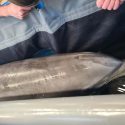
Wild tigers are disappearing from the face of the earth. Those in captivity experience a living hell. The ten tigers and tigresses confined in the wagon of the circus trainer Mario Masson had been driven mad by suffering so their case was urgent. As a result of the complaint that One Voice submitted almost a year ago following a long investigation, surveillance and infiltration, as our animal-protection association was able to offer them a life in a sanctuary the courts have decided to seize them. This shows that it is now possible to save all animals held in captivity in circuses.

A magnificent victory for these tigers trained by the circus

After months of uncertainty, this time it worked! The ‘10 tigers in 1 wagon‘, as we had called our campaign
to save them, has finally ended with them being seized! Since they were born and separated from their mothers they had known only the road, bars and the whip. On the 16 December 2020, after almost two years of investigation and indefatigable struggle, mainly behind the scenes, Tim, Leo, Tara, Yma, Oona, Dian, Rani, Ashley, Lily and Douglas (we’ve given new names to some of them) left the yard of the disused factory with its high brick walls where their trainer was hiding the wagon where they had been confined for years near Beauvais.

We organized everything: transport as an abnormal load, the places that awaited them with our partner refuge Tonga Terre d’Accueil for initial treatment but also individual dens in a sanctuary in Italy, where their journey will be over as soon as the court proceedings have ended. We are paying all the costs of looking after them. We shall need your support to do so. It’s a relief to know that they are now safe and well on the way towards the bright future that we have arranged for them.

Their living hell had lasted too long

Our investigation showed that in a year with the trainer Masson (already on the run from accusations in the Netherlands of ill-treating Betty, an elephant who has just died in suspicious circumstances) the ‘leisure park’ had never been set up. Neither before nor after the galas, as he calls them, (a circus festival here and there), nor in the Summer. But only to create an illusion in the newspapers on the day we finally published the images of the ordeal these big cats were suffering.

For the moment we must remain cautious about what to expect, but the ten survivors could be overweight or even obese because of a lack of exercise, have problems linked to inbreeding and have other health problems too.

In the wagon they were shut up with one another day after day whereas in the wild tigers are solitary creatures. Although they weigh almost 300 kg they had less than two square metres each and nothing to do. Imagine what that was like for them when in the wild they range alone over a territory of 200 square kilometres (77 square miles), when – as we know only too well at present – for humans, staying at home for weeks on end and having one’s liberties curtailed causes psychological suffering.

For animals life in a circus amounts to mistreatment

As Barbara Pompili mentioned during her long-awaited announcements on 29 September 2020, animals are kept in circuses despite captivity being incompatible with their welfare. Circuses are still not subject to any deadline: no clear plan to abolish them has been drawn up yet. However so many aspects of the regulations are infringed: non-existent paperwork, trafficking of cubs, identification by questionable microchipping, ill-treatment – with circuses there is plenty to choose from.

On Thursday 17 December, the day after this large-scale seizure, we took part in another meeting about these animals with the Ministry of Ecology. We have just established that it is now possible to rescue individual animals held captive in circuses!

We are trying to raise €150,000 to meet the initial cost of looking after Tim, Leo, Tara, Yma, Oona, Dian, Rani, Ashley, Lily and Douglas: for food, veterinary treatment and the construction of vast enclosures and dens in a sanctuary – durable enclosures, which in future will be able to welcome other animals saved from circuses. Take part!

Coronavirus vaccines: Not thanks to, but despite animal experiments

Coronavirus vaccines: Not thanks to, but despite animal experiments

Coronavirus vaccines: Not thanks to, but despite animal experiments
14.12.2020
Europe
Coronavirus vaccines: Not thanks to, but despite animal experiments
Animal testing

The animal research industry claims that animal experiments were decisive for the alleged success of the coronavirus vaccines. In fact, the opposite is true: the rapid development of COVID-19 vaccines is the latest evidence of how inefficient and unnecessary animal experiments are. One Voice’s partner in the ECEAE, the European Coalition for the End of Animal Experiments, the German charity organization Doctors Against Animal Experiments, calls for a paradigm shift towards human-relevant, non-animal technologies, so in the future the development of important drugs and vaccines can be faster, safer and more reliable.

During the last few weeks, the manufacturers of three vaccine candidates against COVID-19 reported initial successes in large-scale studies involving thousands of people. Many experts advise cautious optimism, as these are preliminary results and the exact scientific data have not yet been published. However, this does not prevent some pro-animal experiment advocates from ascribing the expected success of the vaccines to animal experiments. A closer examination makes it clear that these animal studies have neither contributed to the development nor improved the efficacy of these vaccines.

Normally, it is required by law that all drug and vaccine candidates are tested in a whole range of animal experiments before the first human test. Since the usual animal experiments are too lengthy and experience has shown that they are too unreliable for the current COVID-19 crisis, some animal experiments were shortened, skipped or carried out simultaneously with the tests on humans. “The vaccine candidates from the German pharmaceutical company BioNTech and the American corporation Moderna were tested on monkeys only after hundreds of human subjects had been injected with the vaccines. BioNTech tested four vaccine candidates on humans and, based on the collected data, opted for the now-famous vaccine candidate. This makes the results of the later monkey experiments completely obsolete« , explains Dr Dilyana Filipova, a scientist at Doctors Against Animal Experiments. The vaccine candidates were tested on mice and rats shortly before the first human trials in order to get regulatory approval for the subsequent human testing. However, a protective effect against the coronavirus infection could not be shown, since neither mice nor rats can be naturally infected with the virus.

«The fact that animal experiments were carried out because of outdated laws is no proof of their alleged indispensability and necessity.»Dre Dilyana Filipova

It is not surprising that animal experiments were not given high priority in the development of drugs and vaccines against COVID-19, because approximately 95% of all drugs that work perfectly well in animals fail in humans. Also, as far as we know today, there are no other animal species that develops the complex COVID-19 symptoms observed in humans. « While some proponents of animal experiments make fearful claims that there would be no COVID-19 vaccine without animal experiments, the very rapid development of several corresponding vaccines up to the present advanced stages was only possible because many of the otherwise common animal experiments were skipped« , says Filipova. The need for and development of animal-free, human-relevant research methods are increasing worldwide. At present, 10 human mini-organs, so-called organoids, or tissues can be infected with the SARS-CoV-2 virus, providing important information about the viral interactions with the human organism. A program to test coronavirus vaccines using multi-organ chips was recently launched in the USA. Complex computer models are also used to analyze the presumed effectiveness of repurposed drugs against COVID-19and to evaluate vaccine candidates. “Many important insights about the coronavirus were gained in these models. Ultimately, the development of the vaccine candidates celebrated today is based on such methods and patient data”, said Filipova.

Less than 1% of the public funding in Germany is invested in these modern, human-relevant methods, the remaining 99% are wasted on animal experiments. “We demand that the funding gets redeployed and that non-animal technologies become legally recognized as test methods in drug development instead of outdated animal experiments. This is the only way we will be able to develop effective and safe drugs and vaccines faster and more reliably”, says Filipova.

Resources:

End the cruel and deadly fur trade, before it causes the next pandemic

End the cruel and deadly fur trade, before it causes the next pandemic

End the cruel and deadly fur trade, before it causes the next pandemic
03.12.2020
End the cruel and deadly fur trade, before it causes the next pandemic
Fashion

Twenty countries have already acted to ban the farming of animals for their fur because it is cruel, outdated and unnecessary. In light of new evidence that fur farms can also act as reservoirs for deadly viruses, as well as create new viruses, all members of the Fur Free Alliance, which One Voice is the French representative call on all countries to ban fur farms, and we call on G20 leaders to publicly acknowledge that fur farming must end. 

Picture rights : Jo-Anne McArthur/#MakeFurHistory

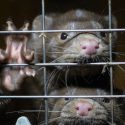
The fur trade is a deadly business. Every year, around 100 million animals suffer and are killed for their fur. The vast majority are kept on intensive fur farms. Animals including fox, mink, raccoon dogs and chinchillas are kept for their entire lives in tiny wire cages, before being killed and skinned for so-called fashion.

Not only do these battery cage systems cause immense animal suffering, they are also now proven to present a serious public-health risk. The cramped conditions, poor hygiene, stress, injuries and disease, minimal veterinary care, and lack of genetic diversity all mean that fur farms create ideal conditions for viruses to be transmitted, and for viruses to mutate creating new strains.

Hundreds of mink farms in countries including the Netherlands, USA, Denmark, Sweden, Italy, France, Greece, Spain and Lithuania have been found to have animals infected with SARS-CoV-2, the virus which causes COVID-19. On farms in Denmark, the virus has already mutated into new strains, which have in turn infected people. Disease prevention experts have expressed grave concerns, including the European Centre for Disease Control who stated in a November report that the evolution of the virus in mink could undermine the effectiveness of future vaccines in humans. The report also found that “continued transmission of SARS-CoV-2 in mink farms may eventually give rise to other variants of concern”.

Governments cannot respond to this crisis simply by culling millions of animals and then allowing farmers to return to business as usual. The appalling conditions on fur farms make them a ticking time bomb for pandemic disease risk. Disease transmission experts warn that it is a matter of when, and not if, another deadly virus hits if we continue to keep animals in conditions that push them beyond the limits of their physical and psychological endurance.

Twenty countries have already acted to ban the farming of animals for their fur because it is cruel, outdated and unnecessary. In light of new evidence that fur farms can also act as reservoirs for deadly viruses, as well as create new viruses, we call on all countries to ban fur farms, and we call on G20 leaders to publicly acknowledge that fur farming must end.

#StopDeadlyFur

The FFA is bound by law to the General Data Protection Regulation (GDPR).

Cambodia, Russia, United States: macaques in the hold to laboratories

Cambodia, Russia, United States: macaques in the hold to laboratories

Cambodia, Russia, United States: macaques in the hold to laboratories
30.11.2020
International
Cambodia, Russia, United States: macaques in the hold to laboratories
Animal testing

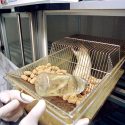
Warned by a whistleblower, with our partner Action for primates, we fly to the rescue of long-tailed macaques, transported from Cambodia to the United States via Russia in the holds of AirBridgeCargo aircraft. Many airlines have already stopped participating in this trade of suffering. Let’s write to the Russian company asking them to stop transporting monkeys to laboratories!

Action for Primates and One Voice have been contacted concerning two shipments of monkeys flown during November by AirBridgeCargo, a Russian cargo airline and part of the Volga-Dnepr Group. Our source at a Moscow airport stated that the monkeys, destined to be used in experiments, were flown as cargo on flights RU/ABW748 and RU/ABW738 on 2nd and 23rd November from Cambodia to Sheremetyevo Alexander S. Pushkin International Airport in Russia and then transfered onto flight RU/ABW701 to the USA, a total distance of over 15,000 kilometers.

We are informed that the monkeys were imported by U.S companies Envigo and Charles River, both major importers and suppliers of non-human primates for research. Only recently, a plan to expand Envigo’s primate breeding facility in Alice, Texas was reported in the news media.

Cambodia is a major exporter of long-tailed macaques to laboratories, primarily in the USA and Japan. Between 2017-18, it exported 15,530 monkeys for research. During air transportation, monkeys are packed into small crates and travel in the cargo hold. They will suffer stress and anxiety as they are forced to endure extremely long journeys around the world.

As a result of public concern and opposition, many airlines and cargo carriers, including American Airlines, British Airways, United Airlines, South African Airways, Delta Airlines, Eva Air, Air Canada and China Airlines, made the decision to end their involvement in the cruelty and suffering caused by the international trade in non-human primates by refusing to transport these animals destined for the research industry.

Please take action by sending polite E-mail to AirBridgeCargo urging it to join the other airlines, and stop transporting non-human primates.

E-mail addresses for AirBridgeCargo offices around the world can be found here: https://www.airbridgecargo.com/en/page/35/office-locator

The AirBridgeCargo Moscow Head Office:
E-mail: service.rus@airbridgecargo.com
E-mail: info@airbridgecargo.com

UK office:
E-mail: AOG@volga-dnepr.co.uk

1000 mink slaughtered at the Eure-et-Loir fur farm because of cases of Covid-19

1000 mink slaughtered at the Eure-et-Loir fur farm because of cases of Covid-19

1000 mink slaughtered at the Eure-et-Loir fur farm because of cases of Covid-19
22.11.2020
Eure-et-Loir
1000 mink slaughtered at the Eure-et-Loir fur farm because of cases of Covid-19
Fashion

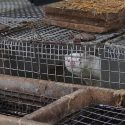
The government has just announced that the 1000 mink at the Eure-et-Loir fur farm, kept in shocking conditions as we revealed in images in 2019 and 2020, have just been slaughtered. In fact cases of Covid-19 had been detected amongst the animals. Not yet amongst the owners and the employees. We are calling once again for the immediate closure of the four remaining fur farms in mainland France!

For years, with the help of images and expert opinion, we have repeatedly denounced the horror that mink experience on fur farms, be they in France or in other countries, in addition to the considerable risks that American mink pose to the biodiversity of their European cousins. We have mobilized our fellow citizens, submitted complaints against several farms, written to the prefecture of Eure-et-Loir and to the Ministry of Ecology and succeeded in getting many of them closed down, and we represented the fur group during discussions with the Ministry of Ecology in 2019.

The danger of mink farms for a potential vaccine

In the last few weeks we have also raised awareness of the danger of the SARS-CoV-2 virus on mink farms in the Netherlands, Denmark, Italy, Sweden, Greece, Spain and even in America being transmitted by staff to the mink. The conditions in which the slaughtered mink were kept favoured the spread of the virus among animals, where it mutated, potentially making any vaccine for humans ineffective.

Immediate closure of the four mink farms!

The Minister of Ecology has announced that they will close over the next five years. In view of the latest developments that is much too long: they must be closed down immediately! And in particular breeders must not be allowed to resume exploitation of these unfortunate creatures in six months or a year. Our complaint against this type of animal-farming is ongoing and we have recently obtained a ruling that the Montarlot farm will not be allowed to expand.

Muriel Arnal, Chair of One Voice, declares: «We have submitted a complaint against the breeders in Eure-et-Loir for the cruelty perpetrated on the mink on their farm. So much suffering to get as far as this! No more mink must be born on this farm, nor on the other three. It is high time to rethink our relationship with wild animals.»

Translated from the French by Patricia Foley

No more persecuting animals during lockdown!

No more persecuting animals during lockdown!

No more persecuting animals during lockdown!
21.11.2020
No more persecuting animals during lockdown!

Just after we went back into lockdown numerous prefectoral decrees began to be published. One Voice is making urgent applications to get around twenty of them suspended in the departments concerned in order to save as many animals as possible.

The day after the second lockdown began the Ministry of Ecology authorised many prefectures to grant the wish of organised groups of hunters to continue their massacres in forests, whilst those same forests are out of bounds to those who wish to exercise in the fresh air and amongst nature, to families and even to individuals picking mushrooms. Apparently the health regulations don’t bother them. Nor does the fate of their neighbours and friends.

But the « regulated hunting » mentioned, in contrast to « leisure hunting », has no meaning in French law: only the latter exists. It is only thanks to the ceaseless work of animal activists and to public support that it can be stopped.

In fact the decrees we are challenging are problematic because as usual the arguments put forward by the hunters and reiterated by the prefectures, in particular the « damage » said to be caused by animals, are fallacious and totally questionable.

We are applying for the decrees to be set aside and for hunting to be suspended in the following departments. The hearing dates will be added as soon as we hear from the various administrative courts (AC).

8 – In Ardennes, hearing at 14.00 on 01/12/20 at the Châlons-en-Champagne AC

16 – In Charente, hearing at 15.30 on 9/12/20 at the Poitiers AC

24 – In Dordogne

32 – In Gers, hearing at 15.00 on 9/12/20 at the Pau AC

34 – In Hérault

37 – In Indre-et-Loire

41 – In Loir-et-Cher, hearing at 10.00 on 4/12/20 at the Orléans AC

44 – In Loire-Atlantique, hearing at 14.00 on 26/11/20 at the Nantes AC

49 – In Maine-et-Loire, hearing at 14.00 on 26/11/20 at the Nantes AC

53 – In Mayenne, hearing at 14.00 on 26/11/20 at the Nantes AC

54 – In Meurthe-et-Moselle

57 – In Moselle

62 – In Pas-de-Calais, hearing at 14.00 on 27/11/20 at the Lille AC

64 – In Pyrénées-Atlantiques

66 – In Pyrénées-Orientales

68 – In Haut-Rhin, hearing at 11.00 on 25/11/2020 at the Strasbourg AC

70 – In Haute-Saône

80 – In Somme, hearing at 15.30 on 3/12/2020 at the Amiens AC

81 – In Tarn

87 – In Haute-Vienne, hearing at 14.30 on 25/11/20 at the Limoges AC

88 – In Vosges

90 – In Belfort, hearing at 10.00 on 27/11/2020 at the Besançon AC

Translated from the French by Patricia Fairey

Airline cuts ties with cruel primate trade

Airline cuts ties with cruel primate trade

Airline cuts ties with cruel primate trade
15.11.2020
International
Airline cuts ties with cruel primate trade
Animal testing

In May 2020, Action for Primates joined with Animal Rights Florida Foundation (ARFF) and One Voice to alert our supporters about a pending shipment of monkeys from Mauritius to the US. As many as 1,200 monkeys were to be exported for use in experiments or toxicity (poisoning) testing. We urged people to ask Skybus Jet Cargo, who had been hired to fly the monkeys on the extremely long journey, to reject the shipment. The response we received to our action alert from people around te world was overwhelming, demonstrating the widespread public concern there is on this issue. However, despite this Skybus did not respond to our concerns, so we feared that the shipment had gone ahead as planned.

This week, we learned of a breach of contract lawsuit filed against Skybus Jet Cargo by a company called International Logistics Support. When we read the complaint, it was clear that the lawsuit was about the shipment of monkeys in our action alert.

Skybus Jet Cargo apparently had cancelled the shipment, in part because of « certain political activist organizations« . On behalf of the monkeys, we are happy that Skybus chose not to get involved in the cruel primate trade.
The surprise victory reminds us of a quote attributed to Mahatma Gandhi: « You may never know what results come of your actions, but if you do nothing, there will be no results. » We are grateful to everyone who contacted Skybus Jet Cargo in response to our action alert!

The court files also revealed that Matthew Block, an infamous US primate dealer, is an owner of International Logistics Support. Matthew Block, founder of Worldwide Primates, has a felony conviction from 1993 for smuggling orangutans, known as the ‘The Bangkok Six’ case, that left three orangutans dead.

Further, in 2018, it was reported that Block pleaded guilty to a federal charge of intentionally conveying false information through the mail, in an attempt to frame animal campaigners in Florida. Block accepted five years of probation and agreed to pay $14,872 for the cost of the police investigation.

One Voice v. mink farm in Montarlot: victory!

One Voice v. mink farm in Montarlot: victory!

One Voice v. mink farm in Montarlot: victory!
10.11.2020
France
One Voice v. mink farm in Montarlot: victory!
Fashion

The hearing held on 13 October in the Administrative Court of Besançon resulted in a victory for us: authorisation to expand the farm in Montarlot issued by the prefecture of Haute-Saône was withdrawn. Now is not the time to expand but for the last four fur farms in France to be closed down immediately. Living in a cage, being gassed for the ‘needs’ of the fashion industry or because of a pandemic… Not even one more mink must be born on these fur farms.

The decree issued by the Prefect of Haute-Saône in December 2017 authorising the breeder to increase the capacity of his fur farm from 2000 to 7700 animals was set aside. The submissions of the French Association of Mink Farmers were deemed to be inadmissible.

A timely decision

In addition to the evidence that we gave to the court, showing that the prefectoral decree was not in compliance, now is a good time to close down these fur farms, in France as elsewhere.

«I have asked the relevant departments of the Ministry to inspect all the farms in France where American mink are bred. I shall take the necessary steps if failures or irregularities are found.» Barbara Pompili, the Minister of Ecology, responding to our concerns about mink farms in France in a letter dated 27 October

Mink on fur farms worldwide are victims of Covid19 too and the virus mutates in them, risking making any future vaccine ineffective in humans. Therefore urgent action must be taken before the problem arises in France.

We are delighted at this judgement and are looking forward to seeing all fur farms close down before the year is out. Political decisions must be acted upon, even if it means speeding up the timetable previously announced.

Covid-19 on mink farms: an absolute massacre

Covid-19 on mink farms: an absolute massacre

Covid-19 on mink farms: an absolute massacre
06.11.2020
Europe
Covid-19 on mink farms: an absolute massacre
Fashion

Mink on fur farms are spreading SARS-CoV-2 and playing a part in the worrying mutation of the virus. The large-scale slaughter has begun. Denmark, in particular, has decided to gas all its animals as soon as possible. With cases of infection increasing exponentially we are asking our government not to wait until the last minute before taking the problem in hand and to close down the last four French fur farms in order to bring the horror to an end.

It’s a bloodbath. Denmark, with its 1137 fur farms the world’s leading producer of mink pelts, announced, on Wednesday 4 November, the « total destruction » of its « stock ». That means between 15 and 17 million animals will be gassed. The massacre has already begun because tens of thousands of mink were slaughtered at the beginning of the Summer as soon as the first cases of animals with SARS-CoV-2 had been identified on three farms in the north of Jutland. Since then the epidemic has continued to spread on farms in that region and « measures » to try to contain it have intensified: more and more animals, both sick and healthy, have been killed in all the establishments infected by Covid-19 and those within a radius of 7.8 kilometres.

There won’t be a single one left

On Wednesday 4 November Denmark changed up a gear: all mink were to be killed as quickly as possible « as a precautionary measure ». This was a radical decision that the Prime Minister, Mette Frederiksen, justified at a press conference by explaining that the virus had mutated in those animals and had been transmitted to twelve people, with reduced sensitivity to the antibodies. Against this background she said she feared that the development of vaccines worldwide would become much less effective or even useless.

Ils auraient dû être gazés pour la vanité de l’industrie de la mode, ils l’ont été pour cause de #COVID19… Au Danemark, la réalité crue des élevages de visons pour la fourrure s’étale sous nos yeux: des milliers de cadavres, des vies annihilées. L’horreur totale! #StopFourrure pic.twitter.com/TgsLxSz4wB

— One Voice (@onevoiceanimal) November 2, 2020

An international problem

Although the tragedy unfolding in Denmark has hit the headlines because of its scale, it is not the first. Since the beginning of the pandemic numerous countries in Europe, including outside the European Union, have been faced with the problem of the spread of SARS-CoV-2 in farmed mink, probably infected by people coming into contact with them in the course of their work. The first cases were detected in the Netherlands as early as April 2020. And there too drastic measures were taken to counter it, with 2,723,904 mink being killed. At the same time the USA, Spain, Sweden and Italy also recorded their toll of sick and dead animals, often resulting in a policy of slaughter.

And in France?

It can’t go on! Faced with the extent of this mass slaughter we can’t just sit back and do nothing! Will the images of corpses heaped up by the million at least make the public and governments aware of the horror of the fur industry? These unfortunate mink were in any case sentenced to die sooner or later in the same ignoble way and to end up transformed into coat collars or other clothing. We shall continue to denounce the ordeal inflicted on these animals, sacrificed for the whims of the type of fashion that has no conscience. We have conducted repeated investigations, the last of which goes back to August, in support. The urgency of the health situation on the borders of France today cannot be overstated. Will this argument accelerate awareness? We are counting on the State to arrange for tests to be carried out and for these establishments to be closed down immediately. Both public health and ethics ordain that not even one more mink should be born in France.

Translated by Patricia Fairey

Victory! Badgers in Jura will be not killed in Spring nor next Summer!

Victory! Badgers in Jura will be not killed in Spring nor next Summer!

Victory! Badgers in Jura will be not killed in Spring nor next Summer!
05.11.2020
Jura
Victory! Badgers in Jura will be not killed in Spring nor next Summer!
Wildlife

The provision for an additional period for hunting badgers has just been removed from the decree published by the prefecture of Jura following our complaint to the Administrative Court in Besançon! It is a great victory, which has come in good time to prevent badgers being slaughtered!

Photo: Nathalie Hausser CC BY-NC-ND 2.0

The additional period for hunting badgers allows the authorized hunting season to be even longer and bloodier. It is therefore extremely satisfying to know that the tiny new-born badger cubs and their families will benefit from four months’ respite and that many will thus be spared.

There is no valid reason for controlling badgers in this way in France any more than there is in the UK and elsewhere in Europe where hunting them is banned.

«The badger is listed in Appendix III ‘protected fauna species the exploitation of which is regulated’ of the Bern Convention and is legally protected in most European countries: the UK, Belgium, Netherlands, Luxembourg, Ireland, Italy, Portugal, Greece, Denmark.»Statement from One Voice legal complaint (extract)

In addition our legal team pointed out a procedural irregularity and added that « no information is provided on the state of the populations of badgers in the department of Jura nor on the impact of the killings on these populations. »

So why go after these sociable and peaceful animals? Why dig deep trenches in the woods to the detriment of nature? Our investigation involving infiltrating hunters who shoot badgers after using dogs to flush them out from their setts at the start of this additional period in the Hauts-de-France (the northernmost region of France) had been broadcast in May 2020 and shown just how cruel this type of hunting was.

The Prefect of Jura made it quite clear in his response: it was because we had applied to have his decree annulled that he withdrew it.

«On looking closely at One Voice’s application I realised that the concept note made available to the public before the decree was signed on 26 June 2020 did not meet all the requirements of Article L. 123-19-1 of the Environment Code in that it did not sufficiently explain the objectives and the context relating to the envisaged start of an additional period of badger hunting. I have thus decided, even though the inadequacy of this document could be likely to deprive the public of a guarantee, to delete from my initial decree of 26 June 2020 the provision setting up an additional period for hunting badgers underground from 1 May to the general opening of the hunting season.»Statement by the Prefect of Jura (extract)

Please help us gain other victories by signing and sharing our petition #JAimeLesBlaireaux!

Translated by Patricia Fairey