Let’s stop the ibex in Bargy from being massacred! Killing shots have been authorised in Haute-Savoie since Spring

Let’s stop the ibex in Bargy from being massacred! Killing shots have been authorised in Haute-Savoie since Spring

Let’s stop the ibex in Bargy from being massacred! Killing shots have been authorised in Haute-Savoie since Spring
30.04.2022
Haute Savoie
Let’s stop the ibex in Bargy from being massacred! Killing shots have been authorised in Haute-Savoie since Spring
Wildlife

Alongside its partners, One Voice has filed emergency interim proceedings against the prefectural decree targeting the Bargy ibex. The hearing will take place in Grenoble on 11 May.

Last Friday we filed a joint plea with our partners against a Prefectural decree that will allow heavy and indiscriminate culling shots on ibex in Haute-Savoie, from this Spring. The emergency interim hearing to obtain the suspension will take place at the Grenoble Administrative Tribunal on 11 May at 10am.

Under the pretext of fighting against brucellosis and under pressure from local reblochon producers, the Haute-Savoie Prefecture has signed a document that allows, until 2030, twenty ibex to be killed each year, whether they are infected or not, to then be analysed post-mortem. All of this to the disappointment of the 84% who are against this decree proposal… Massacring Alpine Ibex (Capra ibex) that are in good health is completely grotesque when the species is protected on an international level and while several hundreds of individuals live in the Bargy mountains.

Legal actions repeated year after year!

How many legal actions will be necessary to make it clear that the survival of Bargy’s ibex is inherent to that of the ecosystems? Especially as it has been shown that nine ibex in ten are not diseased… We must immediately put a stop to this proposed massacre!

It is not the first time that we are attacking decrees to defend Bargy’s ibex. We have increased our actions since the first case in 2012, then in 2018 as well as in 2019 to save these majestic mountain inhabitants.

An interim suspension and an annulment appeal filed with our partners

We are reiterating our process, this time shared with Animal Cross, ASPAS, AVES, FNE Auvergne-Rhône-Alpes, FNE Haute-Savoie, and the LPO nationale, hoping to be heard.

The absolute priority is to preserve all ibex in good health in the Bargy mountains, which is 96% of the current population. Shooting them when they are not unwell is as absurd as flying a helicopter dozens of times above birds’ nests which are becoming rare and are extremely vulnerable. Protected birds of prey are in serious danger with these irresponsible practices. Humans purposefully too often put their selfish interests before those of animals and nature, which are necessary for their own survival.

In this critical situation, the urgent applications judge has set the hearing for 11 May. While waiting for it, our partner FNE Haute-Savoie has launched a petition that we invite you to sign.

Translated from the French by Joely Justice
Adaptive hunting: threatened species under hunters’ fire. One Voice is at the State Council on 11 May for the birds.

Adaptive hunting: threatened species under hunters’ fire. One Voice is at the State Council on 11 May for the birds.

Adaptive hunting: threatened species under hunters’ fire. One Voice is at the State Council on 11 May for the birds.
28.04.2022
France
Adaptive hunting: threatened species under hunters’ fire. One Voice is at the State Council on 11 May for the birds.
Other campaign or multi-campaigns of One Voice

Elegant turtledoves, majestic Western capercaillies, fierce Eurasian curlews, and even black-tailed godwits, greylag geese, and common pochards better watch out!

Elegant turtledoves, majestic western capercaillies, fierce Eurasian curlews, but also black-tailed godwit, greylag geese, and common pochards, just have to behave! With the management principle of adaptive hunting, hunters are taking over again and have full freedom to kill animals that are in decline. The hearing at the State Council will take place on 11 May 2022 at 2pm.

Edit from 14 May 2022:

The decision should be returned around three weeks after the hearing, so in the first week of June.

These birds in our countryside and mountains have one thing in common: they are all on the IUCU red list of threatened species in France. Classified as vulnerable, in decline, or in danger, their population continues to decline. However, hunters, spurred on by the sole pleasure of killing them at point-blank range, continue to make fun of them. To destroy biodiversity with no shame, they champion the implementation of an adaptive management of species. An environmental aberration.

The principle is simple. Adaptive management allows them to “regularly adjust harvesting of species according to the conservation status of their population and habitat, based on scientific knowledge relating to these populations”.

Simply, this management relies on a simple feedback system. Who are they kidding?

The complexity of monitoring species

We know the method of monitoring species is extremely complex and requires ambitious ways of collecting data, putting it together, analysing it, and finally, reacting. Who will take care of this? Hunters themselves and their ‘Chassadapt’ app? This app, presented as a way of controlling specimens and improving knowledge of species, relies on hunters’ mere statements. This is just another aberration.

A system extended to non-hunted species

The adaptive management system on the 90 (!!!) hunted species in France should have been put in place by the biodiversity plan in July 2018. But insatiable hunters asked to apply it to non-hunted species. “Not only does hunting have less impact on fragile hunted species, but a species that is no longer hunted is still doomed ,” Willy Schraen, President of the Fédération nationale des chasseurs [National Federation of Hunters], assures in Connaissance de la chasse [Hunting Awareness] magazine, dated September 2018, without even blushing. Such cynicism is chilling and we uphold the opposite view: let’s stop killing animals, especially when they are already in decline.

However, adaptive management has been included in the law of 24 July 2019. And if it is supervised by a committee of scientific experts (the GEGA) who are responsible for issuing recommendations, these will not be followed by the government. The GEGA has also recommended a harvest quota of zero individuals on turtledoves and Eurasian curlews. With no effect.

Victories…

On 10 September 2020, One Voice and the LPO [League for the Protection of Birds] won their appeals filed before the State Council to get the decree authorising the massacre of turtledoves, already on the cusp of extinction, suspended. On this date, 6,368 individuals had been killed. The decree will be annulled on 30 December 2021. On 17 December 2020, the State Council ruled in the LPO’s favour, during an appeal filed against a decree allowing the hunting of 6,000 Eurasian curlews in 2019-2020. This decree had already been urgently suspended by the high court in August 2019.

Yes but…

The fight for the birds continues. We cannot let them pass this unjust law that gives full power to hunters with no regard for biodiversity. We have filed a plea before the State Council against adaptive management in hunting: the executive decree and the list of species concerned. The hearing at the State Council will take place on 11 May 2022 at 2pm.

Translated from the French by Joely Justice
Mina dead at the start of 2022 and Kamala taken abroad. But what are the authorities doing?!

Mina dead at the start of 2022 and Kamala taken abroad. But what are the authorities doing?!

Mina dead at the start of 2022 and Kamala taken abroad. But what are the authorities doing?!
27.04.2022
France
Mina dead at the start of 2022 and Kamala taken abroad. But what are the authorities doing?!
Exploitation for shows

Elephants exploited in French circuses for decades, complaints about not knowing what to do with them, an eventual law that just generates cynicism, and to what outcome? These great females are put into the worst places under stress and the others die in lorries without ever having lived a peaceful life… Rumours have been circulating about Mina and Kamala, the elephants kept by the Medrano Circus. We are requesting factual information and accounts from those in charge.

Social networks have related alarming information on one of the two elephants being kept by the Medrano Circus settled in Aimargues and whose opening order we have tried to have cancelled : Mina, who was presented to us as being in good health by both the establishment keeping her and by the DDPP services (Prefecture) within the framework of the proceedings taking place before the Rennes Administrative Tribunal, was in fact dead and had been for several months! And Kamala had re-joined the Skanda Vale Centre in the United Kingdom that welcomed Lechmee. A Centre which we had warned the Ministry of Ecology about since 2018 so that they did not let Maya be sent there because it is in no way an acceptable place for elephant welfare. All of this while Elephant Haven, in France, is an available, adequate, and welcoming sanctuary!

«This is a massacre for circus elephants and, at the moment, the Ministry is getting away with it unscathed and silently. It is scandalous.»Muriel Arnal

A law giving the illusion of action

The law on the mistreatment of animals passed in November 2021 is a huge farce for the animals being kept in circuses, especially for the elephants who are dying one after another or are being sent abroad. Because only travelling circuses are targeted, leaving those who want to settle down and to thus continue to exploit the animals at their leisure, as is the case with the Medrano circus. But this law has also still allowed the breeding of big cats for years… in addition to the fact that no application decree has yet been issued.

The authorities must show their accounts!

We are asking for the accounts and factual findings from the Côtes-d’Armor Prefecture.

«It is surprising to say the least that your services can continue to uphold before a court that the animals are in perfect health and kept in excellent conditions even when they are dead or have been given away. This at the very least reflects a dysfunction in your control tasks.»Extract from One Voice’s letter to the Côtes-d’Armor Prefecture (DDPP)

The Association is particularly worried about Mina’s fate, who is now deceased. We would like to understand the circumstances of her death and have access to all of the related documents, especially the veterinary autopsy report carried out and the rendering certificate. With regard to Kamala, the Association is asking for the CITES or CIC document and the handover date.

We have also written to the Rennes Tribunal, because if it turns out that Mina is indeed dead and Kamala has been given away in England, our complaint could be considered as ‘unfounded’ and therefore do absolutely nothing (as happened for the Barbary Macaque kept by the Poliakovs)… Because instead of ruling on problems at the time of the complaint, justice abandons legal proceedings as soon as the animals die from the consequences of the mistreatment they have received… and those who inflicted it on them get away with it. Incidentally, the Medrano Circus boasts, after so many years of cracking the whip and wielding an ankus, about now putting on a show without animals.

Finally, and as always (equally for Lechmee), the exploiters felt that the tide was turning and divested themselves of the elephants to avoid a withdrawal being imposed by the law after more than five years of One Voice’s legal proceedings.


Our incessant campaigns — proceedings, making the public aware, and pressure on the authorities with our investigation footage in particular — got the better of the resistance from the civil service, but too late for Mina who is most likely dead… We are doing all we can so that those responsible will pay.

Translated from the French by Joely Justice
Fighting for transparency should not be a full-time job

Fighting for transparency should not be a full-time job

Fighting for transparency should not be a full-time job
26.04.2022
Fighting for transparency should not be a full-time job
Animal testing

When we try to access inspection reports for animal testing laboratories, the civil service often resists. However, the rulings have followed in quick succession in support of transparency permitted by law, which is not supposed to be optional. But sometimes there is not such good news: recently, the Nice Tribunal authorised the Alpes-Maritimes Prefecture to hide the identity of a laboratory… The law remains subject to interpretation and the fight for transparency becomes a tedious and long-term job.

Since last Autumn, almost thirty rulings in around twenty administrative tribunals have maintained and confirmed that the animal testing laboratory inspection reports are administrative documents that are available to the general public.

In one of the latest examples, the Clermont-Ferrand Tribunal had given this ruling for the Allier, Haute-Loire, and Puy-de-Dôme Prefectures. These rulings can only exist thanks to persistence being maintained in the long run.

In fact, administrations’ customs are often to play the silent card, while hoping that those who address them do not know about the existence of the Commission for Access to Administrative Documents (CAAD [Commission for Access to Administrative Documents — CADA), or do not have the resources, in the favourable opinion of the CAAD, to appeal to the administrative courts, the proceedings of which can take more than a year. And if this does finally end up before the court, the most likely case is still that a layperson does not know how to defend their right of access convincingly, while administrations can put confidence in their legal services to argue their refusal in terms that can be heard by a court.

Documents that should already be public

Drafting these pleas (and gathering the knowledge necessary to argue them correctly) is time-consuming, but sometimes we get a result. While prefectures claim that publishing inspection reports would be risky for the laboratories concerned, who would then be targeted by attacks from animal activists, the majority of the courts are not fooled. The prefectures also claim that animal testing in itself is so frowned upon by the general public that it would be absolutely necessary to conceal the identity of the laboratories. But again, the courts do not believe this.

It must be said that the vast majority of these laboratories do not belong to Sanofi, Royal Canin, Marshall BioResources, or other chains. In fact, the majority are public establishments – universities and other higher education or professional training establishments, but also research teams from CNRS, Inserm, INRAE, or even military laboratories… Why would we not have the right to know where our money is being used in these research centres? And why do we not have a right to know when these centres break the law with public money; with our money?

Transparency on show

Numerous laboratories incidentally signed a ‘transparency charter on the use of animals for scientific and regulatory purposes’ last year. It seems that the term ‘animal testing’ does not really attract public favour – but recognise that a charter that does not commit a research centre to much other than advertising animal testing and its regulation is a pretty clever find. This allows the general public to believe that laboratories have nothing to hide, while the civil service does what it can so that no really substantial information can be leaked.

Even those who are looking to whistle blow internally can find themselves without a job while nothing is done to resolve dysfunctions. We hope that this type of situation will disappear with the protection of whistle-blowers permitted by the law adopted unanimously by the Senate on 16 February.

Disillusions

For now, with several tribunals, case files, and rulings, everything does not always go the way that we would hope and there can be some disappointments and issues. In December, despite several more favourable decisions already released by other tribunals, the Lyon Administrative Tribunal ruled that the security risks justify the names of the establishments being hidden on the inspection reports. However, we have already found information online on animal testing at the Claude Bernard University – Lyon 1, Inserm’s P4 Laboratory, and the Charles River websites, which are not hiding that they are carrying out animal testing.

More recently on 22 February, the Nice Administrative Tribunal ruled that it was possible to hide the name of only one of the establishments concerned by the requested reports, insofar as this establishment houses an ‘A3’ animal facility which handles the rabies virus and a ‘P3’ zone which handles feline coronavirus[1]. According to this ruling, due to the presence of dangerous pathogens, revealing the name of the establishment would be equivalent to creating a security risk. Just by typing ‘A3 animal facility’ into a search engine you will quickly come across construction websites that show where they have built such animal facilities, even on the websites of establishments that themselves indicate that such an animal facility is present on their premises.

Furthermore, these pathogens directly concern viruses present in the wild and have a direct repercussion on the health of wild animals and on human populations – not to mention keeping primates and other wildlife animals in numerous laboratories, or even the inherent risks in handling pathogens regardless of the precautions taken (in the event of an escape or accident) The Environmental Code allows this kind of information to benefit from a right to extensive access for the public. This is what was argued in the case file sent to the tribunal and could have swayed the magistrates towards an even more favourable decision for our cause. But this is not discussed in the decision made by the tribunal, without it being known if this oversight is voluntary or not.

[1] The A3 and P3 acronyms refer to levels of biosafety (from 1 to 4). The higher the level, the bigger the constraints are to avoid escapes and external contaminations as much as possible.

The fight does not end there

Despite these two more nuanced decisions, since autumn, more than twenty rulings from other tribunals have established that the inspection reports for the animal testing laboratories can be communicated by hiding only the names of the staff from the establishments and the veterinary inspectors. These rulings are the result of an in-depth work that we do not see on the ground and which we hardly hear spoken about on social networks – but it is work that requires a lot of time, energy, and money to highlight what is happening and to counter the prevailing obscurity when it comes to animal exploitation.

Many case files still do not give rise to a ruling, and we are filing other requests to obtain the documents that will allow us to better understand the situation, better inform the public, and inform on unjustifiable, or even illegal, practices. As long as animal testing exists, we will fight to demand transparency, to demand public powers to invest greatly in research methods that do not involve animals, and to oblige laboratories to exclusively use these methods. We will never stop fighting for the animals who are victims of this injustice.

Translated from the French by Joely Justice
Animals still under fire in Gard. One Voice is appealing to the Nîmes Administrative Tribunal; the hearing is set for 3 May

Animals still under fire in Gard. One Voice is appealing to the Nîmes Administrative Tribunal; the hearing is set for 3 May

Animals still under fire in Gard. One Voice is appealing to the Nîmes Administrative Tribunal; the hearing is set for 3 May
23.04.2022
Gard
Animals still under fire in Gard. One Voice is appealing to the Nîmes Administrative Tribunal; the hearing is set for 3 May
Wildlife

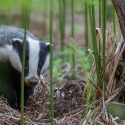
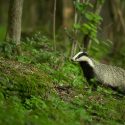
Foxes, badgers, wild boars, deer, roe deer, and fallow deer are targeted by the Gard Prefecture. One Voice is fighting the decree of 21 February 2022. The hearing is on 3 May.

Foxes and badgers as well as animals such as wild boars, deer, roe deer, and fallow deer are targeted by the Gard Prefecture. On 21 February, the Prefect ordered the Wolfcatcher Royals in particular and other sworn officers to kill or capture them. Foxes are targeted indefinitely; other animals will be from 24 February to 11 September 2022, so for a six-month duration, in a period when hunting them is supposed to be banned. One Voice is therefore fighting against this decree that gives free rein to hunters and the like. A plea and an emergency interim suspension have been filed against this bureaucratic hunt; without it, blood will flow in the Gard scrubland. The hearing will take place at the Administrative Tribunal on 3 May at 2pm.

Edit from 14 May 2022:

On 9 May 2022, the urgent applications judge rejected our request to suspend the decree. We are now waiting for the date of the hearing for the annulment appeal that we have also filed.

The reasons put forward to justify killing animals by the Gard Prefect are always the same: traffic accidents and property damage for some, and potential diseases transmissible to humans for foxes.

Foxes, pests: really?

But we have known for a long time and thanks mainly to official reports that foxes are not more dangerous than dogs that are used to life in the great outdoors. When it comes to alveolar echinococcosis, prevention campaigns can avoid contamination without issue (you must not eat fruits that could have been infected by fox excrement and therefore pick them from up high). When it comes to Lyme disease, the presence of foxes is, on the contrary, a benefit: when they are present in an area, they avoid the spread of this disease by attacking the hosts of ticks: voles. They are also, at the same time, at the root of a decrease in the use of pesticides on crops. Red foxes suffer from an unjustified bad reputation which sticks to them and results in more than half a million deaths each year in France (see our 2017 report).

Hunters have an insatiable appetite for spilt blood

Animals considered as game, such as badgers, mercilessly dug out (as are foxes), wild boars, deer, roe and fallow deer, hunted in the autumn and winter every year, are only left in peace for the breeding season and the upbringing of their young.

Hunters cannot, under the pretext of wanting to carry out their bloody hobby all year round, dictate what they want to the prefectures under false pretences! Saying that animals are a traffic hazard or cause damage is nothing more or less than a refusal to admit that these are man-made roads that cross through their forests, and it is not the animals that are crossing our roads… Or that the farmers cannot bear a badger’s family sett, used by other animal species too, and that badgers are therefore a source of wealth for ecosystems. Instead of this, ‘damage’ is stated, often without figures to back it up, and the authorisation to get the guns out is established. As if the only solution to our small discomforts is always to kill.

A prefectural decree that we are contesting for many reasons

These animals, targeted by this decree of 21 February 2022, are victims of a wrongful trial.
This decree must be suspended as a matter of urgency; if not, thousands of animals will perish (the authorised number is unlimited)! The Wolfcatcher Royals, sworn agents of the French Office of Biodiversity (Office français de la biodiversité – OFB) and of the Departmental Federation of Hunters in Gard can, by the way, enlist the services of whomever they want, from a lambda hunter, for example.

Additionally, for years, the same arrangements have been renewed for a duration of six months, so that the ‘demolition’ is carried out throughout the whole year. It is therefore no longer about an exceptional measure arranged in order to respond to a localised problem in time and space (which is authorised by the Environmental Code), but about a true transfer of power given, for years and throughout the whole year, in the whole department to those concerned.

The massacre has already begun. There is therefore an urgency, especially as the public has not been consulted. The hearing will take place at the Nîmes Administrative Tribunal on 3 May.

Translated from the French by Joely Justice
Eleven animals seized from Kid Bauer in the Saint Léger Park: the investigation continues!

Eleven animals seized from Kid Bauer in the Saint Léger Park: the investigation continues!

Eleven animals seized from Kid Bauer in the Saint Léger Park: the investigation continues!
22.04.2022
Saint Leger
Eleven animals seized from Kid Bauer in the Saint Léger Park: the investigation continues!
Exploitation for shows

On Wednesday 20 April a confiscation took place at the Saint Léger Park as part of our complaint for mistreatment. An extensive inspection was arranged by legal authorities on the property and with staff and also carried out animal by animal with the help of veterinarians. We have organised for the animals seized to be cared for as an outcome of this inspection and entrusted to us.

We could not say anything about it on D-day, especially as nothing was guaranteed until the last minute. But now that the Beauvais public prosecutor’s department have spoken, we can tell you that eleven individuals have been seized and put under One Voice’s protection by the deputy public prosecutor who led operations. Two muntjacs (tiny deer), a porcupine, a swan, the two macaws (parrots), four tortoises, and the python left the Saint Léger Park as soon as the decision was made and the papers were signed.

Eleven animals are safe with our partners

Arriving on site in the refuge of our partners, the animals were first of all placed in quarantine. They will soon be able to get comfortable in much bigger and more secure enclosures than at the Saint Léger Park where, for example, the tortoises were frequently trampled on, as evidenced by the signs reading ‘do not step on the tortoises’ which we took photos of several times over the years, and there were low fences surrounding the space reserved for them. As for the swan, its wings were clipped which prevents it from flying away if it were to be attacked…

The animals still on the premises

The lions and tigers from this settled circus are subjected to training and must perform in shows each day that the park is open to visitors. Members of the public are invited to enter the wild cats’ cage… not to mention the tiger cubs exhibited and passed from one person to another at the end of the show… The lemurs as well, who were filmed a few months ago trying to climb on children, licking hands, risking being trampled on… We will never give up on them. And this is not a persecution of the park owners! We have nothing against them, but a settled circus cannot confine wild cats to a life in a lorry. Who can still believe that that is an acceptable habitat for them? It is clearly the animals who pay the price.

Either way, it is about a provisional placement. We will therefore obviously wait for the end of the investigation and to obtain the magistrate’s final decision, but we are confident for the future of these eleven animals. We will do everything we can for the others, whose futures remain uncertain, especially as the park is up for sale.

Translated from the French by Joely Justice

World Day for Laboratory Animals on 24 April: moving towards the end of animal testing in Europe

World Day for Laboratory Animals on 24 April: moving towards the end of animal testing in Europe

World Day for Laboratory Animals on 24 April: moving towards the end of animal testing in Europe
20.04.2022
France
World Day for Laboratory Animals on 24 April: moving towards the end of animal testing in Europe
Animal testing

A weekend of action and a website on the figures on animal testing on 24 April 2022 for World Day for Laboratory Animals.

One Voice is organising a weekend to raise awareness in the field, throughout France, on 23 and 24 April, for World Day for Laboratory Animals. On this occasion, our activists will interact with the public in a dozen towns and will encourage them to sign the SaveCrueltyFreeCosmetics European Citizens’ Initiative to reinforce the prohibition of testing cosmetics on animals in the European Union voted in nine years ago, and also to go further in putting an end to animal testing in the EU. And so that transparency takes precedence, we are publishing a visual representation on specific aspects of the figures on animal testing in France on a dedicated website.

Official figures are not so transparent…

According to official figures which have just been published, 1.6 million procedures were carried out on animals in France in 2020. There have therefore been less experiments than the previous year, but not less victims of animal testing despite that, because in 2020 the Covid epidemic led to absences in laboratories… and in these cases, the animals were killed. Yet in France, unlike almost all of Europe, the deaths of animals not experimented on have not been counted in animal testing figures.

A visualisation of the development of detailed figures by species on a dedicated website

The reuse of animals, severe pain, stress, etc. To help the general public to better understand the extent and the severity of animal testing, we have asked the Ministry of Higher Education, Research and Innovation to provide details of the annual declarations in order to genuinely improve transparency on the use of animals in laboratories in France. We will present the results in the form of an image to uncover and visualise the detailed figures and see their development as the years go by for the many species concerned.

Detailed figures website

Animal suffering in laboratories

The animals who are victims of these procedures spend their entire lives enclosed. It is nothing but bars, stress, terror, and suffering. They are used among other things for essential and applied research, as well as for toxicology testing.

According to Jeanne Mas, who will be there in Paris during our event on 23 April to testify to her solidarity with animals, this quotation from George Bernard Shaw resonates like no other:

«Atrocities are not less atrocious when they are happening in laboratories and when they are being called medical research.»

Yet two thirds of procedures involve significant suffering. Worse, almost 430,000 animals endure what we call ‘severe suffering’!

The parents or grandparents of many animals including primates are captured in the wild, transported in harmful conditions, and are destined for an existence of chain breeding with their young being systematically taken from them. Others are brought up in France (dogs from Mézilles and Gannat, mouse lemurs from the National Natural History Museum, fish), but many are from abroad (macaques from Mauritius or Indonesia… who can also pass through France via establishments like Silabe, linked to the University of Strasbourg). Some even come from zoos!

The law banning animal testing for cosmetics is in danger!

The ban on animal testing for cosmetics in the EU, voted in nine years ago after a long battle and an initial successful European Citizens’ Initiative (ECI), is in danger. The European Chemicals Agency (ECHA) lobby is underway and is questioning this decision.

A new European Citizens’ Initiative which goes further to be signed and shared

This is why we have taken part in a new ECI to salvage cosmetics without testing on animals, but more generally to just stop animal testing in the EU! And we are being supported by our representatives on a European level: just a few months ago, Members of the European Parliament spoke in an historic vote to gradually put an end to animal testing in the European Union. Thus, although France has just exceeded its minimum number of signatures as part of the SaveCrueltyFreeCosmetics ECI, more than a million are needed for the whole of the EU. We therefore must continue to sign and get as many European citizens as possible to sign this ECI!

Sign the SaveCrueltyFreeCosmetics ECI

Our activists are leading measures to raise awareness in the field throughout France

Our activists will be present in numerous towns on 23 and 24 April (unspecified, the action is taking place on 23/04). Take a look at the national event and those for each town below.

Note: the locations and dates may be changed up until the last minute (authorisation by prefectures, weather…). Refer to each of them; they will be updated in real time.

Department Town Facebook Event Place Date and Time
06 Nice https://www.facebook.com/events/254074546861420/ Promenade du Paillon Note: postponed to 30/04
10 Troyes https://www.facebook.com/events/1618991778466024 71, Rue Émile Zola Note: postponed to 30/04
33 Bordeaux https://www.facebook.com/events/559524238668117 Place de la Comédie 24 April 2pm to 5pm
34 Montpellier https://www.facebook.com/events/1165495784205266 Place de la Comédie Note: postponed to 07/05
44 Nantes https://www.facebook.com/events/678598936698710/ Place Royale 2pm to 3:30pm
61 Flers https://www.facebook.com/events/323247553239726/ Place Saint-Germain 10am to 11:30am
64 Anglet https://www.facebook.com/events/478513874013354 Esplanade des Gascons Note: postponed to 30/04
67 Strasbourg https://www.facebook.com/events/556268385699860/ Place du Corbeau 2:00pm to 4:00pm
69 Lyon https://www.facebook.com/events/1379938835802908 Place Saint-Jean Note: postponed to a later date
74 Annecy https://www.facebook.com/events/256747959925474 63, rue Carnot Note: postponed to 21/05
75 Paris https://www.facebook.com/events/5459245317442367/ Hôtel de ville 2:30pm to 4pm
76 Rouen https://www.facebook.com/events/542340967410545/ Place de la Cathédrale 2:00pm to 4:00pm

At work on social networks too

If you would also like to take part in World Day for Laboratory Animals but you are not able to travel, here are the posts that you can use (and adapt) at your leisure on your social networks throughout 24 April to get the ECI signed.

  • Today is #WorldDayforAnimalsinLaboratories! Did you know that more than one million experiments are done on rats in the EU in one year? Stop this cruelty by signing the European Citizens’ Initiative: http://savecrueltyfree.eu #EndAnimalTesting @onevoiceanimal #WorldDayforAnimalsinLaboratories
  • Animal testing in Europe must stop! 72% of EU Citizens would like to end this cruelty but the EU is turning a deaf ear. Let’s make this change! Sign for a cruelty-free EU: http://savecrueltyfree.eu #WorldDayforAnimalsinLaboratories #EndAnimalTesting @onevoiceanimal
  • It is time to put an end to animal testing in Europe! We need YOU to add your signature so that these barbaric practices stop in the EU. Sign today: http://savecrueltyfree.eu #WorldDayforAnimalsinLaboratories #EndAnimalTesting @onevoiceanimal
  • The animals need your help! Sign the European Citizens’ Initiative, join and share the campaign demanding that the EU puts an end to #AnimalTesting. To find out more: http://savecrueltyfree.eu #WorldDayforAnimalsinLaboratories #EndAnimalTesting @onevoiceanimal
  • Distribute widely! I am asking the EU to put an end to animal testing in Europe. Join me by sharing this post and by signing: http://savecrueltyfree.eu #WorldDayforAnimalsinLaboratories #EndAnimalTesting @onevoiceanimal
  • Animal testing is barbaric, costly, and ineffective. I am posting this message to show my support for a cruelty-free EU. Join me by signing and sharing http://savecrueltyfree.eu #WorldDayforAnimalsinLaboratories #EndAnimalTesting @onevoiceanimal
  • Throughout the EU, MILLIONS of animals are suffering from tests and experiments. Each signature counts for animals in Europe. Sign today to put an end to animal testing: http://savecrueltyfree.eu #WorldDayforAnimalsinLaboratories #EndAnimalTesting @onevoiceanimal
  • 5 million experiments done in the EU involve what legislation deems “serious or moderate suffering” for the animals that are victims. Join me for a cruelty-free EU by signing: http://savecrueltyfree.eu #WorldDayforAnimalsinLaboratories #EndAnimalTesting @onevoiceanimal
  • The countdown begins to put an end to #AnimalTesting in the EU! More than a million signatures are needed to stop tests on animals. Join me on #WorldDayforAnimalsinLaboratories: sign http://savecrueltyfree.eu! #EndAnimalTesting @onevoiceanimal #WorldDayforAnimalsinLaboratories
  • 11,194 experiments on primates in the space of just one year is 11,194 experiments too many. Today is #WorldDayforAnimalsinLaboratories. Will you join me for a cruelty-free EU? Please sign and share: http://savecrueltyfree.eu #EndAnimalTesting @onevoiceanimal #WorldDayforAnimalsinLaboratories

Translated from the French by Joely Justice
On 14 April on Flight 473, Air France transported 100 monkeys from Mauritius bound for a British laboratory

On 14 April on Flight 473, Air France transported 100 monkeys from Mauritius bound for a British laboratory

On 14 April on Flight 473, Air France transported 100 monkeys from Mauritius bound for a British laboratory
19.04.2022
Maurice
On 14 April on Flight 473, Air France transported 100 monkeys from Mauritius bound for a British laboratory
Animal testing

On 14 April at 6 o’clock in the morning, a passenger flight from Mauritius landed in Roissy, probably full of tourists coming back from their holidays on the idyllic island. What these passengers did not know was that 100 terrified monkeys were just beneath their feet in the hold.

On 14 April at 6 o’clock in the morning, Air France 473, an overnight passenger flight coming from Mauritius landed at Charles de Gaulle airport (CDG), probably full of tourists coming back from their holidays on the idyllic island. What these passengers did not know, while they were appreciating their comfort on the flight, was that 100 terrified monkeys were just beneath their feet in the hold. What a violent contrast between these holiday-makers and the imprisoned monkeys in crates. For the latter, the final destination was a British test laboratory in which they will endure the worst before certain death.

An eleven-hour fight before… a lab bench.

A concerned worker at Roissy airport warned Action for Primates and One Voice after having learnt the fate awaiting these long-tailed macaques shipped as cargo. From Paris, the monkeys were subjected to more hours of confinement in crates during their transportation to the United Kingdom. We suspect that they were transported by the German carrier Bin Air from France to the United Kingdom, arriving at Manchester Airport, a key destination for monkeys imported into the United Kingdom for the research and toxicity testing (poisoning) industry. The final destination for the monkeys was Labcorp (previously known as Covance) in Harrogate, a global research company specialising in pharmaceutical, chemical, and phytosanitary product testing.

A non-transparent and despicable trade

One Voice and Action for Primates have already revealed the secret and cruel world of the trade and transportation of monkeys into Europe to be used in laboratories and the role of Air France in the regular transportation of monkeys from Vietnam and Mauritius into Europe. The island of Mauritius is the main supplier of monkeys for European and American laboratories, exporting more than 14,000 of them in 2021. France is one of the countries at the heart of this cruel trade, with Silabe (Simian Laboratory Europe), a company based in Niederhausbergen, being used as a known stopover for importing hundreds of monkeys which are then sold to laboratories throughout Europe.

With widespread worry from the public, a good number of the main worldwide airline companies that once transported monkeys to laboratories — such as American Airlines, British Airways, United Airlines, South African Airways, Air China, China Airlines, Delta Airlines, Eva Air and Air Canada — have put an end to their involvement in this cruel enterprise. Other passenger and freight carriers have also declared their intention not to be implicated in this trade.

What awaits them…

Long-tailed macaques are the most used species of non-human primate in laboratories. The majority of individuals are used in tests to estimate the toxicity of medications and chemical products. In these ‘poisoning’ tests, the monkeys are given a substance by injection or by force-feeding to see the harmful effects on the animals. Still. Different species react differently to a medication or a chemical product and the toxicity tests cannot foresee the undesirable effects that humans will suffer. There will always be difficulties in making predictions between one species and another, and between laboratory experiments carefully controlled for the human condition and real situations in a human life.

Let’s act together for the macaques

Please join Action for Primates and One Voice in our appeal to Air France for them to stop transporting non-human primates and to join the many other airline companies who refuse to play a role in this cruel trade.

Send a message to (download message template here)
Anne Rigail, Managing Director: anne.rigail@airfrance.fr
Christophe Boucher, Executive Vice-President of Air France Cargo, chboucher@airfrance.fr
Frédéric Kahane, Group Director of Customer Loyalty for Air France, frederic.kahane@airfrance.fr

You can also write to Bin Air to ask for clarification on its role in transporting monkeys intended for research and urge them not to take part in the cruel worldwide trade of monkeys’ lives: cierpka@binair.eu and charter@binair.eu

Translated from the French by Joely Justice

Official opening of the Chatipi for stray cats in Chanteloup-les-Vignes on Saturday 9 April at 11am

Official opening of the Chatipi for stray cats in Chanteloup-les-Vignes on Saturday 9 April at 11am

Official opening of the Chatipi for stray cats in Chanteloup-les-Vignes on Saturday 9 April at 11am
07.04.2022
Chanteloup les Vignes
Official opening of the Chatipi for stray cats in Chanteloup-les-Vignes on Saturday 9 April at 11am
Domestic animals

One Voice, who has fought against feline straying for years, implements three-way partnerships with towns or drop-in centres and local associations to microchip and neuter homeless cats and release them, while finding them a wooden chalet for them to rehydrate themselves, eat, and take comfort. The official opening of the Chatipi will take place in Chanteloup-les-Vignes on Saturday 9 April at 11am.

© SOS Matous de Chanteloup

One Voice, who has fought against feline straying for years, implements three-way partnerships with towns or drop-in centres and local associations to microchip and neuter homeless cats and release them, while finding them a wooden chalet for them to rehydrate themselves, eat, and take comfort. This is therefore what has happened in Chanteloup-les-Vignes in the Yvelines region, where the local association ‘SOS Matous de Chanteloup’ [Tomcats in Chanteloup SOS] and the mayor have appealed to One Voice for them to take charge of the problem of stray cats in the town. The Chatipi programme allows cats without a human family to no longer suffer from deprivation. The official opening of the Chatipi will take place in Chanteloup-les-Vignes on Saturday 9 April at 11am.

The official opening will take place in front of the Chatipi on Saturday 9 April at 11am on Rue d’Arquelin, near the big top of the Compagnie des Contraires, in the presence of Sophie Chergui, president of the SOS Matous de Chanteloup Association, and local associations and councillors. Finally, Cindy Tucci, point of contact for the activist group Paris-Ile de France, will represent One Voice.

The website dedicated to the Chatipi programme was launched at the beginning of March and gives a lot of information on this educational programme advantageous to cats.

Chatipi: a lasting solution for the vicious circle of feline straying

Chatipi is a plan with the ethical aim of creating areas for stray cats in order to keep them safe while raising awareness among citizens of their suffering and needs. Around twenty are currently being developed. Several Chatipis have been established near residential care homes for the elderly, nursing homes, or hospitals to bring comfort to the residents, and close to schools as One Voice’s goal is fundamentally to teach about cats.
In fact, we too often mistakenly describe these small felines as independent animals, when they are very affectionate, loyal, and dependent, which makes them vulnerable in the event of being abandoned.

That being said, feline straying is not only caused by abandonment. This vicious circle begins with erroneous assumptions about cats, particularly that they have an intrinsic need to reproduce in order to be happy, which leads to their human families not always getting them neutered. Many cat births take place in the wild. In any case, these kittens, when they survive, are hit by hunger, cold, and illness. They are neither microchipped nor neutered, because their humans are sometimes not even aware that these kittens exist. And so litters only continue to multiply in these circumstances. Towns or drop-in centres must manage these individuals faced with this misfortune, which also has an impact on biodiversity.

Sharing out tasks and responsibilities in Chanteloup-les-Vignes

One Voice, who invented the Chatipi concept, provides the chalet and is responsible for the veterinary fees and for feeding around twenty cats at the beginning of the operation (neutering, microchipping, tests) as well as the educational board. The mayor built the concrete slab and, with the local association, carried out the assembly of the chalet and its layout. The local association will manage the trapping for neutering the cats and monitor their health. They will also ensure that they are fed and that the chalet is clean.

Translated from the French by Joely Justice
Share on

A few less animals in labs in 2020?

A few less animals in labs in 2020?

A few less animals in labs in 2020?
07.04.2022
France
A few less animals in labs in 2020?
Animal testing

Every year, we wait for the figures on animal testing and every year they are disappointing. Between the animals forgotten by the statistics, the absence of the development of practices, and the representation of suffering and deaths on the charts devoid of any emotion, we can clearly see that the fight is far from being won.

The figures on animal testing still always arrive very late in France. At the end of February 2022, we have just found out those from 2020. We will be told that it is two months earlier than in 2019 (when we had to wait until the end of April and for a complaint from us alongside Europe against France to have the figures from 2017) and four months earlier than in 2020 (with the publication of the figures for 2018 at the end of June). If this ‘statistical study’ was complete, well presented, and accompanied with relevant details as it is in England, we could forgive the lateness. But when we find ourselves faced with a document a few pages long that forgets to indicate where the primates used come from and which does not establish any comparison with the previous years, we can say that ‘transparency’, which has recently become a recurring theme in defending animal testing, is really only smoke and mirrors.

Figures are going down… on paper

The study brings good news when it comes to the number of animals used, since it is less than 200,000 than the number calculated for 2019 — but the Ministry itself recognises in the document that “this reduction is explained in part by the COVID-19 epidemic which led to a suspension of activity in some establishments”. Good news in this case? Not really: since May 2020, a researcher mentioned on the radio the “sacrifice” of thousands of animals in laboratories “since we no longer have the possibility for staff to come and take care of them”. OPAL, an association of animal testing professionals, also published directives showing absence thresholds from which to plan for euthanasia procedures (15% absent), to start euthanising (40% absent), or to mass euthanise the animals (60-75% absent).

If you still need to be reminded, the figures provided by the Ministry do not show the number of individuals used and/or killed, but the number of procedures. Euthanasia itself is not considered a procedure; the animals killed as a result of a loss of staff are not counted in the study. We have therefore already reported this bad practice in statistical study regarding animals killed to take their tissue or to manage the surplus of animals, insofar as this allows an artificial reduction of the figures to half the amount. The reduction in figures in the study therefore does not mean that less animals died in laboratories in 2020, but simply that there were less experiments.

In short: experiment species and purposes

As usual, rodents, fish, and rabbits form the vast majority of animals used in 2020. But there are still dogs, cats, primates, ferrets, cows, pigs, equine animals, birds, cephalopods, reptiles, amphibians… separately to the great apes (for whom, on the face of it, no exemption has been given in the last few years in France); very few species completely escape animal testing.

As for the purpose of the experiments, it has not changed. Around 90% of them are divided between essential research, applied research, and toxicology studies, in a varied way according to the species: the reptiles, cephalopods, some rodents, goats, and prosimians are almost all used for essential research; the rabbits, dogs, guinea pigs, and crab-eating macaques are mainly used to test the toxicity of medicines for humans, while cats and some birds mainly serve to test veterinary products.

Do the animals all come from approved farms?

For years, we have been told over and over again that the animals must come from specialised and approved farms specifically for animal testing – as if this justifies animal testing! However, only 82-83% of animals come from these farms in the last few years, and this figure is considerably variable according to species. We have seen in particular that 30% of dogs and 21% of cats used for the first time in 2020 did not even come from unapproved European farms, but from farms situated elsewhere in the world, on which it would be difficult to obtain information. Another fine example of transparency on which we never hear animal testing supporters express themselves.

The situation for crab-eating macaques (also called long-tailed macaques or cynomolgus macaques) is less desirable still. With several thousands of procedures each year, these are the primates most used in the experiments. However, the Ministry did not deign to inform us in the 2019 and 2020 studies about where these animals came from. If we are to believe the previous years’ studies, the crab-eating macaques mainly come from countries outside of Europe – which hardly surprises us seeing as we have reported for a long time on farms in Mauritius which regularly replenish their wild animals, and more recently on capturing wild primates in Indonesia, mainly destined for the United States and China (whose farms can also supply the primates used in France).

The report written by the European Commission in 2017 mentioned that, according to the results from the feasibility study carried out in previous years, all of the primates used from November 2022 would come from at least the second generation in captivity (‘F2’ primates[1]) – with the exception of studies involving old primates, who could use ageing F1 primates. We wonder how France will be able to reach this goal when we note that out of 66.9% of F2 primates in 2018, the figure went to 66% in 2019 before going back up slightly to 69% in 2020. This shows that almost 30% of primates used in 2020 were from the first generation in captivity. In other words, their relatives were captured in the wild. According to the report by the European Commission, it is mainly about crab-eating macaques – which brings us back once again to farms in Mauritius and to the captures in Indonesia…

[1] Primates used in laboratories are listed in three categories: ‘autonomous colonies’ (who do not buy primates externally and therefore the renewal of individuals is done by reproduction within the colony), ‘F1’ primates (first generation in captivity, meaning that their relatives have been captured in the wild) and ‘F2’ primates (second generation or more in captivity, meaning that their relatives are F1 primates). After the second generation, we talk about ‘F2+’ primates.

Those that we do not talk about

Alongside these animals that we often talk about, we rarely hear people talking about the species referred to as ‘other mammals’, ‘other carnivores’, or ‘other birds’ in the statistical survey. Taking a closer look using the detailed figures (obtained on request from the Ministry), we can see that these species are mainly used in ethology and animal biology when it comes to roe deer, wild boars, deer, seals, whales, dolphins, many birds, and some species of rodent – with procedures involving stress or pain at least equivalent to a needle being inserted, since they are recorded as animal testing. As for the ‘other birds’, they gather many ducks, geese, turkeys… who are subjected to experiments aiming to improve the productivity of their species for human consumption (particularly in the foie gras industry) among other things.

Let’s also not forget the cases where the ‘unauthorised farms’ in the European Union are zoos — One Voice had already passed on the warning of a German association in 2014, which reported on the experiments being carried out on primates born in French zoos near Nantes. Incidentally, the Ministry statistics for 2018 explicitly mention “zoological parks” as being the origin of the dogfish. Not to mention the National Natural History Museum, which we have recently reported on for breeding hundreds of adorable mouse lemurs for research. Again, with this single mention in fine print in a vague document, we cannot really talk about transparency: how can you know whether zoos near to where you live are providing animals to laboratories?

Year after year, suffering persists

We come to the most serious thing at the heart of rejecting animal testing: animals suffering. We talk about ‘refining’ experiments and the conditions they are kept in, but it is still a question of putting mice in plastic boxes, dogs in stalls, rabbits in cages, which they only get out of to be subjected to the experiments for which they are intended.

And these experiments are far from being harmless: in 2020, almost 225,000 ‘severe’ procedures were carried out. The regulations maintain that these procedures are likely to cause “pain, suffering, or intense anxiety, or pain, suffering, and moderate long-term anxiety” for the animals or “to have a serious negative impact on the well-being or general state of the animals”. These are transplants, caused or facilitated genetic diseases, irradiation and other burns, electric shocks that the animals cannot escape…

Since 2016, severe procedures represent around 15% of experiments carried out in France, without an indicative decrease. Although cats and dogs are proportionately less involved, some do not escape it: 118 dogs and 27 cats were subjected to these procedures in 2020. The number of animals bred to show harmful genetic modifications has been increasing since 2016, reaching almost 84,000 animals in 2020 – it mainly involved mice, but also rats, dogs, and zebrafish.

Almost 50% of the procedures are “moderate”, meaning that they are likely to cause “pain, suffering, or intense anxiety, or pain, suffering, and moderate short-term anxiety, or pain, suffering or minor long-term anxiety”, or “to have a moderate negative impact on the well-being or general state of the animals”. It can be a question of inducing tumours, forced fasting, surgery under anaesthetic, toxicity tests, certain genetic modifications, and so forth…. This figure increases slightly every year at the expense of ‘light’ procedures (30%) such as taking blood, biopsies, or short quarantining in metabolic cages. In fact, beyond the light procedures that animal testing defenders like to showcase, 65% of the experiments involve suffering that is far from being negligible.

What can we learn?

Animal testing is an injustice which we must put an end to. Those who defend it mask their victims behind figures, percentages, and charts. They try to make us believe that these animals are being used for a good common service, all while denying public opinion and trying to influence it when it is not in their favour. Yet it is the general public who funds the majority of these research centres. It is the general public that the results are meant to benefit.

Finally, the figures from 2020 reveal above all that this moral aberration that is animal testing continues and that we will still have to fight to get away from it – by demanding investments in the development of non-animal methods, by demanding a strict obligation to research and apply these methods as soon as they exist, and, on an individual level, by supporting the European Citizens’ Initiative that asks for a strict ban on testing cosmetic ingredients on animals.

Translated from the French by Joely Justice