Griffin: burned alive and thrown out of a window

Griffin: burned alive and thrown out of a window

Griffin: burned alive and thrown out of a window
01.02.2016
France
Griffin: burned alive and thrown out of a window
Domestic animals

Abusers are capable of causing undue pain to both animals and humans alike. Griffin lost his life at the hands of such unspeakable violence, while his human companion’s safety was also jeopardized. The only redeeming part of this story is that their tortuter was eventually tried in court.

Griffin’s human companion had been having relationship issues for some time when she decided to take action into her own hands and end things once and for all. However, her boyfriend had anger issues that she could not have foreseen. Unfortunately, Griffin became caught up in his attempt seek to vengeance. The boyfriend threatened to set fire to the cat unless she agreed to hand over her phone. When she did not comply, he doused Griffin in rubbing alcohol and approached him with a lighter. In this moment, words became reality. Griffin’s fur caught on fire.

The terror and pain Griffin endured did not stop there. In an effort to hide under the couch, Griffin set fire to the entire apartment. In response, the boyfriend grabbed him, hurling him out the window. The girlfriend was helpless; all she could do was call her ex-husband for help. Both of the owner and her ex-husband were subjected physical violence until the authorities arrived and intervened. Violence is blind and does not discriminate with regards to species.

The concerned neighbors, who were awakened by his cries of pain, took Griffin immediately to a veterinarian. But the damage was already done. After one and half hours of agony, the veterinarian had no choice other than to euthanize him.

One Voice appeared as the civil party in the trial that took place on February 1, 2016 in Nice. Griffin’s torturer was sentenced to two years in prison, a six-month suspended sentence with probation, and a lifetime ban on owning animals. He appealed the decision.

Rather than separating the human case from the animal during the legal proceedings, One Voice request that a single public prosecutor review the entire incidents. We believe that in order to strengthen the case against cruelty, the link between animal abuse and human violence should be recognized and every species treated equally under the law.

To support our campaig and spread our petition

Nepal: the land of sacrifice

Nepal: the land of sacrifice

Nepal: the land of sacrifice
20.01.2016
Nepal
Nepal: the land of sacrifice
Other campaign or multi-campaigns of One Voice

Within Nepal’s rich tapestry of cultural traditions, violent rituals have managed to endure despite the disapproval of most of the urban Hindu population.

Cruel traditions and superstitions

Gadhimai is the goddess of power. For the last 300 years, over 2 million people have gathered every 5 years to either participate in or view the sacrifice of thousands of animals–in 2009 alone, 250,000 were slaughtered and nearly 20,000 buffaloes were beheaded with swords. However, as a result of a collaborative effort between France and Nepal, which stemmed from a partnership between One Voice and AWNN, the number has decreased to 3256 in 2014. Furthermore, temple authorities have announced that as of 2019, Gadhimai will no longer be celebrated with blood letting. This is a huge victory and inspires hope that we can put an end to other cruel traditions that persist in Nepal. For instance, during the Khokana celebration, a five or six month old goat is thrown into a pond by young unarmed men and is skinned alive with their teeth. Although only one animal is killed, these victims endure unimaginable suffering leading up to their deaths. Superstitions also engender animal cruelty. For example, in 2013 the Nepal Football Association (ANFA) sacrificed five animals just to bring good luck for the South Asian championship. This sort of senseless cruelty should be illegal in 21st century.

Large-scale entertainment

Even though the bloodshed that took place during Gadhimai will soon be a distant memory, other similar rituals endure in temples and even in some public spaces throughout the year. In a discourse largely dominated by the religious authorities, we hope to open a dialogue that incorporates alternatives to violence. All clans, ethnic groups, and sometimes even the government and the army are involved in sacrifices. Once a year, for the Dashain celebration, both civilians and the military kill hundreds of thousands of goats, cows, ducks, and chickens throughout the country. Some rituals, such as the Navadurga dance, require drinking blood directly from the jugular of the animals as their necks are slit. This barbarity extends beyond religious rituals. Animals are also abused for the sake of entertainment in Nepal: polo is still frequently played on the backs of elephants, and snake charmers and bear tamers are easy to come by.

Far-reaching consequences

These mass sacrifices pose significant risks to people. But even more serious are the consequences of trivializing animal cruelty. Studies conducted by the Link indicate that insensitivity towards living beings is normalized from a very young age. Much like the Buddhist scriptures, Hindu texts advocate for compassion towards animals and certainly do not promote animal sacrifices. Instead, these barbaric traditions are perpetuated by those who exploit superstitious beliefs for profit. For a country that endorses democratic, egalitarian, and modern values, it is essential that laws are put into place to outlaw archaic forms of brutality towards animals.

PCBs threatens extinction of killer whales in Europe

PCBs threatens extinction of killer whales in Europe

PCBs threatens extinction of killer whales in Europe
18.01.2016
Europe
PCBs threatens extinction of killer whales in Europe
Natural habitat

Ban Polychlorinated Biphenyls (PCBs) and polybrominated diphenyl ethers (PBDEs) have been banned worldwide since 1986 and pose a serious threat to cetaceans in Europe.

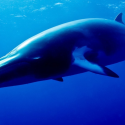
According to a study published on January 14th 2016 in Scientific Reports, blue and white dolphins and European killer whales have the highest concentrations of PCBs in their fat in the world. The researchers who conducted the study say that these massive concentrations are likely to ultimately lead to the decline of these populations.

Products since 1929, polychlorinated biphenyls have been used in flame retardants and coolants or insulation as well as in many types of plastics. But when PCBs were found to cause serious health problems in both human and non-human animals, they were eventually banned. Unfortunately, such products do not break down so quickly. The PCBs or Parylene’s that impregnated the sediments were transported by the streams to the sea. They still persist there.

As super-predators placed at the very top of the marine food chain, killer whales are particularly threatened by this pollution. They eat the flesh of polluted prey, which themselves feed on contaminated prey. In doing so, killer whales accumulate large quantities of PCBs and PBDEs, which are transmitted through breastfeeding.

These products severely affect thyroid function and vitamin A metabolism. They also interfere with neurological and reproductive development and immune function. Because PCBs are fat soluble, they can accumulate at extremely high levels in marine mammals with a high fat mass.

During research, they were levels of PCBs present in fats that were analysed in 1000 cetaceans, whales, orcas, dolphins and porpoises.

Porpoises are the only species that does not show record levels. On the other hand, the researchers were surprised to find that the concentration rate was the same for both males and females, whereas the latter should have got rid of excess PCBs when they were breastfeeding.

Their long life span and their position as superior marine predators make orcas and dolphins particularly vulnerable to the accumulation of PCBs in their bodies.

In this regard, Paul Jepson, a member of the London Zoological Society and author of the study, said the situation was worrying: « We believe that there is a very high risk of extinction for orcas in the industrialized regions of Europe. »

What about the future of another super-predator infinitely more ferocious and voracious than the orca, namely the human being? Is the survival of this species also threatened, as it eats so many fish and in some countries even devours the flesh of cetaceans? Paul Jepson’s study does not say anything…

References

The world according to wolves

The world according to wolves

The world according to wolves
13.01.2016
France
The world according to wolves
Wildlife

The wolf is sitting at the top of the summit. A large dark furred Alpha male, his chest is pushed forward in a solemn pose. He fixes his two yellow eyes on the valley stretching out below him, scattered with forests, fields and a few small roads encompassing the rocky sides of the Alps. This is his pack’s territory.

He listens. On the grassy slopes, a marmot dashes into his burrow. Further away, an owl skims the bushes in soft flight. A panicked shrew can be heard running. Far away in the distance, more than two hundred kilometres from here, another clan howls.

The kingdom of senses

He observes. The night falls gently over the land, while the fog settles and the temperature drops. Like a cat, the glowing eyes of the wolf catch the slightest snatch of light. His long distance vision is limited, but his 250° peripheral vision detects the even the most subtle movement in the multiple shades of grey in the evening dusk.

Stretching out his wet nose, he deeply inhales the air pulling it down to his Jacobson’s organ, the olfactory amplifier situated behind his upper incisors. With a sense of smell nearly 20,000 times stronger than ours, we can only try to imagine what he perceives. Painting a landscape of fragrances in his brain, these scents portray the wind, the stones, the trees, and the animals. He takes a more delicate breath… Surprise! Whilst he was sleeping, a stranger had had the audacity to cross the trail towards the lair! A three year old Beta male, measuring around a metre at the withers, had marked his path with a provocative spray of urine. He will have to deal with him soon.

Genuine love

Behind him, the pack wakes from a long afternoon nap. He hears footsteps: the female Alpha wolf climbs to meet him. He watches his companion approach. She is beautiful, with her pale grey coat, almost white. His heartbeat quickens. They have been together many years…… But the years pass quickly for wolves, who don’t live much longer than big dogs.

They play; teasing each other, rolling around, biting their manes for amusement, playing like children amidst growls. They are still very much in love. If ever one of them should be taken away, killed by a gunshot, the one left behind would be broken hearted but would rebuild a relationship. And if one of them should ever be in danger, ill, or injured, their partner would do everything they could to help them, even risking their own life, as would any of the pack members. Their love is a force that binds and strengthens the clan.

Squeaking, the dishevelled wolf cubs emerge from the den. Wobbly on their feet, they blink their eyes. Today is the first day they have come out of the deep tunnel dug under a hollow tree, between two roots, where the female wolf has nursed them for the last three weeks.

Live for the family

The rest of the clan gather immediately around the little cubs. Big brothers, big sisters… In total, ten people keep a watchful eye on them, coddling them as if they were their own. Whilst under the Alpha couple’s authority, no pack member is permitted to have their own children. But under their guardianship, they form a solid clan: efficient, inventive and dominating a vast territory that they won’t share with any other tribe.

The Alpha couple protect every one of them, their combined intelligence ensures that they are all well fed. One day, some will leave. The mother wolf will be happy to let them go and create other families, on other territories, as much as the humans will leave to them.

The wolf drops his head for a moment, pensive, assembling all of the information he has absorbed in his mind. Later, using physical gestures, in a show of yelps, growling and succinct barks, he will ensure that his troop understands the decisions he has made on how the night hunt will proceed.

The wolves’ message

It’s time to go. So the wolf turns to his clan and points his muzzle to the sky, neck stretched out. He howls. Or rather, he sings an E note, resonating progressively higher, soon be joined by the female wolf, her voice entwining his like ivy.

The other clan members join in, in their individual tones, reflecting their position in the hierarchy. The Alpha couple sing the deepest, the Omegas sing the highest and the Betas form a barking choir. Each wolf has his own trademark sound, recognisable to his comrades. This song unites the tribe, as the rest of the tribe return to join in.

This beautiful song is sung for that reason, and to send the message far and wide that the pack is strong. The voices spiral upwards until the moon, as the wolves lift their heads in turn, happy. This is the world according to the wolves, one of courage, love and beauty.

If you would like to know more: See One Voice’s campaign.

A mink far from his river

A mink far from his river

A mink far from his river
05.01.2016
France
A mink far from his river
Fashion

One Voice is steadfastly opposed to the fur industry that is responsible for torturing cats, dogs, foxes, chinchillas and other victims of fashion (see the history of our fight here). The mink example demonstrates just how cruelly different from the natural environment these fur farms are. It is really time that France bans these fur farms, as have Holland, the United Kingdom and Denmark.

Minks are independent creatures: living a secluded life on their territory of three or four kilometres along the watercourse. The male only leaves in Spring to meet neighbouring females, who accommodate them and two to three other suitors in their domain. The females raise their annual litter of a half a dozen babies on their own. No fight will stop a reproductive male, sometimes coming from far away.

The rest of the time, the solitary mink roams on the humid ground, the muddy banks, the lakeside or on a sleepy branch of a creek. In this little universe he scampers in silence, day and night, his long supple body snaking through a forest of reeds or diving into the dark water of a pond. He catches a frog, a bird in flight. Below the surface, his long whiskers detect crayfish movement and on the bank, the shrew cannot hide from his sharp intuition, or his refined hearing. He chooses how he lives his life, on his own. He doesn’t need anyone. The stomach full, he returns to his nest under a tree stump to rest, a burrow stolen from a river rat. Minks don’t live long, some six or seven years only, but they live a calm and perfect life, made up of fishing, hunting and adventures.

From birth however, the captive mink has a different life. It doesn’t take him long to get to know his jail: a rectangular cage, 70cm long, 40cm wide and 45cm high, constructed from metal grill, including the floor. The little ones feet get scratched on this structure, passing through the gaps. A bit of water drips from an old tube, some meat is thrown at them once a day, occasionally including the flesh of dead minks. Under the cages, mountains of excrement accumulate, emitting a foul odour. If he climbs up the iron wires, the little mink can sometimes see around, in the immense hangar, the hundreds of cages like his lined up as far as he can see. To live piled up together is a nightmare for the solitary mink, but the absence of water to swim in is also dreadful. The inmates comfort themselves by reproducing mad behaviour; an endless sequence of jumps and movements, repeating the same senseless dance in these tiny cages.

Some burrow into a corner, the tail sliced off, the back bleeding, the eye torn out, or worse. Others no longer move, dead amongst the living, their cannibalised flesh covered in blue flies. Brute violence reigns here, there is constant noise, and cries, fear, and death.

At around eight months of age, having reached the size of an adult with a beautiful winter coat, men with thick gloves grab them with a claw. They are thrown together into a crate on wheels pushed between the cages on the central bay. When the lid is closed, a lethal gas suffocates the minks who jump in all directions against the observation window. Death is sometimes slow for these animals, who are capable of staying underwater for a quarter of an hour whilst holding their breath. Some breeders break the animal’s necks or administer them with a lethal injection.

75 generations of tortured minks have not been sufficient to transform this wild mustelidae into a domestic animal. Originally hunted by trappers, the American mink has been raised in fur farms since 1872. Not arriving in Europe until 1926, small breeders everywhere launched themselves into the lucrative luxury fur business. Bankrupted by the war, thousands of minks were released into the nature. When released, some die of stress, but most quickly adapt to wild life.

Even today, many minks manage to escape the farms and swell an already invasive population. They are also sold as pets where they are often freed as it proves to be difficult to keep a semi-aquatic predator in their living room.

This invasion of farmed minks is having a negative impact on the European mink. Smaller and more nocturnal, it has not been exploited by the fur industry, but is in danger as a result of it.

Sensitivity and self-awareness in animals

Sensitivity and self-awareness in animals

Sensitivity and self-awareness in animals
07.12.2015
Sensitivity and self-awareness in animals
Domestic animals

Like humans, non-humans are capable of feeling pleasure or aversion. This is scientifically confirmed by the latest studies on ‘sentience’ in animals: A revelation that more than ever raises the question on our relationship with other animals.

There is no fundamental difference between man and the higher mammals in their mental faculty (…) the difference in mind between man and the higher animals, great as it is, certainly is one of degree and not of kind,” declared Charles Darwin, way ahead of his time. We would have to wait until the 21st century for scientists to prove this great man right with the latest studies on ‘sentience’.

Sentience, indicator of animal sensitivity

If the exact definition of ‘sentience’ and knowing whether it is present in every animal always provokes debate, today everyone recognises that animals are sensitive beings, to more or less of a degree. In other words, an animal experiences positive or negative feelings (sensations, perceptions and emotions), from pain and fear to pleasure and joy. Scientific studies have shown that certain animals have high level mental capacities that until now we thought were reserved to humans, like being self-aware, capable of solving new problems, being able to visualise and to understand what other animals know or are capable of. All of these abilities apply whether the animal is wild, a farm animal or a pet.

Scientific certification of high level mental capacities

For some decades now, a number of examples derived from a large quantity of scientific studies confirm this knowledge. Baboons and pigeons assimilate abstract concepts such as similarity and difference. Some animals use techniques to trick their entourage, like pigs who deliberately use techniques to stop a fellow pig from stealing their food. Sheep, for example, are capable of remembering other sheep or humans for at least two years. A sheep also reacts emotionally to a face: he prefers a friendly sheep or human to an angry sheep or human. Chickens understand that a hidden object continues to exist, something that young infants do not yet understand. Great apes and the common bottlenose dolphin show that they are conscious of themselves and recognise themselves when they look in a mirror…

The animal has an “internal world”

Whilst we are celebrating the 200th birthday of the father of evolutionary biology, science has taken a step forward in confirming that the human being is not the only “animal” capable of long term planning. A scientific study published in March 2009, for example, shows that a 31 year old male chimpanzee, kept at Furuvik zoo in Sweden, plans his future. In the morning, before the zoo opens, the chimpanzee, Santino, collects and makes piles of stones. Later, in the morning, he throws the stones he has prepared in advance at visitors. He stores these munitions on the island slope nearest the spectators, but he doesn’t collect munitions during the closed period of the zoo in winter. For Mathias Osvath, specialist in cognitive science at the University of Lund in Sweden and author of the study, “these observations show in a convincing way that our brothers the big apes genuinely envisage the future in a very complex way (…) I’m personally convinced that they do have this autonoetic consciousness like us where we relive past experiences or when we think about the days to come

Rethink the relationship between man and animal

Since 1997, the European Union has recognised animals as “sentient beings“. Member states are required to “pay full regard to the welfare requirements of animals“. Yet the discoveries made these last few years regarding sentience genuinely pose another essential question: that of the relationship of man with animals. Effectively, if animals are conscious of what they feel, if they know who they are, with whom they are, how can man continue to treat them as an object, use them as a toy or a whipping boy, exploit them, imprison them, torture them and mistreat them? When science repeatedly discovers new information about the ability of an animal to feel, experience, think… it is time that man rethinks how he could be useful to animals instead of how animals could serve him. This is what One Voice is working towards through its campaigns and its invitation to public debate on this subject.

Humanity, a human quality?

Humanity, a human quality?

Humanity, a human quality?
03.12.2015
Humanity, a human quality?
Animal testing

In the game “The Xtreme zone”, humans make the choice to inflict an electric shock on one of the players. But for animals, a similar experience produces a different choice.

On the 17th of March 2010, France 2 viewers watched the first part of a documentary on the subject, “How far can TV go?” On the pretext of a TV game, “the Xtreme zone”, the players, supported by the public, showed that they were capable of putting another human’s life in danger. Directed by an authoritative presenter, they were led to believe that they were administering electric shocks to subjects incapable of responding to questions. The victim was in fact an actor briefed to display increasing levels of pain, but the results were no less worrying.

To resume the statement of Christophe Nick, the author and producer of the documentary, “TV can make people do anything to anybody”.

Humanity in question

This first episode, under scientific supervision, was inspired by an older social psychology experiment undertaken in 1963. This experiment had showed that when under the authority of men in “white jackets”, 60% of humans were prepared to administer an electric shock to another human for the alleged reason that a ‘scientific man’ had instructed them to do so. In France 2’s 2010 documentary, this figure was 81% of participants under the control of “the Xtreme zone” presenter… The transitory executioners were given psychological support following this experience. Electrocuting people is not a trivial act. The results overturn the notion of “humanity”, their supreme quality according to humans – their name being defined by it. But what becomes of it when complying with ‘authority’? Authority, whether this relates to scientists or the media, drives us to ignore our free will, to disregard what our conscience tells us, and our ability to show compassion?

A different point of view for the animals

Similar experiments have been carried out with animals but with very different conclusions. Animals prefer not to receive food rather than inflicting an electric shock on someone (in Xtreme Zone, they had nothing to win). In a study conducted in 1964 on rhesus monkeys, 80% of the monkeys stopped operating the chain that delivered food to them when they realised that their companions would be shocked as a result. They preferred to be hungry for several days. The same experiment, conducted on rats, produced identical results: rats preferred to stop feeding themselves rather than making one of their fellow rats suffer.

From empathy to altruism

Frans de Waal reports other cases. In “The age of empathy, Natures Lessons for a Kinder Society“, the ethologist relates his experiences where upon witnessing suffering in one of their fellow animals, they themselves experience suffering…He notably describes the case where the heartrate of a female goose accelerates when her male companion is challenged by another goose. He also talks about an experiment conducted in mice, which shows that when two mice spend time together, a painful stimulus applied to one of them results in the other becoming more sensitive to pain. Or more: when a capuchin monkey has the choice between a token that gives him the right to food, or one that gives both him and his companion the right to food, he systematically chooses the token which allows them both to eat…

Develop compassion in daily life

Whilst the notion of sentient animals creeps in bit by bit, the circulation of part one of Christophe Nick’s documentary, and the publication of the book by Frans de Waal, forces us to question ourselves regarding human nature. What do we become when faced with authority? How do we reclaim this ‘humanity’ that, finally (sic), would appear to be shared with other members of the animal kingdom? To rediscover our free will; should we not learn to listen to our conscience again? Since developing the ability to show compassion in our lives, and learning that the respect for all lives is also the respect for oneself, surely means that humanity will come out of it more ‘grown up’…

Article published by One Voice in 2010

Interview with Albert Lopez

Interview with Albert Lopez

Interview with Albert Lopez
02.12.2015
Interview with Albert Lopez
Exploitation for shows

December 2014. Albert Lopez, the former trainer of orca Ulysses and dolphins of the Barcelona Zoo and the Dolphinarium of Oltremare, reveals to Muriel Arnal the behind the scenes of these detention centres of slavery…

Muriel Arnal: One day, you decided to “look yourself in the mirror” and stop your activity as a trainer. This is particularly courageous and your testimony is essential to support our fight. I deeply thank you for revealing what happens behind the scenes of these centres. What you know about Ulysses is eminently significant in this respect…

Albert Lopez: Yes, I remember, Ulysses stayed alone in the Zoo pool with a dolphin for 12 years. I was alone too. Because I was young and the other employees of the Zoo didn’t like the animals. That’s why we had made connections. The first year Ulysses arrived, he was badly injured by the dolphins. A male dolphin attacked him and bit him very badly and as a result Ulysses was dying. He remained prostrate, without eating, in great suffering. Every day I went into the water, at his side, to treat him. This is how we became friends; we remained friends throughout his detention in Barcelona.

M.A.: Why did this dolphin attack Ulysses? A dolphin does not behave like that in the wild. Is it promiscuity or the stress of captivity?

A.L.: These attacks were understandable because when the orca arrived in the pool, the dolphins who were detained there were very scared. The male dolphin beat Ulysses and hurt him very badly. Afterwards Ulysses only stayed with the female dolphins but they were always on their guard with him. One of them had a baby, named Inuk. She became even more aggressive with Ulysses because she was afraid, she was constantly watching Inuk. When Ulysses and Inuk were playing and Inuk was hurt a little, he would go back to see his mother and she would then bite Ulysses. Inuk is the first dolphin born in the Zoo and has survived more than two years; the others did not survive because their mothers did not know how to teach them how to eat. Inuk, he was educated by Ulysses who took care of him and taught him how to eat fish. Ulysses was very small when he arrived, he grew up with the dolphins, he was not aware that he was an orca. He thought he was a dolphin. In the following years, he stayed with a dolphin named Nereida. They bonded, but it was Nereida who decided. Throughout his detention, Ulysses never hurt the dolphins. He was very sweet. Every morning he was waiting for me. I was going to see him directly, talk to him and play with him.

M.A.: Your relationship with Ulysses is established, it seems to me from those crucial moments…

A.L.: Ulysses saved my life twice. One day, I was repairing equipment at the bottom of the pool. I had not taken flippers, so to be more comfortable when working. And I had weighted myself with too much weight. When my bottle was empty, I could not get to the surface. At that moment, Ulysses came next to me, showed me his dorsal fin which I grabbed. And he brought me to the surface. That was the first time that he had adopted such behaviour. A few days later, I had to go back to continue the repairs. I had put on flippers and carried less weight for ballast. As I was going down to the bottom of the pool, Ulysses bit me gently on the thigh twice. I did not understand why immediately. A colleague then told me, he does this to warn you of the danger and ask you not to take any risks. So I put down all of my equipment and went into the water, in a swimsuit, and we played. Ulysses was reassured. After this episode, Ulysses has never tolerated it when I wear flippers or even a mask. He has systematically removed my mask with his mouth. He tolerated only the swimsuit, nothing else. Every day, after the show, I stayed playing with Ulysses. It was outside of my job, I did not give him food like during the show. There was no training or submission. He was free to play if he wanted to. And if he did not want, he expressed it. But he always wanted us to play together!

M.A.: Do you think where Ulysses is today he continues to play with humans?

A.L.: No, at SeaWorld playing with orcas when not giving them by food is absolutely forbidden. Moreover, it is now forbidden to go in the water with them because some orcas are in such suffering that they have lost their minds and can kill their trainers.

M.A.: All human beings who have created a relationship with cetaceans remain profoundly marked for life…

A.L.: Yes, this relationship was very strong, too strong. Like the loving relationship that you can have with an animal. Ulysses was my friend. I thought of him every moment because unlike a dog we could not be together all the time. I was at the Zoo seven hours each day, but the rest of the day Ulysses was alone. I had a life outside, he was left alone with Nereida, without doing anything, without being able to swim or move freely, locked in this concrete pool with its over chlorinated and acidic water, which burned his skin and his eyes.

M.A.: What you have said makes me think of a dog or a cat that is left alone in its cage day and night, week after week out, through the holidays, isolated and unhappy…

A.L.: Yes, it’s exactly like that for “working” dogs, dogs are locked in cages all their lives. When you cannot be with your dog, it suffers; it was the same for Ulysses.

M.A.: To return to Ulysses, did he receive food outside of the shows? Was he taking medication?

A.L.: Odysseus ate 60 kg of fish a day. Like the dolphins I fed him 5 or 6 times a day to make him less bored. Ulysses and the dolphins took vitamins and medicines to protect their stomachs from stress-related diseases of captivity. Ulysses had an abscess on his tail that was not healing and worsened two or three times a year. It was disabling for him. So he had antibiotics. In Barcelona, we did not use tranquillizers. In Italy, where I worked afterwards, they gave the dolphins hormones to calm them down; I tried to stop this procedure.

M.A.: Have you seen Ulysses?

A.L.: A year after his departure, I went to SeaWorld to see him. But this company has very strict rules. I could not swim with him and I could not see him very well, it’s not possible to have interactions without going into the water with him. I could see him on the internet because he is filmed live with a webcam but I do not look at it because it hurts me too much.

M.A.: This would be the same for most of us to be separated from a beloved companion and, moreover, one that is detained in conditions of mistreatment. It’s unbearable … Do you remember specific situations that could be behind your courageous decision?

A.L.: When I first started working at a Zoo at the age of 18, the first thing I was asked to do was to kill a dingo. When I asked why he had to be killed, I was told there were no facilities for him. At that time, I then realized that a Zoo is a commercial enterprise that locks away and exploits animals. So I stayed to try to change that, for the animals. With dolphins, the first thing that I was taught by the supervisor was to hit them on the back with a stick to move them from one pool to another. I offered to teach the dolphins to move without hitting them, but the instructor told me it was easier to hit them. I was able to do that for the dolphins, to teach them to move from one pool to another. I was able to stop the hitting. But one day, I understood that I could not change things, so I stopped this job and I decided to join the associative movement to close dolphinariums and Zoos.

M.A.: What do you think of the way humans treat cetaceans?

A.L.: To say whether whales are intelligent or not, one should have the same intelligence as they do, intelligence that makes it possible to compare. We do not have it. And humans have committed many crimes, never whales. I deduce that they are smarter than us, humans that is. Cetaceans live on another plane because they have evolved in the sea. Orcas, like bottlenose dolphins, have a very developed social behaviour, similar to that of humans.

M.A.: But its behaviour without the violence which is not apparent in humans…

A.L.: Yes, exactly.

A unique opportunity for the closure of dolphinariums!

A unique opportunity for the closure of dolphinariums!

A unique opportunity for the closure of dolphinariums!
17.11.2015
A unique opportunity for the closure of dolphinariums!
Exploitation for shows

After Valentin’s death, following the two-meter wave that swamped Marineland in Antibes in October 2015, One Voice launched a campaign for Moana and everyone else. The dolphinariums must close! National mobilization is needed to influence the biodiversity law being revised!

A drama that mobilizes

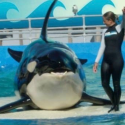
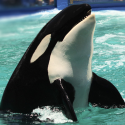
On October 12th 2015, Valentin, a 19-year-old teenager, was found dead in his Marineland pool in Antibes. The cause of his death: a twisting of the bowel probably due to significant stress. And stress, Valentine has had. Valentine is an orca. He should have been born in the ocean and lived in his pod for several decades – Granny, the oldest of the wild killer whales, has surpassed a century. He would have learned the dialect, the traditions and protected the members. Orca families are close-knit; he would have grown up close to his mother, staying by her side, always, even until old. The mother-son bond is very strong in orcas. But Valentin was born in a pool. He was taught to obey and to be applauded. And in June 2015, his mother, Freya, died she was only 33 years old.

Trade, slavery, torture

Freya had been stolen from her family, who was swimming off the coast of Iceland when she was a baby. Her life in a pool has been a long suffering, as for all captive cetaceans. She experienced several miscarriages, all consecutive to artificial insemination. We should not mess with genes in dolphinariums. Many people think that led to Freya falling into a deep depression. Her premature end was a shock for Valentin who had since remained prostrate. The wave of mud that had submerged Marineland had been a last test. But was it death or deliverance? In captivity, orcas do not live long. It is therefore urgent to save Moana and the other companions of Valentine, as well as all the other captive cetaceans!

The biodiversity law: a unique opportunity

The biodiversity law will be reviewed in January 2016. In this context, One Voice has asked for the ban of dolphinariums and has obtained a moratorium. Two new dolphinarium projects have, at least temporarily, been blocked. This text must in fact be based on the application of the principle of ecological solidarity. However, the commercial activity of dolphinariums is contrary to this principle. Indeed, not only do they inflict suffering on captive wild animals because they cannot meet their basic physiological needs (chlorinated water, confined spaces, etc.), but they also present an unnatural vision of the species, further encouraging their capture and exploitation.

A national mobilization

One Voice, with the support of Animalter, ASPAS, Dolphins Libres, FAADA, Marine Connection and SOS Grand Bleu, is calling for the biodiversity law to ban dolphinariums and to order the transfer of all captive cetaceans to marine enclosures, for example, recommendations of Dr. Ingrid Visser. To support our request, sign and broadcast the petition!

Dolphins and the out-dated

Dolphins and the out-dated

Dolphins and the out-dated
15.04.2015
Dolphins and the out-dated
Exploitation for shows

In the D-FE * coalition, One Voice is mobilizing to denounce the shameful exploitation of dolphins by a TV entertainment program currently shooting in Portugal.

Last minute: the show is suspended!

Under the pressure and the actions from NGO’s gathered together such as the Dolphinarium Free Europe (DFE) of which One Voice is a member, the show was suspended. However, the risk of it being produced in other European countries, and particularly in France, still exists. Stay alert!

Presentation of the show

The concept of the program is Dolphins with the Stars – produced by Shine Iberia and broadcast by CIS – it’s to bring together “the most popular stars and the most adored animals” **. Ten couples, formed by a celebrity and a dolphin, must present on prime time viewing an elaborate performance which is duly filmed for thirty days. “Judges” and TV viewers will then decide on the winner.

An unethical broadcast

“The most adored animals” can do without this craze that feeds an increasingly cynical industry. The Zoomarine dolphinarium in the Algarve region of Portugal, where the show is shot, holds 21 dolphins, of which at least five have been captured with certainty from the wild. In addition to captivity, the dolphins “partner of the stars” must undergo additional stress related to the training and the euphoria from this kind of spectacle whose main gaol is to make this show with no consideration for these animals.

A dangerous show

The broadcasting of such a program contributes to the organized misinformation of the general public concerning dolphins, both from the point of view of ethology and that of sentience. This leads to the making of a material object out of a wild animal. The stars, so concerned about their image, should become aware of the out-dated nature of this type of program and the responsibility they endorse by being complicit in such exploitation.

Our action

Considering these violations of Portuguese and European laws that have been perpetrated by this program Dolphins with the Stars, One Voice signed a letter sent today to the Portuguese President asking him to intervene. Other actions are being prepared.

Let’s be vigilant!

For the moment, this program is confined to Portugal. Nevertheless, the concept has already attracted interest with China and 14 European countries, including France. It seems that a French production company has already expressed interest, to the delight of a dolphinarium.

If such a project came to life, One Voice is counting on your mobilization.

* Dolphinaria-Free Europe

** Terms used by La Competencia, the Spanish production company behind the show

*** European Association for Aquatic Mammals