At Saint-Paul Park, a baby tiger and a young audience in danger!

At Saint-Paul Park, a baby tiger and a young audience in danger!

At Saint-Paul Park, a baby tiger and a young audience in danger!
29.04.2019
Oise
At Saint-Paul Park, a baby tiger and a young audience in danger!
Wildlife

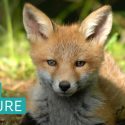
At Parc Saint-Paul, in the Oise department (60), the animal keeper Kid Bauer exhibits a baby tiger as a trophy. Extremely objectified, the little beast passes from hand to hand without care or precaution, and undergoes long photography sessions on the knees of the children. This “attraction” presents as many risks for the feline as for the young public. We are filing a complaint against this establishment.

Come here, ladies and gentlemen … And especially the children! A baby tiger awaits you, almost in « free access », under the tent in Saint-Paul park, in the Oise department (60). Keeper Kid Bauer places his new mascot at your disposal to play with, to rock like a baby and to kiss! Your little one can even be photographed with the animal in their arms, against a 10 euro note. A “marvellous” opportunity to immortalize this “magic” moment where a one-and-a-half-month-old animal is man handled like a toy and in a state of intense stress is placed for a few seconds on the lap of your child… Before it is then passed around on to someone else’s lap !

Caresses and mistreatment

The attraction is a great success … So, think, who would not be seduced by this adorable fur ball, as harmless as a soft toy, presented by trainers as a lover of cuddles? The queue is long, toddlers are thrilled … At their age, it is impossible to imagine that adults can tell and / or do anything … However, the young feline does not need all of them these outstretched hands or the constant chain of caresses… On the contrary, they are terrifying to this baby tiger! Between the blinding neon lights, the deafening din, the oppressing crowd, being carried about by members of staff, the hundreds of unknown fingers foraging through its coat, this poor baby has to endure this ordeal.

Sanitary risks

Our investigators reported a video testifying to the multiple traumatic sources to which the baby is subjected. The only love that his eyes
crave is that of his mother, from whom he was snatched! The unhappy mother is also probably looking for him. Besides, where is she hiding? Her baby is not even weaned yet! We have forwarded these images to Dr. Chris Draper for expertise. The biologist, specialist in the welfare of captive wild animals within the Born Free Foundation, worries as we do about the treatment of this fragile feline. In addition, he underlines the risks that constant handling represents for the baby’s health as well as that of the young audience who touch him:

«There is a risk of disease transmission: neither children nor the baby tiger have yet fully developed their immune systems.»

We must therefore react urgently and not let this situation continue!

We are filing a complaint against this establishment and demanding the seizure of the little tiger and its mother. We have the logistics and infrastructure to welcome them and keep everyone, including cats and humans safe !

The disappearance of insects, an unprecedented disaster

The disappearance of insects, an unprecedented disaster

The disappearance of insects, an unprecedented disaster
28.04.2019
Monde
The disappearance of insects, an unprecedented disaster
Wildlife

Scientists have concluded, insect populations have collapsed. The consequences are immediate: a fall in the populations of birds, amphibians and bats. One Voice has challenged itself to create a vast network of « Arches of Nature », private sanctuaries and gardens and natural spaces, guaranteeing the absence of pesticides and prohibiting hunting.

If anyone doubted it, the study published in the journal Biological Conservation on February 10th 2019 is very clear, we are no longer running from a disaster, we are now right up to our necks in it! If from year to year we had noticed that we have heard less and less birds singing in our countryside, few of us may have noticed the decline, much more significant however, the populations of insects. However, it is the disappearance of these insects that has caused the decline in the number of birds.

Researchers from the universities of Sydney and Queensland have synthesized a dozen studies that have been done around the world by various scientific organizations. Their observation is formal: the catastrophe announced by Rachel Carson in 1962 in her work « Silent Spring » has indeed arrived! We have destroyed billions and billions of insects with the over use of pesticides, so much so that we may have reached the point of no return !

The point of no return already reached?

Puerto Rico has lost 98% of its insects! Even in German nature reserves the insect populations have dropped by 80%. We have done no better here in France. This is true for most species’ groups, and especially for pollinators. The consequence of these disappearances is as
serious as it is rapid: 80% of flowering plants are pollinated by insects. Without them, eight to nine plants out of ten would not be here today.

On the survival of insects depends ours

The disaster will not only be felt on the diversity of wild flora, but also on the crops used for our consumption. Without insects, only grasses (wheat, rice, barley, etc.) which are pollinated by the wind, will be able to bear fruit and reproduce ! No more tomatoes, zucchini or apricots ! Our menus will become very sad, this situation will inevitably lead to famines around the world, and with them, their share of human and animal migrations and of course the armed conflicts that they will cause. This from the lack of butterflies, bees or pollinating flies !

Birds already impacted

Already, it is our friends the birds who have paid a very heavy price for our thirst for dominating nature, for intensely producing agricultural products that are increasingly toxic to humans and the environment. The passerine populations have already dropped by more than a third and of course, it is the species subservient to open environments, therefore to agricultural areas, who pay the highest price for the disappearance of insects. Some species, commonplace 30 or 40 years ago, have now become very rare. Thus now, we hear and see rarely the buntings or the grey shrike. The larks, which were still so numerous in our yesterdays, have become scarce over their entire area of presence (despite this very significant drop in their population, the larks are nevertheless still hunted in France, using cruel traditional methods of hunting! …).

Most passerine species, even granivores, require insects (larvae or adults) to feed their young and to feed themselves during the breeding season. In Europe, the loss of 80% of insects over the past thirty years has caused the disappearance of 400 million birds !

There is an emergency, let’s act!

Birds aren’t the only ones experiencing starvation. Bats, shrews, frogs and lizards, also consumers of insects, are directly affected by their
disappearance.

It is our responsibility, and even our duty to act. By our patterns of consumption, of course, by favouring products from organic farming, but also by direct actions for insects. Let’s open up our gardens, meadows and fields! It’s urgent!

Join the One Voice “Arches of Nature” network. Leave flowers and even « weeds » to feed and breed insects away from sprayers. This is the biggest challenge we will face. If collectively we do nothing in practice, the government will continue to favour intensive agriculture which has led us to this disaster.

We are counting on you ! Download and sign the « Arches of Nature » charter and return it by post (One Voice, 7 place de la République, CS 20263, 56007 Vannes Cedex) or by e-mail to info@one-voice.

Orcas and belugas trapped in Russia: hope is reborn!

Orcas and belugas trapped in Russia: hope is reborn!

Orcas and belugas trapped in Russia: hope is reborn!
25.04.2019
Russie
Orcas and belugas trapped in Russia: hope is reborn!
Exploitation for shows

Relief! An international scientific expedition, supported by One Voice, visited Russia in early April. Eminent experts in marine mammals have gathered around Jean-Michel Cousteau, they have been able to launch a cooperation program to save orcas and beluga whales captive in the Srednyaya bay.

Unfortunately, it will take a long time, but it is now a certainty: the 97 orcas and belugas illegally captured in the Sea of Okhotsk and sequestered in the Srednyaya Bay, in the Russian Far East, have now a real chance of regaining their freedom! Despite pressure to protect the four companies that appropriated them, local activists have worked tirelessly to alert the international community and to secure the movement of leading experts in the support of these endangered animals who are in great suffering. All of this has been achieved with the consent of the Russian authorities !

International shipping

Engaged in this collective fight since the revelation of this affair and its many twists and turns, having helped to lead a team of experts, we are very happy to be a part of this expedition. The expedition team leader is Jean-Michel Cousteau of the Ocean Futures Society and Charles Vinick of the Whale Sanctuary Project – to Russia has been the organizer from April 3 to 11.

Thank you so much, @onevoiceanimal, for being part of our international effort to free 97 captive orcas and belugas from « whale jail » in Russia and return them to the ocean. #WhaleAid https://t.co/gXm95BTSHp

— Whale_Sanctuary (@Whale_Sanctuary) 10 avril 2019

Their mission: to assess the condition of the 10 orcas and 87 belugas locked up in an open-air prison and to advise the government on a rehabilitation program with a view to their return to the ocean. There is an urgent need to rescue them, because since the start of
this series of captures in July 2018, four of these unfortunates have already gone « missing » !

Joint declaration

This visit allowed a giant step in the coordination and development of the rescue project. Jean-Michel Cousteau and Charles Vinick agreed with Oleg N. Kozhemyako, the governor of the Primorsky region where the prisoners are kept, around a joint declaration. The agreement plans to immediately begin work to keep marine mammals in conditions close to their original environment, while also planning the creation of a re-education and rehabilitation centre for the injured. He also claims to pursue, ultimately, the goal of freeing them all! We will make sure of it.

Russian and international scientists from the Cousteau team will therefore continue to assess individuals to determine when and how to release them. The New Zealand biologist Ingrid Visser, who was on the trip and who saw at first-hand the urgent need to intervene, is delighted with this tremendous advance:

«It was extremely distressing to see the orcas and belugas so detained, but I am relieved to know that the governor of the Primorsky region where they are being held signed an agreement to rehabilitate them before releasing them

Long-term cooperation

Why not release these suffering mammals immediately? Because their nine months of detention requires them to readjust to an independent and wild life. The cold, the stress, the break-up of family cells and the captivity in artificial groups upset all their social references and has weakened them both physically and mentally. Today, we must therefore try first to cure them of the shock they suffered and create conditions favourable to their release.

Lori Marino, president of the Whale Sanctuary Project, stresses the importance of addressing each of them individually, at their own
pace :«Each of the 87 belugas and 10 orcas is an individual and each of them has faced the trauma of capture and sequestration in a unique and individual way. In this aspect, they are really like us. Thus, each of them must be taken care of individually to assess their mental and physical health and what they need.»

Because, even if the lovers of dolphinariums continue to struggle to convince themselves that there is no problem, it remains clear that orcas and belugas are like us. Emotionally gifted, endowed with high intelligence and possess real cultures, it is up to us to protect each of them in their specificity, their own history and their unique psychology !

We must save the primates

We must save the primates

We must save the primates
23.04.2019
Monde
We must save the primates
Animal testing

One Voice remains at the forefront of the fight against the despicable international trade of primates for research. In memory of Kéo and Sambo, these two baby monkeys encountered in Cambodia many years ago, we must constantly affirm our fight and our resistance to this market of violence and suffering.

It’s been 10 years since One Voice began a strong campaign of resistance to the exponential growth of primate trafficking from Cambodia to the European market. Our involvement in this fight will soon pass a quarter century and our determination remains intact and assiduous. Our first victories are only the beginning for those to come.

Starting in Cambodia, our investigation denounces all international traffic

When in 2008, the centre of primatology Niederhausbergen, Alsace, imported monkeys from a breeding centre in Cambodia, Muriel Arnal, president of our association, sent investigators into this country to bring back images on the conditions of these captive animals. These
traumatic videos bring us closer to the horror, the pain that emanates from them. Whatever our position on animal welfare, how can we not feel anger at so much suffering? How not to feel helpless in front of these mums who try to protect their little ones to hide them from the intrusive eye of the camera? How do you make them understand that we are here to testify, and help them? One Voice refuses to let this pass in silence, our association has highlighted this urgency with a new resistance campaign started back in 2009. We must again today highlight this ceaseless and vital struggle for our primate cousins.

At the beginning of this year, we learn that China has just cloned five monkeys from a macaque’s modified genes with sleep disorders – one is dead and the others are suffering from serious pathologies, anxiety, depression, schizophrenia – it is high time to give this fight a new impetus.

More than two decades of struggle, we must continue the fight

Taken from their mother’s arms, captured in the wild, raised in cages or cloned, thousands of young primates live the worst of anxieties. It is essential that animal rights activists around the world awaken their sleeping consciences. We who, since the 90’s, are taking action
with our partner, the BUAV (British Union Against Vivisection), we must remember that tenacity can give results. In 1996, we legally rescued 36 crab-eating macaques from a laboratory. They were placed in the L’Arche Refuge. That same year, we blocked the project of the largest breeding centre of primates in Europe (Holtzheim in Alsace). In 2003 the campaign « Air France-Air suffering » began.

As in 2009, we must resume an emergency campaign for new resistance to the growing international trade in primates for research.

Despicable and shameful, because they resemble us

Every year in the world, more than 100,000 monkeys and apes are used for biomedical research. Primates are very intelligent animals, with complex social behaviours. They feel pain and suffering, just like humans. Researchers take advantage of these characteristics to conduct various experiments on them.

But their suffering begins well before arriving in the laboratories. In 1991, the BUAV survey revealed a very high mortality rate amongst monkeys caught in the wild (8 out of 10 primates die before reaching the laboratories). The investigators were able to highlight the cruelty exerted on the captured primates, held in narrow and overcrowded cages in detention centres, and in aircraft holds.

In order to remove all humanity from these transactions, the actors of this traffic hide the monkeys under the acronym PNH, Primates Non-Human. How can we gather more than 550 species under such a cold name? These primates are our cousins, our relatives, in their diversity and their richness.

We refuse the use of primates, as with all living things used in research

This information from China on the cloning of primates should push us to put forward our values and our ethics on the defence of animal rights. We refuse any form of vivisection. We refuse any beneficiation for anybody: traffickers, breeders, laboratories, by the use of primates or animals whatever they are, rodents, dogs or others, for commercial ends. We refuse to condone the trivialization of this exploitation in the publication of writings that give good conscience to those who write and disseminate them.

One third of the primate species are in danger of extinction. For them, we take this reality into account and continue our fight without compromise.

For those who don’t count …

For those who don’t count …

For those who don’t count …
23.04.2019
France
For those who don’t count …
Animal testing

Europe requires its member states to publish annual data on the volume of animals being tested. For without quantifying its victims, science could kill without counting. This is unfortunately the case … So, action !

In 2015, the European Commission wrote: « Animal testing should be phased out. This is the ultimate purpose of EU legislation … « . Without numbers, which places the victims in a real black hole, how do they measure progress? This posture is untenable for One Voice and citizens who no longer want these procedures, nor the opacity that surrounds them.

Obligations not respected

According to Article 54 of the European Directive on the protection of animals used for scientific purposes, as any Member State, France must publish each year figures on its progress towards the abandonment of animal testing. Problem is: the latest statistics from the Ministry of Higher Education, Research and Innovation dated from 2016! In recent years, the Ministry also recalled that because of transitional measures (until the end of 2017), any comparison with previous figures would be inappropriate until 2018. Well ok, we waited and are now in 2019, So, when? Updated, consolidated, legible and in line with the statistical formats of the European Union?


2018 should have been more than one year of fertile figures quantifying the real level of victims of animal testing in France and Europe. The European Union’s last report on the subject dates back to 2013 and is expected to be five years old. We think about the exact balance of the REACH Regulation, governing the use of chemicals in Europe. We also think about the use of animal testing that could explode because of this regulation through the testing of products for registration, required until May 2018.

Without transparency, we are lying

One Voice has been constantly asking for the truth and updated statistics on animal testing in France, by many means of appeal: letters to the
ministry, the last dating from November 2018, but also, in the absence of response, appeal before Administrative Records Access Commission (CADA). This time, the cup is full and we will file a complaint to the European institutions for noncompliance with the directive 2010/63 and violation of its article 54.

Except to flout the rules or to modify the perimeters to dilute the reality, if our virtuous science has really taken the measure of legislation (that is to quantify the number of its victims) and the spirit of its better (to reduce this number) Then, where are the numbers ?

We fear the worst ! The latest figures from the European Union, consolidated on 2011 data, say that about 11.5 million animals are killed per year in European laboratories. In France (2016 figures), there are more than 1.9 million animals. If in 2019 these numbers are not lower, citizens will know that it’s wishful thinking, ensuring that science is working to reduce this massacre is all but lies. It’s a joke. But should these figures be published !

The death of Mévy: the hour of reckoning has struck

The death of Mévy: the hour of reckoning has struck

The death of Mévy: the hour of reckoning has struck
18.04.2019
Paris
The death of Mévy: the hour of reckoning has struck
Exploitation for shows

On April 11th, a new tribunal was held to shed light on the last moments of the tigress Mévy, killed in a cowardly way on November 24th, 2017 by her keeper in a Parisian dead-end road.

The sessions are linked to the Tribunal de Grande Instance in Paris. To defend the memory and the rights of the young tigress Mévy and to go beyond this and into her killing, within the framework for our direct quotation of a voluntary slaughter of an animal. We have already participated in two hearings this year, the second took place on April 11th, 2019.

Commercial Motivation

As a reminder, while our complaint back in 2017, immediately after the facts, had been shamefully dismissed, we initiated direct proceedings against the owner of the Bormann circus who detained the feline, let her escape and preferred to shoot her out of sight rather than keep her cornered until the arrival of reinforcements that would have allowed for her capture.

During the hearing on April 11th, our lawyer was able to speak for Mévy and bring about many elements incriminating her owner. She notably underlined that if the trainer had chosen to kill the tigress, it was only for financial gain. The circus had indeed moved to the 15th arrondissement. With Mévy on the run, he risked losing his plot and being prosecuted for crimes. So, he preferred to shoot, to eliminate this annoying witness, rather than to wait for an outside intervention … And commit an irretrievable act.

A life is priceless

Who cares? Since this tragedy, the circus has quietly continued its performances and has received a financial windfall. However, this tigress was unique, irreplaceable. Her value, like that of each living being, lay in a whole other dimension, that of the financial field. She was an individual, she had a breath, she had emotions, feelings and also had a great intelligence.

Today, she is no longer breathing. The one who – by his own admission – had « bottle-fed » her, the one who had deprived her of her freedom to do her thing. The one who had negligently allowed her to escape and eventually kill her, without hesitation with three
bullets, while she was lying prostrate at the bottom of a dead-end road. We cannot close our eyes. If we cannot save Mévy, we will fight to the end to represent her, we will attend as many hearings as it takes to plead her case … and to allow her to end up being
heard !

Ce 11 avril avait lieu au Tribunal de grande instance de Paris, l’audience pour Mévy suite à notre citation directe pour atteinte volontaire à la vie d’un animal #CirquesSansAnimaux. A dérouler ⤵️

— One Voice (@onevoiceanimal) 11 avril 2019

Investigation on a fur farm in Slovakia

Investigation on a fur farm in Slovakia

Investigation on a fur farm in Slovakia
17.04.2019
Slovaquie
Investigation on a fur farm in Slovakia
Fashion

As part of its campaign to end the breeding of animals for fur in Slovakia, the association Humánny pokrok, member of the Fur Free Alliance and partner of One Voice, has launched a petition which we invite you to sign.

This petition, which already promises to be a success, is part of the campaign « ide o chlp » (« it’s hair ») led by Humánny pokrok against the breeding of animals for fur. In particular, this association calls for the closure of the only mink farm in Slovakia in Príbovce, near Martin, where between 4,500 and 5,000 American mink are housed.

Hell, for animals

Fur farms are a living hell for animals, who are deprived of any opportunity to meet their various natural needs, whether mink, foxes or chinchillas. A survey that we carried out in mink farms in France in 2016 confirms the immeasurable horror of this life of confinement.

The investigation carried out in Slovakia by Humánny pokrok reveals that mink – though semi-aquatic animals, solitary, territorial hunters –
spend their whole lives crammed together in small cages of less than 1 m² and without bedding, surrounded by their excrement. They cannot run, hide themselves, lie down, or even sleep.

Crazy animals

The wire mesh floor of the cages hurts their paws. Often their wounds become infected and some die a slow and painful death. In such unnatural conditions, mink go crazy, behave stereotypically and attack each other. Cannibalism is not uncommon, as evidenced by the many photographs and videos from our Slovak partners.

At the end of their sad and brief existence, animals are gassed if they are not skinned alive.

A serious source of pollution

It happens that individuals escape from the cages, and when they are not injured or killed by the farm dog, they invest in an ecosystem to which they are strangers, to the detriment of biodiversity, as is happening now, right in the vicinity of the Montarlot farm. These farms are also a serious source of soil and water pollution.

A cruelty in the service of futile desires

This extremely cruel industry and this appalling suffering of mink and other fur animals exists only to satisfy futile desires and fashion whims: coats or accessories such as collars, sleeves, pom-poms and pendants.

The barbaric practice of fur farming is already banned in many countries, including 13 European countries. A ban is already being considered in Slovakia to end it: help us make it happen, sign the petition of Humánny pokrok !

We are helping to guide you into buying humane fashion items until the ban on these fur farms becomes widespread all over the world.

Concern for kangaroos around Australian election time

Concern for kangaroos around Australian election time

Concern for kangaroos around Australian election time
15.04.2019
Concern for kangaroos around Australian election time

Considered as pests, kangaroos are victims of mass killings in Australia, as the preview of the French documentary « Kangaroo, a love-hate story » it was denounced last June during our screening. The food and luxury industries have not stopped trading in kangaroos within Europe, as our continent is still the largest consumer of kangaroos in the world. Let us write to the European Parliament to ban this!

Kangaroos, victims of massive killings

Australia has an ambivalent relationship with its favourite animal, the kangaroo. This national emblem has been associated for centuries as a « nuisance ». The Australian government even offers bonuses to get rid of those they associate as a « scourge ». The massacres are perpetuated in the wild, preferably at night, during the most intense period of activity for the kangaroos. The little ones, when they are not killed with their mothers in the pouch, end up dying of thirst or hunger. Thus, the kangaroos are extinguished in total indifference.

Even more worrying, if it is the case, is the mass extermination in view of protecting livestock herds or land, in addition to the purely economic argument for hunters. Kangaroo meat is used in food boxes for our pets, often without mentioning it, but is also sold in some
restaurants and supermarkets for human consumption. France is one of the main importers of these meat products. This also raises, beyond the ordeal experienced by kangaroos, real questions about health risks. The meat hunted in the desert is then transported for hours
without sufficient control or hygiene precautions. The skins, on the other hand, are sold to end up in clothing and sporting goods.

That’s what Kate and Mick McIntyre’s shocking documentary KANGAROO A Love-Hate Story denounces, revealing the hidden side of this sordid industry that One Voice organized the premiere in France.

First election results: a defeat for kangaroos

The hope that the situation will change has diminished with the outcome of the Australian parliamentary elections of the 23rd
March. The Liberal coalition in the state of New South Wales (south-east Australia) won this vote. It has not taken an official stand against these massacres. Let us hope that legislatures across the country will benefit more from the environment and kangaroos in
May, when all Australian states will have voted to establish, in addition to members of their Senate, a new government.

Act now!

We call on the European Union to react quickly to preserve these iconic animals in danger and
extremely vulnerable. Join with us and write (letter template downloadable) to the European Parliament:

For the attention of Mr Ottavio Marzocchi Policy Department C
Citizens’ Rights and Constitutional Affairs
European Parliament
B-1047 Brussels BELGIUM

poldep-citizens@europarl.europa.eu

or to your candidate in the European elections to ban the import of meat, skin and kangaroo fur.

Bouquetins du Bargy: Stop the killings!

Bouquetins du Bargy: Stop the killings!

Bouquetins du Bargy: Stop the killings!
13.04.2019
Bargy
Bouquetins du Bargy: Stop the killings!
Wildlife

An emergency! A consultation is open until April 28 to gather public opinion on the massacre of the ibex of Bargy. Let’s prevent the killing of these beautiful mountain dwellers!

In a sensible world, when individuals are sick, they are treated or, if it is impossible, their suffering is shortened. And in the case of a contagion, we protect others through vaccination. In Haute-Savoie, when an ibex is potentially carrying a zoonosis, it is killed. Even if it is in perfect health. Even if, fragile, it is still protected by the Berne Convention. Without any form of trial.

Eradication pure and simple

Since 2013, One Voice and its partners have been campaigning against the repeated « harvesting » (meaning « slaughter ») of
ibexes from Bargy. Their wrong doing? Some carry brucellosis, a zoonosis transmitted by domestic animals and naturally not present in wild ungulates. Thus, while common sense should encourage breeders to care for their infected sheep, cattle or goats, they are preying on
wild individuals who have had the misfortune to be too close to them in the alpine pastures. The cheese producers have even held them
responsible for the contamination of their Reblochons, although everything renders this hypothesis more than doubtful.

Make yourself heard!

Today, while many healthy ibex have already died under a hail bullets, the prevalence level has dropped significantly, the risk for farms is considered almost zero, will we leave them alone?

No way! The Prefect of Haute-Savoie plans a new order for 2019, which orders in particular
« the removal of ibex present in the sectors » Grand Bargy », » Petit Bargy « and » Jalouvre Peyre « .Presented at the public consultation and up until April 28th, this decree would allow the death of 94 other ibexes if it obtains a majority of favourable opinions.

Let’s mobilize to prevent these planned massacres, while alternatives exist! Join your voices with ours without delay by responding to the consultation:

  • or by post: Departmental Direction for the territories of Haute-Savoie,
    Water and
    Environment
    Department – 15 rue Henry-Bordeaux 74998 Annecy Cedex 9

Let us make sense to those for whom wildlife and nature must disappear to make room for farmed animals to be slaughtered.

Advice:

  • No
    offensive messages
  • No
    overly generalized messages

Veterinarian surgical training on live pigs, One Voice says no!

Veterinarian surgical training on live pigs, One Voice says no!

Veterinarian surgical training on live pigs, One Voice says no !
08.04.2019
France
Veterinarian surgical training on live pigs, One Voice says no !
Animal testing

In partnership with two medical companies, postgraduate training in digestive surgery on pigs is offered to practitioners in two veterinary schools. The pigs will undergo multiple operations of the stomach and intestine and will then be put down. We demand the immediate termination of such practices !

Pigs, beings with a strong personality

Gifted with great intelligence, pigs like to learn, discover and play. They are self-aware and able to develop sophisticated strategies. Pigs have been seen helping humans in difficulty. And yet …

Cruel training

After the stress of transportation and the conditions of their accommodation, they come for these pigs, those for procedures under
anaesthetic. Veterinarians under training will then perform various surgeries on their stomachs and intestines. After these procedures, they will be killed without exception. A distressing and obsolete process.

Moreover, the certificate of Dr Pierre Gallego, a doctor in veterinary medicine and a master’s degree in science, is clear on this point:

«It is my opinion as a veterinarian that the use of live animals that are subsequently sacrificed for surgeries for veterinary training purposes is an obsolete practice that should be completely replaced by alternatives that are already available and which is widely used in most modern veterinary medicine faculties around the world

Prioritize methods without living animals !

In spite of the European directive asking to prioritize substitute methods, these schools nevertheless decided to resort to this practice on animals, which are as cruel as they are outdated. Last year, we managed to stop the use of live rabbits for continuing education in another school. We demand the same thing here.

The sacrifice of live pigs is not necessary to become a good surgeon! On the contrary, according to our experts, models and simulators; virtual reality; computerized multimedia simulators or the use of animal tissues and corpses from ethical sources are preferred.

For Dr. André Ménache, a veterinarian specializing in animal welfare science and a certified member of the European College of Animal
Welfare and Behavioural Medicine, to whom we have asked for an analysis of this type of training:

«These surgical procedures on pigs are not intended to bring any benefit to pigs globally. These pigs are used as living material for postgraduate courses in digestive surgery

One Voice wrote to demand the immediate cessation of this type of training. If these courses continue, we will seize any competent body to enforce the rights of these animals.

Get involved with us for these pigs, by sending one of these two drawings to the concerned organizations to ask them to use alternative methods in the framework of this type of training.

Where to write ?

Medtronic

SASB Medtronic France
Mme Laurence COMTE-ARASSUS

27/33 Quai Alphonse Le Gallo
CS 30001
92513 Boulogne-Billancourt Cedex
contactfrance@Medtronic.com

 Twitter
@MedtronicFR

Vetoquinol
Vetoquinol S.A.
Monsieur Etienne Frechin, Président de Vetoquinol SA
BP189
70204 Lure Cedex
FRANCE

communication.group@vetoquinol.com