Disruption of the climate, a cataclysm for animals

Disruption of the climate, a cataclysm for animals

Disruption of the climate, a cataclysm for animals
25.07.2019
France
Disruption of the climate, a cataclysm for animals
Wildlife

At a time when France is experiencing its second heat wave of the year and an unprecedented one, scientists publish an alarming study: despite the adaptation of animals, the change is too fast and radical for the evolution of the species to be able to « absorb » climate change. Some will disappear, in other words millions of animal persons will die in pain, if we do not urgently stop these current disturbances in the climate.

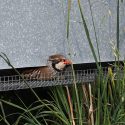
In the short term, we may never see European deer at the edge of the forests in the early morning, nor hear sparrows singing during our vacation in Canada. The guillemots, they will no longer look out to see from the cliffs. The Eurasian magpies, as for them, their delicate voices will no longer be heard from the pear tree in the garden. In a few weeks, France has experienced the largest heat wave in its history for two thousand years, and animals, although able to adapt to a certain extent, will not all be able to survive these changes in temperature, given the rapidity of this phenomenon called global warming.

A publication based on a thousand scientific articles

The scientific journal Nature Communications published the day before yesterday an article1 summarizing the work of about sixty biologists. They analysed the results of more than a thousand scientific publications on the adaptation of species to climate change that has been under way for several years. Their meta-analysis, based on available research, is focused primarily on birds and a mammal from the northern hemisphere.

Climate change too fast for animals to adapt

Since the industrial revolution, most animals have substantially changed their behaviour and life cycle, such as nesting periods or their locations, these changes are adaptive, so somewhat “cultural”. But for an animal species to survive in the short term, this adaptation will have to be combined with genetic modifications. The plasticity of each species has been sifted; these factors are of paramount importance.

Worse still, the species whose characteristics have been analysed are said to be of the « common » type, i.e. the conclusions concerning rare species are even more alarming!

These biologists are very pessimistic, and have in part no solutions. They want to be able to anticipate more than just describe and warn. Their next challenge will be to determine which species are the most resilient, in order to focus their attention on the others, the most vulnerable ones, and help them.

We recall that each of us can already adopt responsible behaviour to limit our impact on the environment, and engage our mayors and their members to act quickly. It is high time for all living beings on our beautiful planet.

1« Adaptive responses of animals to climate change are most likely insufficient». Nature Communications, 23 juillet 2019, vol. 10, n°1, p. 3109.

A new complaint for Jumbo

A new complaint for Jumbo

A new complaint for Jumbo
22.07.2019
France
A new complaint for Jumbo
Exploitation for shows

We follow Jumbo relentlessly. During the heat wave last June, our investigators found that his jailers had no more consideration for him than usual. Even in the middle of summer, the poor hippopotamus is locked in his trailer for hours. And when you briefly open the door for a moment, you find an empty pool waiting for you!

27th June 2019. At 5:39 pm, Jumbo puts his first foot outside of the day. A very hot sun has been burning in the atmosphere, and he has been locked up all this time in a tin truck with his “bathtub” as the trainer calls it. At this moment, the interior of the car from which we observe him reaches 44°C… We dare not imagine the temperature of the furnace from which he exists…

Ni eau, ni piscine, ni boue, enfermé dans le camion-prison chauffé à blanc durant des heures, Jumbo en sera sorti pour être laissé sous un soleil de plomb. Ca va durer encore longtemps?! #SauvonsJumbo #CirquesSansAnimaux pic.twitter.com/Jkxrbdvsxa

— One Voice (@onevoiceanimal) June 29, 2019

Outside, the desert…

Will he be able to cool off? Alas, no. No shade, no mud, no water on the horizon. Oh yes, a pool cover is sometimes stretched out, as we were able to observe a few days later, on July 8th, but it is not filled with water! It’s just a fake gesture of care… And the poor are forced to continue to endure the heat without any area to take refuge. These scenes, bleak and outdated, represent Jumbo’s daily life. Whatever the weather and the day, the Circassians who hold him deny him his most basic needs and make him endure a living hell!


We (re)file a complaint!

While the violence of the Circassians compromised the seizure of Jumbo last February, we remain determined to release him! We continue to diligently monitor and gather the evidence for the charges, our case continues to grow. Based on our last observations, we have just filed a new complaint against the circus where he is being held. There is an urgent need to help Jumbo! And our concern for him is only increasing as we approach the next preannounced heat wave, which will probably not be the last…

Continue to sign and share the petition for Jumbo

Romania: Let’s listen to their cry for help!

Romania: Let’s listen to their cry for help!

Romania: Let’s listen to their cry for help!
18.07.2019
Romania
Romania: Let’s listen to their cry for help!
Domestic animals

The abuse of stray dogs in Romania is scandalous in itself. But this legalized cruelty also exposes children and society as a whole to the normalization of violence. The testimonies of children and their families must be heard: they need help! They do not have the freedom to be able to close their eyes and to escape these visions of horror… we must open our eyes and help them!

We all know what human beings are capable of, even towards his own kind and even in his own home! Sordid impulses lie deep inside some, transforming them into criminals, becoming murderers of their own relatives. This unsupportable violence, lurking in the depths of individuals, is strongly inclined to take precedence over all reason when it has been awakened, even excited or encouraged, and/or suffered since birth.

Oppressed Innocence

By authorizing the killing of stray dogs, even in including on the streets and under the gaze of the very young, Romanian leaders are trivializing cruelty. In fact, this type of « spectacle », children find themselves hostages of these atrocities. How does one escape these tragic scenes? How do we protect ourselves from this negative emotional impact? How can we evolve harmoniously when the leaders of society, and therefore theoretically our protectors, present horrors as the « norm »? The little ones of Romanian know no escape and their human dignity is under attack!

Spiralling Inferno

Such psychological childhood trauma can cause enormous damage even into adulthood. Multiple studies have shown the link between violence against animals and violence against humans. However, as one of them points out (*), environmental factors play a considerable role in an individual’s cognitive development. When aggression is commonly accepted and widespread around one, one risks integrating violence as a cultural reference. The most fragile subjects often end up assimilating deviant behaviour as a rule and are likely to reproduce these acts of violence sooner or later, unless they themselves become victims, as prisoners of fate.

Help

As an international group the European Link Coalition, of which One Voice is a member, has received many testimonies from children and mothers in distress in the face of these public abuses. Sorina B., mother of little Cassian, who is soon to be 6 years old, explains, for example, that since her boy was born, she has been teaching him how to take care of animals. But her teaching is regularly compromised by the scenes outside which she cannot protect her son from. She feels terribly helpless when confronted with it: « When he sees people hurting or mistreating stray animals, he is more than shocked and mortified. He keeps asking me « Mummy, why is this happening? » It’s very difficult to keep him out of this state of shock and disbelief (…) I have no way to explain to him why people do this, why animals are loved by some, but not by others. » Another mother, Andreea F., expresses the same dismay and has difficulty in answering questions from her 5-year-old daughter: « Sarah wants to bring home all stray animals and she always asks me: « Why don’t the animals on the streets have a home? Do they have food? Who loves them? « And animals must also be protected because they have a soul, because it hurts them and they suffer when they are physically and emotionally abused. » On the other hand, Cezara K., mother 18-year-old Vladut sighs bitterly: « My son deserves to live in a world where no animal is hurt … So, his heart will not be wounded as being a witness to abuse and violence! »

Let’s break this routine of violence!

These words from desperate mothers and children must be heard! In May, UNICEF, in partnership with the Romanian Government, signed the « Bucharest Declaration with the Children of the EU ». This agreement provides the possibility for minors to participate in decision-making within the European Community. Will the little ones of Romanian finally be listened to? This is our dearest wish! In the meantime, we call on you to make their voices heard through your own voices right now. By multiplying your letters to the attention of the European Commission and the Romanian Embassy in France, to challenge them about this serious problem within a country of the Union! The most vulnerable must be protected urgently and this cycle of violence stopped!

The plains wolf of the Vosges must not be shot

The plains wolf of the Vosges must not be shot

The plains wolf of the Vosges must not be shot
16.07.2019
Vosges
The plains wolf of the Vosges must not be shot
Wildlife

The Prefect of Meurthe-et-Moselle wants to kill a unique wolf that is present in the west of the Vosges, on the grounds that this wolf has « erratic and abnormal behaviour ». This measure is absurd and counterproductive.

Until proven otherwise, the behaviour of this wolf is normal. He is erratic because he is isolated. It is a biological characteristic of the species: some individuals leave their group (settled in a territory) and can travel very great distances while being erratic, until finding another wolf of the opposite sex to settle with and to reproduce on a new territory.

This wolf attacks sheep because they are easier to capture than stags or deer (especially for an isolated wolf) and because on the plains of Vosges, sheep are placed in meadows where the fences are not at all designed to prevent the intrusion of wolves (or dogs).

The species Lupus has been back for at least 25 years in France. Wolves bred back in 2013 in the Vosges mountains (near the plains of Vosges). Since then, several isolated wolves have already been identified on the plains of the Vosges. Farmers have had time to anticipate their arrival.

The government’s objective in killing this lone wolf is political and short-sighted: to make farmers believe that the problem will be solved by shooting. This is counterproductive if the breeders do not protect their herds, because other wolves will eventually come to Lorraine from the Alpine arc or from Germany, by way of the natural phenomenon of recolonization. If the herds are not protected, there will therefore be new predations, all the more difficult to prevent since we cannot predict the dates or the locations.

Lorraine is part of the natural range for the wolf species and is where it once existed. France must allow wolves to live there. It is even a European commitment of our country. Our associations will sue any decision to shoot the wolf of the plains of the Vosges.

The associations CAP Loup

The bramble, the unloved one

The bramble, the unloved one

The bramble, the unloved one
15.07.2019
France
The bramble, the unloved one
Natural habitat

At first glance, the bramble is repulsive. Carrying its thorns as a standard, this plant seems to go to war and it is declared. But don’t just judge it by its looks. Under its hostile appearance, the unconditional pursues only one goal: to restore its rights to nature and to give birth to life.

Intrepid and fiery, the common bramble (Rubus fruticosus), when it rises, it has a feverish ardour. Yet rejected, evicted, abused, it clings, and does not let go of anything. But what is the secret of this woody plant which, even torn up, cut down, burned, scalded, it always ends up reborn from the ashes and lives on, more valiant than ever, to attack the horizons it covets?

Fight for life

It’s a conqueror! And nothing can extinguish the flame that inhabits it… But let no one be mistaken: this member-as illustrious as despised-of the rosacea family may be equipped with long stinging stems, no desire at home to violate anyone or to sow discord! If its sharp thorns cling so passionately to the paths they take, it is only to make life triumphant! And they only play a role of shielding against those who would like to divert them from this mission.

Green activist

For yes, the bramble, under its raw appearance, is animated by a noble vocation: to give at all costs its rights to nature! And claim them vigorously when they have been flouted… Thus, it is one of the first to appear spontaneously on abandoned land, in the countryside as in the city. Green spaces, roadsides, piles of rubble, rubbish dumps, suit it as much as the wastelands, the hedges or the edges of a wood. As soon as its attraction to direct light is properly satisfied, this pioneer adapts easily to all kinds of habitats, opening the way for a host of species evolving in its wake.

Let the charm act!

Try to block it and it’ll get out its claws! As soon as it feels threatened, cut, persecuted, it enters into resistance and repels more, while its thorns multiply and thicken. They even load more toxins to become more aggressive! It is therefore better to let it work, as a fine lace maker does. Pursuing a logic as botanical as it is subtle, it masters the art of re-establishing bare soils or in transition between plains and forests. Equipped with a growth hormone and an asexual mode of reproduction (vegetative multiplication) extremely effective, it develops at high speed V (several centimetres per day)! Its branches extend in all directions and intermingle so well that they quickly form thorny groves, the famous wild mulberry bushes.

By my bramble…

Under their protective armour, a forest ecosystem tries to be recreated, making the happiness of young tree shoots, still too fragile to defend against large herbivores, as well as a multitude of animals. Rabbits and hares, in particular, install their burrows there and the birds there make their nests, well sheltered. Meanwhile, above the ramparts of branches, bees forage for flowers, deer feast on leaves, and foxes, polecats, badgers, martens or weasels feast on blackberries during the summer and until the beginning of the season, Autumn. This farandole of living causes nature to gradually resume strength and assurance. And when the bramble no longer feels indispensable to plead its cause, it ends up disappearing… At this moment, while contemplating the work that it has left, one becomes aware of the dimension of the artist and one is surprised to regret its presence. So, if by then the wild man with the heart of gold knocks at your door, know how to applaud his coming, full of sweet promises and appreciate it at its true value… To love it with dignity, join the Arches of nature!

The Reserve of the Ramières should not be reopened to the hunt!

The Reserve of the Ramières should not be reopened to the hunt!

The Reserve of the Ramières should not be reopened to the hunt!
12.07.2019
Drôme
The Reserve of the Ramières should not be reopened to the hunt!
Natural habitat

It’s been six years since the magnificent reserve of the Ramières had become a real sanctuary for animals. But here, the public authorities have yielded, for the umpteenth time, in front of the lobby for hunters. We write to the Ministry of Ecology asking for the urgent adoption of a new decree to protect this site. Please sign and share the petition launched by the Citizens and Nature Collective in Val de Drôme

This reserve which is on the course of the beautiful river Drôme, is the largest wetland in the department of the same name. It houses otters, beavers, and many birds. Especially in migration period (hence hunting…). It is a fantastic reservoir of biodiversity on one of the last rivers in the natural bed of France.

Since 2013 and for 3 years, hunting was no longer allowed, intolerable for hunters. Their federation appealed against this common sense decision. Following a procedural irregularity, they got their way and cancelled the order.

Unfortunately, the authorities did not see fit to take over a new owner, once again in front of the hunters.

One Voice joins the « Citizens and Nature Collective in Val de Drôme » which initiated a petition demanding that the reserve of the Ramières remains a protected area. We are writing to the Ministry of Ecological Transition asking for an urgent adoption of a new order.

This beautiful place must remain the haven of peace it has become for the animals living there and should not be disturbed by those who continue to want us to believe that they defend the Nature armed rifles.

Please sign and share the petition!

A partnership to stop animal testing in the EU

A partnership to stop animal testing in the EU

A partnership to stop animal testing in the EU
10.07.2019
European Union
A partnership to stop animal testing in the EU
Animal testing

World Day for Laboratory Animals (April 24) saw the launch of an ambitious new partnership campaign to end the suffering of more than 11 million animals still used for experimentation across Europe.

The Cruelty Free Europe Group, a dynamic Brussels-based network of partners, which ensures a permanent presence at the heart of the European decision-making process, will work to get the EU to commit to a global timetable. The goal is to modernize research and testing and to renounce animal experimentation, which is outdated, useless and cruel.

Cruelty Free Europe also urgently needs to intervene to ensure that bans on cosmetics testing on animals in the EU is respected and to stop the growth of chemical testing in the cosmetics sector. As a first step, the organization will contact the candidates during the European elections in May to ask them to commit themselves to animals in the laboratories.


As founder Katy Taylor says:

« With the creation of Cruelty Free Europe, we have the opportunity to change the way we think about science and research and development. Europe has long been proud to be at the forefront of animal welfare: we call on the European Commission, the European Parliament and governments to work with us to end the suffering of animals in laboratories and to replace this with less cruel test methods that are more relevant to humans. »

Geoffrey Deckers, President of Een DIER Een VRIEND, one of the leading Dutch animal protection associations, says:

« I am delighted to be part of the new Cruelty Free Europe initiative. In 2019, it is unacceptable that so many animals continue to suffer in laboratories. We look forward to working with the policy makers and citizens across Europe to help us to become more vocal on this issue and to make a real difference for these animals. » « In France, the cause for laboratory animals is one of the hardest fights we have to fight. Joining forces with our European partners is essential to move forward and break the silence surrounding the suffering of millions of animals that no one ever gets to see or hear of. We look forward to taking part in this Cruelty Free Europe adventure! »
Muriel Arnal, Founder and President of One Voice, France « In Europe, legislation on animal testing is designed primarily for research lobbies. It is therefore essential that the associations working to end it be organized at a European level. Currently, laboratory animals are only superficially protected, this must change. With Cruelty Free Europe, we want to defend more efficiently these millions of animals that are each year victims of painful or lethal experiments in Europe. European regulators grant too much freedom to researchers and must act more directive and determined to systematically reduce the use of animals for experimental purposes. The priority targets are the painful experiments that are practiced on primates, dogs and cats. »
Ann De Greef, Director of GAIA, Belgium « It is an honour to participate in the creation of such an important new organization. Over the last twenty years, thanks to our hard work, we have won major victories for the animals that are exploited and killed in the laboratories. Together, we will certainly accomplish much more in the next few years. »
Rita Silva, Animal, Portugal

NGOs want to believe in the real progress of animal welfare

NGOs want to believe in the real progress of animal welfare

NGOs want to believe in the real progress of animal welfare
08.07.2019
France
NGOs want to believe in the real progress of animal welfare
Other campaign or multi-campaigns of One Voice

At the end of the consultation launched by the Minister of Ecological and Solidarity Transition on April 24th, animal welfare organizations presented their proposals on the four areas of work: wild animals in circuses, cetaceans in dolphinariums, breeding mink for fur and zoos. Faced with the absolute impossibility of satisfying the physiological and behavioural needs of wild animals in captivity, they are calling for a ban on the keeping of wild animals in circuses and dolphinariums, as well as the prohibition of mink breeding for fur.

Improving animal welfare requires ambitious measures

Improvement of an animals living conditions does not involve enlargement or enrichment of cages or ponds, promises to respect existing legislation, which no one is supposed to ignore, or anthropocentric interpretations of what could or should be animal welfare. No additional standard will make these practices acceptable and justifiable. Improvement of an animal’s condition requires ambitious measures and strong commitments, which take into account the specific needs and interests of each species, the reality of the situations, the existing alternatives and the expectations of civil society. The economic argument, taken into account by the organizations by proposing transitional measures, can in no way be a brake on the necessary progress towards a more just society towards animals.

Animal welfare: a strong societal demand

Animal welfare organizations do not base their arguments on a philosophical vision of animal welfare but on scientific data, which demonstrates, in addition to visible pathologies and injuries, the psychological suffering of wild animals kept in captivity. These requests take into account from their experience in the field, current regulatory failures they have witnessed, growing societal and political expectations, the negative pedagogical impact of wildlife shows and the protection of nature issues. In addition, these requests for prohibitions are supported by a growing number of French and elected officials1.

“To defend the animal cause is to serve human progress”

The concern for the animal cause is no longer the exclusive preserve of animal welfare organizations and is becoming an ethical and political issue. The Minister of State said in launching this dialogue: « to defend the animal cause is to serve human progress. (…) Today we can no longer claim humanism without fully taking into account animal welfare ». France must embark on this path of progress for a more just, respectful and responsible society. The government must give itself the means to act concretely, beyond incantatory speeches on the importance of the consideration of animal welfare.

Minister of State François de Rugy emphasized on 3rd July: « It is not because things have existed for a long time that they must be immutable. » Organizations are just waiting to believe it and are now waiting for concrete and strong action.

Signatory organizations:

AVES France – Campaign Against Canned Hunting (CACH) France et Green Cross France et Territoires CCFT – C’est assez ! – Code Animal – Confédération Nationale Défense de l’Animal – Convergence Animaux Politique – Fondation 30 Millions d’Amis – Fondation Assistance aux animaux – Fondation Brigitte Bardot – La Fondation Droit Animal, Ethique et Sciences (LFDA) – L214 – Ligue pour la protection des oiseaux (LPO) – One Voice – Paris Animaux Zoopolis – Les Pisteurs – Réseau-Cétacés – La Société Protectrice des Animaux

1 – Clear expectations of civil society and many elected officials:

  • 67% of French people want to ban the exploitation of wild animals in circuses (Ifop survey for the Fondation 30 Millions d’Amis – February 2018).
  • At the national level, in 2 years, 4 bills and 33 parliamentary written questions were sent to the Minister of the Ecological and Solidary Transition by deputies and senators concerning the presence of wild animals in circuses.
  • As of June 24th, 2019, 361 municipalities want a total ban on the use of wild animals in circuses
  • 7 out of 10 are opposed to the captivity of dolphins and orcas in water parks.
  • 86% of our fellow citizens believe that the government should rather encourage and accompany the creation of sanctuaries or marine refuges to accommodate these captive cetaceans and rehabilitate them back into the wild.
  • 8 out of 10 are strongly opposed to the presence of polar bears in zoos in Mediterranean regions. (Ifop survey for That’s enough! and the Brigitte Bardot foundations and 30 Millions d’Amis – November 2018)
  • 9 out of 10 consider that animal welfare is an important cause.
  • 65% of French people do not trust the current government to face up against the lobbies.
  • 60% are unhappy with the government’s animal welfare. (Ifop survey for Animal Policy – January 2019)

The agony of mink at a farm in Eure-et-Loir

The agony of mink at a farm in Eure-et-Loir

The agony of mink at a farm in Eure-et-Loir
02.07.2019
Eure-et-Loir
The agony of mink at a farm in Eure-et-Loir
Fashion

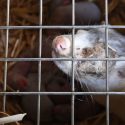
They have just been born, suffering and death surrounds them. Small minks’ utter cries of distress through their closed eyelids. Throughout this breeding process young and old are dying in the midst of this horror: the cages are strewn with corpses often torn apart, sometimes mummified… We constantly denounce these living conditions of the mink that are raised for their fur alone, but here we are beyond anything normal: this farm must close immediately! We are suing the breeder for acts of cruelty.

The corpses pile up

We have decided as part of our participation along with the « Fur » commission of welfare’s mission, which is conducted by the Ministry of Ecological Transition and as the French representative of the international Fur Free Alliance coalition, to return to assess the situation three years after our initial investigation into French mink farms.

We had to interrupt this audit urgently at the visit of the first breeder, as the absolute horror was exposed cage by cage!

The worst breeder in France, possibly even in Europe

In more than 20 years on the ground, nowhere had our investigators ever seen such conditions of detention as on this mink farm. How can this be tolerated in France by the authorities responsible for the control of standards and regulations that are in force? Faced with the agony of these mink, this breeder was to be denounced as soon as possible. We could not continue the audit without taking immediate action.

The investigation « Respect for minks: the luxury side of mink » actually exceeded the worst!

For more than twenty years we have been denouncing the raising and killing of animals for their fur. Three years ago, our survey showed the situation of mink in these « fur farms » that are also on national territory.

This time, this breeding far exceeds all the revolting elements that we had already highlighted and reported at the time: the crammed conditions of these mink who are confined in such small spaces, they who are usually free and solitary creatures; the wire floors injuring their webbed feet made for swimming and the lack of access to water; food, the infamous porridge placed on the cage and excrement falling to the ground, polluting the  soil and waterways… Finally, the gassing or poisoning to avoid damaging the coat.

The collateral damage, the deleterious consequences of these American mink that escape from these farms on the local biodiversity. Leading in particular to the disappearance of European mink, justifying alone our requests for prohibition of such farms in France.

Nausea

What the minks experience in this breeding at Eure-et-Loir is appalling! The only prospect for these minks is death in excruciating suffering, to the point of being devoured by their own kind. Barely born, they are already dying, surrounded by corpses at different stages of decomposition, before becoming one themselves… And mothers cannot protect their young from the abominable fate that awaits them. Here the scandal of raising minks for their fur reaches its climax.

This farm must close urgently

We denounce this farm and call for its immediate closure! An expertise in welfare must be carried out with the adoption of emergency measures such as the taking in charge of all of these animals by the State, which has failed in its task by leaving them in such unworthy conditions!

We are lodging a criminal complaint against the breeder, SCEA « Les Aubépines », for acts of cruelty, maltreatment committed by a professional and for improper exploitation of an establishment that holds non domestic animals.

Sign our petition to close this breeder down as soon as possible. This horror must stop. Surviving mink need us!

Fur in Eure-et-Loir: the farm of horror

Fur in Eure-et-Loir: the farm of horror

Fur in Eure-et-Loir: the farm of horror
02.07.2019
Eure-et-Loir
Fur in Eure-et-Loir: the farm of horror
Fashion

While checking which fur farms were still operating in France in order to prepare the « animal welfare » mission at which the association participates with the Ministry of Ecology, the investigators of One Voice discovered the horrors lurking in a mink farm located in the area of Eure-et-Loir: mink barely born, dying, stuck under the corpses of their congeners. Everywhere on this breeding farm, young and old dying in the middle of faeces and decomposing bodies. The cages are littered with dead mink often torn apart, sometimes mummified, over which the survivors crawl.
The association decided to stop its investigation to launch the alert on this breeding farm and ask for its immediate closure. A complaint for acts of Cruelty is to be filed on July 1 against this breeder, SCEA des Aubépines.

Participating in the animal welfare meetings of mink reared for their fur, the association (also French representative of the international coalition Fur Free Alliance) decided to check which fur farms were still operating in France and had reported in the winter of 2016/2017.

MACABRE DISCOVERIES

Our investigators have made a macabre discovery in addition to the facts alleged by our association with fur farms that was already revealed back in 2017.

Silver-blue, black and white minks exhibiting stereotypical behaviour: constantly turning in circles, signs recognized by the experts as the manifestation of abnormal characteristics, in installations of utter filth; wire cages on which minks have difficulty walking from where excrement and waste are dripping; mink (young and old) wounded, mutilated, dead, mummified; dead mink corpses around the farm without any precautions for the environment (fur farms are classified installations because they pose a significant risk to nature). During the breeding season, the young had mostly a few weeks of life.

Here the scandal of raising minks for their fur reaches a climax.

ONE VOICE REQUESTS IMMEDIATE CLOSURE OF THIS FARM of HORROR!

he association lodges a criminal complaint against the breeder for acts of cruelty, maltreatment committed by a professional and for improper exploitation of an establishment that holds non domestic animals. In addition, we are requesting an expert analysis on these animals’ welfare. How can the authorities endorse such practices? Survivors must be taken care of as soon as possible by the State, which has failed in its task by leaving them in such unworthy conditions.

This Wednesday, July 3 at 3.00 pm, the Minister of the Ecological and Solidarity Transition François de Rugy will receive all the protagonists of the animal welfare mission of captive wildlife for which the mink farms are concerned. Beyond the penal sanctions, this extremely cruel exploitation must be prohibited. This is the request we will make to the minister, of whom we expect to take strong action.

APPENDIX