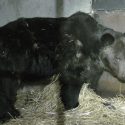
No, Bovine Tuberculosis does not spread more when we spare badgers’ lives

No, Bovine Tuberculosis does not spread more when we spare badgers’ lives

No, Bovine Tuberculosis does not spread more when we spare badgers’ lives
22.07.2021
France
No, Bovine Tuberculosis does not spread more when we spare badgers’ lives
Wildlife

While it is true that badgers feature among wild animals that are susceptible to being a host for Bovine Tuberculosis, incidentally in the same way as wild boar or deer for example, it is indeed a disease which originates from cattle herds. Therefore, when farmers and hunters claim in the media that sparing the lives of badgers is the cause of the disease spreading, and that the withdrawal of the decree that we criticised contributes to it, we can only counter them with the facts. We cannot let them say whatever they like to the public and trick them with their deceptive arguments.

Digging out: a dangerous hunt for dogs who can catch diseases

Underground hunting with hounds is a dangerous practice in terms of Bovine Tuberculosis because it puts hunting dogs in contact with badgers and with tunnels where badger urine can be found, which increases the risk of Tuberculosis spreading. Incidentally, this is the reason for the ministerial ruling of 7 December 2016 which orders that, in areas at risk, the Prefect can forbid the practice of underground hunting with hounds for all species for which hunting is permitted, owing to the risk of contamination for the teams of dogs. The Prefect knows this all the more since he actually had it banned in one part of this area precisely for that reason!

It is therefore completely contradictory and counter-productive to practice digging out to fight against Bovine Tuberculosis! We have highlighted this in the plea that we won against the Prefect of Lot-et-Garonne’s decree.

Divide and rule: when hunters make a game out of Bovine Tuberculosis

Unfortunately, killing badgers remains permitted from September to mid-January, in particular for hunting with guns. Now, many scientific studies have shown that indistinguishable badger culling results in an increase of Tuberculosis in bovines and the risk of transmission into adjoining areas owing to spreading machinery and the social and territorial reorganisation of surviving individuals.

The French Agency for Food, Environmental and Occupational Health & Safety (ANSES) has produced two reports on this issue, in 2011 and 2019, in which they consider that culling is not justified as a preventative measure in badger populations that are not yet affected by Tuberculosis. Indeed, this seems logical: you don’t cull individuals in good health to avoid transmitting a disease!

The withdrawal of the decree that we contested does not mean the disease will spread!

The diggers actually complained about the cancellation of their favourite summer hobby for completely disingenuous reasons. On one hand, they pinned the blame of bovine herd culling – destined for the slaughterhouse by farmers, need I remind you? – on badgers and on us, their advocates, while it is these farms that are the source of the transmission of the disease to wild animals.

On the other hand, the hunt isn’t used to fighting against the spread of Bovine Tuberculosis. Specific administrative demolition decrees have been issued for this within the framework of the Sylvatub system. The withdrawal of the decree that we obtained changes nothing on this point.

Equally, concerning the damage attributable to badgers and duly observed in farming, it is possible to put alternative (repulsive: filling in the setts so that the badgers “move out”, as the case may be) solutions in place. And the Prefect, unfortunately, has the possibility year-round and every time he deems it necessary to order these administrative badger “demolitions”. Even then, the withdrawal of the Lot-et Garonne Prefect’s decree that we contested doesn’t change anything.

Therefore, badger culling largely remains possible (something which we deplore); the misleading argument of hunter-farmers doesn’t hold up for a minute. We have obtained the withdrawal of the decree because the Prefect hadn’t carried out a public consultation beforehand. But he also allows the practise of a hobby that either way isn’t linked to the presence of damage or to a health risk.

Translated from the French by Joely Justice

Coitus interruptus for badger diggers in Lot-et-Garonne

Coitus interruptus for badger diggers in Lot-et-Garonne

Coitus interruptus for badger diggers in Lot-et-Garonne
19.07.2021
Lot-et-Garonne
Coitus interruptus for badger diggers in Lot-et-Garonne
Wildlife

The hearing at the Administrative Court in Bordeaux concerning our appeal to defend badgers took place on 29 June 2021. For the rapporteur public, the decree ordered by the Prefect of Lot-et-Garonne on 11 December 2021 that permits the allowed period of underground badger hunting with hounds to be kept from mid-May to Mid-September 2021 should be totally or partially withdrawn. We were therefore optimistic, and the good news broke this evening on 19 July 2021: the decree has been withdrawn!

Amongst the grievances that we have against this decree, there was the fact that the Prefect hadn’t preceded the publication with a public consultation.

For us, the decree was equally “tarnished by an obvious error of judgement”, it “was/is unaware of the precautionary approach” and was “tarnished by misuse of power”.

For Muriel Arnal, founding president of One Voice: « Badgers are peaceful animals who are protected in most European countries. And for a reason! Their population remains relatively stable and they don’t cause any damage. The only reason for authorising allowed periods for digging them out is simply for hunters’ pleasure! »

The Bordeaux Administrative Court has now decided to agree with the rapporteur public’s outcome. This is great news for badgers in Lot-et-Garonne. Effectively, badger diggers, who are allowed to carry out their sinister task from autumn to spring, will no longer be able to do so this summer. So, admittedly, from mid-May to now, it had been possible for them to kill badgers by digging the soft soil of the setts but that is where their gruesome game ends. We are extremely happy with this positive conclusion.

Translated from the French by Joely Justice

One Voice against bullfighting: coordinated action in thirteen regions!

One Voice against bullfighting: coordinated action in thirteen regions!

One Voice against bullfighting: coordinated action in thirteen regions!
07.07.2021
France
One Voice against bullfighting: coordinated action in thirteen regions!
Exploitation for shows

For the past twenty-five years, One Voice has been campaigning against bullfighting in France, firstly to prevent the bulls from suffering and dying, and secondly to ban access to bullrings and the participation of children in this torture. To this end, a day of coordinated actions in thirteen regions will take place on July 10. The animal rights organization is calling for a nationwide ban on bullfighting.

Bullfighting is considered a traditional spectacle where violence is trivialized. These torture sessions stimulate the aficionados in the audience, among whose ranks are even children, brought by their parents to witness these bloody scenes. These “shows” should constitute acts of cruelty and serious animal abuse, and therefore be punishable under the penal code. However, they benefit from an exemption in the regions where they take place, as they are, according to French law, part of a “continuous and uninterrupted” local tradition.

Whether on foot, on horseback or Portuguese-style, bullfights always torture and kill bulls in public or behind the scenes. There are several types: bécéradas with 2-year-old calves, novilladas with 3-year-old calves, and corridas with 4-year-old bulls. These are all very young individuals who are sacrificed in public. When we investigated bullfighting schools for children in 2012 and 2019, we saw adults forcing frightened children to take part in the unspeakable, and very young bulls put to death by teenagers.

What’s normal about killing an animal or watching them being killed? Bullfighting clearly contributes to the trivialization of violence. Far from being sport or art, these practices are abominable, and we demand that they be banned throughout France, without exception, rather than subsidized by town halls in search of local entertainment.

Events:

Please check the dates, times and venues on the day on the corresponding Facebook event, which will be updated, as sometimes prefectures change them at the last minute.

Region Town  Facebook Link Place Time
05 Embrun Event link Lieu-dit « Plan d’Eau » Sunday 11/07
2:30 to 5pm
06 Nice Event link La Coulée verte, Le Paillon 4:30 to 6pm
08 Charleville-Mézières Event link Rue Pierre Bérégovoy 2:30 to 4pm
13 Aix-en-Provence Event link Allées Provençales 11am to 12:30pm
14 Pont d’Ouilly Event link Devant L’Épicerie Du Coing 2:30 to 5pm
17 La Rochelle Event link Place de la Caille 2:30 to 4pm
33 Bordeaux Event link Quai de la Garonne Sunday 11/07
12pm to 5pm
34 Montpellier Event link Place de la Comédie 2:30 to 4pm
57 Metz Event link 12 Rue du Petit Paris 3 to 4:30pm
59 Lille Event link Grand’Place 2:30 to 4pm
67 Strasbourg Event link Rue des Grandes Arcades 2:30 to 4pm
69 Lyon Event link Place Saint-Jean 3 to 5pm
75 Paris Event link Place Edmond Michelet 2:30 to 4pm

An award-winning breeder who beats his dogs: we are filing a complaint

An award-winning breeder who beats his dogs: we are filing a complaint

An award-winning breeder who beats his dogs: we are filing a complaint
04.07.2021
Roquebrune-sur-Argens
An award-winning breeder who beats his dogs: we are filing a complaint
Domestic animals

One of many hunting festivals is happening this weekend in Roquebrune-sur-Argens. An award-winning breeder beats his dogs… but a witness filmed the scene there and sent it to us. We are filing a complaint for abuse committed by a professional (a crime)!

When one of our supporters found themselves face to face with this hunter-breeder in Roquebrune-sur-Argens, it made sparks. The man, an award-winner for his Porcelaine dog breeding during the Diane Roquebrunoise hunting festival taking place this Sunday 4 July 2021, keeps his dogs in a wire kennel, hitting them with what strongly resembles the handle of a whip. The poor dog being filmed, collapsed on the ground, terrified and beaten, undoubtedly must feel all the love that hunters clearly feel for their dogs…

It’s lucky that one of the participants of the ‘happening’, organised by the VESEA (Living Together Without Animal Exploitation) group, was filming at that moment. We are filing a complaint for abuse committed by a professional – an aggravated offence – because, once more, these acts of violence against animals cannot go unpunished.

During the verbal exchange, the breeder, leaving with a handful of prizes including one for best breeder – you couldn’t make it up! – doesn’t even seem to be aware that his behaviour was disgraceful. He beat them all successively and when confronted about it by an opponent he said: “Ah well, what can you do?!”. Hunters cannot continue to treat dogs as objects to be exploited, mercilessly having to obey like they are robots. They are sensitive beings and must be protected. We are there to ensure that happens.

Translated from  the French by Joely Justice

Our investigators saw Ula in a state of extreme emaciation

Our investigators saw Ula in a state of extreme emaciation

Our investigators saw Ula in a state of extreme emaciation
01.07.2021
Spain
Our investigators saw Ula in a state of extreme emaciation
Exploitation for shows

In the month of May, and when the latest news published by Loro Park in April about Ula was bad, our investigators went to Tenerife’s dolphinarium. We had to go and see for ourselves what was going on. After this visit to the Spanish pools, we were not hopeful about the future of Ula at all.

Dr Gallego, a veterinarian specialising in marine mammals, analysed the behaviour and physical appearance of Ula and her mother Morgan at our request. It emerged from his assessment that Ula was in a state of extreme emaciation. At two and a half years old, she should be putting on weight rapidly and continuously. Instead, the little orca, born with a deformity to her left flipper, suffered a period of serious digestive illness which made even the park’s management team fear for her life.

A past marked by difficulties

Separated at birth from her mother, Ula was unable to be nursed by Morgan. And since this period of critical urgency in the spring, she has been isolated from the rest of the orcas. Our investigators could see that during the show, she was moved from one medical pool to another, no doubt so as not to mess up the stunts. In fact, when she did not stay still in the pool of the dolphinarium, she would spy hop to look into the other pool. The adults spent time at the entrance of her pool as if to keep in touch with her.

A frail health

According to our sources in the dolphinarium, she began to lose weight without losing her appetite, then she no longer ate anything. A feeding tube filled with very diluted fish purée had to be used because she was vomiting everything else she swallowed. She recently accepted food again by way of small fish every two hours, which made the keepers optimistic. But it was nowhere near enough for her to regain strength and weight.

For the veterinarian specialising in marine mammals, Ula “does not seem to be in total remission.” Of course she is better, but all the same her state is still devastating: you can see her ribs sticking out, which would never happen with an orca in good health. In the same way, you can make out the section between her head and the rest of her body, giving the first the shape of a peanut, a sign of a serious loss of subcutaneous fat, which is totally alarming. Furthermore, her dorsal fin is beginning to cave in, which indicates a lack of fat and muscle, and therefore exercise. This has a particular repercussion on her buoyancy: she has trouble returning to the surface to breathe.

An uncertain future

Ula remains in a critical condition even if the return of her appetite is good news. In any case, her and Morgan should not be confined in these pools. Besides, it should never have been possible, given the regulations in dolphinariums, for an orca like Morgan not born in captivity to give birth to a baby in a pool. A better future exists for the orcas of the dolphinarium – marine sanctuaries. Moreover, we are in the process of working to a solution of this kind for the French orcas with the greatest specialists on the matter. Morgan and Ula could perhaps benefit…if the little one survives in the meantime.

Translated from the French by Sophie Martin

Correction on November 17: withdraw of the mention of the dolfinarium’s owner.

Hunting with glue: the State Council has ruled, victory for birds

Hunting with glue: the State Council has ruled, victory for birds

Hunting with glue: the State Council has ruled, victory for birds
28.06.2021
France
Chasse à la glu: le Conseil d’État a tranché, victoire pour les oiseaux
Wildlife

On May 28, 2021, the State Council examined the merits of the petition filed by One Voice and others against the 2018 and 2019 decrees authorizing glue-trap hunting. A positive decision had been handed down by the Court of Justice of the European Union (CJEU), so there was cause for optimism.

The decision of France’s highest public jurisdiction has just arrived: the State Council rules that glue-trap hunting is illegal.

In addition, the five decrees of September 24, 2018 by the Minister of State, Ecological and Solidarity Transition, relating to the use of birdlime for the capture of thrushes and blackbirds meant to be used as decoys, respectively, in the regions of Alpes-de-Haute-Provence, Alpes-Maritimes, Bouches-du-Rhône, Vaucluse and Var, for the 2018-2019 campaign, have been annulled.

What a great victory for birds, who will no longer be caught in glue in France! For four years now, One Voice has also been fighting before the State Council against all the other forms of traditional hunting. For these little birds, we’ll go all the way. Muriel Arnal President and Founder of One Voice

Below is the press release issued by the State Council

The State Council rules that glue-trap hunting is illegal

The State Council has ruled that glue-trap hunting cannot be authorized as it stands, after animal protection associations called for it to be banned and hunting federations called for it to be maintained. After referring the matter to the Court of Justice of the European Union, the State Council has annulled the French regulation authorizing the glue-trap hunting of thrushes and blackbirds, on the grounds that it is contrary to European law. In fact, it has not been demonstrated that the other birds accidentally caught using this method are caught in small numbers and without serious consequences. Furthermore, the fact that this is a “traditional” hunting method is not sufficient to justify a derogation.

A “traditional” hunting technique in five regions of south-eastern France (Alpes-de-Haute-Provence, Alpes-Maritimes, Bouches-du-Rhône, Vaucluse and Var), hunting with glue or birdlime involves coating sticks (“gluaux”) with glue in order to capture live birds of certain species who land on them, for use as decoys. Other birds caught using this technique must be released.

The European Birds Directive of November 30, 20091 prohibits the use of mass or non-selective capture methods, and lists glue-trap hunting as one of the prohibited practices. The directive does, however, provide for a derogation to be granted, “if there is no other satisfactory solution”, to capture certain birds in small quantities, “under strictly controlled conditions and on a selective basis”.

After asking the Court of Justice of the European Union (CJEU) to clarify its interpretation of these provisions of the Birds Directive, the State Council took the Court’s response into account and today annulled the ministerial decrees setting the maximum number of thrush and blackbird catches by glue-trap hunting in France. The three rulings were issued in response to appeals from the association One Voice and the French League for the Protection of Birds, which had called for the technique to be banned, and from the National Hunting Federation (FNC), which had called for it to be maintained.

The State Council noted that neither the government nor the hunters’ federation had provided sufficient evidence to assert that glue-trap hunting only led to the capture of small numbers of birds belonging to species other than those sought. Nor can it be claimed that accidentally captured birds would only suffer negligible damage once released and cleaned, particularly to their plumage.

Furthermore, it points out that while traditional hunting methods may be authorized under the Birds Directive, the sole aim of preserving these traditions is not sufficient to justify a derogation from the prohibitions of principle laid down in the Directive. Finally, it notes that it has not been demonstrated that there is no other satisfactory solution to the practice of glue-trap hunting.

Timeline

  • September 2018 and September 2019: The Government authorizes by decree the glue-trap hunting of thrushes and blackbirds in five regions of Provence-Alpes-Côte d’Azur for the 2018-2019 and 2019-2020 hunting seasons.
  • November 2019: Referred to by the association One Voice and the French League for the Protection of Birds, the State Council asks the CJEU to clarify the interpretation of the Birds Directive (see decision).
  • August 2020: Pending a response from the CJEU, the Government refuses to authorize glue-trap hunting for the 2020-2021 campaign.
  • September 2020: The National Hunting Federation refers to the State Council to order the Government to reauthorize glue hunting.
  • March 17, 2021: The CJEU responds to the State Council (see decision).
  • June 28, 2021: The State Council annuls the orders setting the number of birds that may be captured in 2018-2019 and 2019-2020, and validates the Minister’s refusal to authorize such captures in 2020.

1Directive 2009/147/EC of November 30, 2009 on the conservation of wild birds

Read the press release

Download decisions n°443849, 434365 and 425519

Week of action across Europe against cruel botox tests on mice

Week of action across Europe against cruel botox tests on mice

Week of action across Europe against cruel botox tests on mice
22.06.2021
Europe
Week of action across Europe against cruel botox tests on mice
Animal testing

Cruel botox tests on mice continue despite animal-free tests have been available for 10 years. From June 21 to 26, the members of the European Coalition for the End of Animal Experiments (ECEAE), from which One Voice is the French representative since the beginning, mobilize for a week of action across Europe.

Ten years have passed since the first manufacturer of botulinum toxin products (commonly known as botox) received regulatory approval for an animal-free test. After Allergan, two other global companies, Merz and Ipsen, switched to animal-free tests in 2015 and 2018. Despite these victories for animal rights campaigning, the extremely cruel botox tests on mice continue. One Voice, first French member of the European Coalition to End Animal Experiments (ECEAE), is calling upon the European Medicine Agency (EMA) to delete the LD50 test on mice from the European regulations. The ECEAE will be holding a Week of Action across Europe from 21 to 26 June to protest against the continued use of mice in this cruel poisoning test.

Muriel Arnal, Chairwoman of One Voice declares: « It is unacceptable that sentient animals are still subjected to an agonizing death for a product widely used for cosmetic purposes despite non-animal technologies being available. »


Occasionally used for medical purposes, the bacterial poison is well-known for its cosmetic use to temporarily reduce facial lines and wrinkles. Each batch of botox is tested by the controversial LD50 (Lethal Dose) poisoning test with different dosages of botulinum toxin being injected in the abdomen of mice in order to find the dose, which kills half of the animals. This involves appalling suffering for the animals who suffocate slowly through muscle paralysis while fully conscious. In Europe, an estimated 400,000 mice per year, are subjected to this cruel death.


Continuous protests by the ECEAE and others have persuaded the manufacturers Allergan, Merz and Ipsen to use cell-based assays, replacing most of their animal tests. However, some tests of these companies are still conducted on mice. One manufacturer still using the cruel LD50 test is Sloan Pharma. In 2019, the company received a license to conduct LD50 tests on 46,800 mice in Germany.

The European Pharmacopoeia which regulates the batch testing of botox products allows a number of animal-free test methods, but it also still allows the LD50 test on mice. The ECEAE calls upon the regulatory authority EMA to delete the mouse assay from the Pharmacopoeia.

Members of European Parliament raise concerns over the trapping of monkeys in Mauritius

Members of European Parliament raise concerns over the trapping of monkeys in Mauritius

Members of European Parliament raise concerns over the trapping of monkeys in Mauritius
18.06.2021
Mauritius
Members of European Parliament raise concerns over the trapping of monkeys in Mauritius
Animal testing

This follows the Mauritius government recently giving its approval to allow the expansion of one non-human primate farm with up to 1,000 macaques to be captured from the wild to be used for breeding. The MEPs include Ms. Manuela Ripa, Mr. Guenther Sidl, Ms. Marie Toussaint, Ms. Anja Hazekamp, Mr. Francisco Guerreriro. Mr. Martin Buschmann, Ms. Eleonora Evi and Mr. Raphaël Glucksmann.

«The intended expansion of Mauritius’ program to capture wild macaques is very alarming. With this, the country seeks to broaden breeding efforts to be able to supply the international market – including the EU – with monkeys for testing purposes. This could lead to large-scale commercial trapping of wild animals, which would be a major setback for biodiversity protection and animal welfare.»stated Ms. Manuela Ripa, MEP«The European Union led the way when it included the welfare of animals in its treaties as early as the 1990s. It did so again, in a practical way, when it proposed in 2010 to prohibit scientific experiments on wild primates. The ban should take effect next year, after too many long years of preparation. In a backward move, the government of Mauritius has recently approved the extension of an establishment breeding long-tailed macaques. The owner intends to use animals captured in the wild in this breeding establishment. As most of the primates used for scientific research purposes in the European Union come from Mauritius, we cannot just stand by and let this happen. We must not take the risk of importing macaques taken from the wild into the EU, even if this is legal for a few more months. We call on the Commission to act. In accordance with the high level of European ambition in relation to animal welfare, it must ensure that no wild primates will be used in Europe for the purposes of scientific research.» stated Mr. Raphaël Glucksmann, MEP

The questions asked of the European Commission by the MEPs include: Considering that the EU has set the date for ending the use of wild-caught primates and first-generation offspring in research, is it not incongruous that at the same time the EU is importing primates from a country that not only condones a wild-caught trade but is also allowing it to expand? How will the EU ensure that primates imported from Mauritius are genuinely captive bred or not sourced from farms that are involved in the export or trapping of long-tailed macaques for breeding purposes?

A coalition of animal groups in Europe and Mauritius (Action for Primates, One Voice, Animal Rights and Progress Science Mauritius), that led an international campaign to oppose the expansion and capture of wild monkeys, is grateful to the MEPs for responding to its concerns and has welcomed the submission of questions to the European Commission.

Mauritius is the main supplier of monkeys to Europe for research, exporting many thousands each year. In 2020, long-tailed macaques were exported to the following EU countries: Spain (2,126), France (1,027), Netherlands (290) and Germany (29).

In acknowledging that animal welfare, animal health and ethical problems arise from the capture of non-human primates in the wild, the EU decided to end its involvement in the capture of monkeys from the wild for scientific and breeding purposes. From 2022, the EU will only allow non-human primates to be used in research if they are the offspring of animals who have been bred in captivity (F2/F2+ generation), sourced from self-sustaining colonies. Recent developments in Mauritius, however, point to the resumption of a wild-caught trade for breeding and export, when in April, the Mauritius government approved the expansion of one non-human primate farm, Biosphere Trading Ltd, allowing up to 1,000 macaques to be captured from the wild to be used for breeding.

The animal groups are dismayed that the trapping of long-tailed macaques is taking place and calls this a major step backwards in terms of animal welfare, especially at a time when there is widespread global concern over the capture of wild non-human primates, because of the cruelty and suffering caused by the removal of such animals from their natural habitat, social and family groups.

NOTES

2010/63/EU The European Parliament and of the Council of 22 September 2010 on the protection of animals used for scientific purposes (Article 10) Directive. https://eur-lex.europa.eu/eli/dir/2010/63/oj

One Voice joins the coalition for a more ambitious law on whistleblowers

One Voice joins the coalition for a more ambitious law on whistleblowers

One Voice joins the coalition for a more ambitious law on whistleblowers
17.06.2021
Europe
One Voice joins the coalition for a more ambitious law on whistleblowers
Other campaign or multi-campaigns of One Voice

The European Directive on whistleblowers is going to be transposed into French law. We have joined a coalition of around 30 organisations, associations and unions calling for an even more ambitious law, that gives more protection to whistleblowers, who stand up for ethics and the common good!

Whistleblowers respond to an ethical imperative. As for animals, law and regulation offer them little protection, in spite of some symbolic advances in recent years and scientific research which constantly extends our knowledge of their intelligence, awareness and behaviour.

Animals really need whistleblowers!

There are multiple exceptions to the legislation, based on the ways that animals are used. Cats and dogs can be tortured in laboratories, although there are penalties for mistreatment when they are used as pets. Dogs used for hunting are seen as mere tools. Horses live different sorts of lives (some are used in racing, others in riding schools, or for trekking, bull-fighting, circuses or equine therapy). But almost all of them end up in an abattoir. When cats stray, they are no longer loved and cherished: they end up as a problem for the local authority to manage.

Wild animals in France are almost all hunted or trapped, considered to be a nuisance, even if the names change. Elephants and tigers, imported from abroad, are tamed and taken from town to town, exhibited in circus tents, their needs neglected. They end their lives in trucks. Mink and angora rabbits in captivity are victims of completely unnatural living conditions. Monkeys are transported from one end of the earth to the other, ending up on laboratory benches. Bulls are bred to end their lives with a dagger between their horns, bleeding to death in a bullring.

In each of these cases, humans are using animals and ruling their lives. This is also true when they are free in the wild. The natural world is also being devastated. Animal habitats are in constant decline as a result of intensive agriculture and the spread of urbanisation throughout the world.

Whistleblowers: a key link in the chain to improve conditions for animals in France

As in all areas of our society, the law should apply. However, in our view the existing laws fall short of what is needed. Worse, they are not even respected, and compliance even with the letter of the law is not checked.

That is why One Voice relies on many whistleblowers. They alert us to problems where they work, in their neighbourhood, in places where no one can know what is happening as the crimes are concealed. Or they send us documents which, if we publish them, could be the subject of action by the police. When our investigators are following a lead, and need to remain under cover, it is then One Voice which becomes the whistleblower.

These three aspects in particular of our work with and as whistleblowers would be protected if the proposals we are calling for are adopted.

A law which could go even further…

In December 2021 the European Union adopted a directive to protect whistleblowers, which has to be adapted and transposed into French law by December 2021. With the Maison des Lanceurs d’Alerte and the coalition of some 30 organisations we are calling on the French parliament to go further, so that whistleblowers are even better protected.

Particularly as, in France, defenders of animal rights are under surveillance

Defenders of animal rights are currently the target of a unit of gendarmes known as Demeter. This is contrary to the essential role of whistleblowers, who are responding to an ethical imperative, working for truth and transparency – for the common good. Ecology is not just about sorting waste or creating cycle paths: it covers the whole ecosystem, including animals. Our behaviour to animals is critical.

Proposals for going further

Recent whistleblowers have alerted us to Dumba, to the orcas and dolphins in Marineland, and to the American beagles which endure endless experiments in France. We need to be able to protect these whistleblowers, just as journalists can protect their sources.

We were able to see confidential information about the long-tailed macaques sent from Vietnam and Mauritius to Silabe in France and elsewhere in Europe. If we were to receive sensitive information, we could not publish it without risking legal action. We are calling for immunity from criminal prosecution for this. The public has a right to know how their taxes are being used.

Finally, we are proud that One Voice itself has been a whistleblower on many occasions: On the conditions in which the bears, Micha, Bony and Glasha, and many other animals were held by the Poliakovs. Or when our investigators had to spend night after night on a roof over ten metres high, leading to the most important seizure of tigers in France, and Europe more widely, for at least ten years. On minks: we have constantly rung the alarm on the dangers of pollution from mink farms, the suffering of the animals themselves and, in recent months, the health risks linked to COVID-19. For the orcas of Marineland Antibes, at risk of being sent to China. On the danger represented by individuals who are violent towards animals. We repeatedly point out that knowledge of this should be used as a means to prevent domestic violence (this phenomenon, known as the Link, was identified by a member of our team). On the horrors perpetrated by practitioners of penned hunting, those who dig out fox earths or badger setts, those who hunt with hounds, or indeed by any hunters. On the danger of showing performances involving captive animals to children, making them watch or take part in bullfights or hunting, so preventing them from developing empathy and hindering their ability as adults to protect animals and vulnerable beings in general.  On all these issues, we too should be heard and protected.

Translated from the French by Jo Durning

Senator International Air Freight: flights from the USA full of dogs for laboratories in France

Senator International Air Freight: flights from the USA full of dogs for laboratories in France

Senator International Air Freight: flights from the USA full of dogs for laboratories in France
15.06.2021
International
Senator International Air Freight: flights from the USA full of dogs for laboratories in France
Animal testing

On Thursday 20 May, a cargo of around a hundred beagles was sent from South Carolina to Germany. Their final destination was laboratories in France. We need you to call on the air freight company, Senator International Air Freight, to stop this evil trade.

We did research after an alert from a whistleblower. The beagles spent 14 hours on the road in trucks, crossing the east of the United States before arriving in the burning heat of South Carolina. They were all caged in shipping crates and loaded on a palette into the trailer, like a consignment of goods. They were unloaded at the airport, where the whistleblower was able to take some photos. Staff then loaded them onto a flight for Germany, from where they were transferred to France where they will suffer test after test in laboratories. Senator International, the air freight company, regularly carries such cargo. It also works for other companies, such as Bosch and even BMW.

Transport of dogs from the United States to France: a lucrative trade

The main American breeder sending dogs from the US to France is Marshall Farms, the ‘bioresource’ company, which bought the Gannat site in Allier from Harlan, against which we have taken legal proceedings, and which is seeking to extend its commercial influence in France. It would not be surprising if the dogs came from Marshall Farms’ North Rose site in New York State, as that is where the trucks that transported the dogs to the Greenville-Spartanburg international airport are registered. Nor would it be surprising if they were destined for the company’s site in Lyon, as Lyon is the only city in France where Senator International has a branch at the airport

These beagles are in living hell, from birth to death

The unfortunate beagles are reared in animal facilities which provide guarantees to the laboratories as to the type of dogs to be sent. They are separated from their mothers soon after birth. The same operations are carried out in Mézilles in France, where we have obtained images of the bitches used for breeding and the comfortless cells in the maternity building, where they have no respite from the constant cycle of pregnancy, giving birth and feeding puppies. As soon as the breeder decides that the puppies should be weaned and that they are ready, they are put into crates.

That is when the journey through the United States begins. It lasts around fifteen hours. At the end of such a long journey, the dogs are exhausted, stressed, thirsty and hungry. They have had to perform their bodily functions in the crates in which they are imprisoned. But the journey is not over: they still have a flight of around eight hours, not counting any stopovers, in a freight aircraft. The same applies when they arrive in Germany: a stopover, then the next journey, from Germany to France.

And that is when the real torture begins: continual experiments, more or less invasive and painful, until they die. And often, post-mortem, their organs are used for analysis.

Translated from the French by Jo Durning