MarineLand, Canada, Kiska thrashing…

MarineLand, Canada, Kiska thrashing…

MarineLand, Canada, Kiska thrashing…
19.12.2021
Canada
MarineLand, Canada, Kiska thrashing…
Exploitation for shows

We filmed Kiska at MarineLand Canada in October 2021 doing violent back and forth movements from left to right near the glass at the shallow end of the pool.She struggles in the water, displacing large amounts of water.

Assessment of the situation of the cetaceans, held at MarineLand of Canada, Niagara Falls, Ontario.

Report prepared by Dr Ingrid N Visser (Phd), Tutukaka, New Zealand

Download
Read our campaign about the other MarineLand to know more

Dumba still needs us!

Dumba still needs us!

Dumba still needs us!
16.12.2021
Germany
Dumba still needs us!
Exploitation for shows

Another year of solitude has passed by for Dumba. Since her previous keepers put her into a permanent circus in Germany, she no longer spends her life on the road, shut up in a lorry, and is no longer subject to humiliating performances. But boredom still plagues her. Our investigators have witnessed her dismal day-to-day.

Time drags for Dumba… It has been a year since we found the elephant languishing at the back of the animal trainers’ property in the French department of Gard. It was 1 January 2021; she was kept prisoner in a tiny trailer and left to fight against the cold with temperatures below 0°c.

One year of rallying

We need to intervene urgently… we have moved heaven and earth to alert the public and the media, launched a petition, and reasoned with the mayor of Euzet-les-Bains who took the trainers’ side. We also sent letters to the region’s prefect and to the authorised representative in Alès and filed a complaint in order to obtain ownership of the elephant. However, despite the agreement of six independent experts attesting to her alarming state, the French authorities distinguished themselves by their inactivity. And Dumba’s ‘owners’ were able to escape to Germany peacefully.

Still in circus trainers’ hands

From now on, the elderly female is being kept in the Elefantenhof Platschow permanent circus near Hamburg. She has finally escaped from touring and training sessions that she has been enduring since being captured in Africa almost 40 years ago. Our investigators who diligently monitor her went back to see her. While other elephants are exploited between shows and popcorn, she has the privilege of not having to participate in acts. She can even take a few steps in a small enclosure at the back of a human-sized park and visitors don’t harass her. Is Dumba happy in view of all of this? Clearly not. Because she is still faced with isolation. Admittedly, she has other pachyderms surrounding her. But the enclosures separate them. So, it is alone, tragically alone, that Dumba’s days drag on.

Let’s offer her a better future!

Knowing that she is outside of our borders doesn’t mean that we will give up on improving her day-to-day life. Quite the contrary: proceedings are underway and we will fight until we get custody of her. Permanent circuses do not provide a satisfactory solution for the animals that they are keeping. Dumba should be cared for in a sanctuary with more space, surrounded by companions. We will fight until the end to obtain a peaceful sanctuary for her…

Translated from the French by Joely Justice
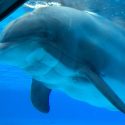
The other MarineLand : an orca in isolation and belugas crammed in…

The other MarineLand : an orca in isolation and belugas crammed in…

The other MarineLand : an orca in isolation and belugas crammed in…
09.12.2021
Canada
The other MarineLand : an orca in isolation and belugas crammed in…
Exploitation for shows

We have published an expert’s report and revealed previously unseen images of the cetaceans from the other MarineLand, located a stone’s throw from Niagara Falls in Ontario, where there are belugas, dolphins, and an orca stagnating in small, dirty tanks. Kiska has been alone for ten years. Animal welfare is so badly flawed that the problems being reported a decade ago are still unresolved and are getting worse! Yet another scandal in the captivity industry.We wrote to Isabelle Hudon, Ambassador of Canada in France as well as Sylvia Jones, Solicitor General of Ontario and Paula Milne, Ontario’s chief animal welfare inspector, and sent them the report.

Just before its annual closure for several months, one of our investigators returned to the other MarineLand in Canada to see what state the cetaceans were surviving in. Kiska was subjected to enforced isolation for years and was going round and round in a tank that was tiny in relation to her size and swimming capability. What will their lives become, being hidden out of sight for the entirety of the Canadian winter?

A damning report

When our investigator went back, the images and information collected were sent to Dr Ingrid Visser, a marine biologist who specialises in orcas, to create a report on Kiska’s state. According to the researcher who had visited MarineLand in person in 2015, 2017, and 2018, and had also received our images from 2021, the conditions of confinement, behaviour, and also the physical state of the animals were so worrying that the report covers much more than just the isolated and neglected orca as we had initially planned.

The quality of the water (page 55), the size of the tanks (page 43) and the general upkeep of the park are questionable. The mental and physical state of the animals is detrimental and has been for years.

« The cetaceans are all exposed to extreme welfare issues. All of them show stereotypical behaviours (in other words abnormal and/or repetitive behaviours). Many of the animals have injuries, of which many are probably the result of self-mutilation behaviours and/or attacks and/or injuries caused by the tanks. » Ingrid Visser, Marine Biologist

Assessment of the situation of the cetaceans, held at MarineLand of Canada, Niagara Falls, Ontario.

Download Report prepared by Dr Ingrid N Visser (Phd), Tutukaka, New Zealand

Kiska’s solitude and overcrowding for the belugas

The belugas are on top of each other and, inevitably in such conditions, are subject to attacking. They go round and round in circles, so much so that, like Kiska, their profound mental and psychological problems are also shown as physical problems. Some of them have teeth worn down to the gum, deformed bodies… In the tanks in the show auditorium, there are two sealions, five dolphins, and two belugas. These animals should not share the same tank system as the temperatures required for each species are completely different (mild for one, freezing cold for another). What’s more is that the latter are made to carry humans on their heads (page 29)! The dolphins’ skin is raked with bite marks, specific to being confined, and they are kept in a miniscule tank. As for Kiska, she spends her day idling, skimming around the sides of the tank always in the same direction. So much so that her dorsal fin is collapsing, typical of her having a health problem and a lack of exercise (page 5). Sometimes she exhales underwater to make bubbles, and often, near the “beach” in the tank, makes waves so strong that we think she hits her head on the glass (page 15). This is to keep herself occupied. For the three days that our investigator was there, at no point did the park make any enrichment available to Kiska to cure her boredom. Only mealtimes break the monotony of the days passing by. We were able to film them cleaning her teeth, which are in a pitiful state incidentally, almost comparable to Inouk’s in France… many of her teeth have been gnawed down to the flesh (page 7), which is just as painful for orcas as it would be for humans. This is the result of years in captivity: gnawing at the edges of the tanks, regurgitating numerous times due to stress, and not even using them to eat (everything is poured directly down their throat) (page 9). Furthermore, even care is given in a questionable way: a Betadine-type liquid is sprayed onto their teeth and runs down their lips (page 8)… but this liquid should not be ingested under any circumstance, which is inevitable! Ingrid Visser’s report further revealed that an open wound that she had on her tail for nine years has still not healed (page 14). That’s just life in a dolphinarium.

« The annual closure of the dolphinarium is a critical moment because no external witness is able to reveal any problems. We are very worried about what might happen to Kiska and the rest of the animals locked up behind closed gates at MarineLand Canada. We have not forgotten the tragic fate of Femke and the other dolphins sent from Parc Astérix (in France) to other European dolphinariums last year to continue to be exploited. » Muriel Arnal, One Voice’s President

A dilapidated dolphinarium in need of restoration? What about the animals?

Everything shows that the dolphinarium is deteriorating and that no investments have been made for years. Around the tanks and near the bear enclosures, there are numerous seagulls looking to grab what’s left of the belugas’ food from their “educational demonstrations” or what’s left of the brown bears’ food that has been distributed by visitors all day long. Droppings are spread all over the place and not cleaned up from one day to the next. On the edges of the tanks, on the ground, everywhere (page 38). There is a risk of numerous illnesses being transmitted to visitors and to children. The bears mope around in their enclosure, most of them stay away and even turn their backs on the visitors in a futile attempt to forget where they are. Two or three of the big eaters take a bath in front of the park’s clients who throw them food that they’ve bought at the kiosk just before.

The walruses, including Smooshi, previously one of the park’s attractions, have disappeared. What has happened to them?

Under the tanks, large dirty windows allow you to see the cetaceans. There are leaks everywhere and mud and algae grow at the joints. Signs indicate that the leaks are safe and that they should resolve on their own… the same signs photographed years before show the opposite is true (page 36)! Who are we kidding?

One of the signs, with attendance at half capacity (the few open rides are pretty much empty and so are the pathways), shows that the current owners may be looking to sell the park, including the animals. What will their fate be?

According to a local source, some of the most famous companies worldwide in the entertainment industry could be among the potential buyers… but this information remains to be confirmed.

«The number and the scope of the violations of Ontario Regulation 444/19 (NB: page 59) on animal welfare are considerable… it is recommended that the cetaceans are moved as soon as possible to a proper sanctuary by the sea.»Dr Ingrid Visser

There is a petition to free Kiska online. We are counting on you.

Sign the petition

Moana, a young orca in a pitiful state of health at Marineland in Antibes

Moana, a young orca in a pitiful state of health at Marineland in Antibes

Moana, a young orca in a pitiful state of health at Marineland in Antibes
23.11.2021
Alpes-Maritimes
Moana, a young orca in a pitiful state of health at Marineland in Antibes
Exploitation for shows

At Marineland in Antibes, just like his uncle (Inouk), mother (Wikie), and brother (Keijo), Moana goes round in circles in the filthy waters of the aging dolphinarium. Orcas can live for as long as humans. Yet Moana is 10 years old. And at his age, the sub-dermal wounds that we have photographed are very worrying. His state has worsened. Thanks to our images and to several visits to the park over the last few years, Moana has been studied and evaluated by Marine Biologist Dr Ingrid Visser, and by Dr Pierre Gallego, a veterinarian specialising in cetaceans. We are filing a complaint against the dolphinarium for acts of cruelty.

« The facility is small and in a bad state (and is deteriorating) and the poor quality of the water is worrying. I think that the data relating to Moana’s nutrition, health, behaviour, and aggression, as well as that related to the quality of the water, should be made accessible for independent orca experts. This would allow an accurate evaluation on the extent of the issues that Moana is faced with. » Dr Ingrid Visser PhD

A proposed law that is insufficient for orcas

As we reported two years ago, the risk of the French orcas from Marineland Antibes being sent to China remains. Even more so now that the law against animal mistreatment that has just been passed contains loopholes that allow it to get around that which it advises.

In fact, the law proposed that it is possible to keep orcas and dolphins in pools for research. But to study what exactly? How they suffer when they are cut off from the world? Illness among captive individuals? How to develop various diseases by imprisoning them?

« Moana’s state of health… is critical, and requires urgent treatment by a veterinarian. The pathological process which Moana seems to be a victim of is likely to put his life in danger » Dr Pierre Gallego

Moana is in poor health!

His chin, for example, is in a very bad state, as the numerous photographic snapshots from the report written by Dr Visser confirm (available for consultation at the bottom of the page). The colour of his skin has changed! And his state is worsening. The harmful state of the water is an exacerbating factor. He is also the target of the older orcas’ attacks, as is the case everywhere where cetaceans are kept in dolphinarium pools. It is one of the (many) problems of captivity.

Finally, the fact that they are going round and round in an environment that is too small and completely artificial, exacerbated by the absence of any depth, the poor quality of the water, the absence of choice, and difficulty in communication, creates a harmful strain on the orcas’ immune systems, which leads to them irreversibly developing mental and physical illnesses.

Little Ula at Loro Parque in Tenerife didn’t even last three years before dying. And in Marineland Antibes, we can no longer keep count of the number of deaths (Valentin) since it opened…

Our complaint to protect him

We have filed a complaint for acts of cruelty in relation to Moana, in which we have requested particularly that an independent investigation is carried out and for a precautionary foreclosure.

The precautionary foreclosure will allow the prohibition of all transportation as well as putting a stop to shows and experimentation. Also, he — and by extension Wikie, Keijo and Inouk — cannot risk being transferred, for example to China where they would be exploited more and more for shows. China is also a country that doesn’t have any regulations in terms of animal wellbeing. They will no longer be exploited for shows nor for “studies”, two activities which enforce them to do acts and sequences that they cannot choose… a very stressful way to train them.

We are also requesting that Moana is entrusted to our care so that one day we can transfer him to a marine sanctuary that we are in the process of creating with the best specialists in the world who have the necessary experience.

Translated from the French by Joely Justice
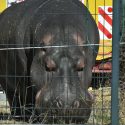
Moana, a 10-year-old male orca born in captivity, with subdermal tissue lesions

Download report written for One Voice by (Dr) Ingrid N. Visser

Monkeys destined for US labs die on board Wamos Air flight

Monkeys destined for US labs die on board Wamos Air flight

Monkeys destined for US labs die on board Wamos Air flight
17.11.2021
International
Monkeys destined for US labs die on board Wamos Air flight
Animal testing

Animal Protection groups are calling on the Spanish holiday charter airline, Wamos Air, to immediately stop transporting monkeys for research laboratories following the tragic deaths this week of several monkeys on board its flight from Cambodia to the US.

The tragedy began Sunday 14th November. According to a tip-off received by a concerned person in Madrid, Wamos Air transported 720 long-tailed macaques as cargo on Flight EB998 from Cambodia (PNH) to Houston (IAH) (AWB 46090129060). The ordeal suffered by these monkeys included confinement inside small transit crates for 24 hours of flying time, with an additional six hour stop-over in Tbilisi, Georgia, which included a three hour delay. In addition, many hours would have been spent in transit to and from the airports.

In recent months, animal protection groups Action for Primates (UK), One Voice (France) and Stop Camarles (Spain), have spearheaded a campaign across Europe calling on Wamos Air to stop transporting monkeys after discovering the Madrid-based airline was flying thousands of monkeys to the US for research.

Sarah Kite, Co-founder of Action for Primates, stated: « This tragedy exposes the shocking reality of the suffering inherent in the transportation of these intelligent and sentient beings. It is simply not possible to confine non-human primates to small crates, away from familiar surroundings, and transport them on long journeys across the world without causing considerable distress, physical and psychological suffering. This is an issue that attracts widespread public concern, and it is time for Wamos Air to join the long list of airlines that now refuse to be a part of the cruel global trade in monkeys for research. »

« We know that deaths occur on airlines flying monkeys for research, but details are rarely publicised. This shocking and heartbreaking incident on board a Wamos Air flight is a stark reminder of the very real suffering involved in the global trade and transportation in non-human primates for research. »

The long-tailed macaque (Macaca fascicularis) is the most heavily traded non-human primate species for the global research and testing industry, with the US being one of the world’s largest importers and users of non-human primates for research. In 2020, imports of long-tailed macaques from Cambodia by the US increased by 82.8% – from 8,571 in 2019 to 15,664 in 2020.

Wamos Air, formerly Pullmantur Air, primarily operates passenger charter flights to holiday destinations, including in the Caribbean. It is a subsidiary of the Miami-based Royal Caribbean Group (formerly Royal Caribbean Cruises Ltd), the world’s second-largest cruise line entity, which operates Royal Caribbean International, Celebrity Cruises and Silversea Cruises.

During transportation, monkeys are held in small transit crates and travel as cargo. In addition to the cramped conditions, they may be forced to endure inadequate ventilation, unfamiliar and loud noises, temperature and humidity fluctuations and delays en-route. Monkeys may become ill or die in transit, as happened in this case. For others, anxiety and stress can lead to infections and the onset of disease which may remain latent until the animals reach their destination.

At the Nouveau Cirque Triomphe, lions breed instead of being sent to a sanctuary…

At the Nouveau Cirque Triomphe, lions breed instead of being sent to a sanctuary…

At the Nouveau Cirque Triomphe, lions breed instead of being sent to a sanctuary…
04.11.2021
France
At the Nouveau Cirque Triomphe, lions breed instead of being sent to a sanctuary…
Exploitation for shows

Since June 22, 2021, the Nouveau Cirque Triomphe has been forbidden to keep any feline. And yet, at the beginning of October in Jons, our investigators filmed a mating between a lion and a lioness. This shows the extent to which circus performers, and Joseph Gougeon in particular, cousin of the circus performers from Cirque de Paris, Italiano and Idéal, ignore official orders and do as they please all the time. Breeding is actually happening in this circus and it’s not its first criminal act: last year alone, it sold a lion to a taxidermist in Paris, and holds a lion with the same identification number as Jon, even though he had been seized from the Cirque de Paris several months earlier! We’re stepping up our administrative procedures.

If our representatives think that by allowing breeding to continue for another two years, they are making compromises and allowing circus performers to “adapt”, what they are really doing is allowing the trade in big cats to continue! Circus performers already benefit from compromises, conscientiously ignoring the regulations that apply to their trade.

Tougher proceedings against a circus that continues to trample on the rules

After our investigators discovered in October that the circus was indeed keeping four lions, despite the partial closure order, we filed an additional complaint (for carrying on an activity in violation of a closure order).

We also wrote to the Rhône DDPP, the department of the prefecture responsible for captive wild animals on its territory, requesting written proof of the death of the lion, who died on February 16, 2021 and was sent to the Parisian taxidermist.

As part of our appeal to the administrative court in June 2021, the prefecture has initiated a procedure to have the lions placed in a suitable structure, but if Gougeon has appealed as it is said, he could keep them in the meantime, as long as they are not presented in a show… Yet the prefectoral decree has not been challenged in the administrative court by the circus.

In any case, we have reinforced our appeal with a supplementary brief for these lions. And since the Rhône DDPP says that the National advisory commission for captive wildlife is due to meet and rule on Gougeon’s application for a competency certificate, we’ve written to the Commission. It’s mind-boggling! We wouldn’t allow a quarter of what circus performers dare to do to any other citizen. We demand to be heard on the serious and numerous failures and unwillingness of the trainer to comply with the regulations.

These lions and lionesses must be entrusted to us!

These animals are being mistreated and kept in absolutely abject conditions. This circus should no longer keep felines! But what we filmed a few weeks ago in October were animals in the process of reproducing. So there are going to be more babies?! Who are once again going to feed the traffic… This is all very lucrative for the circus, but totally illegal and scandalous. Muriel Arnal President of One Voice

Following these new elements, we are writing another letter to the prefect, this time to ask him to seize the animals and entrust them to us. Sign the Brindas residents’ petition, already supported by over 20,000 people.

At the Muller Circus, tiger cubs are born, exhibited and then disappear year after year…

At the Muller Circus, tiger cubs are born, exhibited and then disappear year after year…

At the Muller Circus, tiger cubs are born, exhibited and then disappear year after year…
03.11.2021
France
At the Muller Circus, tiger cubs are born, exhibited and then disappear year after year…
Exploitation for shows

In October 2021, whistleblowers alerted us to the fact that the Muller family, the owners exploiting Jumbo, were exhibiting a tiger cub to the public, and even allowing them to be touched. Our investigators went to the site and found two of them. This constitutes mistreatment and an offense. And what’s happening to the cubs? We are lodging a new complaint against the circus and putting the Drôme DDPP on notice.

Circuses are supposed to obey rules. In this case, it’s the decree of March 18, 2011. Each trainer has a license for certain animal species, and a maximum number is set. Muller has for instance a hippopotamus, Jumbo, and tigers. But not everything is allowed! These animals must all participate in the show (which is often far from being the case), otherwise why subject them to transport and confinement in cage trucks? As for the shows themselves, they must follow certain rules: no exhibition of tiger cubs, for example, in the decree authorizing the opening of this circus! But that’s exactly what our investigators witnessed! Cubs just a few weeks old, separated from their mothers at an early age, dragged brusquely from their cages by one paw, then groped by the audience.

Welfare, safety and health: trampled underfoot by trainers

Handling tiger cubs in particular is totally contrary to the well-being of the babies, but a simple separation is already a problem for both the cubs and their mother.

Such interactions are strictly forbidden. For safety reasons, of course, but also for health reasons: diseases, known as zoonoses when they are transmissible from one species to another, can be transmitted. What the Muller Circus is doing even goes against the recommendations of the European Association of Zoos and Aquariums (EAZA).

How, under such conditions, can we expect children to see animals – particularly tigers, whose species is disappearing – as anything other than objects at their disposal? How can we hope to protect the planet if nature is objectified in this way?

For the baby tigers and their mother, we have lodged a complaint against the circus for mistreatment by an operator, irregular exploitation and detention methods likely to cause suffering.

What happens to the babies? Do they feed the traffic?

What’s more, as we’ve already said in other cases, we’re deeply concerned about the fate of these babies. At Parc Saint Léger, at Mario Masson‘s, at Triomphe, Paris, Idéal or Gougeon cousins’ Italiano circuses: what happens to the babies after a few weeks? A few months? After all, circuses cannot exceed the number of felines authorized in each opening decree. And although the births are always described as “unusual”, there are still some every year. What happens to them, then, since circus performers have to give them up, or even get rid of them, on pain of being fined?

We are also putting the Drôme prefecture (DDPP department) on notice to find out how many births have taken place in this circus, and what has happened to the animals. The bill on animal mistreatment (PPL Animaux) only provides that breeding be prohibited in traveling circuses within two years. This will do nothing to help these baby big cats, victims of this and other forms of trafficking, such as ending up in a taxidermist’s shop where their remains are sold for tens of thousands of euros!

Two proceedings are therefore underway: one criminal, the other administrative.

Dog breeding in Gannat for the laboratories: the administrative tribunal have cancelled planning permission!

Dog breeding in Gannat for the laboratories: the administrative tribunal have cancelled planning permission!

Dog breeding in Gannat for the laboratories: the administrative tribunal have cancelled planning permission!
02.11.2021
Allier
Dog breeding in Gannat for the laboratories: the administrative tribunal have cancelled planning permission!
Animal testing

Humiliation for the municipality of Gannat. Beagle breeding in Gannat cannot be expanded. The Clermont-Ferrand administrative tribunal have ruled in favour of One Voice and their partner, FNE Allier [France Nature & Environment Allier], who filed a joint appeal in 2019. It is a truly great victory against one of the links in the animal experimentation chain in France, and especially for the many beagles who will avoid having to suffer in this place void of love. We never gave up on them.

Photo : Jenny, Charlotte, Linda et Zoé, saved by One Voice from the Gannat breeding facility in 1999

The breaking point of an expansion with detrimental consequences for the environment

Since animal advocates such as ourselves weren’t heard in ethical arguments linked to animal experimentation, we criticised the prefectural decree on the ecological aspects that such an expansion would have on the environment. In fact, our association defends all animals: those found inside breeding farms such as wild animals, as well as nature and humans. Pollution is a major problem which we must counterbalance by combining all of our efforts. However, the Marshall BioResources (MBR) project backed by the municipality of Gannat was not precise or protective enough for the surrounding ecosystem.

According to Muriel Arnal, founding president of One Voice: « Dogs suffer martyrdom in laboratories. And breeding in Gannat is no exception. The obscurity of this sector is deliberately retained; there is a need for more transparency and controls. France would do well to fund research into alternative methods. In the meantime, we are fighting for these dogs being used as guinea pigs. Obtaining a ban on the expansion of this breeding farm signifies thousands of lives spared. »

A matter of money where dogs are the product

In 2017, the American giant Marshall BioResources took over the breeding of beagles destined to suffer and die on tiled laboratory benches, before this year buying a breeding centre in Yonne, Mézilles (the reputation of which was already badly damaged by associations such as ours) to avoid the inconveniences linked with transporting animals to laboratories by air and to cut back on costs. The aim? To keep making more money from dogs in France, knowing that our country is one of the three biggest users of dogs for animal experimentation within the European Union.

France leads in animal experimentation obscurity

There is a serious problem with transparency in the animal experimentation sector. There is no exception here, where the beagles are hidden from public view in ultra-secure locations of which images are rare. In that case, how can the public be incensed by their fate? Those who are on occasion born with genetic conditions to test this or that product. Those which we know so little about… in these conditions that they are born into, will they grow up? How are they treated? All we know is that they will never set foot on a blade of grass, or run on the beach, or roll onto their backs to be given a belly rub, or warm themselves in front of a fireplace… instead, they will be inoculated with toxic products until their organs can take no more and they fail one by one, causing them excruciating pain before they die and are dissected.

A long-term battle

One Voice’s battle in Gannat and against MBR is nothing new. Since the end of the 1990s, our association (then named Talis) has prevented the construction of a breeding farm in Montbeugny. We have also fought against Harlan in Gannat when this company owned it…

We will never give up on the animals who are victims of animal experimentation, whether in France or in Europe

In September, we took part in a rally, organised by Animal1st, outside the Gannat breeding farm following the movement that was started in Great Britain: Free the MBR Beagles, and in one on 16 September in front of the MBR headquarters in Lyon. We started a petition for transparent research and for replacing animal experimentation with alternative methods. Speaking of which, the European Parliament has just voted for a plan of action to put an end to animal experimentation in Europe. We are also part of the coalition that set up the European Citizens’ Initiative, which is working towards the same goal.

Translated from the French by Joely Justice

One Voice rally in front of the National Museum of Natural History to shut down its primate breeding facility

One Voice rally in front of the National Museum of Natural History to shut down its primate breeding facility

One Voice rally in front of the National Museum of Natural History to shut down its primate breeding facility
05.10.2021
Paris
One Voice rally in front of the National Museum of Natural History to shut down its primate breeding facility for laboratories on October 9, 2021
Animal testing

On Saturday October 9 in Paris, One Voice is organizing a rally to demand the closure of the largest breeding facility for grey mouse lemurs for animal experimentation -that of the National Museum of Natural History. It will take place at Valhubert square from 1pm to 3pm, at the end of the Jardin des Plantes, facing the River Seine.

In our country, experiments are still carried out on primates. Worse still, France is Europe’s leading user of primates for laboratory purposes.

Five hundred grey mouse lemurs (Microcebus murinus), tiny lemurs with big eyes, are bred in France for animal experimentation.

The National Museum of Natural History’s Brunoy facility (Essonne) is home to the world’s largest breeding facility for grey mouse lemurs, and offers its animals to scalpels. The Museum is even looking to expand!

So, once again, France stands out for its ferocious appetite for animal experimentation, on primates in particular, on the pretext that those ones are as easy to handle as mice, while sharing with humans a “more important heritage than conventional rodent models”. And it’s working hard to shine internationally in this domain.

See the Facebook event

France, champion of animal experimentation: grey mouse lemurs in sight

France, champion of animal experimentation: grey mouse lemurs in sight

France, champion of animal experimentation: grey mouse lemurs in sight
04.10.2021
France
France, champion of animal experimentation: grey mouse lemurs in sight
Animal testing

Researchers in France are still conducting experiments on primates. Specifically, in its branch in Brunoy (Essonne), the French National Museum of Natural History has the largest breeding centre for mouse lemurs in the world. The animals are kept purely to be cut up for science.

Photo: © Gerald Cubitt / Photoshot / Biosphoto

France is renowned for its culture, its intellectuals, its historic towns and villages and its beautiful landscapes… Take Brunoy, in Essonne, for example. Although tensions in some of the surrounding housing estates can sometimes lead to unrest, the centre of this residential suburb retains at least part of its historic heritage, with magnificent buildings and plenty of green space giving rise to its reputation and its charm.

A centre of excellence

This is the setting within which scientists from the National Museum of Natural History (Muséum National d’Histoire Naturelle – MNHN) have, for some fifty years, been carrying out specialist research in the fields of forest ecology and adaptive strategies of living organisms, on the site of the Petit Château, an 18th century mansion.

Primates destined for experiments

It is a fine programme – on paper! However, the walled grounds, now closed to the public, are currently home to the largest primate breeding centre in the world, a community of nearly 500 small lemurs. Their name in English is ‘grey mouse lemur’; in French ‘microcèbe mignon’, meaning ‘charming lemur’, while the Latin name is ‘microcebus murinus’. They are kept for use in animal experiments. Mixed teams of scientists from the MNHN, the CNRS and other research institutes really love these descendants of animals caught in Madagascar, particularly because their small size makes them as easy to handle as mice while they have ‘much more in common with humans than the classic rodent models’.

From observation to euthanasia

This represents a great opportunity for laboratory technicians, who subject them to batteries of tests. These include ‘simple’ behavioural studies, which nevertheless sometimes, as here, consist of leaving the animals in darkness or making days and nights shorter in order to reduce their lifetimes. However, other experiments can be much more invasive, as part of research on inflammation of the eyes, pancreatic lesions, or the development of tumours as part of ageing. Research in neuroscience, in particular on the structure of the brain, cognitive abilities and Alzheimer’s disease, causes terrible suffering to the subjects, which are usually put to sleep afterwards.

Ill-treatment before decapitation

One of the worst studies our team of scientists knows of focused on the ability of grey mouse lemurs to enter torpor to adapt to their environmental conditions. Apparently harmless on the face of it, in practice this study involved keeping individual animals in isolation without enough food for several days. They were then all decapitated and samples were taken from their corpses, frozen and sent to Canada. This is because the MNHN, not content with conducting its own experiments, also offers its ‘materials’ (in this case, lemurs) and its ‘services’ to scientific researchers throughout the world. It even has a website, called IBiSA, which offers ‘services and equipment’ useful to foreign laboratories keen on small lemurs.

An insatiable appetite

So, France is once again standing out as a result of its ferocious appetite for animal experiments, especially on primates. It makes every effort to increase its reputation in this respect at international level. The MNHN has even stated its ambition to renovate its premises and to take early action to extend its animal house to house 800 lemurs. There are more studies and more suffering to come… We have recently written three letters, to the President of the MNHN, the Director of the Essonne department DDPP [whose responsibilities include animal protection], and the Minister of Higher Education, Research and Innovation, asking them to disclose all documents relating to the MNHN centre for the breeding and use of animals for scientific research in Brunoy. A spotlight needs to be shone on what is happening there, and on the suffering of the grey mouse lemurs.

Sign the petition