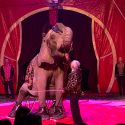
New investigation at Parc Saint Léger where cats are visible from the road

New investigation at Parc Saint Léger where cats are visible from the road

New investigation at Parc Saint Léger where cats are visible from the road
16.03.2022
New investigation at Parc Saint Léger where cats are visible from the road
Exploitation for shows

Following our complaint in August 2021 for the lemurs and big cats at Parc Saint Léger, we went back there at the end of February 2022. Indeed, the advert in the press putting the park up for sale and the winter closure were concerning to us when it came to the state of the animals.

Our investigators knew the place well. They have been there regularly since Spring 2019 when we published our first images of Parc Saint Léger and of Parc Saint Paul where we saw tigers being passed from one person to another for photos. Our complaint against Kid Bauer, the boss and big cat trainer, is incidentally still ongoing, and still current. Since, the investigations have come one after another in the area: Baby, owned by Gilbert Bauer, Kid’s brother, and the ten tigers in a lorry, belonging to Mario Masson, who had once had hired his services and tigers out (if not more) to Parc Saint Paul…

When they arrived there, our investigators immediately saw the tigers and lions from the road, pacing up and down in the lorry-cage; the foliage was sparse in winter.

It was impossible for them to approach the animals this time however, for obvious reasons. The park was closed to the public and with the family of circus performers having settled their circus there and having lived there for eight years, the circumstances were not the best for a ‘close-up’ investigation.

But with a bit of distance, it is still possible to see things and, in a twist of fate, this allows an even better understanding of reality. The establishment, previously called ‘Parc des Félins’ [Big Cat Park], is situated on the edge of a roundabout, where the secondary road leads to the entrance of the main road that links Beauvais with Rouen. Trucks and cars drive quickly along here. Day and night, the lions, tigers, panthers, tortoise, lemurs and other farm animals are therefore submitted to a noise level that is far from negligible, as well as to the traffic pollution. This is a far from rural environment.

The lionesses, the white lion, as well as the tigers are closed in the lorry-cage almost all day and pace up and down (‘pace’ is not only a turn of phrase here: they can only take three paces before bumping into a fence again) …

The circuses, whether travelling or settled, are hell for the animals who are locked up in them. They are synonymous with captivity, boredom, training, serious injuries, illnesses, separation of babies from their mothers, absence of choice, dependency, and a lack of privacy. But also very often — and confirmation of this is due to the experience of our proceedings — with irregularities regarding regulations, undeclared work, trafficking…

Settled circuses are not affected by the law that has just been passed, a godsend for many trainers who will settle. For the others, the implementing decree has still not been published… and reproduction will still be permitted for several more years yet (and will fuel the trafficking that is already happening), in the knowledge that it will suffice for the animals to remain at the mercy of the trainers who will later settle or leave to go abroad…

We are considering sending a new complaint to supplement the one that is already ongoing, with regard to these new images, where one of the lionesses is being hit with an iron bar by a member of staff.

Translated from the French by Joely Justice
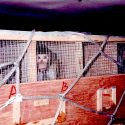
Victory: a lion taken away from a trainer from the Nouveau Cirque Triomphe

Victory: a lion taken away from a trainer from the Nouveau Cirque Triomphe

Victory: a lion taken away from a trainer from the Nouveau Cirque Triomphe
14.03.2022
Victory: a lion taken away from a trainer from the Nouveau Cirque Triomphe
Exploitation for shows

A three-year-old lion named Tarzan has been seized from Joseph Gougeon at the Nouveau Cirque Triomphe! A great victory for our team who have been working hard for years to save the big cats from the Gougeon’s grasp; this family of circus trainers are sadly well-known because Jon had been seized from one of them, and because a lion that died there had the same identification number as him…

Photo: The lion seized from the Nouveau Cirque Triomphe in the circus’ lorry-cage in Jons, October 2021.

Our belligerence rewarded

The overall pressure that we have implemented on the Nouveau Cirque Triomphe and the prefectures who the animals have depended on for months has ended up paying off. A three-year-old lion has just been taken away from Joseph Gougeon by the authorities due to his lack of a licence (and for good reason: it had been taken off him in 2017 and since, during checks, formal notices have been issued one after the other because there is not always a capable person present). Our proceedings, together with the publication of our investigations online and in the press, are not for nothing.
The young lion will not be a victim of mistreatment… Considering the photo in the newspaper and lack of response from the circus community, we can legitimately doubt it.

But not all is won: we are still looking for where the three remaining lionesses are. Incidentally, going back a little in our work, if all the lions at the Nouveau Cirque Triomphe had been entrusted to us back in 2019 when the authorities had rightly stated that Joseph Gougeon was keeping them without authorisation to open and in the absence of a capable person, we wouldn’t be here!

To be precise (as happened in other cases, for Lechmee or Micha for example), it is not in the direct context of one of our complaints that the removal happened. But the substantive work of the Association cannot be denied, and the result is on point!

Gougeon and his consorts, masters at sleight-of-hand games

For years now, we have investigated the Nouveau Cirque Triomphe, a circus on the outskirts of Lyon, and more widely the other different circuses belonging to the Gougeon family. Among the family circuses are the Cirque Italiano (see our petition to save the big cats that they are keeping) and the Cirque de Paris (Jon and his four companions seized by Steve Gougeon were part of it)… This investigation has led us to the Puces de Saint Ouen, to a taxidermist’s shop, against a backdrop of trafficking wildlife products.

The family of circus performers is used to these arrangements, to not talking about their scheming. About the identities of the lions, for example. The logbook is rarely up-to-date and is often missing, including during trials… so, the authorities discovered during their inspections that, at the Gougeon’s, the lions that come, selectively, from another circus in the family, are already dead, or might even have been held for months…

The Nouveau Cirque Triomphe has as many proceedings as they do scandals

We have an administrative proceeding ongoing in Lyon against the Rhône Prefecture which is responsible for wild animals in its territory, and on which the animals kept by the Nouveau Cirque Triomphe depend.

In terms of criminal proceedings (against the circus), we filed a complaint before the Lyon Prosecutor on 16 June 2021, to which three additional complaints were added over time, including one concerning the taxidermy of a deceased lion with the same identification number as Jon, at the time living his best life in our partner shelter.

Then we learnt that the four (the lion and three lionesses) would have been sold by Gougeon to Guy Mordon, another circus trainer registered in Auvergne-Rhône-Alpes. We therefore filed a complaint against him before the Grenoble Prosecutor on 23 February, because his licence (a way in to keep and train wild animals) did not authorise him to keep as many big cats, especially since he had an excess of them before even receiving those from his friend… an operation that was however authorised and even supervised by the Rhône Prefecture! However, on Friday (three days before writing and publishing this article), we have just contacted the Grenoble Prosecutor again regarding the Mordon case… a coincidence that questions the goings-on that collide so much.

Lastly, recently alerted to the return of these lions to the Nouveau Cirque Triomphe, we have filed a new complaint (the latest to date) in Lyon…

We are therefore writing today to the Director of the Rhône DDPP (Prefecture), so that she can tell us where we can find the three remaining lions, since they are no longer (were they really there at all?) with Guy Mordon. The mystery remains a mystery and this is not really reassuring.

Translated from the French by Joely Justice
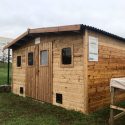
The constant persecution of monkeys in Mauritius

The constant persecution of monkeys in Mauritius

The constant persecution of monkeys in Mauritius
11.03.2022
The constant persecution of monkeys in Mauritius
Animal testing

Action for Primates and One Voice have been alerted to the trapping of long-tailed macaques taking place in Mauritius. Deep in the forest near Tamarind Falls, one of them was discovered in great distress by a walker. It was caught in a trap. Worried about its fate, the walker filmed it before helping. This macaque has therefore been released, free to return to its family and social group. An exception.

A tragedy

Others do not get this chance. In Mauritius, wild monkeys are not protected. They are trapped for many reasons, mostly either to be eaten, kept as ‘companion animals’, exported directly to laboratories or, after having been used for breeding, their babies are taken by companies exporting monkeys, or lastly, simply killed because they are considered pests.

Many people are unaware that in Mauritius, monkeys can be captured to be sold as ‘companion animals’ or to be served as food. Bushmeat — such as the flesh of long-tailed macaques that have been captured and slaughtered — can indeed be found for sale on the island.

Trapping: a dreadful and barbaric process

In 2021, Biosphere Trading, one of the companies exporting monkeys, obtained authorisation from the government to increase their facilities and to capture up to 1000 monkeys for reproduction. According to a report at the time, Biosphere intended to provide landowners and operators with traps to capture monkeys and then offer to buy selected individuals. The business did not indicate what was in store for the remaining individuals, for the ‘undesirables’…

Biosphere Trading actually placed a premium on monkeys’ heads. These macaques had been torn from their families and natural habitat to be exported to laboratories or imprisoned for years in concrete enclosures for breeding purposes; the infants were continually torn from their mothers to then be exported to laboratories.

Biosphere Trading, a company at the centre of capturing for animal experimentation in the Western world

We know that the majority of long-tailed macaques are used in testing to estimate the toxicity of medications and chemical products. In these ‘poisoning’ tests, the monkeys are given a substance by injection or by force-feeding to see the harmful effects of the materials. In 2021, there was a strong increase (14,640) in the number of long-tailed macaques exported from Mauritius for research and toxicity testing; this figure represents a growth of more than 35% of those sent abroad in 2020 (10,827). Last year, Members of the European Parliament also put our questions to the European Commission for these macaques.

Treating sentient and intelligent beings in this way is abhorrent. The trapping of wild monkeys is a universally condemned practice due to the cruelty and suffering caused by it and the removal of individuals from their natural habitat and their family and social groups.

You too can do something to change this!

Join Action for Primates and One Voice in defending monkeys in Mauritius. We must put an end to the cruel and horrendous treatment of wild long-tailed macaques.

Send an email to the following people to demand that they put a stop to the trapping of wild monkeys and introduce a law to protect them (you can find an example email here):

If you live in Mauritius and you are aware of wild captive monkeys that are being eaten or used as ‘companion animals’, contact us at: info@actionforprimates.org and info@one-voice.fr

Translated from the French by Joely Justice
Nine years after EU ban on selling cosmetics products tested on animals, they will once again be dying in the name of beauty

Nine years after EU ban on selling cosmetics products tested on animals, they will once again be dying in the name of beauty

Nine years after EU ban on selling cosmetics products tested on animals, they will once again be dying in the name of beauty
11.03.2022
Nine years after EU ban on selling cosmetics products tested on animals, they will once again be dying in the name of beauty

On 11 March, Cruelty Free Europe (for which One Voice is the French representative), Eurogroup for Animals, and GAIA, all Animal Protection NGOs, will not be happily celebrating the ninth anniversary of the European law preventing the sale of all cosmetics products tested on animals, as chemical products rules look set to render European laws meaningless.

Yesterday, on 10 March 2022, the associations held a vigil for the cosmetic animal testing bans near the European Commission headquarters and the Council in Brussels. The French street artist Ckeja joined them and painted live throughout the event.Despite huge public support for the bans [1], cruel animal tests are now being required by European authorities, including on ingredients used solely in cosmetics. Proposals to extend the scope of chemical safety legislation under the Chemicals Strategy for Sustainability look set to massively increase the amount of regulatory animal testing taking place in Europe, including tests for cosmetics’ ingredients, namely make-up, shampoo, moisturiser, soap, perfume and toothpaste.A study carried out in 2021 by the European Centre for Alternatives to Animal Testing found that, based on the data in the EU’s chemicals database, 63 chemical safety assessment dossiers had used the results of new animal testing for cosmetics risk assessment, with this number looking set to increase as the European Chemicals Agency carries out more reviews. This is testing that has taken place since the bans [2] came into place.

« Europe’s leaders often trumpet how brilliant the EU’s cosmetics animal testing bans are – and how they were ground-breaking and a model for the world. However, we know that more and more animal testing is being required by regulators for ingredients in cosmetics, against the wishes of European consumers and cosmetics brands. But we can all stand up and say that we want our bans back and we want them strengthened. How? By signing the Save Cruelty Free Cosmetics European Citizens’ Initiative at www.savecrueltyfree.eu. We have the power! » Kerry Postlewhite Director of Public Affairs of Cruelty Free Europe « Non-animal approaches to ensure the safety of cosmetics and other consumer products have been routinely used in the EU for decades. There is no reason to test ingredients on animals when advanced non-animal assessment strategies are available and offer reliable alternatives to animal testing. With this ECI, we call on the European Commission to commit to actions that can ensure the protection of human health and the environment by managing chemicals without the use of animals, and to invest in human-based, non-animal approaches for regulatory decision-making. » Reineke Hameleers CEO of Eurogroup for Animals « Millions of animals suffer in Europe in laboratories. For nine years, we have seen how safe and how possible it is to buy and use cosmetics products that are not tested on animals. Other methods exist to guarantee their safety and effectiveness. History and progress go in the direction of genuinely stopping, or certainly progressing in, animal experimentation, and this must begin as soon as possible. It is important to sign the ECI to ensure that we do not take a step backwards. There is no more time to lose for animals in laboratories. » Muriel Arnal President of One Voice Sign the ECI to put an end to animal testing Notes: [1] 74% of adults in EU Member States agree that animal testing for cosmetic products and their ingredients is unacceptable in all circumstances. Savanta ComRes survey for Cruelty Free Europe, July 2020[2] As well as the 2013 ban on the sale of all cosmetics products tested on animals, the EU had previously banned the testing of cosmetics products on animals in 2004, and the testing of cosmetics ingredients on animals in 2009ECI Cruelty Free Cosmetics Translated from the French by Joely Justice

One Voice’s national actions in March are calling for respect for wolves

One Voice’s national actions in March are calling for respect for wolves

One Voice’s national actions in March are calling for respect for wolves
10.03.2022
One Voice’s national actions in March are calling for respect for wolves
Wildlife

After having been exterminated for centuries, wolves have come back to France but are struggling to surpass the vital threshold of 500 individuals. The State organises the slaughter of more than one hundred of them each year. One Voice has submitted a plea to the State Council every year to protect them. On Saturday 12 March (or Sunday 13 and Saturday 19 March for some events), in eighteen departments (see below), activists from the Association are raising public awareness of these united and sentient beings that are essential for our ecosystems.

Despite help from the State that compensates them, hunters and farmers pursue wolves even though their species is legally protected. Groups of armed poachers are even created to kill them. Lately, there is even an agricultural union that has called in two departments to massacre wolves. And each year, bodies are found. Last September, a hanged wolf was exhibited in front of a town hall… The Ministry for the Ecological Transition, under the ‘Wolf Plan’ framework, sets quotas for growing slaughterhouses year after year. Even this year, one in five wolves will be slaughtered, which is tragic for the individuals concerned, for the state of the packs in France, and ultimately constitutes a blow to the international regulations on biodiversity.

Unable to accept cohabiting with wild canines, farmers and hunters put pressure on the authorities to be able to massacre wolves. Why? They do not see them as predators of their own prey. And they only perceive nature and its inhabitants through the prism of the profit that they can make from it in the short term, instead of anticipating the future.

However, wolves are an integral part of our country’s biodiversity. They participate in its preservation as well as in that of our land and all have their place by our side. We must re-learn to tolerate these extremely intelligent, sentient and wise beings who deserve our respect. They have so much to teach us, namely on solidarity which is essential to them.

We refuse to have the rules dictated to our leaders by those few citizens who are hostile to the natural world. We demand that our leaders stop making regular breaches of international regulations for endangered species and definitively prohibit new culling.
Year after year, One Voice attacks the State Council on the decrees allowing the slaughter of more wolves. But even when the Association obtained the annulment of the decree and therefore the illegality of the shootings a posteriori, as the State Council decided again last year, wolves are dead and they only have themselves to blame. One Voice is fighting for them, for their existence, for the preservation of their habitat, for the restoration of their reputation. The petition launched by the Association has already gained over 69,000 signatures.

Our events are subject to change up until the last minute, due to weather or permission reasons. You can consult the event link before going. We update them live.
Department TOWN Facebook Event Precise Location Time (and date if different to 12/03)
74 Annecy https://www.facebook.com/events/1272574779931419 65, rue Carnot 2:30pm to 4:30pm
60 Beauvais https://www.facebook.com/events/507313900966194 15, rue Carnot 3:30pm to 5:00pm
33 Bordeaux https://www.facebook.com/events/975192419791220 Place de la Comédie 1:30pm to 4:30pm on 13 March
05 Digne-les-Bains https://www.facebook.com/events/2765612320407324 69, Boulevard Gassendi 11:30am to 2:00pm on 13 March
14 Falaise https://www.facebook.com/events/491746512349258 Place Belle-Croix 8:00am to 11:00am
17 La Rochelle https://www.facebook.com/events/351115616907425 Cours des Dames 2:30pm to 4:00pm
59 Lille https://www.facebook.com/events/509830144098084 Grand’Place Note: postponed to another date (blocked by heavy goods vehicles)
69 Lyon https://www.facebook.com/events/168124871878046/ Place Saint Jean 2:30pm to 4:30pm on 13 March
57 Metz https://www.facebook.com/events/662604558524230 64, Rue Serpenoise 2:30pm to 4:00pm
34 Montpellier https://www.facebook.com/events/1135115370584520/ Place de la Comédie, in the middle of the march on climate change. Note: postponed to 9 April due to torrential rain
44 Nantes https://www.facebook.com/events/203740421888550 Place Royale 3:30pm to 5:00pm
06 Nice https://www.facebook.com/events/693750618294996 Place Garibaldi 11:30am to 1:00pm
75 Paris / Special event https://www.facebook.com/events/203740421888550 Nation NOTE: One Voice is joining the march organised by Voix des Loups [Voice for Wolves] which will re-join the march on climate change 12:30pm to 4:30pm
76 Rouen https://www.facebook.com/events/487818929592682 Place de la Calende 2:30pm to 4:00pm
67 Strasbourg https://www.facebook.com/events/950394689173859 Place du Corbeau 2:00pm to 4:00pm
37 Tours https://www.facebook.com/events/623194855413009 Place Jean Jaurès 2:30pm to 4:00pm
10 Troyes https://www.facebook.com/events/336367331741981 71, Rue Émile Zola 3:30pm to 5:00pm on 19 March

Translated from the French by Joely Justice

SOS for Ukraine’s animals

SOS for Ukraine’s animals

SOS for Ukraine’s animals
10.03.2022
SOS for Ukraine’s animals
Domestic animals

Since bombs have been raining down on Ukraine, thousands of animals have been abandoned after the mass extinction of their human families, or left in shelters which have become inaccessible. Since the start of the conflict, we have been by the side of our partners, who are on the border and on site, to bring them the best help possible. Help them!

Photo: UAnimals

The media has relayed deeply moving images of Ukrainians leaving their country with their pets in their arms. Escape, yes. But not without them. Not without their best friends, fully-fledged members of the family. Unfortunately, crossing the border with a dog or cat makes exile even more difficult still. Thus, many refugees face a terrible dilemma: leave their animals behind or stay by their sides, under bomb attacks… those who made the choice to leave were heartbroken. The others stayed, risking their own lives… and many have already lost theirs.

Today, thousands of cats and dogs are roaming the streets without anyone to take care of them. And those who found themselves in shelters before the start of the war are also deprived of food and care due to logistical issues to get it to them. Volunteers are dedicating their bodies and souls to try to help them, until the ultimate sacrifice: their own existence.

We are making use of everything to take part in rescues. At the start of the conflict, we immediately got in contact with the Ukrainian association UAnimals, our partner, to see how we could help bring them the best and most effective help possible. More than anything, it is about being by their side to save lives. Join our action with them as well as with our previous partners, Otwarte Klatki in Poland, and Magyar Szőrmellenes Liga in Hungary, in order to lend a helping hand to the accessible shelters! Transporting food to all of the cats and dogs in distress is a huge challenge. Thank you.

Make a donation

Translated from the French by Joely Justice
The decree allowing the massacre of wood pigeons when they arrive after migration has been partially suspended!

The decree allowing the massacre of wood pigeons when they arrive after migration has been partially suspended!

The decree allowing the massacre of wood pigeons when they arrive after migration has been partially suspended!
09.03.2022
The decree allowing the massacre of wood pigeons when they arrive after migration has been partially suspended!
Wildlife

The Aude Prefecture has published a decree allowing wood pigeons – referred to as ‘palombes’ in the Pyrénées-Orientales department – to be considered as a species likely to cause damage, a new term for ‘pests’, and under this title they can be killed by hunters before the ‘traditional’ hunting season. With multiple arguments in hand, we challenged this decree, and it has just been suspended until 31 March inclusive. A half-hearted victory, but a victory all the same for these birds, and one that we share with the whistle-blower that called on us.

It seems that the Montpellier Administrative Tribunal was affected during the hearing by the argument the crops do not sprout until the month of April. This point calls into question the very existence of the damage to crops by wood pigeons in February to March, a critical (and current) juncture of the published decree. Among other things, the President highlighted a “file that’s not been done well”, particularly due to the lack of clarifying documentation in his eyes.

The decision is worded in such a way that we understand that these are the dates that ultimately mattered to the urgent applications judges:

«Article 2: The execution of the decree of 25 February 2022, under which the Aude Prefect has, on one hand, classified the wood pigeon as a pest and, on the other, defined the terms under which they can be destroyed, has been suspended as it concerns the period from 25 February to 31 March 2022.»

We are very happy with this suspension, although partial. It means hundreds of wood pigeons can fly in peace.

Translated from the French by Joely Justice
Stray cats: unveiling a website dedicated to the Chatipi programme and a press briefing at the Chatipi in Vannes on 3 March at 2pm

Stray cats: unveiling a website dedicated to the Chatipi programme and a press briefing at the Chatipi in Vannes on 3 March at 2pm

Stray cats: unveiling a website dedicated to the Chatipi programme and a press briefing at the Chatipi in Vannes on 3 March at 2pm
02.03.2022
Stray cats: unveiling a website dedicated to the Chatipi programme and a press briefing at the Chatipi in Vannes on 3 March at 2pm
Domestic animals

Le Cercle des Chats Libres du Pays de Vannes [Society for Stray Cats in Vannes] in the Morbihan department contacted the One Voice association to take charge of the issue of stray cats in the town. The Association de Défense des Animaux [Association for Animal Welfare], who has fought against feline straying for years, implements partnerships with municipalities and local associations to microchip and neuter homeless cats and release them, while finding them shelter and holding informational panels. The Chatipi programme therefore means that cats without a human family no longer suffer from deprivation. In Vannes, a press briefing will take place at the Chatipi on Thursday 3 March at 2pm, organised by the municipality. One Voice will open their website dedicated to the Chatipi programme to the public on the same day.

_Photo credit: Vannes Town Council_

A press briefing will take place in front of the cat chalet on Thursday 3 March at 2pm at 8 rue de la Salle d’Asile in Vannes.

Mr Thépaut, the deputy mayor in charge of climate, biodiversity, and finance, and town councillor Mrs Manchec who is appointed to environment and nutrition, will be present, as well as the two local associations involved in the project, represented by the President of the Cercle des Chats Libres du Pays de Vannes, Mrs Marie-Christine Vidal (whose association had not yet been created when the project began), and the President of SPA [Society for the Protection of Animals] in Vannes, Mrs Marie-France Le Gallou, a signatory of the convention. Mr Sylvain Gillet, a veterinarian at the Vannes pound who is responsible for neutering, is also invited. Finally, Mrs Cécile Gillet who is responsible for the Vannes office represents One Voice.

On the same day, One Voice will launch their website dedicated to the Chatipi programme fighting against feline straying, currently being developed in around thirty towns, linked here: www.chatipi.fr

Chatipi: a lasting solution for the vicious circle of feline straying

Chatipi is a plan with the ethical aim of making the creation of areas for straying cats in towns possible, and of rescuing them while raising awareness among citizens of their suffering and needs. Several Chatipis have been established near residential care homes for the elderly, nursing homes, or hospitals to bring comfort to the residents, and close to schools. Fundamentally, One Voice’s goal is to educate on cats to move towards a lasting solution to this problem.

In fact, we too often inaccurately describe these little felines as independent and self-sufficient animals, even though they are vulnerable when they have been abandoned (which happens much more frequently and far less visibly than it does for dogs).

That being said, feline straying is not only caused by abandonment. This vicious circle begins with erroneous assumptions about cats, particularly that they have an intrinsic need to reproduce in order to be happy, which leads to their human families not always getting them neutered. There are around eleven million stray cats in France. Many cat births take place in the wild. In any case, these kittens, when they survive, are hit by hunger, cold, and illness. They are neither microchipped nor neutered, because the human families concerned are sometimes not even aware that these kittens exist. And so litters only continue to multiply in these circumstances. Municipalities must manage these individuals faced with this misfortune, which also have an impact on biodiversity.

Sharing out tasks and responsibilities in Vannes

There will be fifteen residents in the Chatipi. The cats haven’t yet been moved in as the chalet has only just been assembled. One Voice, who invented the concept of a Chatipi, provided the chalet, information boards, and cat biscuits at the beginning of the operation. They also guaranteed the initial veterinary fees for fifteen cats (neutering, microchipping, testing). The town council provided the concrete flooring, assembly, and construction of the chalet. The Cercle des Chats Libres du Pays de Vannes and the SPA Vannes organised capturing them to get them neutered. They are also the ones who will be responsible for the maintenance of the chalet, feeding, health checks for the cats, and long-term veterinary costs. The cats will be identified under the name of the town council.

Translated from the French by Joely Justice

Hunters and animal supporters overcome their differences on penned hunting

Hunters and animal supporters overcome their differences on penned hunting

Hunters and animal supporters overcome their differences on penned hunting
28.02.2022
Hunters and animal supporters overcome their differences on penned hunting
Wildlife

One Voice’s presidents and the Amis des Chemins de Sologne are united against penned hunting and enclosing nature. The unprecedented meeting between Muriel Arnal, One Voice’s president, and Raymond Louis, Amis des Chemins de Sologne’s president, will take place on Tuesday 8 March 2022.

One Voice’s presidents and the Amis des Chemins de Sologne are united against penned hunting and enclosing nature.

The unprecedented meeting between Muriel Arnal, One Voice’s president, and Raymond Louis, Amis des Chemins de Sologne’s president, will take place on Tuesday 8 March 2022.

The two presidents of the associations will put their differences aside to better unite in the things that bring them together: nature and biodiversity in France and in Sologne in particular, where penned hunting is a curse.

Whilst the Amis des Chemins de Sologne, hunters by the way, have been fighting against fencing in this territory for years as it prevents wild animals from moving around freely, One Voice fights against all hunting and has carried out an undercover investigation into hunts in closed parks to report on the extreme cruelty.

The two associations have been consulted by parliamentarians, in particular within the framework of the proposed law against fencing in nature. They hope that hunting in closed properties, leaving no chance of survival for the animals trapped inside and preventing the animals from having free movement, will soon be a thing of the past. A ban in Sologne would be a strong sign.

They are calling on parliamentarians to at least responsibly vote for this ban, or failing that, to prohibit fencing of properties, which prevents animals from being able to move around to enter and leave.

It was agreed that Raymond Louis would receive Muriel Arnal, founder of One Voice, at the headquarters of the Amis des Chemins de Sologne, and that after a short press conference they would go out in the field, as close as possible to the fenced properties.

Translated from French by Joely Justice

Would you dare torture and kill a fish for science ?

Would you dare torture and kill a fish for science ?

Would you dare torture and kill a fish for science ?
25.02.2022
Would you dare torture and kill a fish for science ?
Animal testing

In his new book, Laurent Bègue-Shankland explores our relationships with other animals and the way in which our empathy is sometimes put to one side. Thanks to a robot fish and an experiment inspired by the work of Milgram on obedience to authority figures, he shows that the experiment is not as passive as he imagined: many people genuinely chose to put their empathy to one side towards the fish, going so far as to inflict suffering and death on it for the benefit of a scientific objective that they found to be legitimate.

Laurent Bègue-Shankland, Professor of Social Psychology at Grenoble-Alpes University, has recently published a book on our relationships with other animals (Face aux animaux, Odile Jacob, 2022). The first part of the book talks about the way in which we consider ourselves to be outside of and above the animal kingdom, which gives us the impression that our desires and our comfort should come before the most basic needs of other animals, even at the risk of supporting acts of cruelty towards them. The second part of the book discusses an experiment carried out to study the way in which supporting science and profit prospects for humans can be the reason why most people put their empathy to one side to inflict suffering upon an animal.

Obedience to authority figures

The experiment in question is inspired by well-known work by Stanley Milgram, who, in the 1960s, asked numerous people to inflict stronger and stronger electric shocks on other people when they made a mistake in a learning task. The electric shocks were fake and the victims, who pretended to be in pain, were in on it with the researcher. Apparently unsuspecting of the ruse, and despite the cries and pleas of their victims, the majority of the subjects went so far as to inflict a 450 volt shock under the supervision of the white-coat researcher.

Some people believed that the subjects actually knew that the electric shocks were fake, and that the results of the experiment were therefore biased. To assess this possibility, two researchers developed a particularly cruel version of this experiment, which we know less about, by asking students to administer real electric shocks to a puppy. Three quarters of the subjects went so far as to inflict the maximum shock of 450 volts to the poor puppies despite their very real pleas.

For Milgram, these experiments proved the complete submission of subjects to authority, who were no longer responsible for their acts since they were in an “agentic state”. However, after the experiment, and before knowing about the ruse, the majority of the subjects said they were satisfied to have been able to help with scientific research. In fact, apparently they were not in a state of blind obedience and their apparent cruelty was perhaps due to the fact that they had put aside their own reluctance to inflict suffering on another person, as long as they deemed the stated scientific objective and the researcher who embodied it to be credible and legitimate.

Torturing a fish for science

Laurent Bègue-Shankland set up his own experiment to test this hypothesis, featuring a (fake) fish and the progressive administration of a toxic substance into its aquarium, with 750 people from a range of profiles recruited from the general public. The subjects believed that it was to test the acceptable dose of a product that helped people who were suffering from a memory impairment. In contrast, the software that was used to carry out the experiment was made so that the subjects had the maximum amount of empathy towards the fish
which they could see in its aquarium a few metres away and whose heartbeats were reproduced on a screen and with high-pitched beeps.

Would you administer this product to the fish thinking that it could kill it? If you were to respond, you would probably say no – or that you wouldn’t use the maximum dose in any event. However, while only 12% of those questioned thought that they would go to the maximum dose, 53% of subjects who were actually put into the experiment went all the way, administering a dose that the software indicated had a 100% chance of killing the fish. This percentage was variable according to the subjects’ level of “social dominance” and their level of speciesism (measured on a six-point scale devised by Oxford University), but also according to their attitude towards science: the subjects from the pro-science group would generally go further than those from the group who were critical towards science.

A filmed interview was done with each subject at the end of the experiment. The Maison des Sciences de l’Homme [Human Sciences Centre] in Grenoble/the Alpes released extracts of these interviews on their Youtube channel, which showed that most people, even among those who went all the way to ‘kill’ the robot fish, felt guilty about what they had done, and they justified it by saying that the objective of the experiment was important, or that the fish didn’t feel pain like other animals that are more similar to us (which is not true).

Rather than blind obedience, it was therefore a matter of them voluntarily distancing their own empathy to respond to what they thought were commendable scientific objectives, even if it meant inflicting huge suffering on this fish.

Animal experimentation and empathy

Perhaps this same process is the endeavour of those who are learning to carry out animal experimentation and are making it their occupation: rather than sadists in white coats, these people are surely convinced that what they are doing is useful and good, and this justifies them putting their own empathy towards the animals aside. Nowadays, animals are incidentally so standardised that it would be very difficult in most cases to recognise them as individuals.

Is animal experimentation ‘necessary’ for human health? In some cases, clearly not – from cosmetic ingredient testing, which still happens despite European regulations, to pharmaceutical enterprises, which are difficult to trust given the number of times they have been condemned in the past , it is difficult to see how those who champion animal experimentation still manage to defend it.

Science isn’t the problem – self-criticism is part of its DNA and one day it will overcome the problems that have corrupted the system for a long time. The real problem is elsewhere: among those who try to convince the public that, without animal experimentation, research will come to a halt – among those who, in addition to refusing to acknowledge the merits of certain non-animal methods that are already available, cannot imagine the paths that science could take if money was redistributed in a way in which it doesn’t oblige us to condone acts of cruelty at the expense of our own moral values.

Translated from the French by Joely Justice