
More than 300,000 animals used illegally by French laboratories between 2015 and 2020

More than 300,000 animals used illegally by French laboratories between 2015 and 2020

More than 300,000 animals used illegally by French laboratories between 2015 and 2020
27.07.2022
France
More than 300,000 animals used illegally by French laboratories between 2015 and 2020
Animal testing

The new report by the European Union on the figures on animal testing in 2019 has just come out. Like the previous, it reports on the use of experiments for which alternatives have existed for more than ten years. And as usual, France has a leading role in these illegal uses. One Voice has obtained a document from the Ministry of Research, thanks to which we can count more than 300,000 illegal uses from data from 2015 to 2020! We have just written to the Ministry of Research to ask for an explanation.

All in all, more than 250,000 animals have thus been used illegally in France between 2015 and 2019, while lobbies and ministries kept bragging to us about the regulations and the strict obligation to use existing alternatives. Adding in the data from 2020, available in a file obtained on request from the Ministry of Research by One Voice, it reached more than 300,000 illegal uses.

Between 2015 and 2019 within the European Union, France was responsible:

  • for almost 40% of pyrogen tests (measuring the onset of fever by a substance injected into rabbits), while alternative methods have been recorded in the European Pharmacopoeia since 2009;
  • for more than a third of skin and eye corrosion and irritation tests on rodents, rabbits, and pigs, while alternative methods were approved by the European Agency responsible for their validation (ECVAM) in the 2000s;
  • for 95% of uses of rodents to produce monoclonal antibodies using the painful ascites method, while since 1998, ECVAM maintains that “the production of monoclonal antibodies using the ascites method is no longer necessary, except in certain exceptional cases”.

The European Directive on the use of animals for scientific purposes nevertheless envisages that once an alternative that does not use living animals exists, it must be used. Would animal testing laboratories therefore be exempt from respecting the law? Even if we put aside the legal aspect of these uses, it is difficult to explain how France has doubled its use of rabbits for pyrogen tests while their global usage in the EU has gone down by a third. Or how the idea that monoclonal antibodies being requested “in very large quantities” by the industry can justify using a cruel method in place of the alternatives available.

Faced with a lack of action from the authorities responsible for implementing regulations, we can easily understand the public’s mistrust.

In a letter addressed to the Ministry of Research, we are asking for explanations on the reasons for these illegal uses, on the penalties expected for the responsible establishments, and on the measures implemented to ensure that no projects are accepted from now on that use animals while alternatives exist.

Translated from the French by Joely Justice

Hundreds of thousands of animals used illegally by French laboratories

Hundreds of thousands of animals used illegally by French laboratories

Hundreds of thousands of animals used illegally by French laboratories
27.07.2022
Europe
Hundreds of thousands of animals used illegally by French laboratories
Animal testing

The new report by the European Union on the figures on animal testing in 2019 has just come out. Like the previous, it reports on the use of experiments for which alternatives have existed for more than ten years. And as usual, France has a leading role in these illegal uses. We have contacted the Ministry of Research to ask for an explanation.

Public authorities and other organisations who champion animal testing tell us over and over again that this is only done when no alternative is available. It is in fact a legal obligation, despite article L. 214-3 of the Rural Code and the European Directive on the use of animals for scientific purposes.

So why do we still hear about pyrogenicity testing on rabbits, irritation and corrosion testing on the skin or eyes of rodents, or even the production of monoclonal antibodies thanks to the particularly harsh ascites method? In fact, alternatives have existed for years, approved by the European agency responsible for their validation (ECVAM).

Irritation and corrosion testing

The alternatives to irritation and corrosion testing on the skin and eyes were approved in 2000 and some were even the subject of a regulatory recommendation from ECVAM. However, tests on animals continue in the European Union – and in particular in France. In fact, from 2015 to 2019, more than a third of testing carried out in the EU was done in France.

Pyrogen tests

Pyrogen tests consist of injecting a substance into rabbits and measuring the onset of fever. The number of rabbits used for these tests in the European Union reduced by a third between 2015 and 2019. But France, always quick to ignore European law, swam against the current by doubling its use of rabbits for these tests in the same period. It has therefore won the award for the largest number of rabbits used for pyrogen tests in 2019, with 39% of uses in the European Union, way ahead of Spain (29%) and Germany (21%).

“Monocyte activation tests” in vitro (MAT) were nevertheless filed in 2002 with ECVAM, approved in 2006, and included in 2009 in the European pharmacopoeia as a viable alternative to the pyrogen test using rabbits.

The ‘ascites method’

But there is worse. The ‘ascites method’, a particularly cruel process for rodents and rabbits, is still topical in the European Union. To blame in 95% of cases: France.

In 1998, ECVAM were already talking about in vitro alternatives available, emphasising that “monoclonal antibody production using the ascites method is no longer scientifically necessary, except for in certain exceptional cases“. In 2020, they went even further, stating that “monoclonal production using the ascites method should no longer be acceptable, whatever the circumstances”.

Among the explanations given in the Ministry of Research’s statistical files, some are surreal. Just as, in 2019 and 2020, more than twenty thousand usages of animals were justified by the idea that “this antibody is requested in large quantities, the alternative methods cannot respond to this need”. You would think that industrial interests are more important than the law.

Where are the sanctions?

All in all, more than 300,000 animals have thus been used illegally in France between 2015 and 2020, while lobbies and ministries kept bragging to us about the regulations and the strict obligation to use existing alternatives. Faced with lies and stonewalling from the authorities responsible for implementing regulations, we can easily understand the public’s mistrust.

In a letter addressed to the Ministry of Research, we are asking for explanations of the reasons for these illegal uses, on the penalties expected for the responsible establishments, and on the measures implemented to ensure that no projects are accepted from now on that use animals while alternatives exist.

Sources

2015-2020 statistic files provided by the Ministry in charge of Research (see our presentation of these figures at https://experimentation-animale.com).
Statistical reports
from the European Union (the last of which dates back to mid-July 2022, regarding the 2019 figures).

Translated from the French by Joely Justice
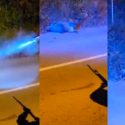
In Ariège, bears are being shot at to make them run away…

In Ariège, bears are being shot at to make them run away…

In Ariège, bears are being shot at to make them run away…
26.07.2022
Ariège
In Ariège, bears are being shot at to make them run away… Wildlife

To combat bear scaring in the Pyrenees, we are attending the emergency interim hearing at the Toulouse Administrative Tribunal on 27 July. One Voice is requesting the cancellation of the Ariège prefectural decree. The hearing relating to our plea at the State Council on the same subject has not yet been arranged.

After having reintroduced bears where farmers had made sure they had disappeared, the executive authorised prefects to organise warning shots, essentially to scare them, but which could also injure them. We are fighting the Ministries of Ecology and Agriculture at the State Council and the Ariège Prefecture at the Toulouse Administrative Tribunal. It is inconceivable to have made bears almost disappear from this area to then bring them from abroad and in turn make their lives impossible.

Various levels of the decrees and pleas are intertwined

Since 2019, the Ministries for the Ecological Transition and Agriculture have authorised the implementation of measures to scare brown bears in the Pyrenees with decrees. These measures were primarily authorised on a trial basis from 2019 to 2021, before being made permanent by a recent ministerial decree issued on 20 June 2022. On the basis of this decree, the prefects can issue bear scaring authorisations each year from now on throughout the entirety of the Pyrenean ranges.

Two types of bear scaring that reduce their natural territory bit by bit

There are two types of scaring measures: simple scaring which consists of the use of olfactory, sound, and light methods for scaring, and more intense scaring which consists of non-lethal shots using a rifle loaded with sound cartridges or rubber ammunition.

These measures present significant risks to bears: injuries caused by the rubber missiles, auditory injuries caused by sound devices, separation of the cubs from their mothers while they are escaping, miscarriages linked to stress, a risk of drifting due to the insufficient supervision of sheepdogs and hunters during operations. In short, an explosive combination.

Among other things, the implementation of these shots leads to bears being systematically pushed out of areas that are their natural habitat, which is decreasing extensively, little by little. The animals are therefore persuaded not to frequent essential parts of their natural area of distribution in the long term!

Protected animals for a good reason!

Today, brown bears are protected animals under European and French laws. The last count reported around 70 individuals in 2021, while the minimum threshold of viability for the species is estimated at 110 individuals. Scaring them “to protect herds” (which are destined for the abattoir in any case…) is nonsense anyway, seeing as there are so few of them…

Administrative jurisdiction that has already broken government decisions. And yet…

The State Council has already annulled the decrees issued in 2019 and 2020 implementing scaring measures that presented a risk to the improvement of the state of the ursine species in the Pyrenees mountain range… However, the Ministries for the Ecological Transition and Agriculture have not drawn conclusions from these annulments and have perpetuated the system, allowing prefects to authorise the implementation of scaring measures with the decree of 20 June 2022. One Voice is therefore attacking this decree from the State Council in order to get it annulled once again. The hearing has not yet been set.

Based on this ministerial decree, the Ariège Prefect has authorised grazing groups to resort to scaring measures (at least seven to date), which can therefore currently be implemented on the Pyrenees ranges. We have referred to the Toulouse Administrative Court in order to obtain an urgent suspension of these authorisations.

Our view is that these authorisations are illegal because these scaring measures seriously threaten the state of the ursine population and that, as for the wolves, alternative, more effective solutions exist to protect herds (by combining the presence of shepherds, protection dogs, and electric night-time enclosures for example). Incidentally, the Conseil national de la protection de la nature (CNPN) [National Council for the Protection of Nature] shares this opinion, and announced this during a meeting on 15 March 2022. For them, the effectiveness of scaring is not proven over time and it “is possible to ensure cohabitation between bears and pastoral activities with herds being well protected”.

While waiting for the hearing at the State Council, we will consequently be at the Toulouse Administrative Tribunal on 27 July facing the Ariège Prefect to defend the bears in our mountain ranges.

Translated from the French by Joely Justice
Protection for animals in China: raise awareness from an early age

Protection for animals in China: raise awareness from an early age

Protection for animals in China: raise awareness from an early age
25.07.2022
Protection for animals in China: raise awareness from an early age

We know that China is far from being a model country when it comes to animal protection. But digging into it, it is clear that the corrupt relationship of humans with the most fragile of beings is due to a lack of awareness, particularly in the poorest areas. This is why we are working closely with our partner, ACTAsia, to find a solution to the situation by supporting education programmes in kindness. And once the seeds have been sown, miracles happen…

Awakening compassion and stimulating kindness and all that is good in humans is the goal that we have set ourselves by supporting the Caring for Life educational programme by our partner ACTAsia. This NGO, run in China, is an astounding effort in raising awareness with respect for life in all its forms. They have done a lot of work to raise awareness of the state of the country’s zoos and the dog meat trade. Every year they take action against the Yulin festival and also act closely with veterinarians in Asia to make them aware that animals feel fear and pain.

Fur is still all the rage

In China, it is rare for people to be aware of this obvious fact. Even the dangers represented by zoonotic diseases are not always taken into consideration. Even though the Covid-19 pandemic drove many countries – including France – to forbid breeding animals for fur in their countries, the Chinese industry did not draw any conclusions on it. Quite the opposite! With the disappearance of their rivals, they saw an opportunity to gain a greater share of the market in worldwide trade and to promote the exploitation of mink, Arctic foxes, silver foxes, and raccoon dogs, who all suffered the most. All while making fun of the public health concerns of an extremely toxic and harmful industry.

Empathy can be learnt

With ACTAsia, we are convinced that developing empathy relies on education, ideally from a very young age. Those who have benefited from the Caring For Life project are the best witnesses of this. This unique programme, lasting through six years of primary school, addresses social well-being, citizenship, animal welfare, environmental issues, and recognises interdependence between all living beings. Ms Fang, a teacher, discovered it in 2013 and saw the benefits for both her son and herself: “CFL taught me to practice compassion in all aspects of my life and I firmly believe that we should all live our lives on this basis”. She has been very invested since and teaches it by including the CFL lessons in school learning. And the positive impact of the lessons, delivered at school and during summer camps, is remarkable. Ms Fang continues to see changes in the day-to-day behaviour of her pupils. She sees their kindness and their civilised and responsible behaviours grow. In order to measure the success of the programme, she carried out a two-year study comparing two classes — one which follows CFL teaching and the other that does not. Prosocial and compassionate attitudes were very evident among the students who had received the CFL learning. Much calmer and not showing signs of aggression, they showed a much greater respect for others. Following this study, more classes now adopt CFL teaching. A new generation of compassionate and empathetic children is emerging, ready to implement these “un-technical skills” in all aspects of their existence and in society in a wider sense in the future. And we are here to encourage them!

Translated from the French by Joely Justice
An urgent reform of ethical committees in animal testing is needed

An urgent reform of ethical committees in animal testing is needed

An urgent reform of ethical committees in animal testing is needed
20.07.2022
Europe
An urgent reform of ethical committees in animal testing is needed
Animal testing

While we have been told for years that going through ethical committees is a guarantee of compliance with regulations, the Comité national de réflexion éthique sur l’expérimentation animale (CNREEA) [National Committee for Ethical Reflection on Animal Experimentation] has recently ruled that these committees do not have the means to function correctly. Its recommendations, which are interesting, do not go far enough. One Voice has written to CNREEA’s President to request a more ambitious reform.

On 8 April, the CNREEA submitted a notice regarding the conditions for approval for the comités d’éthique en expérimentation animale (CEEA) [Ethical Committees in Animal Experimentation]. This is great when we know that the 130 French CEEAs have not been in agreement since 2013 and that their operation does not allow compliance with the requirements for impartiality and transparency provided for by the regulations. We are almost surprised that the Ministry of Research still uses them today as an alibi to justify projects that involve electric shocks and forced swimming to be authorised.

Unfortunately, CNREEA’s notice remains timid on points as important as the make-up of the committees, the increase in participation of those who are not involved in animal testing, and committees’ independence regarding the establishments whose projects they assess. One Voice has therefore addressed an open letter to Pierre Mormède, CNREEA’s President, to call for a more ambitious reform of ethical committees.

Opinions on the CEEAs

CNREEA’s recommendations on ethical committees predominantly concern financial and logistical means: member training and ‘mission letters’ allow them to carry out evaluations of their working time, the increase in the number of members and regular participation in evaluations, but also material and logistical means necessary for basic operation.

Up to this point, the propositions seem to us to be completely reasonable and welcome, and it seems to be appropriate to thank the CNREEA for this. The major limit of its recommendations is rather what has not been addressed here, namely the make-up of the committees and the function of the evaluations themselves.

CEEA limits

Ethical Committees in Animal Experimentation (CEEA) clearly appear to be lacking when we compare them with their equivalent for research involving human beings: the Comités de protection des personnes (CPP) [Committees for People’s Protection].

CEEAs have a minimum composition of five people, of which four are directly involved in animal testing, while the fifth does not have to prove they have any expertise. CPPs are comprised of twenty-eight people, of which half represent patient and specialist associations such as sociology and law, but also ethics – a speciality which is completely absent from ‘ethics’ committees in animal experimentation.

Furthermore, a file that must go through a CPP is randomly submitted to one of the 38 CPPs in France, which guarantees a certain impartiality in the rulings implemented. On the other hand, a file that must go through a CEEA is submitted to the committee linked to the establishment that is presenting the project – which means that there are currently around 130 CEEAs in France, a number ten times higher than the European average, which is far from a guarantee of independence and harmony in the operation of committees.

The reform is urgent

If CNREEA’s notice is implemented as it stands, the ethical committees in animal experimentation will begin a change in operations involving significant investment. It would therefore then be difficult to move towards more ambitious reforms for several years.

Hence our request to envisage a reform inspired by the CPP model from now on. A request which is not alone, since it is also part of the programme from the Parti Animaliste [Animalist Party] and propositions from the Engagement Animaux 2022 campaign, which we participated in.

This will involve a bigger change but would at least make it possible to reach the objective set by European regulations and by the Animal Experimentation Ethics Charter: the impartiality and independence of ethics committees, moving towards better control in animal testing while waiting for it to be abolished.

To find out more: a brief history

While the CNREEA left no trace over the course of its first ten years of existence (2005-2014) outside of a national charter on the ‘ethics’ of animal experimentation, the arrival of the European Directive in 2013 seems to have motivated some work (listed on the Ministry of Research’s website). In particular, activity seems more sustained since 2019 with the appointment of new members, presided by Pierre Mormède: the 2020 summary mentions four meetings throughout the year (instead of two in the previous years), several notices issued in 2021, and other notices in progress. The next meeting will take place in 2024 – we will fight so that One Voice can have a place in this future committee.

Translated from the French by Joely Justice
One month left to call for a Europe without animal testing

One month left to call for a Europe without animal testing

One month left to call for a Europe without animal testing
19.07.2022
Union Européenne
One month left to call for a Europe without animal testing
Animal testing

The Save Cruelty Free Cosmetics European Citizens’ Initiative (ECI) is not a simple petition: reaching one million signatures will compel the European Commission to look into the proposal and to provide a response to it. You have until 31 August to sign and get those you know to sign! Without you, without them, we will not make it.

Last year, One Voice and numerous committed associations, alliances, and brands joined forces to launch a European Citizens’ Initiative (ECI) against animal experimentation, specifically in relation to cosmetics. The cut-off date of 31 August 2022 is approaching and we are asking you again to sign and share (see the end of this article) this initiative as widely as possible.

A committed political act

A petition is generally not binding on its recipients. But an ECI is much more than a petition because if it receives more than one million signatures, the European Commission is obliged to look into the requests and to respond to them.

Signing the ECI is therefore truly a committed political act.

The requests of the SaveCrueltyFreeCosmetics ECI

You have three reasons to sign this ECI:

1. Guaranteeing and reinforcing a ban on animal testing for cosmetics

In fact, according to an analysis published in 2021, more than 60 exclusively cosmetic ingredients have been tested on animals in the European Union despite bans on these tests since 2009 and 2013. And that is without counting the thousands of ingredients with multiple uses. We informed you about our concerns on this dramatic setback…

2. Overhaul the EU regulations relating to chemical products

These regulations regularly force businesses to practice tests on animals, particularly when it comes to plastics and other petroleum products, but also metals, dyes, essential oils, and so on.

3. Establish a roadmap to leave animal testing behind

In September 2021, the European Parliament unanimously passed a motion to move away from animal testing.

Signing the ECI will allow us to keep pressure on the European Union for a truly ambitious policy to come into force!

We still need to find more than 300,000 signatures

Eleven countries, France being one, have reached the minimum threshold of signatures, which completes the first criterion necessary for the ECI to be successful. The second criterion is to reach one million signatures – without counting any duplicates. Our Members of the European Parliament are in agreement with us, they are in favour of an action plan to get away from animal testing. The European Commission is the only one left to catch on. We are counting on you to help us to reach this goal!

With already more than 100,000 signatures (almost 200% of the national threshold), France figures prominently among the signatories. But now is not the time to ease off, there is not a moment to lose: other countries have gone even further. Slovakia is at almost 250%, Finland and Germany at almost 300%, Bulgaria has passed 300%, and the Czech Republic is about to reach 600% of its signature threshold!

And there are still around 300,000 left to reach the minimum threshold… You can participate in change for animals used in laboratories!

To help in finding a way out of animal testing, you can sign the ECI (if you have not already done so) and encourage those close to you and your network to do the same and to share the link http://savecrueltyfree.eu

To motivate them, you can explain to those close to you that the signing process is very simple nowadays and can be done without an identity card. You can also remind them that, despite appearances, this is not just a simple petition, but a political process which could have a real and profound impact.

Message template to share on your other social networks: Facebook, Instagram, etc.:

One month left to reach the one million signatures needed for the #SaveCrueltyFreeCosmetics ECI! Without it, progress against #AnimalTesting is not possible. Sign, share, talk about it with everyone you know! http://www.savecrueltyfree.eu/ @onevoiceanimal #EndAnimalTesting

Translated from the French by Joely Justice

One Voice is raising awareness among the public for animals kept in dolphinariums and circuses in 13 towns throughout July

One Voice is raising awareness among the public for animals kept in dolphinariums and circuses in 13 towns throughout July

One Voice is raising awareness among the public for animals kept in dolphinariums and circuses in 13 towns throughout July
13.07.2022
France
One Voice is raising awareness among the public for animals kept in dolphinariums and circuses in 13 towns throughout July
Exploitation for shows

In July, in 13 towns in France, One Voice will raise awareness among the public of the exploitation of animals for entertainment in circuses and dolphinariums. The Association is organising a coordinated national activist event on 16 July in Annecy, Antibes (where a demonstration will take place near Marineland), Lyon, Metz, Montpellier, Nantes (where tributes will be paid to Aïcko the dolphin who died at Planète Sauvage), Rouen, and Troyes; on 17 July in La Rochelle and Sisteron; on 23 July in Aix-en-Provence; on 24 July in Lille; and on 30 July in Strasbourg.

For One Voice, whether they are marine or land animals, they must be preserved and protected in their natural habitats.

Circuses and dolphinariums: places of boredom and intense suffering

Orcas and dolphins lead a miserable life in the concrete pools of dolphinariums where they all suffer cruelly from captivity. They die young, unwell, and injured here and are sometimes driven to aggression by boredom, frustration, and endless deprivation. We are calling on the public to join us and to demand with us the transfer of captive cetaceans from these two dolphinariums in France, Planète Sauvage near Nantes and Marineland Antibes, to a marine sanctuary.

In circuses, the animals are made to suffer by the conditions that they are kept in, by the violence of training and shows and the tough nature of travelling around.
An endless ordeal that specialists say is a life that is not worth living. Many are born and die in a lorry; and disappear unnoticed.

An unfinished law and a campaign lasting more than twenty years

The law against animal mistreatment is a step forward on certain topics but it definitely does not go far enough for the animals kept and exploited for entertainment. One Voice is therefore continuing its work in raising awareness among the public of the reality behind the sequins thanks to footage from the investigation and proceedings. Its activists will encourage as many people as possible not to go to these places where animals are miserable, as they have done for more than twenty years. This is how they have helped ensure that big tops and dolphinariums close one after the other due to a lack of spectators.

These animals, with their dignity tarnished, all suffer the same horrendous fate.
We will never give up on them.

Note: you can consult the event online before going
Updated live to assure you that it has not been changed.

Dept. TOWN Facebook Event Address Date Time
13 Aix-en-Provence https://www.facebook.com/events/1439219893178530 Allées de Provence 23 July 10:30am to 12:30pm
74 Annecy https://www.facebook.com/events/358469066419147/ Carnot 16 July 2:30pm to 4:30pm
6 Antibes https://www.facebook.com/events/540236677589677 1715, route de Nice 16 July 4:30pm to 6:00pm
17 La Rochelle https://www.facebook.com/events/586837823005366 Cours des Dames, Old Port 17 July 3:00pm to 5:00pm
59 Lille https://www.facebook.com/events/2303900679763394 1, rue des Tanneurs 24 July 2:30pm to 4:00pm
69 Lyon https://www.facebook.com/events/1504208013330881 Porte des Enfants du Rhône
Parc de la Tête d’Or
16 July 3:00pm to 4:30pm
57 Metz https://www.facebook.com/events/477162744169050/ 64, rue Serpenoise 16 July 2:30pm to 4:30pm
34 Montpellier https://www.facebook.com/events/599699914699651/ Place de la Comédie 16 July 10:30am to 12:00pm
44 Nantes https://www.facebook.com/events/5499447786742538 Location to be confirmed 16 July 4:00pm to 6:00pm
76 Rouen https://www.facebook.com/events/1217000419126750 Place du Général de Gaulle 16 July 2:30pm to 4:00pm
5 Sisteron https://www.facebook.com/events/560755435453390/ Plan d’Eau des Marres 17 July 10:30am to 1:00pm
67 Strasbourg https://www.facebook.com/events/574302834134367 Place du Corbeau 30 July 10:30am to 12:00pm
10 Troyes https://www.facebook.com/events/385590263541291/ 71, Rue Emile Zola 16 July 3:30pm to 6:00pm

Translated from the French by Joely Justice
At the National Veterinary School of Alfort, animal testing is a laughing matter

At the National Veterinary School of Alfort, animal testing is a laughing matter

At the National Veterinary School of Alfort, animal testing is a laughing matter
12.07.2022
Alfort
At the National Veterinary School of Alfort, animal testing is a laughing matter
Animal testing

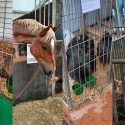
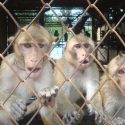
To test surgical veterinary techniques, the National Veterinary School of Alfort [l’École nationale vétérinaire d’Alfort (EnvA)] uses ‘experimental’ mares and horses who will never know anything other than animal testing. In a video published in 2021 in an article by EnvA, we hear the staff laughing heartily while one of these horses is in the middle of experimental surgery.

Image: Screenshot of the S1 video from the paper « Balloon catheter occlusion of the maxillary, internal, and external carotid arteries in standing horses »

Following the publication of certain malicious messages on social networks against the veterinary school, the staff, students in fact, asked us to show moderation and to remain intrinsically non-violent, as we always have done. Insults, threats, and injuries never help the animals or the fights that we are leading together. Thanks to you.

The use of animal testing in veterinary research is a complex subject: is it acceptable to use animals to develop medications and surgical procedures for other animals? The question is raised with this study by EnvA, published in February 2021,which tests the feasibility of the occlusion of various arteries in standing horses and mares, with the idea of having a less risky solution to general anaesthesia to treat horses and mares affected by guttural pouch mycosis, a serious illness.

From experimental surgery to the anatomy table

This same question comes up much less when we know that the animals used for the first phase of the study were not presenting with any illness – while the second phase of the study tested the procedure on mares and horses that were unwell, with the agreement of their ‘owners’, with the aim of curing them.

Therefore, it was four ‘experimental’ mares and four ‘experimental’ horses in good health who had not asked for any of this but who had had the misfortune of having been bred for it. For the study that we are talking about, these individuals were subjected to invasive surgical acts on two occasions, in the neck, face, or gum areas.

After being used for these experimental surgeries, all of the animals were killed to be used for use in education of the equine anatomy. Anyone would think that alternative methods for specialised training (such as simulators or augmented reality apps) have still not been successful in becoming established in France.


Animal testing is a laughing matter

Evidently, surgical operations do not always go as planned – something which is also true for experimental surgeries. ‘Horse 4’ was thus calmly subjected to the first surgery but showed signs of anxiety and an increase in its respiration during the second surgery, even moving around uncontrollably despite the sedative.

The article provides a video extract of this moment of the surgery. Warning: the footage is difficult to watch. Evidently, it is difficult to watch because it involves surgery. But it is even more difficult to watch when we know that this horse was perfectly well before being made to submit to this intervention and that it was killed a few days later. Above all, the end of the video (after the occlusion of the artery is released and the surgeon has left the camera’s field), where we hear the staff laughing, is utterly obscene.

As if the expressions of anxiety and neurological disorders of this individual could make you laugh. Truly, animal testing feeds a very particular conception of animals.

Translated from the French by Joely Justice

Pig trifecta: a letter to the Vabres l’Abbaye mayor

Pig trifecta: a letter to the Vabres l’Abbaye mayor

Pig trifecta: a letter to the Vabres l’Abbaye mayor
11.07.2022
Aveyron
Pig trifecta: a letter to the Vabres l’Abbaye mayor
Exploitation for shows

We have received images and videos of the 46th pig trifecta in Vabres l’Abbaye. They show pigs squealing, exposed to crowds and noise, and forced to keep moving as quickly as possible… We have written to the Mayor.

Mr Frédéric Artis
Mayor of Vabres l’Abbaye
Hôtel de Ville
12400 Vabres l’Abbaye

Vannes, 11 July 2021

Dear Mayor,

We have been warned by the organisation about the 46th pig trifecta on 3 July in Vabres l’Abbaye.

In our capacity as an association with the main purpose to protect and defend animals and the environment, we are concerned by the treatment in store for them.

The images and videos that we have been given show pigs squealing, exposed to crowds and noise, and forced to keep moving as quickly as possible. The animals are clearly disorientated and absolutely do not understand what awaits them.

Voluntarily submitting animals to such levels of stress for a purely recreational purpose is cruel and unethical. The pigs, who are nevertheless animals with extraordinary cognitive and sentient abilities, are reduced to numbers here.

Such an event has serious repercussions on the public and particularly children. The pigs are considered as objects of entertainment with no consideration for their needs or desires. This performance is regressive in educating future generations to respect their environment and the individuals with whom they share it.

No tradition can justify mistreating animals. This situation certainly tarnishes the image of Vabres l’Abbaye which also has an undeniable cultural significance. The celebration of the village festival must not happen to the detriment of respect for animals.

This is why we are asking you in future to renounce the organisation of pig trifectas in favour of more ethical events.

We thank you for your attention to this letter and ask that you accept our highest consideration, Mr Mayor.

Muriel Arnal
Founding President of One Voice

Translated from the French by Joely Justice
Tens of thousands of mice are still being killed for botox! One Voice is demanding a ban on animal testing

Tens of thousands of mice are still being killed for botox! One Voice is demanding a ban on animal testing

Tens of thousands of mice are still being killed for botox! One Voice is demanding a ban on animal testing
09.07.2022
Union Européenne
Tens of thousands of mice are still being killed for botox! One Voice is demanding a ban on animal testing.
Animal testing

The European Coalition to End Animal Experiments (ECEAE), of which One Voice is a member, has revealed that hundreds of thousands of mice are killed in botox tests with great cruelty despite the existence of non-animal tests. On 9 July, the ECEAE organised a European Action Day and is demanding the responsible authority, the European Directorate for the Quality of Medicines and Healthcare (EDQM), to abolish this regulatory testing.

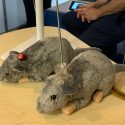
Botulinum toxin (called ‘botox’) is a neurotoxin used for cosmetic purposes such as eliminating facial wrinkles, but also in the field of medical applications. Each batch is tested on mice in a test called ‘LD50’. Different doses of this substance are injected into the abdomens of groups of mice in order to determine from what quantity half of the animals die. The poison paralyses the respiratory muscles and the mice die by suffocation while they are fully conscious. In 2011, the American manufacturer Allergan received approval for their cell-based test. Due to continuing protests from the ECEAE and other animal protection associations, the Merz and Ipsen companies also replaced the majority of their tests on animals, but this fight is not over.

Muriel Arnal, President of One Voice, stated:

«It is unacceptable that animals, sentient beings, are still subjected to an atrocious death for a product largely used for cosmetic purposes despite there being non-animal technologies available.»

Non-technical summaries accessible to the public have shown that botox tests carried out on 22,440 mice have been approved by Germany in 2021. In 2019, 46,800 mice (this figure could be as high as 150,000 in previous years!) were used in botox tests in Germany alone. In 2019 and 2020, projects involving the use of botulinum toxin on rodents and birds were approved in France to study different pathologies in the muscles, or pain, or to model avian botulism. In Europe, Ireland has been the country that practices these tests the most for a long time. The official statistics from 2020 reveal that 100,848 mice were subjected to what they call batch potency tests, very likely for botox. 92,887 mice were killed in this way in 2019, 138,846 in 2018, and 192,015 in 2017. The reduction is therefore visible but, in the eyes of the entirety of the members of our coalition, whatever the number of mice sacrificed is, it is unacceptable.

The European Pharmacopoeia, which regulates batch tests of botox-based products, authorises a certain number of tests on animals but also the famous LD50 test on mice. The ECEAE urgently requests the EDQM regulatory authority to abolish the Pharmacopoeia to put an end to the atrocious suffering that it inflicts on animals.

Each year at the beginning of July, our coalition organises an Action Day against botox tests carried out on animals to mark the first regulatory approval, in 2011, of an ethical cell-based botox test.

The ECEAE also supports the ‘Save Cruelty Free Cosmetics’ European Citizens’ Initiative aiming to progressively eliminate animal testing in its entirety. A million signatures must be collected between now and 31 August so that the European Commission will act. We are counting on you!

Translated from the French by Joely Justice