The Ministry of Ecology continues to let hunters trap larks

The Ministry of Ecology continues to let hunters trap larks

The Ministry of Ecology continues to let hunters trap larks
07.10.2022
France
The Ministry of Ecology continues to let hunters trap larks
Wildlife

Today, on 7 October 2022, the official journal published the four decrees from the Ministry of Ecology re-implementing traditional hunting. However, the decrees from 2018 to 2021 had clearly been suspended and cancelled twice in a row last year by the State Council after a decision by the EU Court of Justice, two jurisdictions that One Voice had referred to alongside the LPO. Once again, we are referring it to the State Council.

The decrees from 4 October 2022, relating to the numbers and the capturing of field larks, in Landes, Lot-et-Garonne, but also in Gironde and the Pyrénées-Atlantiques, using netting and traps (cages), are once more nonsensical regarding the Birds Directive, which specifically makes it clear that traps must be selective. And once more they were issued on a Friday, as they were last year, to allow hunters to start killing birds for the whole weekend before we could intervene.

The maximum number of field larks that can be captured with nets has thus been set at 38,600 in the Gironde department, 56,672 in Landes, 1,230 in Lot-et-Garonne, and at 2,200 in Pyrénées-Atlantiques for the 2022-2023 season, and with regard to the cages, the maximum number authorised for captured field larks is set at 2,870 in Lot-et-Garonne and at 4,928 in Landes. That is 106,500 field larks, to which the collateral victims (other birds caught in the traps) must be added, who will struggle and lose their lives before the hunter-trappers arrive.

One Voice, who have been fighting for years to get these cruel methods banned — that can kill any bird that gets trapped without exception, including individuals from a protected species — will file, as they have already done and as they have announced, the appeals and emergency interim proceedings necessary to allow birds to survive in the south of France. It cannot be that because this kind of particularly barbaric hunting is only practised by only a few hunters, it is allowed to happen. For each bird taken by these traps, we are talking about life or death.

The advantage is essential for the birds concerned and symbolic in terms of cost for the entirety of the population.

According to Muriel Arnal, President of One Voice:

«Birds are living beings to be protected as such. They are among the hardest hit by the sixth mass extinction of species that we are currently experiencing with pesticides putting them in a situation of chronic famine, urbanisation harming their populations with noise, light, and a lack of places to nest… Drought and fires this summer have ended up hitting them head-on. It is essential that we rally for them. These ‘traditional hunting’ decrees are a disgrace.»

Our Ipsos/One Voice survey, released on 6 October 2022, clearly shows that eight to nine French people refuse to allow hunting to be practised in places decimated by heat and summer fires and that they want a ban on traditional hunting (83%, of which 56% are “completely in agreement”).

One Voice will be there throughout France this weekend to raise awareness among the public of the harmful effects of hunting, of the animals hunted, but also of the dogs that are used as weapons and considered to be objects.

Translated from the French by Joely Justice
Raising awareness of the harmful effects of hunting: One Voice is rallying in France

Raising awareness of the harmful effects of hunting: One Voice is rallying in France

Raising awareness of the harmful effects of hunting: One Voice is rallying in France
07.10.2022
France
Raising awareness of the harmful effects of hunting: One Voice is rallying in France
Wildlife

The day after the publication of the decrees on traditional hunting of field larks, that One Voice went up against the State Council for, and the publication of the IPSOS/One Voice survey on the opinions of French people regarding hunting, on the weekend of 8 and 9 October, One Voice is organising national action coordinated by their local branches to raise awareness among the population of the harmful effects of hunting… regarding the animals killed, of course, but also the dogs used as weapons and considered as tools, the risks for humans, and the pollution that this hobby inflicts on natural spaces. One Voice will therefore be in Bordeaux, Gap, La Rochelle, Lille, Montpellier, Nantes, Nice, Paris, Rouen, and Troyes.

Penned hunting, traditional hunting, gun or bow hunting, badger or fox digging, trapping birds, hunting with hounds… in the 21st century, all of these practices still exist despite people’s wishes to radically reform them.

Hunting in France: there are between 6,000 and 8,000 tonnes of lead in the wild, 20 million animals coming from breeding farms to be released and slaughtered, 45 million animals slaughtered each year, and 90 species of animals killed each year!

One Voice has opposed it for years and tries to make change in mentalities in France by demonstrating the suffering of the animals, the absurdity of the practice, and the collateral damage that hunting brings about. Hundreds of thousands of citizens and tens of associations with these demands want to change that from our side.

Today, double standards still exist for some animals. Dogs for example… artificially branded with ‘hunting’ as a qualitative term. We imagine them running through woods and countryside, happy to satisfy their instinct to prey and their need to exert themselves. But behind the idealised image, the reality is much different. The life of hunting dogs is a life of being a weapon as a purpose, of being a tool.

Because once the guns are put away, the exhausted dogs, often injured, are shut into small barred vans. Headed for the kennels, the dogs are tied to stakes in the mud or confined in cramped cages.

Parched, malnourished, sometimes beaten if they do not obey quick enough, many wearing shock collars which send an electric shock if they dare to bark.

Some even live among the remains of other dogs, our infiltration investigations into various hunts and those into kennels in Dordogne and in Jura have highlighted.

Consult the links for each town for the exact date, time, and place.

Translated from the French by Joely Justice

New IPSOS/One Voice survey: twice as many French people opposed to hunting as those in favour

New IPSOS/One Voice survey: twice as many French people opposed to hunting as those in favour

New IPSOS/One Voice survey: twice as many French people opposed to hunting as those in favour
06.10.2022
France
New IPSOS/One Voice survey: twice as many French people opposed to hunting as those in favour
Wildlife

One year after the circulation of the first infiltration investigation images from One Voice on hunting revealed the remarks made by hunters, particularly on safety, the Association has repeated its IPSOS survey determining the opinions of French people regarding hunting, in the context of the reopening of the 2022-2023 season.

A context in which hunters have finally come across strong opposition in the field: ours

In the meantime, numerous events have or are about to take place. The government is still hesitating to once more authorise the traditional hunting of small birds against the decision from the State Council, following the one from the European Union Court of Justice.

The commission in charge of the case file on the law proposed on the safety of hunting by the Senate, who met with us, returned a more than disappointing report, even though the trial on the death of Morgan Keane, who had started the ‘One Day One Hunter’ petition obtaining more than 120,000 signatures on the Senate’s site, is starting in a few weeks. 87% of French people found that hunting poses safety problems for walkers. Around three in four people living near a hunting zone are worried by the idea of walking around in the countryside due to the presence of hunters; almost eight in ten people have already avoided going out in this case, six on multiple occasions.

Thousands of animals have perished in fires in the summer or have been floored by the heatwave. All of them have suffered.

Badgers and their babies have been hunted down to the depths of their setts in numerous departments; we have joined together with numerous local and national associations for justice to put an end to this deadly hobby and have also documented the process. The National Assembly’s Sustainable Development Committee also heard from us at the end of September 2022 about wire fencing in Sologne, after that of the Senate last year, because our investigation into penned hunting in Sologne and elsewhere had provided us with solid expertise in the field.

Only one in four French people are in favour of hunting

The results of the IPSOS/One Voice survey in September 2022 do however give food for thought to those defending animals like ourselves. In fact, since last year, the proportion of people who state that they have a favourable opinion towards hunting has risen (26% versus 20% in September 2021). The ‘management of animal populations’, particularly, is an aspect of hunting that six in ten French people think is valid. French people are therefore still ignoring what hunting is in reality: a hobby which has no other justification than the pleasure of killing, with no or almost no limits. Despite strong news linked to the dangers and endless requests for exemption by hunters, some find them, unjustly, charming.

Animal breeding farms for hunting: partridges, wild boars, deer… or feeding (always feeding wild animals in the same place so that they can kill them as soon as the hunting season begins) would not exist if hunters were really ‘regulators’.

Last year, it also seemed that the annual eight million tonnes of lead that had fallen to the bottom of the wetlands due to these same hunters had been forgotten, polluting the whole fragile ecosystem of these ponds and seashores, where huts can be installed and live ducks attached to call to other ducks to land while passing during migration – they too are forgotten… We will not omit this, and will do everything we can for the information to be remembered once again.

After the heatwave and fires, French people are in favour of leaving animals alone

Hunters justify their existence by arguing that they love nature and that they regulate animal species who, without them, “would run riot”. On one hand, nobody else but them believes in this self-proclaimed status of them being on-the-ground environmentalists. Last year’s survey shows this well. On the other, if this was really the case, no hunter would shoot this year, given the suffering and also the carnage of this summer throughout the whole of France. Eight to nine French people in ten agree with a ban on hunting in areas affected by drought or fires, the majority are even “completely in agreement” with this.

However, the most shared opinion is still an overall opposition to hunting (48%), strong support of framework measures for hunting (all measures proposed are supported by the majority of French people who are “completely in favour”, and 76% to 92% in favour of them). Finally, a negative view of what hunting is (from another era and not a hobby like any other), of what it offers to animals (cruel to 65%) and humans (intrinsically a source of risk).

One Voice — at a moment when animal associations leading investigations are threatened by a gag amendment adopted by the finance committee at the National Assembly — who want to be a single voice for animals, the planet, and humans, will do all we can to support animals against the hunting lobby and to always inform the public as best we can on the reality of what hunting is: a dangerous, barbaric, and polluting activity.

Download the survey in its entirety

The French and hunting — An Ipsos study for One Voice

Translated from the French by Joely Justice

Finance bill: One Voice is stepping up to the plate to defend their right to inform on cruelty to animals

Finance bill: One Voice is stepping up to the plate to defend their right to inform on cruelty to animals

Finance bill: One Voice is stepping up to the plate to defend their right to inform on cruelty to animals
05.10.2022
France
Finance bill: One Voice is stepping up to the plate to defend their right to inform on cruelty to animals
Other campaign or multi-campaigns of One Voice

One Voice has noted three amendments that have been passed (n°I-CF16, n°I-CF98, and n°I-CF607) today by the Finance Committee on the Finance Bill, and which aim to remove fiscal advantages agreed with associations whose activists were guilty of intruding on agricultural and industrial sites.

The association, who is a whistle-blower or relays information from whistle-blowers on numerous subjects linked to irregularities and omissions, mistreatment or acts of cruelty to animals by breeders, circus artists, etc., can only condemn this attempt to put the associations in a difficult position, when they actually defend compliance with the laws in place against cover-ups. We will not allow the law to be so skewed in favour of these anti-animal and anti-nature lobbies due to pressure groups in favour of private interests being listened to by the Ministry for Agriculture.

One Voice is a revolutionary and non-violent association. Its methods, particularly investigations, allow them to show what is hidden by people who are breaking the law. And the images that they legally produce have allowed numerous victories in favour of animals.

For example, the investigation on the ten tigers kept by a circus trainer having led to their rescue in December 2020, or those in mink farms, for which the images allowed parliamentarians to decide to ban fur farms in France at the end of November 2021. But also our investigations within animal breeding farms (birds, deer, wild boars) serving as game for hunters.

One Voice is therefore calling on all MPs and especially those who want to defend animals, the right to inform, and the right for civil disobedience, to reject these amendments during the plenary session.

Translated from the French by Joely Justice
Finance bill: an additional amendment to silence civil society

Finance bill: an additional amendment to silence civil society

Finance bill: an additional amendment to silence civil society
05.10.2022
France
Finance bill: an additional amendment to silence civil society
Other campaign or multi-campaigns of One Voice

We, citizen, environmental, and rural organisations, strongly condemn the amendment that has just been passed today by the finance committee on the finance bill which aims to eliminate the fiscal advantages agreed with the associations whose activists are guilty of intruding on agricultural and industrial sites. (1)

If this amendment was really voted in plenary, it would hit all of the organisations condemning the abuse of our agricultural and industrial system hard, particularly through civil disobedience acts. We are therefore calling on MPs to reject this amendment during the passage of the law in the full session.

This amendment is new proof of the persecution of public power toward civil society organisations, and a new step to hamper our associations who are working for general interests.

As a reminder, the ‘separatism’ law, passed in 2021, opens up a wide range of restrictions imposed on associations, calling into question in particular the possible legal actions by associations defending the environment and fighting against corruption. Two weeks ago, it was this same law that was mentioned by the Vienne Prefect to revert on the grant from the Poitiers Mayor at a festival offering civil disobedience workshops.
As for the Demeter unit, the national gendarmerie intelligence unit, created in 2019 under pressure from the FNSEA, it is still very much active in “fighting against violations of the agricultural world”, and in reality silencing all critical opinions of the agro-industrial system.

Faced with this new attempt of intimidation of civil society, we will continue to defend our freedom of expression and right to protest which are so essential in the face of the ordeals that we are experiencing and for democracy, and to warn citizens about these abuses of safety.

Signatory organisations (in alphabetical order)

Action Non-Violente COP21
Agir pour l’Environnement
Aitec
Alofa Tuvalu
Alternatiba
Altrimenti
Amis de la Terre France
APESAC
ASPAS
Association Végétarienne de France
ATTAC France
Bio consom’acteurs
BLOOM
CFDT-Journalistes
CIWF France
CODE (Communication et Démocratie)
Foodwatch France
Fondation pour la Nature et l’Homme
France Nature Environnement
Générations Futures
Greenpeace France
Humanité et Biodiversité
Les Ami.e.s de la Confédération paysanne
L214 Éthique & animaux
LPO
Maison des Lanceurs d’Alerte
Notre Affaire à Tous
Nothing2Hide
One Voice
Oxfam France
Réseau Action Climat
Sciences citoyennes
SNJ-CGT
SOL, Alternatives Agroécologiques et Solidaires
Sud Recherche EPST – Solidaires
Terre & Humanisme
Virage Energie
VRAC France
WECF France
Welfarm

(1) – The amendment stipulates that “the benefit of the tax reduction is excluded for donations to associations whose members are found guilty of acts of intrusion on private agricultural properties and industrial establishments or acts of violence towards professionals.”

Translated from the French by Joely Justice

Will there soon be more primates in laboratories?

Will there soon be more primates in laboratories?

Will there soon be more primates in laboratories?
03.10.2022
International
Will there soon be more primates in laboratories?
Animal testing

While China has not exported monkeys to laboratories for two years, Air France predicts the end of them being transported to be any moment now and the European Union is ready to ban the use of primates born to parents that have been captured in the wild. Changes that are not to everyone’s taste…

Friday 18 June in Marseille. The international FELASA Congress 2022 has finished and it leaves us with a bitter taste in our mouths. Among the latest responses to the congress, the President of the European lobby on animal testing made a point of talking about the threat weighing on the use of primates for laboratories. A bad thing according to him.

First generation primates in captivity soon to be banned

In fact, the use of new primates from the first generation born in captivity (‘F1’, meaning those whose parents were captured in the wild) will theoretically be banned from November 2022, according to a report by the European Commission from 2017 following a feasibility study.

At the congress the reactions were mixed at best. After all, “what is the difference between F1 and F2+, since they are all born in captivity and have never known anything else?”. As if this justifies anything… And “if the regulations were concerned by captures and wanted to discourage them through these measures, they should have specified”! Which they do, explicitly, since we read in the report from the European Commission that these measures aim to “put an end to the capture of non-human primates in the wild for scientific and breeding purposes”.

Lastly, it should not be necessary for researchers who are very concerned by the ‘welfare’ of ‘their’ animals to export to China, where the conditions are “deplorable”, if the European Union starts to over-limit their source of supply or pose overly strict limits on what they can inflict on primates. Is the concern for this ‘animal welfare’ therefore only valid if the local regulations require it?

We talked about ethical short-sightedness in the previous bill, but here it reaches a completely different level and it would be hard to believe that it is not voluntarily maintained by the industry.

The problem with capturing

We even heard from a researcher that the difficulties with cohabitation could justify individuals being captured by breeding farms who supply laboratories. Still a rhetorical fallacy for which the reasoning is contradicted by a recent webinar organised by the Asia for Animals coalition (which One Voice is part of).

It is true that cohabitation between the human population and primates is sometimes difficult – which implies safety issues to humans, and mistreatment and regular violent trafficking for non-human primates (macaques in particular). But specialists on this subject emphasise that it is the education of human populations on waste management and sharing spaces with other species that is vital in resolving cohabitation conflicts, alongside neutering campaigns aimed at female macaques.

Capturing has never resolved anything and has even created a new problem: despite localised growths, long-tailed macaques are threatened with extinction on a global scale nowadays. Since the 2000s, a report by CITES has mentioned the risk represented by capturing for these macaque populations. And they were not wrong: this species was classified as ‘vulnerable’ in 2020, then ‘endangered’ in 2022 on the IUCN Red List.

A classification which echoes the ban on exportations of primates from China since the start of the Covid-19 pandemic, but also the recent decision by Air France to soon stop transporting primates to laboratories.

The media battle

Faced with this combination of factors which could speed up the end of the use of primates in experimentation, the media is dealing with two sides of the story.

On one side, those who defend animal testing structure themselves at the centre of their inter-professional organisations to convince the public and politics that the use of primates is absolutely indispensable in the discovery of new treatments – setting aside the epistemological hindsight that should be standard in all scientific research work.

On the other, the associations and people who want to see the end of animal testing try their best to have a say in the matter, through platforms or letters addressed to the media to condemn the one-sided treatment of the subject.

Journalistic work is very complex. But democratic work is even more complex when public establishments and private companies come together to defend practices criticised by the public that are based on a fundamental injustice.

We invite journalists to contact us to balance the debates on the basis of sourced information that is sometimes difficult to access.

This article is the last in a series which will present different aspects of the FELASA 2022 congress:

  1. Transparency and communication strategies in animal testing
  2. Language elements and rhetorical fallacies in animal testing
  3. The animal testing industry makes propagand
  4. The ethical short-sightedness of animal testing
  5. Will there soon be more primates in laboratories?

Translated from the French by Joely Justice
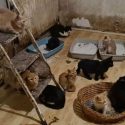
One Voice in court for mountain Galliformes!

One Voice in court for mountain Galliformes!

One Voice in court for mountain Galliformes!
30.09.2022
France
One Voice in court for mountain Galliformes!
Wildlife

To please hunters, prefects continue to attack birds. More specifically, two mountain Galliformes: black grouse in the Alpes-de-Haute-Provence and grey partridges in the Pyrénées-Atlantiques. The emergency interim hearings are set respectively for Monday 3 October at the Marseille Administrative Tribunal at 2pm, a case in which One Voice is filing a voluntary intervention supporting the Ligue pour la Protection des Oiseaux [LPO: League for the Protection of Birds] case file on black grouse, and at the Pau Administrative Tribunal on Tuesday 4 October at 2pm, where One Voice will be alone in defending the grey partridges.

Hunters are rubbed up the right way by the prefectures. A habit of State services who have not always understood that society has changed and that the requirement to set an example in terms of respecting nature and biodiversity is essential for the population. Under the pretext that it has always been done this way, it is no longer conceivable or tolerable to publish decrees indulging hunters, and what’s more, by justifying them, under clearly incorrect pretexts.

According to Muriel Arnal, President of One Voice: « Hunters are perpetually trying to push the limits of their deadly hobby. But it is not conceivable to leave the animals, registered on the list of animals to be protected, to be shot at! The reports, which confirm what we have been claiming for decades, are not lacking: animals are disappearing from the planet, which is extremely worrying for all of us. We cannot sit back and let this happen. »

Saving grey partridges in the Pyrénées-Atlantiques is urgent!

The Pyrénées-Atlantiques Prefecture has not spared any effort in pleasing hunters. The order that we are contesting and trying to get urgently suspended currently allows them to slaughter four partridges each in the mountain ranges in the 2022-2023 season. But what the Prefecture omits to mention in its decree is, neither more or less, the number of hunters and the maximum number of slaughtered partridges permitted.

If we therefore take the decree at face value, and despite the species being protected on a European level by the Birds Directive, it would theoretically be possible to eradicate these animals from the department, if there are a ‘sufficient’ amount of hunters! An even bigger scandal when we know that the population of these birds is already in constant decline in the Pyrenees mountains, and classified as ‘near-threatened’. The slightest gunshot on one of these grey partridges is therefore also a fatal shot on the entire species.

To the rescue of black grouse on borrowed time…

As for the black grouse in the Alpes de Haute-Provence, the Prefecture has authorised, despite the species being ‘vulnerable’ in the Rhône-Alpes region and also having been ‘near-threatened’ in France since 2016, the slaughter of forty-two of them! An aberration, when we know that the reasons given for issuing this authorisation is the reproductive success of these birds in the current year. But… is this not the exact opposite of the effect expected from the constant conservation efforts implemented for the species? As in many other case files, we are facing prefectural services who are completely disconnected from the climate emergency and, in this context, also from the protection necessary for wildlife.

Animals are dying from the inactivity and short-term vision of our civil service, being reinforced in its conservative habits by a hunting lobby well-rooted in local networks. To promote animal rights and defend birds and all other animals, One Voice will not move an inch.

Translated from the French by Joely Justice

Official opening of the Chatipis in Marignane (13) and Valbonne (06)

Official opening of the Chatipis in Marignane (13) and Valbonne (06)

Official opening of the Chatipis in Marignane (13) and Valbonne (06)
30.09.2022
France
Official opening of the Chatipis in Marignane (13) on 2 October and Valbonne (06) on 4 October for stray cats
Domestic animals

One Voice, which has been fighting against stray cats for years, has set up three-way partnerships with municipalities or residential areas and local associations to raise awareness among the population, identify and sterilize homeless cats, and release them with a wooden shelter where they can drink, eat, and rest. This is what happened in Marignane (Bouches-du-Rhône) and Valbonne (Alpes-Maritimes), where the municipalities and local associations, respectively “La Paix entre les bêtes” “ and ”Extrême sauvetage, » signed an agreement with One Voice to take charge of the stray cat problem in both localities.

The Chatipi program helps cats without human families escape misery and, above all, educates people about cats and stray cats.
The Marignane and Valbonne chatipis will be inaugurated on Sunday, October 2, at 5:30 p.m. and Tuesday, October 4, at 5 p.m., respectively.

In Marignane, the inauguration will take place in front of the chatipi on Sunday, October 2 at 5:30 p.m., on Rue Fabre near the green spaces, in the presence of the mayor of the city, Eric le Dissès, as well as Véronique Tardy, 5th deputy mayor in charge of animal welfare and president of the local association “La Paix entre les bêtes” (Peace Among Animals). Finally, Sylviane Réau, One Voice activist and member of the municipal council for animal welfare in the neighboring town of Les Pennes-Mirabeau, will represent the association.

In Valbonne, the inauguration will take place in front of the chatipi on Tuesday, October 4, at 5 p.m., on Rue Émile Pourcel, at the back of the Anciens Combattants parking lot, during the celebration of World Animal Day, in the presence of Mayor Joseph Cesaro and his municipal councilors, as well as the local association “Extrême sauvetage” and its volunteers. Finally, Corinne Bouvot, One Voice’s national field coordinator, will represent the association.

Chatipi, a sustainable solution to the vicious cycle of stray cats

Chatipi is an ethical initiative that aims to create spaces for stray cats in order to rescue them while raising public awareness of their plight and needs. Around twenty projects are already in place and almost as many are currently being developed. Just recently, on September 26, the Chatipi in Laroque-de-Fa opened its doors in the Aude department. The Association Protection Animale Hautes-Corbières (APAHC) and the municipality are the two other stakeholders involved in the project. Several chatipis have been set up near nursing homes, health centers, and other hospitals to bring comfort to residents, as well as near schools, as One Voice’s fundamental goal is to educate people about cats.

All too often, these small felines are mistakenly described as independent animals, when in fact they are very affectionate, loyal, and dependent, which makes them vulnerable if abandoned.

However, abandonment is not the only reason cats end up wandering the streets.

This vicious cycle stems from misconceptions about cats, particularly that they have an intrinsic need to reproduce in order to be happy, which leads their human families to not always have them spayed or neutered. As a result, many cats are born in the wild. These kittens, when they survive, are in any case affected by hunger, cold, and disease. They are neither identified nor spayed or neutered, as their humans are sometimes not even aware that these kittens exist. Under these circumstances, litters simply multiply. Municipalities and communities must manage these individuals facing misery, which also affects biodiversity.

Distribution of tasks and responsibilities in Marignane and Valbonne

One Voice, which invented the Chatipi concept, provides the shelter and generally covers the veterinary and food costs for around fifteen cats at the start of the operation (sterilization, identification, tests) as well as the educational sign. The municipalities are responsible for laying the concrete slab and assembling the chalet. The local association in each town manages the feeding and health monitoring of the cats, as well as the interior layout of the chalets.

In Marignane, the town hall, which has been very committed to animals for several years (the cleaning products used at the town hall are not tested on animals, there are municipal beehives, a guide to animals in the city, campaigns to prevent abandonment are carried out, etc.), took the first step towards One Voice for the installation of the chatipi. The project concerns around thirty cats on the site, all of which have been sterilized and identified.

Similarly, the municipality of Valbonne is also behind the project located in its historic center. In this specific case, One Voice only had to sterilize and identify three cats, as the other twelve had already been done.

The website dedicated to the Chatipi program was launched in early March 2022 and provides a wealth of information about this educational program on cats.

* Edit of October 4, 2022: The date of the Valbonne launch is not October 5 but October 4, 2022, so we have changed the corresponding dates.

Maybe not the ‘Pablo Escobar of Rigaous*’, but this pensioner has killed and sold thousands of robins

Maybe not the ‘Pablo Escobar of Rigaous*’, but this pensioner has killed and sold thousands of robins

Maybe not the ‘Pablo Escobar of Rigaous*’, but this pensioner has killed and sold thousands of robins
27.09.2022
France
Maybe not the ‘Pablo Escobar of Rigaous*’, but this pensioner has killed and sold thousands of robins
Wildlife

On 26 September, the Toulon Legal Tribunal ruled: a poacher receives a heavy sentence after trapping, killing, and selling thousands of robins. One Voice is delighted with this decision that puts an end to years of abuse against a protected species.

« But where were the hunters on Monday, to defend biodiversity, those who have received millions of euros for this task? Clearly, we did not see or hear them. Without the French Biodiversity Agency (OFB) and our associations, the already fragile robins would have continued to perish by being poached or glue trapped. Make no mistake about it, the only people defending biodiversity are us! » Muriel Arnal, President of One Voice

The hearing for us against a retired farmer was held on Tuesday 26 September 2022 for the destruction and sale of robins in Revest-les-Eaux, as well as possession of a weapon without a licence.

One Voice as well as ASPAS, France Nature Environnement PACA, and the LPO all filed civil cases in this bleak case incriminating this man who had regularly engaged in illegal activities capturing and killing robins in a phenomenal quantity.

To perpetrate his crimes, the defendant had several traps, as ‘traditional’ as they are cruel, and for which the use was in fact suspended by the State Council following our appeal in 2021. In this case, they were steel traps that close around the necks of their victims. Once decapitated, he consumed them or froze them to sell on the black market.

According to his own statement, he therefore poached 20 to 25 robins a day; according to an estimation by the French Office for Biodiversity, that is 5000 birds killed each annual season.

On allegations from a witness having bought robins from him for 8 euros a dozen, we discovered that the poacher carried out this abuse for a long time and was responsible for the deaths of tens of thousands of additional robins.

Faced with such crimes and after a very intense hearing, the prosecutor requested a 5000 euro fine, a ban on keeping a weapon, and that the ruling be published in French hunting magazine, Le Chasseur français.

The magistrates’ court went much further. He sentenced him to a 6 month suspended sentence, a 25,000 euro fine, the confiscation of all of his seals, a ban on keeping a weapon, compensation for all civil parties up to 3,000 euros each in moral damages, as well as the publication of his decision as soon as it is final in Le Chasseur français magazine.

*Rigaous: Provençal name for robins.

Translated from the French by Joely Justice
Petition against digging out at the Senate: we are asking for neutrality and transparency!

Petition against digging out at the Senate: we are asking for neutrality and transparency!

Petition against digging out at the Senate: we are asking for neutrality and transparency!
27.09.2022
France
Petition against digging out at the Senate: we are asking for neutrality and transparency!
Wildlife

On 21 September, the Senate noted the success of the ‘for a ban on badger digging’ petition filed by ASPAS last March and signed by 104,745 citizens. The ball is now in the Commission of Economic Affair’s court, which is in charge of putting the action together and designating a public reporter in the coming months.

This is only the fourth petition to reach the target of 100,000 signatures in less than six months, and the second to demand a radical change to the ways and practices in hunting in France: proof that it is a very strong attempt by the French people, to whom our political representatives must respond. At a time when animal rights concern more and more citizens, our associations welcome a response being given regarding the ban on underground hunting with hounds, a brutal hunting practice that is a source of great suffering for badgers, but also foxes, another of the animals affected by this bloody hobby that is still legal in France.

We regret that the Senate did not choose to study the issue of digging out in a plenary session, which would have allowed a quicker result on a parliamentary law. However, the implementation of a mission at the centre of the Commission of Economic Affairs will at least allow our associations to show how the practice of digging out should be given up, as they already have in the majority of our neighbouring countries.

However, our associations wish to affirm our very great vigilance when it comes to arranging the future mission, its scientific reliability, and its impartiality. We have not forgotten to condemn loud and clear any attempt of democratic stifling by the intrusion of the hunting lobby. It would be inconceivable that the designated reporter has any connection with the subject criticised by the petition, as was the case for the securing mission for hunting, and for which certain conclusions in the report scandalously went in favour of the weapon and hunting lobbies.

Without waiting for the implementation of the parliamentary mission, our associations are today pursuing the fight against digging out before the tribunals, on the ground, in the media, and wherever we can, so that as many French people as possible are alerted to the existence and legality of this unjustifiable practice from a scientific, economic, and ethical point of view.

Release co-signed by ADH, Animal Cross, APRAD, ASPAS, AVES, Collectif Renard Blaireau, Education Ethique Animale, Fondation Brigitte Bardot, Mille Traces, One Voice, Un Jour Un Chasseur, as well as Catherine Le Troquier, the Valaire Councillor.

Translated from the French by Joely Justice