
Traditional hunting of larks: Victory! The State Council has urgently suspended the decrees

Traditional hunting of larks: Victory! The State Council has urgently suspended the decrees

Traditional hunting of larks: Victory! The State Council has urgently suspended the decrees
21.10.2022
France
Traditional hunting of larks: Victory! The State Council has urgently suspended the decrees
Wildlife

One Voice and the LPO have defended the fate of larks that have been trapped and killed in the name of traditional hunting in the Gironde, Landes, Lot-et-Garonne, and Pyrénées-Atlantiques Departments for the 2022-2023 hunting season. Our two associations filed emergency interim suspension proceedings on the Monday following the issue of the laws signed by the Ministry of the Ecological Transition. They defended birds tooth and nail before a ministry and hunters who did not know how to justify the pig-headedness of issuing new decrees that had scarcely been reformulated after the repeated cancellations and suspensions in preceding years.

There was an urgency to act and the State Council, consistent with past decisions, sided with our arguments. Field larks are on the list of birds classified on the IUCN Red List. And as the European Union Court of Justice recalled, France has not respected the European ‘Birds’ Directive of 30 November 2009 because it has contravened two exonerating criteria. On one hand, the absence of alternative techniques for trapping birds in particular, on the other, the fact that this technique allows the capture only of individuals of this species, in very limited numbers and without harm. The Ministry failed to demonstrate that the nets and cages were the only existing methods, that they only capture larks, or that they do not capture other bird species without killing any in the process…

The urgent applications judge at the State Council ruled that a “serious doubt” existed on the legality of the 2022 decrees challenged by One Voice and the LPO, and ordered them to be suspended immediately, from the day after the hearing.

«We come back here to the State Council each year, we would like this to be the last. And when I think about nature and the shared heritage of future generations, I have a dream, which should not be one, that the Ministry of Ecology will guarantee the protection of birds and biodiversity. And that their primary concern will not be to protect a hobby which is nothing other than that: a recreational hobby as we have heard during the hearing. Birds are disappearing and potentially there are cultural elements, but in that case, it should be the Ministry of Culture who must face us. Here it is about the Ministry of Ecology. It should be there to serve in protecting biodiversity.»

Muriel Arnal, President of One Voice

When will the Ministry of Ecology stop delivering birds, whose species is disappearing through our own faults, to hunters, all while daring to talk about conservation and daring to say that they are worried about biodiversity? When will those who govern us respect the highest decisions of the administrative legal courts in France? After the cancellations of the 2018 to 2020 decrees and the suspension of the 2021 and 2022 ones, we hope that this time the Ministry of Ecology will give into it.

The hearing regarding the cancellation of the suspended decrees of 2021 is set for Monday 24 October; we will be there for the birds.

Translated from the French by Joely Justice

In Corrèze, the prefectural decree on badger digging was illegal

In Corrèze, the prefectural decree on badger digging was illegal

In Corrèze, the prefectural decree on badger digging was illegal
18.10.2022
Corrèze
In Corrèze, the prefectural decree on badger digging was illegal
Wildlife

Clear victory for One Voice: the Administrative Tribunal has just decided on 13 October to cancel the prefectural decree from May 2022 — already suspended — in Corrèze, authorising an additional period of underground badger hunting with hounds. This decree was therefore illegal.

This is good news that confirms the suspension of the decree obtained urgently by One Voice just after it being issued and allowing the lives of numerous badgers and their young to be saved. The court revealed multiple illegalities.

The non-transparency of the presentation note

Firstly on the style: the presentation note accompanying the decree project during the public consultation did not detail either the reasons leading to the additional period of underground badger hunting with hounds being authorised or give local data on badgers. The court considered that the violation of this article in the Environmental Code deprived the public, and particularly associations for environmental protection, of a guarantee.

The Commission in charge of evaluating the consequences for animals was misinformed

Before any issuing of a decree, the National Commission for Hunting and Wildlife must be summoned according to the rules which have not been followed to the letter in this case. Not only have its members not had access to documents that must be sent to them to study the decree project sufficiently ahead of the meeting, but these documents were not all together! Particularly, they had no knowledge of the “decree project, the dates of this additional period, or the estimates of the badger population in the department or, to a greater extent, the effects that an extension on the hunting season was likely to have on the presence of the species in the Corrèze Department.” (Extract from the ruling.)

The casual nature of arguments put forward by the Prefecture

Finally and in substance, the court ruled that the Prefect had based their decision on the occasional damage to agricultural produce that was not established, and that the survival of the young as well as the potential presence of other animals in the setts should be taken into account, something that the Prefect had not done.

«The additional period for hunting badgers thus opens opportunities to kill young animals that are not yet weaned or starting a mixed diet. Furthermore, the significant number of secondary setts dug by badgers allows other animals to use them for their own needs. Yet the Corrèze Prefect has not matched their decision with any particular requirements to avoid the destruction of either the young badgers while the demographic growth of this animal is weak, or the destruction of other species.»

Extract from the ruling.

We are in complete agreement with the court!

We have filed numerous emergency interim proceedings and appeals this year to try to get the additional periods of underground badger hunting with hounds suspended and cancelled alongside our partners.

To support our plea to protect badgers, sign our petition!

Updated 21 October 2022: the two occurrences of the term “judgement order” have been replaced by the more accurate “ruling”.

Translated from the French by Joely Justice
Hunting: One Voice is at the Grenoble Administrative Tribunal on 18 October for mountain Galliformes

Hunting: One Voice is at the Grenoble Administrative Tribunal on 18 October for mountain Galliformes

Hunting: One Voice is at the Grenoble Administrative Tribunal on 18 October for mountain Galliformes
17.10.2022
Savoie
Hunting: One Voice is at the Grenoble Administrative Tribunal on 18 October for mountain Galliformes
Wildlife

Decrees are raining down on all areas where mountain Galliformes live to authorise them being slaughtered by hunters, and this despite their poor state of conservation! For One Voice, this is unacceptable. We have attacked the Savoie Prefectural decree of 23 September 2022 authorising the hunting of black grouse, rock ptarmigans, and rock partridges. The emergency interim proceedings will take place at the Grenoble Administrative Tribunal next Tuesday 18 October. We hope to have this authorisation to hunt them suspended as quickly as possible.

One Voice is attacking the decree on the basis that it authorises the slaughter of these three species of bird. The novelty in this case file, in relation to others on mountain Galliformes, is that we have chosen to fight not only for lagopus and black grouse, but also for rock partridges that are classified as ‘near-threatened’ and for which the figures from the Mountain Galliformes Observatory [Observatoire des Galliformes de Montagne] (in charge of the in situ inventories) are not good.

Each hunter in each area can kill a rock ptarmigan, while the fate of black grouse and rock partridges is left to the indiscretion of the individual hunting plans which can kill up to 414 individuals for black grouse and 190 for rock partridges.

Is this short-term vision that authorises hunting to continue normal? Is it normal that the quotas are established according to the data collected in the previous year? We do not calculate a provisional budget there: this is not theoretical, lives are at stake, and that is not all! Mountain Galliformes are disappearing bit by bit. If we allow more of them to be slaughtered in years where, finally, they can live and reproduce in peace, this is not how we will ensure that they survive when they are already having such trouble doing so without being in the line of fire. If we add to this that the hunting season is particularly long in this department, we could end up believing that there is a desire to make them disappear as quickly as possible.

Translated from the French by Joely Justice

Traditional hunting of larks, gray partridges, and wood pigeons: regulations under scrutiny

Traditional hunting of larks, gray partridges, and wood pigeons: regulations under scrutiny

Traditional hunting of larks, gray partridges, and wood pigeons: regulations under scrutiny
17.10.2022
France
Traditional hunting of larks, gray partridges, and wood pigeons: regulations under scrutiny
Wildlife

Our team and our lawyers will be rallying in great numbers on 20 October to defend the cause for birds, at the same time as the LPO, at the Paris State Council. The suspension of the ministerial decrees on traditional hunting of larks will be discussed and disputed there! And at the same time at the Haute-Garonne Administrative Tribunal in Toulouse, where the fate of grey partridges and wood pigeons will be in the hands of administrative justice.

Lawyers from Maitre Gossement and Maitre Thouy’s offices will defend grey partridges and wood pigeons respectively in the South-West; Maitre Lyon-Caen will meanwhile be at the State Council to put forward our fight for field larks and other birds trapped in folding nets and hanging cages.

Despite a particularly devastating summer, the State goes again for traditional bird hunting

It is 2022… After the summer that we have had and the lasting difficulties that birds met due to urbanisation and intensive agriculture, we are awaiting something else from the Ministry of Ecology and the prefectures. The first is persisting in issuing new decrees to keep traditional hunting, against the repeated opinions of the State Council and the European Union Court of Justice and contradicting their own statements. And in Toulouse, the Prefecture is acting as a registration centre for hunters’ wishes, against the protections implemented for birds and also against the European Directive named ‘Birds’.

Wood pigeons hunted in Haute-Garonne… by force of habit?

We are attacking the decrees of 31 August and 8 September 2022, which approve the management hunting plan authorising the hunting of wood pigeons from 1 October to 30 November from 2022 to 2026 and thus provides for the opening periods and places of the latter with an emergency interim suspension. Apart from the defects in the style, the decree is empty of content. Yet the protected status of wood pigeons in different laws stipulates a justification for a multitude of elements to authorise them being hunted. The management plan approved by the decree does none of that and is happy to show that wood pigeon hunting can carry on due to a tradition which exists in the region. In other words: the existence of this hunting justifies it continuing. Absurd. We believe that it is urgent to get this decree suspended because the wood pigeon hunting season is already open and each life lost represents a violation of the species.

Hunters (badly) defending their interests is one thing, but what is worse is that the Haute-Garonne Prefect has approved this management plan by substituting his appraisal with theirs.

Two or four grey partridges per hunter in Ariège and in Haute-Garonne respectively… with no limit?

We have also attacked the prefectural decrees of 1 October authorising a fixed quota of two partridges per day per hunter in Ariège and the one of 22 September 2022 for four partridges per hunter in Haute-Garonne with an emergency interim suspension. The two decrees having been issued barely a few days after the start of them being applied. But grey partridges are also protected by the Birds Directive. The prefectures cannot put a maximum limit on hunters or birds!

The species’ vulnerability and the absence of an exact understanding of their numbers coupled with the fact that hunting irreversibly affects the conservation status of the species gives proof of the urgency in suspending these decrees. It is exactly this argument that has allowed us to get the Pyrénées-Atlantiques Prefect’s decree suspended on 4 October by the Pau Administrative Tribunal.

A Ministry of Ecology persisting in slaughtering small birds… cruelly and with no selectivity!

As we have announced and like the LPO, we have referred the urgent suspension of the four ministerial decrees of 7 October 2022 allowing the capture and slaughter of field larks, protected birds, according to methods known as ‘traditional hunting’ in the South of France (Landes, Lot-et-Garonne, Gironde, and Pyrénées-Atlantiques), to the State Council. This represents more than 106,500 larks, which are added to those from other species trapped in nets or hanging cages, who by definition do not decide on which animals they trap.

The ministry has indicated that they will not issue another decree while the substantive decision has not been made in this latest case file… yet the hearing in question has just been set for 24 October for the cancellation of the already suspended 2021 decrees. It should be noted that these commitments have not been respected.

We are asking for an urgent suspension of these disgraceful decrees. The Birds Directive is once more being trampled by the French State. The criteria clearly put forward by the European Union Court of Justice and which have allowed the State Council to give their decision to cancel the 2018 to 2020 decrees on 6 August 2021 and to suspend the 2021 ones are not always taken into account. Traditional hunting is in addition to hunting ‘with guns’ and does not replace it. There are no longer additional checks. In short, the authorisation of these hunts is therefore not in “the interests of birds”. But who doubted it? What kind of hunting could be?

Translated from the French by Joely Justice
Three research projects on pain and stress approved in 2022

Three research projects on pain and stress approved in 2022

Three research projects on pain and stress approved in 2022
13.10.2022
France
Three research projects on pain and stress approved in 2022
Animal testing

Since the beginning of the year, France has been publishing summaries for animal testing projects approved on the basis of European ALURES data. An opportunity for the public to discover the suffering that awaits animals in laboratories in real-time.

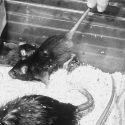
While our campaign on forced swimming continues, we have discovered a new project accepted by the Ministry in charge of research, which is going to subject 420 mice “to chronic pain for 9 weeks or chronic stress for 3 weeks with, in both cases, the development of anxiety-depressive disorders” treated with two antidepressants whose function will be studied thanks to “anxiety-depressive tests with a duration comprising between 5 and 6 minutes”.

This understatement is not the only one, since we have found mention of “behavioural tests” without further clarification in another recently approved project, among others. A nice way to avoid mentioning the forced swimming test, which is precisely this duration.

But we cannot forget that animal testing is packed with other just as unbearable practices. Three ‘strict’ project summaries approved and published online on 13 July have attracted our attention.

Stress in utero, bacterial infections, and chronic pain

The objective of the first project is to study how stress in utero and bacterial infections favour chronic illnesses in lineage, to find avenues for treatment for these illnesses.

For this, 840 pregnant mice will be put into a restraining tube under a bright light (two stress factors) for thirty minutes, three times a day, for six days. Due to this, their young will have anxious and depressive behaviours.

The research team will then subject these 2,016 mice to various experiments, from bacterial infection through force-feeding to implanting electrodes, taking blood, and anxiety tests.

Pain specialists

The second project responds to a request from pharmaceutical companies who want varied pain models to test their analgesic molecules.

The laboratory already has ten models for ten forms of pain yet they want to develop an eleventh. For this, the laboratory staff will ligate the sciatic nerve or spinal nerve of 2,428 rats, implant cancerous cells in the tibia, take away part of the cartilage in the knee, and inject them with inflammatory agents in the bottoms of their feet.

Then they will test different substances, take blood from the neck, tail, eyes, or heart up to three times a day and submerge the related paw into 42°C water several times to test their pain reactions.

Painkillers… except for when they interfere with the results

The third project looks to test the anti-inflammatory or pain-killing potential of various substances in inflammatory pathologies of the intestinal system.

For this goal, the research team will make 300 guinea pigs starve for twenty-four hours before applying an inflammatory reagent to their colon, treating them acutely or chronically with the drugs to be tested, and observing the evolution of the inflammation by regularly testing their pain for one to two weeks.

The project summary states that no analgesic or anti-inflammatory treatment will be given to the animals, who will simply be killed if the suffering due to inflammation becomes “intense”.

For an end to harsh experiments

For all of these projects, the animals will be killed at the end of the experiments — whether that be to gather and study their tissues and organs or more simply because they cannot be reused in other experiments.

These practices, legal today in France, remind us that the fight must not only be waged against the non-conformities and other lies by people who want to perpetuate animal testing. The cultural, political, and regulatory change is just as important to succeed in banning animal testing.

Translated from the French by Joely Justice
Wildlife SOS and the IUCN propose a World Day for Sloth Bears

Wildlife SOS and the IUCN propose a World Day for Sloth Bears

Wildlife SOS and the IUCN propose a World Day for Sloth Bears
12.10.2022
International
Wildlife SOS and the IUCN propose a World Day for Sloth Bears
Wildlife

Sloth bears are a unique species that are found mainly in India. They also exist in a tiny number in Nepal and have a sub-species in Sri Lanka, thus making India their main home. They are also the least studied bears in the world. They are strong enough to scare away a pair of wild adult tigers to protect their young.Wildlife SOS India, involved in the conservation and protection of sloth bears for more than 25 years, has proposed to the IUCN that 12 October be declared ‘WORLD DAY FOR SLOTH BEARS’ in order to attract attention to the conservation and protection of this unique ursine species, endemic on the Indian sub-continent and listed as ‘vulnerable’ on the IUCN Red List. The IUCN-SSC team of experts on sloth bears has accepted this proposal and declared that this day will be celebrated worldwide.

World Day for Sloth Bears will be an opportunity for this species to be showcased, and for associations, institutions, rescue centres, and zoos in the whole world to promote conservation of sloth bears and their habitat, to expedite research, and to make the public aware of this still little-known species on an international level. Sloth bears are often confused with South-American arboreal sloths who move slowly. In reality, sloth bears are agile and considered among the most formidable wild animals.

To commemorate the first World Day for Sloth Bears, Wildlife SOS and the IUCN-SSC team of experts will organise an inaugural event at the Agra Bear Rescue Centre in Uttar Pradesh on 12 October 2022. This is the biggest rescue and rehabilitation centre in the world for sloth bears, created in 1999 by Wildlife SOS in collaboration with the Uttar Pradesh Forest Department.

Sloth bears (Melursus ursinus) are one of eight ursine species present in the world. They are known thanks to their very distinctive long dark-brown or black fur, a distinct white patch on their chest in a V-shape, and their curved ivory-coloured four-inch long claws used to dig out termites and ants from hard mounds. In the Indian subcontinent, they are present throughout the Deccan Plateau, coastal areas, western ghats, and up to the foot of the Himalayas.

Today, 90% of the global sloth bear population is found in India. According to several reports, their population has shot up from 40 to 50% during the last three decades, mainly due to loss of habitat, habitat fragmentation, poaching, and an increase in conflict with humans.

The 1972 Indian law (Wildlife Protection) included sloth bears in Annexe I, granting them the same level of protection as tigers, rhinoceroses, and elephants. However, this key species in particular had to fight a long and hard battle for survival and urgently requires conservation and protection measures.

These bears were formerly captured in India for fun (a barbaric practice of ‘dancing bears’). Wildlife SOS has been at the forefront of conservation for sloth bears for more than 25 years. With the support of their international partners — IAR (International Animal Rescue) and One Voicethey have saved and rehabilitated more than 628 dancing bears, thus putting an end to a four-centuries-old barbaric tradition. They have also provided alternative livelihoods to members of the nomadic Kalandar community, making the women independent and educating the children to prevent them from carrying on this illegal and cruel tradition.

Sloth bears are classified as ‘vulnerable’ on the IUCN Red List. Their conservation is only hindered by the fact that we know very little about them. With only 6,000 to 11,000 individuals in the wild in India, it is essential that we start to rewrite the history for this species.

«This day is a call to arms so that people in the whole world better understand this species and promote their conservation so that they will never disappear. The public can help to save Indian sloth bears by discovering their habitat and by supporting the associations actively working to protect them. We are grateful to the Forests Department, the MoEF & CC, the Indian government, and our partner associations, IAR (United Kingdom), HSI (Australia), One Voice (France), and Terre-et-Faune (Switzerland), for their friendly and unfailing support of our work as the decades pass.» Kartick Satyanarayan, Co-Founder and CEO of Wildlife SOS

«One Voice has been a partner of Wildlife SOS for decades, having worked hand-in-hand to put a stop to dancing bears and for the preservation of wildlife in India. The work accomplished by their team to promote research, conservation, and raising awareness regarding sloth bears is remarkable. We will be proud to celebrate World Day for Sloth Bears on 12 October and to help Wildlife SOS to ensure that these animals receive the protection that they need.» Muriel Arnal, Founding President of One Voice, a partner association of Wildlife SOS

«In many ways, sloth bears are the most unique ursine species. They carry their young on their backs for 6 to 9 months, 50% of their diet is made up of termites and ants, and they are capable of making an adult tiger flee. Unfortunately, they are faced with growing pressures of habitat loss and fragmentation as well as other man-made risks, particularly poaching. World Day for Sloth Bears is an opportunity to take stock and reflect on the importance of protecting this truly unique species.» Nishith Dharaiya, Co-chair of the IUCN sloth bear expert team

«Sloth bears have lived on the Indian subcontinent for almost two million years. These are the least-studied bears in the world and we have many mysteries to solve concerning this unique ursine species. We hope that 12 October each year will be established for the preservation of sloth bears in the world.» Geeta Seshamani, Co-Founder and Secretary for Wildlife SOS

Who is Wildlife SOS?

Wildlife SOS is a charitable not-for-profit association created in 1998 with the main goal of saving and rehabilitating wildlife in distress in India. It actively leads protection projects for wildlife and nature to promote conservation and fight against poaching and the illegal trade of wild species. It works in partnership with the government and native communities in order to provide former poaching communities with alternative and sustainable livelihoods.

Translated from the French by Joely Justice

The Ministry of Ecology continues to let hunters trap larks

The Ministry of Ecology continues to let hunters trap larks

The Ministry of Ecology continues to let hunters trap larks
07.10.2022
France
The Ministry of Ecology continues to let hunters trap larks
Wildlife

Today, on 7 October 2022, the official journal published the four decrees from the Ministry of Ecology re-implementing traditional hunting. However, the decrees from 2018 to 2021 had clearly been suspended and cancelled twice in a row last year by the State Council after a decision by the EU Court of Justice, two jurisdictions that One Voice had referred to alongside the LPO. Once again, we are referring it to the State Council.

The decrees from 4 October 2022, relating to the numbers and the capturing of field larks, in Landes, Lot-et-Garonne, but also in Gironde and the Pyrénées-Atlantiques, using netting and traps (cages), are once more nonsensical regarding the Birds Directive, which specifically makes it clear that traps must be selective. And once more they were issued on a Friday, as they were last year, to allow hunters to start killing birds for the whole weekend before we could intervene.

The maximum number of field larks that can be captured with nets has thus been set at 38,600 in the Gironde department, 56,672 in Landes, 1,230 in Lot-et-Garonne, and at 2,200 in Pyrénées-Atlantiques for the 2022-2023 season, and with regard to the cages, the maximum number authorised for captured field larks is set at 2,870 in Lot-et-Garonne and at 4,928 in Landes. That is 106,500 field larks, to which the collateral victims (other birds caught in the traps) must be added, who will struggle and lose their lives before the hunter-trappers arrive.

One Voice, who have been fighting for years to get these cruel methods banned — that can kill any bird that gets trapped without exception, including individuals from a protected species — will file, as they have already done and as they have announced, the appeals and emergency interim proceedings necessary to allow birds to survive in the south of France. It cannot be that because this kind of particularly barbaric hunting is only practised by only a few hunters, it is allowed to happen. For each bird taken by these traps, we are talking about life or death.

The advantage is essential for the birds concerned and symbolic in terms of cost for the entirety of the population.

According to Muriel Arnal, President of One Voice:

«Birds are living beings to be protected as such. They are among the hardest hit by the sixth mass extinction of species that we are currently experiencing with pesticides putting them in a situation of chronic famine, urbanisation harming their populations with noise, light, and a lack of places to nest… Drought and fires this summer have ended up hitting them head-on. It is essential that we rally for them. These ‘traditional hunting’ decrees are a disgrace.»

Our Ipsos/One Voice survey, released on 6 October 2022, clearly shows that eight to nine French people refuse to allow hunting to be practised in places decimated by heat and summer fires and that they want a ban on traditional hunting (83%, of which 56% are “completely in agreement”).

One Voice will be there throughout France this weekend to raise awareness among the public of the harmful effects of hunting, of the animals hunted, but also of the dogs that are used as weapons and considered to be objects.

Translated from the French by Joely Justice
Raising awareness of the harmful effects of hunting: One Voice is rallying in France

Raising awareness of the harmful effects of hunting: One Voice is rallying in France

Raising awareness of the harmful effects of hunting: One Voice is rallying in France
07.10.2022
France
Raising awareness of the harmful effects of hunting: One Voice is rallying in France
Wildlife

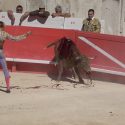
The day after the publication of the decrees on traditional hunting of field larks, that One Voice went up against the State Council for, and the publication of the IPSOS/One Voice survey on the opinions of French people regarding hunting, on the weekend of 8 and 9 October, One Voice is organising national action coordinated by their local branches to raise awareness among the population of the harmful effects of hunting… regarding the animals killed, of course, but also the dogs used as weapons and considered as tools, the risks for humans, and the pollution that this hobby inflicts on natural spaces. One Voice will therefore be in Bordeaux, Gap, La Rochelle, Lille, Montpellier, Nantes, Nice, Paris, Rouen, and Troyes.

Penned hunting, traditional hunting, gun or bow hunting, badger or fox digging, trapping birds, hunting with hounds… in the 21st century, all of these practices still exist despite people’s wishes to radically reform them.

Hunting in France: there are between 6,000 and 8,000 tonnes of lead in the wild, 20 million animals coming from breeding farms to be released and slaughtered, 45 million animals slaughtered each year, and 90 species of animals killed each year!

One Voice has opposed it for years and tries to make change in mentalities in France by demonstrating the suffering of the animals, the absurdity of the practice, and the collateral damage that hunting brings about. Hundreds of thousands of citizens and tens of associations with these demands want to change that from our side.

Today, double standards still exist for some animals. Dogs for example… artificially branded with ‘hunting’ as a qualitative term. We imagine them running through woods and countryside, happy to satisfy their instinct to prey and their need to exert themselves. But behind the idealised image, the reality is much different. The life of hunting dogs is a life of being a weapon as a purpose, of being a tool.

Because once the guns are put away, the exhausted dogs, often injured, are shut into small barred vans. Headed for the kennels, the dogs are tied to stakes in the mud or confined in cramped cages.

Parched, malnourished, sometimes beaten if they do not obey quick enough, many wearing shock collars which send an electric shock if they dare to bark.

Some even live among the remains of other dogs, our infiltration investigations into various hunts and those into kennels in Dordogne and in Jura have highlighted.

Consult the links for each town for the exact date, time, and place.

Translated from the French by Joely Justice

New IPSOS/One Voice survey: twice as many French people opposed to hunting as those in favour

New IPSOS/One Voice survey: twice as many French people opposed to hunting as those in favour

New IPSOS/One Voice survey: twice as many French people opposed to hunting as those in favour
06.10.2022
France
New IPSOS/One Voice survey: twice as many French people opposed to hunting as those in favour
Wildlife

One year after the circulation of the first infiltration investigation images from One Voice on hunting revealed the remarks made by hunters, particularly on safety, the Association has repeated its IPSOS survey determining the opinions of French people regarding hunting, in the context of the reopening of the 2022-2023 season.

A context in which hunters have finally come across strong opposition in the field: ours

In the meantime, numerous events have or are about to take place. The government is still hesitating to once more authorise the traditional hunting of small birds against the decision from the State Council, following the one from the European Union Court of Justice.

The commission in charge of the case file on the law proposed on the safety of hunting by the Senate, who met with us, returned a more than disappointing report, even though the trial on the death of Morgan Keane, who had started the ‘One Day One Hunter’ petition obtaining more than 120,000 signatures on the Senate’s site, is starting in a few weeks. 87% of French people found that hunting poses safety problems for walkers. Around three in four people living near a hunting zone are worried by the idea of walking around in the countryside due to the presence of hunters; almost eight in ten people have already avoided going out in this case, six on multiple occasions.

Thousands of animals have perished in fires in the summer or have been floored by the heatwave. All of them have suffered.

Badgers and their babies have been hunted down to the depths of their setts in numerous departments; we have joined together with numerous local and national associations for justice to put an end to this deadly hobby and have also documented the process. The National Assembly’s Sustainable Development Committee also heard from us at the end of September 2022 about wire fencing in Sologne, after that of the Senate last year, because our investigation into penned hunting in Sologne and elsewhere had provided us with solid expertise in the field.

Only one in four French people are in favour of hunting

The results of the IPSOS/One Voice survey in September 2022 do however give food for thought to those defending animals like ourselves. In fact, since last year, the proportion of people who state that they have a favourable opinion towards hunting has risen (26% versus 20% in September 2021). The ‘management of animal populations’, particularly, is an aspect of hunting that six in ten French people think is valid. French people are therefore still ignoring what hunting is in reality: a hobby which has no other justification than the pleasure of killing, with no or almost no limits. Despite strong news linked to the dangers and endless requests for exemption by hunters, some find them, unjustly, charming.

Animal breeding farms for hunting: partridges, wild boars, deer… or feeding (always feeding wild animals in the same place so that they can kill them as soon as the hunting season begins) would not exist if hunters were really ‘regulators’.

Last year, it also seemed that the annual eight million tonnes of lead that had fallen to the bottom of the wetlands due to these same hunters had been forgotten, polluting the whole fragile ecosystem of these ponds and seashores, where huts can be installed and live ducks attached to call to other ducks to land while passing during migration – they too are forgotten… We will not omit this, and will do everything we can for the information to be remembered once again.

After the heatwave and fires, French people are in favour of leaving animals alone

Hunters justify their existence by arguing that they love nature and that they regulate animal species who, without them, “would run riot”. On one hand, nobody else but them believes in this self-proclaimed status of them being on-the-ground environmentalists. Last year’s survey shows this well. On the other, if this was really the case, no hunter would shoot this year, given the suffering and also the carnage of this summer throughout the whole of France. Eight to nine French people in ten agree with a ban on hunting in areas affected by drought or fires, the majority are even “completely in agreement” with this.

However, the most shared opinion is still an overall opposition to hunting (48%), strong support of framework measures for hunting (all measures proposed are supported by the majority of French people who are “completely in favour”, and 76% to 92% in favour of them). Finally, a negative view of what hunting is (from another era and not a hobby like any other), of what it offers to animals (cruel to 65%) and humans (intrinsically a source of risk).

One Voice — at a moment when animal associations leading investigations are threatened by a gag amendment adopted by the finance committee at the National Assembly — who want to be a single voice for animals, the planet, and humans, will do all we can to support animals against the hunting lobby and to always inform the public as best we can on the reality of what hunting is: a dangerous, barbaric, and polluting activity.

Download the survey in its entirety

The French and hunting — An Ipsos study for One Voice

Translated from the French by Joely Justice

Finance bill: One Voice is stepping up to the plate to defend their right to inform on cruelty to animals

Finance bill: One Voice is stepping up to the plate to defend their right to inform on cruelty to animals

Finance bill: One Voice is stepping up to the plate to defend their right to inform on cruelty to animals
05.10.2022
France
Finance bill: One Voice is stepping up to the plate to defend their right to inform on cruelty to animals
Other campaign or multi-campaigns of One Voice

One Voice has noted three amendments that have been passed (n°I-CF16, n°I-CF98, and n°I-CF607) today by the Finance Committee on the Finance Bill, and which aim to remove fiscal advantages agreed with associations whose activists were guilty of intruding on agricultural and industrial sites.

The association, who is a whistle-blower or relays information from whistle-blowers on numerous subjects linked to irregularities and omissions, mistreatment or acts of cruelty to animals by breeders, circus artists, etc., can only condemn this attempt to put the associations in a difficult position, when they actually defend compliance with the laws in place against cover-ups. We will not allow the law to be so skewed in favour of these anti-animal and anti-nature lobbies due to pressure groups in favour of private interests being listened to by the Ministry for Agriculture.

One Voice is a revolutionary and non-violent association. Its methods, particularly investigations, allow them to show what is hidden by people who are breaking the law. And the images that they legally produce have allowed numerous victories in favour of animals.

For example, the investigation on the ten tigers kept by a circus trainer having led to their rescue in December 2020, or those in mink farms, for which the images allowed parliamentarians to decide to ban fur farms in France at the end of November 2021. But also our investigations within animal breeding farms (birds, deer, wild boars) serving as game for hunters.

One Voice is therefore calling on all MPs and especially those who want to defend animals, the right to inform, and the right for civil disobedience, to reject these amendments during the plenary session.

Translated from the French by Joely Justice