Franck Sorbier commits to One Voice!

Franck Sorbier commits to One Voice!

Franck Sorbier commits to One Voice!
12.01.2017
Franck Sorbier commits to One Voice!
Fashion

Franck Sorbier, a great name of the French Haute Couture, is engaging with One Voice in the program « Fur Free Retailer » to say no to animal fur!

Franck Sorbier a great name of the French Haute Couture is committed with One Voice in the program « Fur Free Retailer » to say no to animal fur!

Couturier Franck Sorbier sends a strong signal to his peers by taking a stand for a humane ethical style.

Distinguished Master of Art for his unique technique of compacting (mixture of materials), Franck Sorbier is among the few holders of the name « Haute Couture ». By signing today the Fur Free Retailer program promoted by One Voice and its international coalition, the Fur Free Alliance (already 90 ethical brands in France, and more than 450 in the world), Franck Sorbier reconciles creation and compassion, conjugate designer with “without cruelty »!

For this insatiable creator, it is also about educating young people on a key issue so that, in one or two generations, animal fur is eradicated from clothing stores, hoods and other fashion accessories…

Recall the poll undertaken by One Voice / Ipsos which revealed in late August 2016 that fur is primarily associated with cruelty for nearly 6 out of 10 French, and that 91% of the French are in favour of a label « no animal fur ».

In Europe, where many countries have already banned fur farms from their soil, millions of animals are still killed each year for their skin. A suffering and environmental impact that One Voice has always been fighting.

Congratulations to Franck Sorbier and his team for this position, joining that of Giorgio Armani who joined our FFR program for the autumn-winter 2016/2017 season.

Help us grow the Fur Free Retailer network for ethical fashion! Distribute the information.

Luxury, from the mink point of view: an unprecedented investigation by One Voice!

Luxury, from the mink point of view: an unprecedented investigation by One Voice!

Luxury, from the mink point of view: an unprecedented investigation by One Voice!
10.01.2017
Luxury, from the mink point of view: an unprecedented investigation by One Voice!
Fashion

One Voice leads a nonviolent fight to defend animal rights and respect all life forms. The organization operates independently and is thus free to speak and act freely.

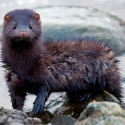
One Voice conducted a survey into French mink farms, mink who are farmed for their fur. While the latter is synonymous with luxury, the other side of the picture is not glamorous. The images, unveiled exclusively, give a tragic insight.

They dream only of one thing, freedom. They should have enjoyed a hectic life alone, protecting their territory, teaching the little ones to
hunt and fish, dig burrows, smell the fresh humus, hide in the weeds of the wetlands … But these mink from America are born in a cage and will only know the time of their short life, the wire cages, self-mutilation by force of stress and deprivation, then a long death by asphyxiation. For their fur...

No respect for the needs of mink

Of these images, filmed by people who had access to the farms, we discovered and dismayed, the cages all lined up and in very poor condition or even completely dilapidated. The minks frantically seeking a way out of their psychological misery, stress and boredom, by surveying in the few cubic decimetres of living space that are conceded to them. They are caught in a vice between the putrefied remains of food, deposited directly onto the cages, and their droppings, piled up on the ground beneath them, inevitably polluting the groundwater that runs off it, and saturating the air with a pestilential odour.

These animals, naturally solitary and territorial, are subjected to extreme stress. Lack of space, even promiscuity, is unbearable for them. How to escape a conflict in these conditions? How to isolate yourself a little? The fence abruptly shears their semi-webbed legs, over-solicited. Deprived of all access to water, an element essential to their well-being, they are hurt, they are afraid, they are bored, they want to go out, they go crazy …

Suffering right up to the end

While a free mink lives for about ten years, they are barely eight months old when they are harshly picked out by the breeder. On our images,
we see them being thrown brutally on top of each other in a container. In one of the filmed farms, a dog watches, and pounces on those who desperately try to flee.

Death by asphyxiation has relative « success » and speed. Piled on top of each other, some survive a first session. But this choice of industry is not made to limit their suffering. We must above all preserve their precious coat from any blood stains!

A disaster for the environment

The fur industry has major environmental consequences, including its use of heavy metals, its water consumption and its effluent production.
In many of the mink farms filmed, the excrement evacuation system was substandard or non-existent. The images also show corpses decomposing on the ground, which means a significant polluting effect to the environment, and therefore major health risks for the entire ecosystem … including human.

As for the mink that manages to escape, their freedom is at the price of their future European cousins.

To learn more, discover our full report

One Voice calls for the ban on mink farming in France. Let us write together to the Prime Minister to enhance the power of the voices of mink and all the other animals raised and killed for their fur. We must put an end to this industry of suffering and death. Let’s respect the mink!

The hidden face of the fur industry in France: Mink farm revelations

The hidden face of the fur industry in France: Mink farm revelations

The hidden face of the fur industry in France: Mink farm revelations
09.01.2017
The hidden face of the fur industry in France: Mink farm revelations
Fashion

One Voice reveals its breaking images, filmed in six mink fur farms amongst the 14 currently in operation1. The evidence exposes the mink’s suffering, as well as the particularly worrying environmental practices. Reinforced by the French public’s opinion, the majority of whom do not want fur, the association is demanding for the rapid closure of these mink farms.

The images, which will be made public on the 9th of January 2017 by One Voice, were filmed by people with access to the French mink farms’ premises. For the animals, luxury is a long way away, as they suffer in their dirty cages. A vile porridge is deposited on the cage roof of their pathetic ‘nest’, where the remains are left to rot, sometimes for some time. The floor is comprised of painful cage bars for their paws, where their excrement is allowed to fall through and accumulate in sometimes incredible quantities. The water seen running around their cages carries the effluent with it, provoking concern for the environment, as well as the hygiene questions raised by the corpses discovered in the grass… For a coat, up to 80 minks need to be killed, and it is estimated that a farm of 1,500 females generate 120 tonnes of manure a year, plus a tonne of phosphorus2. 200,000 minks are killed in France every year.

Whilst the farmers make a mockery of « creating life » and guaranteeing the well-being of the animals, the minks that we see in these farms are denied water and any form of activity, despite being semi-aquatic predators. Their only outlet is craziness, which is expressed through stereotypical behaviours. And when the time comes to discharge them from their sad existence, they are brutally snatched and thrown one on top of another into a container…

If we believe the breeder’s line, captivity spanning several generations has removed their desire for freedom. So how can we explain their attempts to escape when they have the chance? The biological reality of these animals is the need to live in liberty, near a watercourse, the need to hunt, to fish, to hide. No living being is designed to live imprisoned. We don’t adapt to suffering. Two minks who were filmed in a desperate attempt to escape were both caught and brutalised by the dog on the premises. But how many manage to escape and enter the feral population which has been recorded across France? They are not native, their introduction upsets the ecosystems. Ethical management plans exist but in order to be effective, no more individuals can be imported… So more farms.

Muriel Arnal, One Voice’s president declares: « Any notion of humanity seems to have deserted the passageways of these farms.The individuals who are raised there are sentient beings and possess an incontestable desire to live. But they are continually denied their identity. Their lives are comprised of misery and torment. It is not right that the luxury sector continues to endorse such practices. Real beauty can’t exist without ethics. We are asking for the immediate ban of fur farms in France. »

All of the observations are available in a report written by One Voice. A video has also been made following the investigation.

All information collated is available on the campaign website:
www.VisonsLeRespect/en

(1) Source : Well Fur
(2) Source : Nasi, 1977, in : Guégan er Rougeot (1987) : Le vison, techniques d’élevage et rentabilité, TAVI, 1987 (The mink, farming and profitability techniques)


Share on

Tilikum has gone home

Tilikum has gone home

Tilikum has gone home
06.01.2017
Tilikum has gone home
Exploitation for shows

Tilikum life has just been extinguished at SeaWorld. The one who inspired the film Blackfish ended up succumbing to despair and illness. Will his death mean the end of SeaWorld and the captivity industry?

In his last days, Tilly was barely moving

He remained a float in a semi-comatose state behind the grid of his medical pool, at the back of the show pools. He watched the others dance to the thunderous music that had twisted his skull for twenty-four years. Never again would he come back on stage. Never again would he obey. He was going away and we can imagine that, far from being afraid, this idea soothed him.

The drugs blurred his mind, the fever made him shudder. Sometimes the young Kayla came out of the fog and held him on the other side of the bars. Or it was Trua, his grandson, or little Unna … No, his daughter was dead, he could not remember when. He confused them all now. But he was happy that we cared about him. He felt death and it did not matter.

Then he plunged back into his waking dream and saw before him the vast open seas of Iceland and the fjords of his childhood. Far over there, on the edge of the horizon, his mother called out to him louder and louder, the piercing eerie cry of the orcas to call those who are far away. And he was swimming towards her.

SeaWorld will do everything to clear Tilly’s memory

The company will continue to tell us that thirty-six years is very old for an orca, and that everything has been done to treat him at best. But this time, it will not work anymore. People know. And if they know, it’s thanks to Tilikum. The whole world knows today the atrocious fate of this little orca snatched from his mother, locked in the dark with two mad females, who went mad and who killed three times before being lobotomized by drugs. They know that pneumonias, such as ulcers or « bowel twists, » are diseases directly related to captivity. Stress, hunger, fear causes a massive immune system failure among these giants in jars, opening the door to all types of infection. They know the lies of this industry. In no case, ever, anywhere, can a cetacean live happily in slavery.

Anyway, no one is listening to what SeaWorld is saying

The group of amusement parks can publish all the videos they want, pay for the most expensive advertising campaigns, for them it’s over. The mask has fallen off and the king is naked. Through the magic of the movie Blackfish, Tilly revealed everything about this hell of sadness, boredom and shame that he suffered like all captive orcas. He showed us that slaves can revolt and turn into killer orcas, who can kill humans, a species that exists only in pools.

Keiko was the first orca whose fate moved the public thanks to the movie Free Willy

His tragic death in the wild was a windfall to SeaWorld and its clone companies, who then repeated in a loop that freedom was killing orca’s. But it’s Tilly who opened the eyes of the world to the true face of captivity. And SeaWorld will be his fourth victim.

Beyond his death, the powerful memory of Tilikum will continue to guide us towards this goal that we will reach: free all orcas from their concrete pits!

What did Aicko die of?

What did Aicko die of?

What did Aicko die of?
03.01.2017
What did Aicko die of?
Exploitation for shows

On January 5, the Tribunal de Grande Instance of Nantes will examine One Voice’s request for a judicial expertise to determine the causes of the death of Aïcko whose corpse was quickly sent to an animal disposal unit.

On November 6, 2016, the little Aikko died in solitary in his pool.

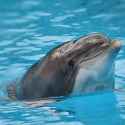
But what did the young dolphin die of when Park Asterix were praising his good health and vitality at the time he still lived with his mother?
What killed him? Is it a viral or bacterial pathology that could threaten other dolphins? Is it because of the harassment of Aikko by other adult dolphins? Is it stress due to captivity? Or the ingestion of toxic paint peeling from the walls of his pool, like Théa, who also died at Planète Sauvage? Deadly pathologies are surprisingly varied in dolphinariums, but we know nothing about what caused Aikko’s death. To date, no autopsy results have been reported as yet.

Since Galéo is better, thanks to the alert launched by One Voice, Aïcko became in turn the scapegoat for stressed adults. On October 29, advised by us, Dr. Naomi Rose, a world specialist in cetaceans, visited the Marine City of Planète Sauvage and declared: « Never
in my career have I seen such a lean captive dolphin
. » We filed a
further complaint on behalf of Aikko on November 7, accompanied by
the full report of Naomi Rose. On November 2, One Voice was able to
film Aïcko, apparently in great distress, separated from the rest of
the group. These are the very last pictures we have of him …

On November 6, Aikko passed away. Curiously, his body was quickly delivered to the animal disposal unit. No definite reason has yet been given for his death. At the announcement of the death, the scientific director of the dolphinarium said: « Aïcko suffered from a loss of appetite for about 3 and a half weeks. He had been in intensive care for a week because he could no longer eat alone. He was suffering from a disease; it will be necessary to identify which one1.”

It is surprising under such conditions that Aikko was able to continue to participate in the show!

Muriel Arnal, president of One Voice, says, « Dolphinariums claim that they « offer » their captive dolphins excellent conditions of detention, which we challenge. It is time for France to become a country where dolphins are free to swim in the ocean.  »

1.
http://www.lecourrierdupaysdec…

Share on

Croatia bans fur farms!

Croatia bans fur farms!

Croatia bans fur farms!
03.01.2017
Croatia bans fur farms!
Fashion

A new victory in the fight against fur! After Japan in November, it is the turn of Croatia to ban fur farms, becoming a fur free country!

A new victory in the fight against fur! After Japan in November, it is the turn of Croatia to ban fur farms, becoming a fur free country!

The 2006 Fur Trade Prohibition Act came into effect as planned on 1 January 2017 in Croatia. Breeders have benefited from a 10-year period to reconvert. And the ultimate political attempt to maintain chinchillas was indignantly rejected by the citizens.

Very happy, members of Animal Friends Croatia, the main local players in this fight, decided to take cakes to the Minister of Agriculture in charge of law enforcement. Partners in their fight, One Voice had investigated hidden camera in chinchillas breeding. We had filmed the great suffering of these soft animals killed by electrocution, and contributed to the awareness of the Croatian public.

This beautiful development echoes that what was obtained in Japan in late November: the last mink farm in Otsuka closed forever. Now under the law on the prevention of invasive alien species – raccoons have left bad memories in the archipelago – no more fur farms will be able to open. The Land of the Rising Sun has joined the ranks of the nations – the Netherlands, Great Britain, Austria, and others – who have renounced the fur farms and the senseless cruelty they imply.

These two victories show us that with the support of public opinion and policies, we will succeed in building together a better world for animals. In this regard, One Voice is particularly pleased to be part of the 40 organizations of the Fur Free Alliance whose constant work around the world is gradually changing consumers’ perception of fur.
Behind the silky coat of mink, beyond the silvery reflections of a fox tail collar, people now see the cages, the wounds, the babies trampled on the wire floors and the skinned corpses thrown into the air like waste.

A fur-free world is possible and the news coming from Japan and Croatia can only bode well for the coming year.

Dolphins, France against history

Dolphins, France against history

Dolphins, France against history
22.12.2016
Dolphins, France against history
Exploitation for shows

The Ministry of Ecology is preparing to revise the decree on dolphinariums, not to ban them as requested by One Voice, but to encourage dolphin battery farming. The few changes to be made are just a smoke screen. Enough is enough!

On November 24th 2016, One Voice had been received by the ministry regarding this subject. We brought our investigation reports, supported by the opinion of world-renowned scientists. We had been pleading for the end of this toxic industry. But the text has just been approved.

It is a shame because this decree is only a ridiculous update of a text 35 years old. It ignores the ethical advances and scientific discoveries that disrupt our view of the animal world, including a clear shift in public opinion against these pools of prison.

How can we still, in the 21st century, exhibit captive cetaceans in an aquatic circus arena?

Innumerable scientific research reveals to us today that the dolphin is endowed with a prodigious intelligence, cultures and self-awareness. The mere fact of keeping these animals born for the vastness of the ocean and to be locked up is in itself a major abuse.

What could be crueller than to deprive them of the complex social life that is the essence of their happiness, of any decision-making opportunity, of any sensory stimulation, of any long-distance group voyage or of any deep dive to the ocean bed?

The fact that there are five shows a day instead of three, three pools instead of two and a scientific committee charged with the idea of “enriching” their environment – with more balloons and rubber hoops? – This can never compensate for the lack of freedom.

The draft decree however intends to perpetuate this practice by producing “dolphins for shows” as a production line

They would like to make us believe that the born-captives are “domestic dolphins” who have miraculously adapted to the dreary life in these pools, and in less than two generations. The dramas of Lucille, killing a baby and Galéo covered with wounds, the little Aïcko, died despite of our appeals; show us enough evidence that this is not the case.

At the same time, the public has stopped being fooled

Because of their intrinsic cruelty, dolphinariums have been banned in India and banned in 14 European states. In Finland, the only dolphinarium closed due to lack of spectators. The phenomenon is now affecting the Netherlands.

Throughout Europe and the United States, a fundamental movement fuelled by social networks, documentaries and widely disseminated scientific information, is leading consumers away from these cruel spectacles. In France, an IPSOS survey conducted for One Voice on December 19th 2016, tells us that most French people are in favour of banning dolphins and orcas shows. 62% believe that cetaceans suffer from stress, 60% from boredom and depression. Finally, for more than one in two French persons, dolphins and orcas are unhappy in captivity.

In September, One Voice had already issued a warning about the content of the new decree, denouncing the policy on reproduction.

The international coalition Dolphinaria-Free Europe is now supporting us by denouncing the tentative planned developments that only validate the principle and future functioning of marine parks. But these seriously affect the individual freedom and dignity of dolphins, slaves who are forced to perform until their death. It is an insult to their sophisticated cultures, dialects, and hunting techniques to believe that balls and hoops or even contact with their trainers could actually “enrich their environment” and replace the incredible richness of a free life at sea.

Because it is impossible to really improve a dolphinariums, unless you turn it into a marine sanctuary or better still return to the ocean. In the United States, we are already preparing for this inevitable deadline. While a sanctuary in Canada is preparing to host captive orcas in 2017, the Baltimore Aquarium announces that it will move its dolphins into a closed bay in the Caribbean before 2020. In Spain discussions are underway to move the last captives of the Barcelona Zoo to Lipsi Island, after the closure of the dolphinarium.

How can France be so blind? It is only in Russia, China, Dubai or Japan that the industry of captivity continues, nourished by Taiji dolphins. Is this really the path that our country intends to follow?

The only decree that One Voice will support is therefore the one that will put in place the closure of all dolphinariums in France, through firm and progressive procedures, associated with the establishment of marine sanctuaries.

2017: The fight against feline strays

2017: The fight against feline strays

2017: The fight against feline strays
08.12.2016
France
2017: The fight against feline strays
Domestic animals

10.7 million homeless cats, hundreds of thousands killed each year… It cannot go on any longer. For felines without families, One Voice asks the presidential candidates for a plan of action that finally puts an end to the wandering and suffering associated with it.

They are called Sheila, Mahalo, Felix, Mr. Chat… They once had a home but one day were deemed undesirable. For them, the time to stray had begun. Find shelter from the cold or the rain, find food and drink, protect yourself from attacks, those from other cats, dogs and humans too. Because in the street, cats are victims of a thousand abuses: stones being thrown, burning, smacks… So many trials that they have to survive on a daily basis.

Some, however, have a chance to meet a benevolent human. Someone who will help them a little, or adopt them to offer a new family and this time, someone who will not betray them. But despite these women and men who, for some, dedicate their lives to helping them, the problem does not go away. It never stops getting worse. Because at the origin
of strays, at the base of the overpopulation feline, there is the rate of reproduction: in seven years, it is estimated that a cat and its offspring can give birth to as much as four hundred thousand kittens, of course, there are those who are thrown into the street, but also those who are born there.

One Voice asks the authorities to react. It is time for this to stop. It calls for a national plan to fight feline straying in France, including mandatory sterilization and the ban on the sale of animals by classified ads (paper and Internet). In the run-up to the 2017 presidential elections, this is one of the questions the association will ask the candidates to answer. Because straying is a public order problem, which is not only the cause of abuse, but also an environmental nuisance.

The One Voice Action Plan for Cats Without Families

  • Denounce their torturers and make the voices of homeless cats heard
  • Actively lobby the government for mandatory sterilization
  • Take steps at a territorial level to stop the sale of animals by classified ads (paper and Internet)
  • Help our partners in the field bring care, food and love to the surviving felines.

Help cats without families by supporting our campaign.

The dogs of Darjeeling

The dogs of Darjeeling

The dogs of Darjeeling
30.11.2016
India
The dogs of Darjeeling
Domestic animals

In 2002, One Voice financed the construction of the Darjeeling Animal Centre in Western Bengal, India, allowing thousands of dogs and cats to be given medical care and to be sterilised. In 2016, the adventure goes on!

The town of Darjeeling is found nestled in a valley at the foothills of the Himalayas, with tea plantations covering the hills. Originally a British colonial’s resort, who came every summer to refresh themselves from the Calcutta heatwaves, Darjeeling has since become an Indian town like the others: touristic, polluted, crowded and populated by the bolting shadows of the outcasts of all outcasts, stray dogs.

These poor individuals, covered in dust, worn down by parasites, and exhausted from hunger, live in constant fear of being kicked or having stones thrown at them. We see them scuttling around, heads down, between the shop stalls, shooed away into traffic jams where many of them finish under a lorry’s wheels. The people throwing stones at them do it mostly in fear. In India, rabies is still a real risk: 18,000 people die of it each year.

In order to reduce the spread of the disease, the Darjeeling municipality regularly launch street dog eradication campaigns, whose bite is the main transmitter of the virus.

In Jaipur, Christine Townend and her husband Jeremy have already set up an ‘ABC’ programme (Animal Birth Control). They were prepared to invest in Darjeeling as in the neighbouring town of Kalimpong, but how would they find the money? Who would finance the project? Because of a lack of answers to these questions, the project remained dormant. However, in 2002, after having obtained commitment from the town, One Voice offered all of the funds necessary to buy the land and to construct Darjeeling Animal Shelter, without looking back. The ABC programmes could start!

Today, the first thing we notice when we arrive in the town, is that there are less stray dogs, they look happier, and are in better health. The veterinary centre, still financed by One Voice, and fully active since 2008, has been looking after them ever since. Thousands of dogs, and more recently, cats, have been looked after in the refuge; treated and sterilised. Some are released, others stay in the centre, and others are adopted. Going further afield, the Darjeeling Animal Centre team has expanded its remit, with a veterinary van that visits the villages to treat animals. Vaccination camps are also installed in isolated hamlets that are only accessible by foot.

Gradually, more individuals are getting involved, volunteers are presenting themselves at the refuge, people are adopting cats, and mentalities are changing. People’s points of view are shifting for these animals that were once seen as untouchable. They have seen the centre personnel catch them gently, give them medical care, sterilise them and let them go once they are back in good health. On top of this of course is the essential work undertaken by the centre, creating awareness in a population who mistreat dogs out of fear of rabies, and persecute cats out of superstition.

To support this wonderful project, which will surely be a useful pilot for many other Asian and African towns, One Voice is looking for sponsors for Darjeeling’s ‘stars’. The oldest one, Dolly, an adorable dog, was found abandoned on the return from a mission. Forced to scrounge in rubbish bins to feed herself, she was sadly no stranger to human abuse. Thanks to the refuge team, she quickly regained her strength and high spirits with her best friend Nuri, a stocky little dog who she loves playing with. Dolly has not been adopted but everyone at the refuge loves her: she is welcome wherever she goes, even if she is quite imposing! Dolly loves inspecting visitors and the dogs that they bring with them. It is without doubt a job that she has allocated to herself and she executes it with great seriousness.

Alongside One Voice, please help Dolly, Cricket, Soumil, Pikachi and all of the other residents in the Darjeeling refuge! They are counting on you!

Dolphins die… For justice system: Move on, there is nothing to see!

Dolphins die… For justice system: Move on, there is nothing to see!

Dolphins die… For justice system: Move on, there is nothing to see!
25.11.2016
Loire-Atlantique Dolphins die… For justice system: Move on, there is nothing to see!
Exploitation for shows

On November 24th, Nantes Tribunal de Grande Instance (TGI) granted the request of Parc Planète Sauvage and ordered One Voice to pay €1,000. The TGI also cancels the order of justice having authorized the association to investigate with the help of a bailiff the conditions of detention for the dolphins in this park … which has just recorded the death of the young Aikko!

His decision was based on the report prepared by the Departmental Direction of the Protection of the populations of Loire-Atlantique (DDPP), following a visit to the zoological park of Port-Saint-Père in February 2016, indicating that “The animals’ health status and their conditions of detention are in accordance with the regulations in force, no danger having been noted for these dolphins“. The judge also denied the urgency of the application for the court order, obtained by One Voice to carry out this summer, a bailiff ‘s report on the living conditions and health of the eight dolphins in the Park.

Muriel Arnal, President of One Voice, who was received at the Ministry of the Environment on 24 November to plead for the closure of dolphinariumins in France, commented on the decision:

“This judgment could be understood if the young dolphin Aikko who was sent to Park Asterix early 2015, did not die in Port-Saint-Père on November 6th. We did our work as whistle-blowers, with two successive reports produced this year by eminent marine biologists (Dres Naomi Rose and Ingrid Visser) to highlight the dysfunctions of the park, and with this lawsuit to obtain a bailiff’s report. Such a decision masks a reality that now weighs on the future of other dolphins of Planet Sauvage, including the half-brother of Aikko, the young Galéo. How many deaths will it take before something is done?”

The association does not give up, far from it: The Commission for access to administrative documents, the CADA, gave a favourable opinion on 3 November 2016 to One Voice’s request that the refusal of the DDPP to provide a copy of the control report relating to the Planète Sauvage dolphinarium was not justified. One Voice has therefore reiterated its request for a copy of the DDPP control report and remains committed to shed light on the causes of Aikko’s death and to put the other dolphins in the park out of harm’s way.

For Muriel Arnal:

“The report of the DDPP, giving an endorsement to the park on its compliance with the regulations cannot fail to note the lack of adequate shade for the pools, as well as the presence of algae, this criterion alone should not allow such a positive conclusion. Moreover, since the passage of the DDPP, Planète Sauvage has recorded the birth of two dolphins. The conditions of detention and the coexistence between cetaceans have nothing more to do with the report, as today one of the three pools is used to isolate infant dolphins with their mothers … This reduces the other dolphins to an untenable confinement. I recall that last year, the birth of a dolphin in Port-Saint-Prère resulted in the death of the baby, victim of a fight between depressed dolphins.”

The One Voice association therefore maintains all its ongoing proceedings against the Parc Planète Sauvage: the complaint filed with the public prosecutor, the request addressed to the prefect for formal notice to comply with the regulations on pain of suspension of its activity, and finally an interim procedure to assess the causes of the death of Aikko.

Press contact:

info@one-voice.fr

Share on