Badgers, these discreet heroes

Badgers, these discreet heroes

Badgers, these discreet heroes
28.04.2020
France
Badgers, these discreet heroes
Wildlife

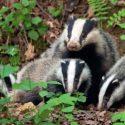
With their little Zorro mask, badgers are easily identifiable. But few are lucky enough to be able to observe these shy and reserved mustelids. A portrait of enthusiastic, united and peaceful workers who deserve all our respect … rather than being murdered in the bottom of their burrows.

When we come across an individual after dark, pointing his nose out of his burrow, we think we are dreaming. The timidity of European badgers (Meles meles) is such that they prefer to stay looking pretty if they spot the slightest danger thanks to their highly developed sense of smell. It is not for nothing that they choose to spend more than half of their lives in a safe place in their home.

Responsible architects

Outstanding diggers and earthmovers, it is underground that they become seal off. But their shelters are nothing like simple caves, dug anywhere in a hurry! As good engineers, they do not choose their addresses at random. When they have the possibility and the environment is not too heavily anthropized, they prefer discreet environments (undergrowth, thickets, hedges), set back from human activity. Their real preferences go to the soil, which is both soft and resistant and if possible, sloping (slopes, hillsides, etc.) which will facilitate mucking out and drainage. They also ensure the structure of the surrounding vegetation whose roots will guarantee the sustainability of their works, as well as the presence of water and sufficient food resources for all of their small community.

Tireless builders

Once the location of their future home has been identified, work can begin. And they can count on their endurance, their courage, their ardour and the prowess of their paws to design real crypts worthy of those inside cathedrals! Thus, some burrows sometimes extend over several hectares. It must be said that with badgers, one takes care of the family heritage. Their homes have grown over the generations, with a tangle of galleries buried up to five meters deep! Each serves floors and rooms intended for specific uses: dormitories, birthing room and even latrines! Very keen on the comfort and hygiene of their home, the kings of the household regularly clean their interior, ventilate the litter boxes and even renew them, returning from surface expeditions loaded with moss and armfuls of dry grass or ferns.

Group spirit

Each of the adults occupying the household takes part in domestic chores. Here, the females do not have to complain about the males to support them! And there is always a lot to do within collective housing which brings together an average of ten individuals, young badgers included. Very close-knit, the family clan shares everything, including the same smell with which it blithely marks its territory. In addition to olfactory markings, badgers also communicate by suing a wide range of sound signals ranging from purrs to howls, including groans, squeaks, bleating, and other grunts. And when the little ones have fun together in the fresh spring grass, they are cheerful cheers! Including when they play with their neighbours the pups, whose parents squat part of their vacant burrows, without anyone being offended!

A false reputation

So, badgers have nothing to do what so ever with these abject monsters so portrayed and who are slaughtered by hunters. Underground and careful night owls, they suffer from their discretion and the ignorance that surrounds them. At least since the Middle Ages, they have been criticized of wrong doing, their smell, their darkness, and why not go ahead, their masked faces … Today, their detractors are trying to justify the hatred they have for them by accusing them of stealing a few ears of corn in cultures, to be vectors of diseases, sometimes to jeopardize the urban infrastructure. So many exaggerations, even fallacious arguments, illustrating above all the inability of some humans to bear the presence of wildlife alongside them, even when it’s, they who invade it! In this unequal and unfair fight, badgers look like perfect scapegoats. We can assume all types of misdemeanours about them, which in their defence is completely unfounded! Only those who are interested in badgers will discover a high level of sentience of these extremely endearing animals and their considerable role in preserving biodiversity. They notably contribute to soil aeration and the dissemination of seeds in their excrement. Let them live in peace, that’s all they aspire to! And if their customs and their faces still conceal a part of a mystery, it is undoubtedly that they reserve their precious secrets only to a few insiders …

Sign our petition

Support our fight

Coronavirus: Faster than animal experiments

Coronavirus: Faster than animal experiments

Coronavirus: Faster than animal experiments
24.04.2020
Union Européenne
Coronavirus: Faster than animal experiments
Animal testing

Coronavirus SARS-CoV-2 became a pandemic within a few weeks. We all hope for a fast development of vaccination and antiviral drugs. History has taught us that animal experiments are not the right model to achieve this goal but it is human nature to repeat past mistakes. When will the world finally realize that human-relevant model systems need to be promoted and adequately funded if we want medical research to be effective and fast?

It is a well-known and major drawback of animal experiments: They are slow – too slow in times of a pandemic such as SARS-CoV-2 that we are currently facing. It has long been criticized by scientists and NGOs that medical research based on animal experimentation is inefficient – in particular when it comes to disease modelling and drug development. Also, it has been discussed for years with numerous stakeholders that human-relevant model systems have to be established, optimized and validated. Many advanced research models have already been developed such as 3-dimensional cell models of the human lung and of the immune system or advanced organ-on-a-chip approaches.

Still, research funding is largely assigned to projects involving animal experiments whereas very little is invested in the optimization and establishment of human-based technologies. Shifting our scientific paradigm towards animal-free research would be wise in order to have human-relevant research models available for future pandemics which will certainly come. Such in vitro models are faster and more efficient compared to animal research because they do not face the problem of species-specific differences. Countless animals are currently suffering in animal experiments related to COVID-19 in order to find “the right animal model” for studying the virus and its infectious properties. Ferrets are now claimed to be an excellent “model”, because they get infected by SARS-CoV-2. However, ferrets do not develop any symptoms of the disease as observed in humans making the approach a dead end road.

This phenomenon is a long-established strategy: Results from animal experiments which will most probably never apply to humans are presented to the public as great success stories. Other animal species are used for COVID-19 research although they do not even get infected, for example mice. Genetically modified mice that have previously been developed to study other corona viruses are now sold as special “tool boxes” to try out if they might be useful for SARS-CoV-2- research. Further approaches include the generation of humanized mice in order to make them susceptible to viral infection upon insertion of human genes into the mouse genome. Apart from a very low chance to succeed, such attempts are unethical and extremely time-consuming. Simply the generation and breeding of genetically modified animals take months, the in vivo experiments span several months or years and the chance to finally obtain human-relevant experimental outcomes is very low.

History taught us many times that animal experiments are not suitable for successful development of vaccines. The regular process of vaccine development spans many years with costs amounting to hundreds of millions of euros or even more. For numerous viral diseases such as HIV, MERS or other SARS viruses, we failed to develop effective vaccines to date – despite years of extensive research.

Each pandemic like the one we are exposed to now, is a chance for politicians and decision makers to learn from past mistakes. The next pandemic will come one day and we should be prepared with human-relevant research models that enable a fast and reliable drug development process. For the sake of human safety and for the sake of so many animals which suffer for a research that does not live up to its promise.

Joint statement on COVID-19 from the ECEAE

A year of being undercover and observing in order to be able to offer freedom to Baby!

A year of being undercover and observing in order to be able to offer freedom to Baby!

A year of being undercover and observing in order to be able to offer freedom to Baby!
16.04.2020
France
A year of being undercover and observing in order to be able to offer freedom to Baby!
Exploitation for shows

We have investigated for months and have documented to the maximum the conditions of detention to which Gilbert (alias Yeuk) Bauer has kept Baby, an elephant which he has exploited for more than thirty years. We denounce him and his organisation, we want to free her from this life of hell! But to obtain a seizure, and to be able to place her in a sanctuary, justice and the authorities have always asked us for more evidence on what we are demanding. Violations, reports … nothing ever seems to be enough. So here is the account from a year of diligent investigation, during which we crossed France to follow Baby and her days of confinement. Between the years, we have been monitoring and reporting, tailing her and continued to pursue our undercover work…

Since our meeting over fifteen years ago when she was exhibited alongside Micha, Bony and Glasha, we have been following Baby. Since her capture in Kenya when she was barely two years old and the certain massacre of her family, she has been dragged by force from circuses to animal parks. She has been exploited under marquees, at fairs, village festivals, advertisements and television and radio broadcasts, historical re-enactments and even films…

She is forced to obey, under penalty of being beaten with an ankus or even being deprived of a meal… Worse still: she complies obediently, because getting out of the truck, her prison cell, is still her only relief, even if it is only to take a few steps. At least she is able for a few minutes, to feel the fresh air circulating around her numb body … Even if means that you have to perform painful poses under a noisy marquee.

This is what her life and her future will continue to be reduced to if we do nothing. Because we have done the math: Baby spends 96% of the day in the truck during performances, and 100% the other days. This truck which barely allows enough room for her to turn around on herself.

From April to November 2019, when « freedom » rhymes with dungeon

Since our last procedure, we wanted to show as many people as possible the ordeal that is Baby’s life. Two steps from Saint Paul Park, where Kid Bauer also exhibits his feline babies, and from the village where Mario Masson’s ten tigers are kept, Baby has suffered for months.

In April, May, August and September, our investigators went to Kid Bauer’s Parc Saint Léger, from where they returned, stunned: alternating between tigers and babies being photographed with the public, Baby is also part of the program for the opening season, at the rate of one hour a day per show, when the park is open. Planned at the end of June 2019 near 1000 km from this park, Baby’s trained act in an ancient festival will be cancelled thanks to the mobilization of animal defenders under the impetus of the Code Animal.

On the park map is the elephant enclosure. On the spot, however, one finds there only waste ground, with a wire  as a barrier, badly attached to the trees at the edge of the forest. The pamphlet states that she is walking « free » in the park, where she can be seen after the show. And indeed, after the show, Gilbert Bauer walks for a few minutes, Baby breaks branches by his side, it is the illusion of freedom. It is even possible to approach her; no security barrier is in place. Only the presence of the trainer appears to be enough for the authorities…

For several months, a daily danger!

Her freedom stops there: even in this animal park, everything is just glitter and pretence! In seven months, she has never set foot in the “elephant enclosure”. Because while the park promises mountains and wonderous things, we who have been hidden for days on the edge of their property have been able to observe Baby’s real daily life. On the other side of the road, the poor elephant with fragile feet remains confined in the truck which serves as her dungeon.

When the park does not open – in other words every day except weekends and school holidays – or when the performance is cancelled, for lack of customers or if the weather is not suitable, Baby doesn’t go out either. At most Gilbert Bauer opens one of the rear flaps of the truck so that she has some light and air. But she’s not even allowed to stretch her legs. And having access to water to drink only during the morning and evening cleaning time, she spends rainy days searching the roof of the truck with her trunk for something to drink. The rest of the time, she turns on herself slowly, taking care not to bump into the walls, or sways from right to left, as do all captive wild animals to express their suffering.

In December, the park closes before the scheduled date and Baby disappears: no trace of the trailer. A phone call tells us the park next year will no longer feature wild animals in their shows. Following repeated comments from customers and « pressure from animal rights groups it appears the park has got the message”. However, at the end of February 2020, the Bauer couple’s truck and caravan are back on site …

Go to Aubevoye, March 11th in an emergency

While we were on the point of proving Baby’s presence on the park, we were contacted urgently on March 11th to go to the Cirque de Paris to determine which elephant was part of the show in Gaillon. Was it Dumba, « rented » several times by this circus? In the ring, no doubt, it’s Baby. She runs around under the gaze of the spectators, oblivious to her misfortune and the danger: many of them take pictures of her during the intermission or follow her after the show to her truck.

For several days in a row, Baby will remain confined to the interior of the truck. And as always, she will only be allowed to walk outside of her tin box once a day to … go to the marquee. Lockdown and submission, same old routine, she’s grown sick of it.

Undercover tracking enlivened at the start of confinement!

In March 16th, the circus was preparing to break camp. So as not to lose track of Baby and to know where she will be during confinement, the extent of which we don’t know as yet, we are organizing the emergency tracking of these trucks. For hours, Baby is tossed around inside the trailer. The convoy eventually stopped at nightfall near Vierzon on a circus field. A new location? Should the undercover tracking continue the next day? Certificates must now be produced to justify our trips … The choice is made to stay nearby, at least until the next day, as long as it is possible. In the early morning, the convoy leaves. After a few hours on the road, they have stopped for inspection, we lose sight of the truck. We end up finding them and follow until they arrive at a property in the South of France … The trailer truck is parked in front of a hangar. Up until we left, Baby did not get out of the truck.

We had everything planned to follow Baby again, a trained elephant in great suffering, subjected to a life of slavery. As this confinement drags on, it forces us to postpone this painstaking work which consists of accumulating clear evidence of the mistreatment of which she is the victim. But our team is more determined than ever. We will not stop as long as Baby is in the hands of her trainer! Her place is in a sanctuary.

Support us
Baby, the perfect little elephant

Baby, the perfect little elephant

Baby, the perfect little elephant
16.04.2020
France
Baby, the perfect little elephant
Exploitation for shows

Captured in 1985 when she was very small, Baby delighted circus spectators and television audiences. Wise and responding to commands from a finger and the eye, the elephant is well-known… You can even hire her services for your living room! This « impeccable education » is none other than the reward gained from years of training and abuse… Stop mistreatment under the guise of moral lessons!

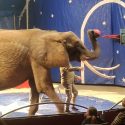
We can ask her to do anything! Go forward, backward, get up, go to bed, kneel, look “beautiful”, sit on a stool, climb on it, balance on three legs, then two or even one, dance around, hit a balloon! … When the act approaches the end, it then serves to draw her by one of her “tusks” which are of no longer of any use and then lead her to meet the public. Strokes and little affectionate “pats” on the head are waiting for her at the end of the chain! The “lucky” ones can take it in turns and keep a photo souvenir. Polite, she will wave goodbye to everyone with a white handkerchief before leaving … How touching! Baby is wise, Baby is well “educated”, Baby is as flexible as plasticine … Baby is a circus elephant.

Like a robot

Of course, her trainer watches over everything. Always the ankus and a pack of treats in hand. Between the two, Baby knows which one to choose. From experience, she knows that it is better to be docile. She is ready to accept anything. Besides, she will show this to us. Whoever sequesters her, she who has endured hell for many years, to even be used as a bench to sit on if he wants! Then he sits upon her side and swings his legs with contentment. Slumped to the ground on command, humiliated to the extreme, like a statue, she bears as much the weight of this humiliation as that of her «master». Not an ounce of reaction, not a whisper… Only a dumbfounded look can be seen in her eyes, though it’s thought she’s not even aware.

Spotlights in the dungeon

Baby is used to it. Baby has been perfectly formatted. Baby has become listless. It has been more than thirty years since she was captured in Africa when she was a baby. For all these decades, she has been performing in all kinds of shows, without ever flinching. One can even rent her “to create surprise and intrigue”. But do TV stations, movie stars and other fans of unusual events care about knowing at what price this elephant has become so obedient and servile? Do they really care about their daily life when “the party is over”?

We’ve been following Baby since 2005, we’ve seen the worst. Far from the limelight, the poor slave spends most of her time in a truck like prison cell. Its “owner”, who prides himself on loving her very much, has no qualms about leaving her locked up night and day! Sometimes he takes out his living toy to expose it to admiring onlookers. Without any precaution, he then makes her cross roads, in defiance of the animal’s safety as much as that of vehicles and pedestrians! Our investigators have collected dozens of videos, each more outrageous than the other. All of them reveal the horror of Baby’s existence.

“Destiny” has even led her, in the past, to cross paths with the Poliakov bears. Co-detained on the same fairground, each behind the bars of the cages belonging to their respective trainers … Everything is linked …

For Baby, the ordeal is not over. We have gathered enough evidence now of poor welfare, improper care and ill-treatment to enable us to file a complaint against the trainer who holds her! Please help us to deliver this

Support us

Cetaceans also die from coronaviruses: let’s close the dolphinariums and ban their export to China!

Cetaceans also die from coronaviruses: let’s close the dolphinariums and ban their export to China!

Cetaceans also die from coronaviruses: let’s close the dolphinariums and ban their export to China!
06.04.2020
International
Cetaceans also die from coronaviruses: let’s close the dolphinariums and ban their export to China!
Exploitation for shows

As humans around the world try to cope with the coronavirus pandemic, and that at least one of the seven tigers and lions coughing at the Bronx Zoo has just tested positive for covid-19 after human contamination, expert scientists who specialize in orcas, dolphins and belugas, with whom we have worked with a long time, have called on us to help alert people to the fact that cetaceans can also contract this type of virus. They can contract it, pass it on and die from it.

Long before the parks were closed, which was imposed by the French government on March 14th and 15th of 2020. International cetacean experts had written to Emmanuel Macron and to the ambassadors of China, the United States and France, to inform and urge them to immediately ban imports and exports of cetaceans (especially outside of France) to China. To date we have not received a reply, they remain silent…

The international experts with whom we have been working for many years are concerned about the transfers of free and captive orcas and other cetaceans to China, especially those who are detained in French dolphinariums.

Indeed, these experts have shown that cetaceans are affected by forms of the coronavirus. Several dolphins in Hong Kong, in particular have never shown symptoms, which in itself is very worrying because they were therefore « healthy carriers ». A beluga, meanwhile, died with serious liver problems associated with this virus.

Experts also noted that the captive industry (dolphinariums, aquariums and zoos) is keeping the cause of many deaths a secret, which is really problematic in terms of public health – as this makes it impossible to assess the extent of the coronavirus in cetaceans. Many others may exist, and they are not made public by the parks.

Obviously, by preventing the captive industry from bringing in more orcas, dolphins and belugas from the wild, the authorities would limit the reservoir of viruses that could potentially be transmitted to humans. By prohibiting their transfer from one country to another as well.

In support of our campaign, experts have alerted the authorities of the concerned countries

Several weeks ago, these experts, in support of our campaign, wrote to the ambassadors of China, the United States and France who are based in China as well as to Emmanuel Macron. It was important to inform them of these risks of zoonoses between orcas, belugas, dolphins and humans, first of all; ask them to close dolphinariums and zoos, places of interspecies contact; and also to ban the sending of orcas and other cetaceans, particularly to China, because of the risk of transmission of the virus. The authorities of these three countries have not bothered to reply, the problem is very worrisome.

We had already campaigned against the transfer of the orcas detained in Marineland following confidential information which we had received late last year. But since the emergence of the Covid-19 pandemic, the problem has widened further.

A few weeks ago, China and Vietnam announced that they would stop exporting wild animals. In reality, this ban is very incomplete: no mention is made of cetaceans.

Dr. Ingrid Visser, biologist specializing in cetaceans (Orca Research Trust, New Zealand), Dr. Naomi Rose, PhD, scientist specializing in marine mammals (Animal Welfare Institute, USA), and Muriel Arnal, founding president of One Voice (France), in a joint text, call on the authorities:

«As concerns grow over the risk of spreading COVID-19 through large gatherings of people, a number of scientists, veterinarians and advocates have alerted relevant Ambassadors to the potential impacts that dolphin shows at aquariums and zoos might have. The stadiums for such shows are similar to sports stadiums, concentrating audiences in a single location. The group of experts explain that <strong>in the past, a number of whales and dolphins have been treated for respiratory diseases and died, and that the aquariums have typically failed to release details of the diseases involved. The few details which are available indicate that the diseases are often drug-resistant and some are also zoonotic (transferable to humans)</strong>. Graphic photographs show the extent of some of the diseases. The experts note that at least two species of whales and dolphins have been documented with their own coronavirus and they are calling on the Authorities to ensure that the wildlife trade ban implemented in China includes whales, dolphins and porpoises and for the shows to stop.»

Since the writing of this text, forced by the government to avoid transmissions of the virus between spectators and dolphinarium staff, Marineland Antibes has closed its doors, as well as SeaWorld in the United States.

These closings have occurred very late and seem weak, given these overwhelming elements at the moment. The authorities must go further: prohibit the reproduction of wild animals in captivity and their transfer and importation from one park to another. In France, the publication of a ministerial decree would suffice for this.

The wretched lives of “hunting” dogs in the Jura

The wretched lives of « hunting » dogs in the Jura

The wretched lives of “hunting” dogs in the Jura
03.04.2020
Jura
The wretched lives of “hunting” dogs in the Jura
Domestic animals

This isn’t the first time we are highlighting the dismal living conditions of so-called « hunting » dogs. The bitter truth is that they suffer the same plight in most breeding farms. What we discovered in the middle of a woodland in the French region of the Jura is no exception. We carried out an investigation into the abuse that they have suffered, and are taking action on their behalf.

It is in the Jura where the barks of desperation of twenty-two « hunting » dogs set our alarm bells ringing. No one seemed to be concerned about their existence, and with good reason. Their enclosure is in the middle of woodland, hidden from view, two kilometres from the nearest village.

Twenty-two dogs suffering

They live in squalid conditions. They are left to themselves, hidden away on a piece of land littered with debris and abandoned objects, with no shade and no protection from the wind. Crammed into thirteen open pens, they are confined in pairs all day long in these minuscule spaces. As for shelter, they only have an old leaky wooden kennel that does not protect them from the heat nor from low temperatures that drop to almost -20°C in winter. Without any space to play, they are constantly going around in circles among their excrement in pens that have not been cleaned for days. They live on concreted ground, with neither drainage nor litter. Carcasses close by leave one to imagine that they are fed with what is left over from the hunt. Their « dog bowls » consist of old buckets containing green stagnant water, undoubtedly replenished by rainwater.

Some dogs are sick and must be in real agony. Given their conditions, they have probably not received veterinary care for months. We showed our images to an independent veterinarian for an expert opinion. One of the dogs has a sunken right eye, and one of the females has a very large mammary growth that is probably cancerous. Not content with exploiting the dogs for hunting, it is highly likely that the owner is breeding them too since the female has been shut in with a male.

A longstanding situation

Despite having been alerted for eight years now, the county veterinary services are not acting. When contacted again in recent weeks, the local authority did not wish to take action, which is telling of how little value is placed on the lives of these animals. We could not wait any longer. We filed proceedings against the owner demanding the removal of all the dogs.

The fate of these « forgotten » dogs

The case of these dogs in the Jura, the latest to date, is far from an isolated one. We previously told you about the dogs of the hunter in the Perigord – we’re still campaigning about them – and also those of the hunter in the Morbihan. As for the authorities, they continue to repeat the same refrain that these are “just” hunting dogs.

Given how protected hunters are, it is not surprising that they can continue to treat these dogs as objects without being bothered in the slightest. « Hunting » dogs must have the same protection as our faithful four-pawed companions. « Hunting » dogs too are highly sensitive and loving, and need care and attention. Although we are still a way off, we are fighting for them.

We have just submitted our proceedings on their behalf.

Translated from the French by Mahersh Shah

Letter from Ingrid Visser and specialists to ambassadors about the ban on Wildlife Imports in China; potential vector Orcinus orca

Letter from Ingrid Visser and specialists to ambassadors about the ban on Wildlife Imports in China; potential vector Orcinus orca

Letter from Ingrid Visser and specialists to ambassadors about the ban on Wildlife Imports in China; potential vector Orcinus orca
22.03.2020
International
Letter from Ingrid Visser and specialists to ambassadors about the ban on Wildlife Imports in China; potential vector Orcinus orca
Exploitation for shows

In support of the campaign of One Voice, the biologist Ingrid Visser and a group of experts call on ambassadors to plead the cause of captive orcas in France so that they are not sent there, because of the presence of coronavirus.

The Honourable Lu Shaye
Ambassador
Embassy of the People’s Republic of China
20 Rue Monsieur,
75007 Paris
France
chinaemb_fr@mfa.gov.cn 

The Honourable Laurent Bili
Ambassador
Embassy of the Republic of France
Faguo Zhuhua Dashiguan 60 Tianze Lu
100600 Beijing
People’s Republic of China
presse@ambafrance-cn.org

The Honourable Cui Tiankai
Ambassador
Embassy of the People’s Republic of China
3505 International Place, N.W. Washington, D.C. 20008
United States of America
chinaembpress_us@mfa.gov.cn

The Honourable Terry Branstad Ambassador
Embassy of the United States 
No. 55 An Jia Lou Lu
100600 Beijing
People’s Republic of China
Agbeijing@fas.usda.gov office.beijing@trade.gov


Re: Ban on Wildlife Imports in China; potential vector Orcinus orca

Dear Ambassadors,

I am writing on behalf of the undersigned scientists and veterinarians and organisations. We have been carefully following the outbreak of the novel coronavirus (2019-nCoV, now designated as SARS-CoV-2), which appears to have originated in Wuhan City, Hubei Province, China. We are aware of the wildlife import ban currently being implemented in China (1), in an attempt to prevent further outbreaks of similar pathogens and we welcome this decision.

This letter focuses on orca (Orcinus orca, also known as killer whales); however, we also wish to draw your attention to the fact that so far two species of cetaceans (whales, dolphins and porpoises) have been identified as carrying coronaviruses. One was identified in a 13-year-old captive-born beluga whale (Delphinapterus leucas) (believed to be born at SeaWorld, USA) and the coronavirus was implicated in the cause of death (COD). This beluga exhibited “generalized pulmonary disease and terminal acute liver failure. … The virus (SW1) was a novel, highly divergent coronavirus most similar overall to group 3 coronaviruses” (2). The authors concluded “… the identification of a previously unrecognized virus in a captive animal underscores the vast diversity of viruses that remains unexplored in animals. These viruses have the potential to be transmitted to humans or other animals, with significant implications for human and animal health.”

Another coronavirus, ‘Cetacean coronavirus’ (also known as CoV (BdCoV) HKU22), was isolated from the faecal samples of three captive Indo-Pacific bottlenose dolphins (Tursiops aduncus) (held at
Ocean Park, Hong Kong) and the findings of that study indicated that this conroavirus was associated with acute infections and that “viral clearance was associated with a specific adaptive antibody response when the bottlenose dolphins recovered from the infections … none of the three bottlenose dolphins positive for BdCoV HKU22 developed any notable symptoms” (3). The latter is of concern in that dolphins who may appear ‘healthy’ can still be infected with coronavirus.

We are reaching out to you as there have been recent reports regarding the import of five captive orca into China (4) (from France and from the USA), as well as recent attempts to bring wild-caught orca into China from Russia (5).

Orca harbour a range of pathogens. For example, one captive orca held in the USA has been described as having a ‘normal loading’ of pathogens, yet she had more than 40 potentially pathogenic organisms isolated from her tissues, exhalations and excrement. At least four were reported as ‘drug resistant’ and some are also found in humans (6).

Generally, pathogens found in captive orca have not been reported in any detail other than vague descriptions such as ‘bacteria’ or ‘respiratory related’ diseases. For example, an adult male orca captured off the coast of Iceland and subsequently held for decades at SeaWorld (Florida, USA), died in Jan 2019 after years of treatment. He was reported to have had a drug-resistant bacterial respiratory infection (7).

For the past 25 years, facilities holding orca have refused to release necropsy (animal autopsy) reports (8) or simply released vague descriptions of the COD, despite the fact that, among other benefits, necropsy details could provide vital information for identifying zoonotic diseases (i.e., diseases that are transmissible from animals to humans). Scientists and veterinarians believe captive wildlife necropsy information is of great importance (9). Several professionals seeking orca necropsy information have filed a court case in the USA (10)  in an attempt to access necropsy reports for several recently deceased animals.

In light of the 2003 outbreak of severe acute respiratory system syndrome (SARS) and the 2012 outbreak of Middle East respiratory syndrome (MERS-CoV) and now the SARS-CoV-2 outbreak – each of which are respiratory diseases in humans believed to be zoonotic – health officials and the authorities should be alert to the potential risks associated with displaying/contact with, not only small wildlife species found at trade markets, but also larger species such as orca used in public entertainment.

To illustrate our concerns, at least 40 captive orca have died from respiratory related diseases and the three most recent orca deaths have been reported as:

  • Kasatka (died August 2017, after years of unsuccessful treatment); COD respiratory infection (11) (see attached photographs of this individual);
  • Tilikum (died Jan 2019, after years of unsuccessful treatment); COD bacterial respiratory infection;
  • Kyara (died July 2017, after living only 3 months); COD lung disease.

In the very few cases where the pathogen that is associated with the respiratory infection is identified publicly, the microorganism was
also known to infect humans:

  • Unnamed female orca (died October 2003, captured in Russian waters and survived only 13 days); COD bacterium Pseudomonas aeruginosa (12) ;
  • Haida (died 1982, after 1.5 decades in captivity); COD lung infection from bacteria Staphylococcal sp. (13).;
  • Unnamed female orca (died August 1971, after 20 months in captivity); COD salmonellosis (14).


Furthermore, at least two CODs in captive orca have been identified as mosquito-transmitted diseases that have also been recorded in humans (15). Two orca trainers, who have since left the captivity industry, describe the situation eloquently when they write in their peer-reviewed scientific article:

«Although unreported in wild orca populations, mosquito-transmitted diseases have killed at least two captive orcas (Orcinus orca) in U.S. theme parks. St. Louis Encephalitis Virus (SLEV) was implicated in the 1990 death of the male orca Kanduke, held at SeaWorld of Florida. In the second case, West Nile Virus (WNV) killed male orca Taku at SeaWorld of Texas in 2007. Captive environments increase vulnerability to mosquito transmitted diseases in a variety of ways. Unlike their wild counterparts who are rarely stationary, captive orcas typically spend hours each day (mostly at night) floating motionless (logging) during which time biting mosquitoes access their exposed dorsal surfaces. Mosquitoes are attracted to exhaled carbon dioxide, heat and dark surfaces, all of which are present during logging behavior. Further, captive orcas are often housed in geographic locations receiving high ultraviolet radiation, which acts as an immunosuppressant. Unfortunately, many of these facilities offer the animals little shade protection. Additionally, many captive orcas have broken, ground and bored teeth through which bacteria may enter the bloodstream, thus further compromising their ability to fight various pathogens. Given the often compromised health of captive orcas, and given that mosquito-transmitted viral outbreaks are likely to occur in the future, mosquito-transmitted diseases such as SLEV and WNV remain persistent health risks for captive orcas held in the U.S.»

Both SLEV and WNV are diseases to which humans are susceptible and there are no vaccines to prevent, or medications to treat, either virus in people (or animals).

Diseases of concern are not only respiratory in nature, as these two examples show:

  • K’yosha (died Jan 1992, after living only 5 months); COD brain infection;
  • Haida II (died Aug 2001, after 19 years in captivity); COD brain abscess, fungal infection.

It is already established that orca in captivity are chronically stressed and many, if not all, are immuno-compromised (16). It has been noted that “perfect conditions for new viruses to emerge” develop at the ‘wet’ markets in China where animals are traded and where they are also “massively stressed and immune-compromised” (17).

Seventy percent of zoonotic diseases identified so far come from wildlife (18) and as such these CODs serve as warnings for all forms of wildlife contact and zoonotic diseases. Therefore, our concerns extend to include the orca already in China, not only any potentially imported orca, because these animals are, or will be, on public display in front of large stadium audiences.

We emphasise that the typical show format (including the existing one in China) includes the orca using their tails to splash the audience with very large volumes of water from the tank (see attached photos from various days and years to illustrate this is a regular occurrence). It should be noted that this is the same water where the orca defecate and urinate and it is the same water that circulates with the ‘off show’ tanks – where in China we have documented dead fish decomposing in the water on the tank floors (see photos attached). Microbes identified in orca faeces have been shown to be resistant to drugs (erythromycin, ampicillin, tetracycline, and chloramphenicol proved to be ineffective against the cultured bacteria) (19). Recently Chinese scientists have found traces of SARS-CoV-2 in the faeces of some human infected patients, possibly indicating an additional mode of transmission (20).

Additionally, orca, particularly after high-energy exercises such as breaching (where the orca ‘jump’ completely out of the water– a trick commonly seen in display shows at theme parks), exhale with force and their breath is known to contain a wide range of pathogens (see the appended Table, where 15 potential and known pathogens were identified from free-ranging orca exhalations) (21).

The health hazards for such encounters are already obvious but in addition to these, the orca who are to be imported from France and the USA have severe dental damage (22) (also see appended images), resulting in infections and purulent discharge. Body fluids from these conditions will also enter the water. To further illustrate our concerns, we provide several images (again appended to this letter) from two orca who are held in the USA (one in California and one in Florida), showing some of the issues that manifest themselves in orca, despite “world class veterinary care”.

Given the SARS-CoV-2 outbreak, we believe that the alert levels and quarantine status should be raised for this type of show. We note that Shangdong Province has appropriately implemented a ban on all imports of aquatic animals (including ‘controlling’ breeding). There is a ban on visiting aquariums and these facilities are closed and all exhibitions and activities related to aquatic wildlife have been stopped (23).

China (as of 2019) holds more captive cetaceans than any other country (23% of the world’s captive cetaceans), followed by Japan (16%) (24). Within China there are an estimated 1,000 individual cetaceans from at least 13 species (25). Although we recognise that there has been no recorded zoonotic transmission of coronavirus from cetaceans to humans, there have been examples of transmission from small mammals (e.g., masked palm civets and bats in the case of SARS) (26) and larger mammals (e.g., camels in the case of MERS) (27) to humans. It is well recognised that many species of animals function as ‘reservoirs’ of infectious diseases like coronaviruses and that outbreaks of such diseases are expected to continue in both marine mammals and humans.

Using a precautionary framework, we strongly urge you to pass this information along to the appropriate authorities in China and to request that orca (and other cetaceans) be added to the permanent ban on wildlife imports in China. We also ask that the Shangdong Province implementation of banning shows and closing aquariums is considered as a nation-wide option, with due regard for the provision of adequate welfare of the animals currently held in captivity.

Respectfully,

Ingrid N. Visser, PhD 

Cetacean Scientist
Orca Research Trust
New Zealand

On behalf of (listed alphabetically):

Gitte Andersen, DVM
Veterinarian & Owner
Park Animal Hospital Mississauga,
Canada

Monica K. H. Bando, BS MS BVSc PhD
Wildlife Veterinarian
Board, Global Animal Welfare

Maddalena Bearzi, PhD
President
Ocean Conservation Society
USA

Jean-Michel Cousteau Environmentalist/Educator/Film Producer
Founder
Ocean Futures Society
USA

Chris Draper, PhD
Head of Animal Welfare & Captivity
Born Free Foundation
United Kingdom

Silvia Frey, PhD
Marine Conservation Biologist
KYMA Sea Conservation & Research
Switzerland

Toni Frohoff, PhD
Wildlife Behavioral Biologist
TerraMar Research
USA

Deborah Giles, PhD
Science and Research Director
Wild Orca
USA

Julie Herbert, DVM,
ABVP Veterinarian (Head of Exotic Animals)
Laval Emergency Animal Hospital,
Laval Canada

Sophie Hebert-Saulnier, DVM
Exotic Animal and Wildlife Veterinarian
Avian & Exotic Animal Hospital,
Montreal Canada

Erich Hoyt,
Research Fellow
Whale and Dolphin Conservation
United Kingdom

Samuel Hung, PhD
Dolphin Biologist
Hong Kong Dolphin Conservation Society
Hong Kong

Mark Jones, BVSc MSc (Stir) MSc (UL) MRCVS, Veterinarian & Head of Policy
Born Free Foundation
United Kingdom

Rob Laidlaw, CBiol and MRSB
Founder & CEO
Zoocheck
Canada

Heather Rally, DVM
Wildlife Veterinarian
Captive Animal Law Enforcement
PETA Foundation,
USA

Naomi A. Rose, PhD
Marine Mammal Scientist
Animal Welfare Institute
USA

Christelle Roy-Corbin, DVM,
MSc Exotic Animal and Wildlife Veterinarian
Avian & Exotic Animal Hospital,
Montreal Canada

Jan Schmidt-Burbach, DVM, PhD
Head of Wildlife Research and Animal Welfare World Animal Protection
Germany / Thailand

Thomas I. White, PhD
Ethicist
Oxford Centre for Animal Ethics
United Kingdom

Lindy Weilgart, PhD
Cetacean Biologist
Dalhousie University
Canada

Photo taken 20181217, © Ingrid N. VisserPhoto taken 20181217, © Ingrid N. Visser

Notes

1. https://web.archive.org/web/20…

2. Mihindukulasuriya, K. A., Wu, G., St. Leger, J., Nordhausen, R. W. and Wang, D. 2008. “Identification of a novel coronavirus from a beluga whale by using a panviral microarray.” Journal of Virology 82: 5084–5088, http://dx.doi.org/10.1128 /JVI.02722-07.

3. Woo, P. C. Y., Lau, S. K. P., Lam, C. S. F., Tsang, A. K. L., Hui, S. W., Fan, R. Y.Y., Martelli, P. and Yuen, K. Y. (2014).
« Discovery of a novel bottlenose dolphin coronavirus reveals a distinct species of marine mammal coronavirus in Gammacoronavirus. » Journal of Virology 88 (2): 1318-1331.

4. https://one-voice.fr/en/news/s…

5. https://www.nationalgeographic…

6. See the Court-released report from Dr Ingrid N. Visser, regarding a captive orca held at Miami Seaquarium, which refers to a number of drug-resistant pathogens (the ‘super bugs’ Staphylococcus aureus (MRSA) (Methicillin-resistant
S. aureus), Staphylococcus sp. (CoNS Coagulase-negative) Escherichia coli Sp#2 (Resistant). Case 1:15-cv-22692-UU, Florida Southern District Docket, 2016. Additionally, a number of recent orca deaths at SeaWorld have been linked to drug-resistant pathogens; e.g. see the female orca Unna https://slate.com/news-and-politics/2015/12/unna-killer- whale-died-at-seaworld-san-antonio-this-week/

7. https://www.thedodo.com/seawor…

8. See news article regarding SeaWorld not releasing the necropsy report of the orca who featured in the documentary ‘Blackfish’ https://web.archive.org/web/20…

9. Rally, H. D., Baur, D. C. and McFeeley, M. (2018). “Looking behind the Curtain: Achieving Disclosure of Medical and Scientific Information for Cetaceans in Captivity through Voluntary Compliance and Federal Enforcement.” Animal Law. Lewis & Clark Law School. 24: 303.

10. https://web.archive.org/web/20…

11. https://web.archive.org/save/h…

12. Rozanova, E. I., Alekseev, A. Y., Abramov, A. V., Rassadkin, Y. N. and Shestopalov, A. M. (2007). « Death of the killer whale Orsinus [sic] orca from bacterial pneumonia in 2003. » Russian Journal of Marine Biology 33(5): 321-323.

13. Kielty, J. (2011). Marine Mammal Inventory Report (Deficiencies). St Pete Beach, Florida, USA, The Orca Project Corp (unpublished report, available from https://theorcaproject.wordpress.com/2011/03/18/noaa-nmfs-marine-mammal- inventory-report-deficiencies/), 25 pp.

14. Ridgway, S. H. (1979). « Reported causes of death of captive killer whales (Orcinus orca). » Journal of Wildlife Diseases 15(1): 99-104.

15. Buck, C., Paulino, G. P., Medina, D. J., Hsiung, G. D., Campbell, T. W. and Walsh, M. T. (1993). « Isolation of St. Louis encephalitis virus from a killer whale. » Clinical and Diagnostic Virology 1: 109-112.

Jett, J., Ventre, J., Vail, C. and Dodson, L. (2012). “Evidence of lethal mosquito transmitted viral disease in captive Orcinus orca.” Marine Mammal Health Conference IV. Mote Marine Laboratory and Aquarium, Sarasota, Florida. 5.

Jett, J. and Ventre, J. M. (2012). « Orca (Orcinus orca) captivity and vulnerability to mosquito-transmitted viruses. » Journal of Marine Animals and Their Ecology 5(2): 9-16.

St. Leger, J., Wu, G., Anderson, M., Dalton, L., Nilson, E. and Wang, D. (2011). « West Nile Virus infection in killer whale, Texas, USA, 2007. » Emerging Infectious Diseases 17(8): 1531-1533

16. Marino, L., Rose, N. A., Visser, I. N., Rally, H. D., Ferdowsian, H. R. and Slootsky, V. (2019). « The harmful effects of captivity and chronic stress on the well-being of orcas (Orcinus orca). » Journal of Veterinary Behavior https://doi.org/10.1016/j.jveb.2019.05.005.

17. https://web.archive.org/web/20…

18. https://ghss.georgetown.edu/ih…

19. Potter, S. L. (2013). “Antimicrobial resistance in Orcinus orca scat: Using marine sentinels as indicators of pharmaceutical pollution in the Salish Sea.” Master’s Thesis, p. 125, Evergreen State College.

20. https://www.scmp.com/news/china/politics/article/3048611/coronavirus-scientists-identify-possible-new-mode- transmission

21. Raverty, S. A., Rhodes, L. D., Zabek, E., Eshghi, A., Cameron, C. E., Hanson, M. B. and Schroeder, J. P. (2017). « Respiratory microbiome of endangered Southern Resident killer whales and microbiota of surrounding sea surface microlayer in the Eastern North Pacific. » Scientific Reports 394: 1-12.

22. Visser, I. N., Jett, J., and Ventre, J. (2019). INOUK – Captive 20-year-old male orca, with chronic and extensive tooth damage. Report prepared for One Voice (www.one-voice.fr), March 2019, 25 pp.

23. https://web.archive.org/web/20…

24. https://www.worldanimalprotect…

25. http://chinacetaceanalliance.o…

26. https://www.ncbi.nlm.nih.gov/p…

27. https://web.archive.org/web/20…

Australia: a huge thank you for your support!

Australia: a huge thank you for your support!

Australia: a huge thank you for your support!
07.03.2020
Australia
Australia: a huge thank you for your support!
Wildlife

Australia’s climate cataclysm has already destroyed more than 10 million hectares of forests and 40% of the country’s biodiversity. Today, although the subject seems to have been forgotten by the media, the island continent is still burning though. As more than a billion animals have perished, local associations are scrambling to stand by the survivors. Thank you to all those who replenished our Solidarity Action Fund to bring them emergency aid!

Photo credits: Animals Australia, Shoalheaven Bat Clinic, Vets for Compassion, Wildcare

We are delighted that you have responded overwhelmingly to our January 7th appeal for help for Australia! A huge thank you to all those who participated … Your mobilization allowed us to relaunch our Solidarity Action Fund and quickly respond to the immense needs of this country still in the throes of flames!

Priority given to small associations

Thanks to your generosity, we were able to support the actions of local associations. We took advice from our Australian film partners Kangaroo to select serious and reliable structures, paying particular attention to those which were most cruelly lacking in resources.

  • Your donations will allow the Wildcare association to continue to feed and water animals surviving in devastated areas, for as long as necessary. Volunteers distribute fruit and vegetables to wildlife in distress over vast areas. But they were desperate to be able to continue their action because of the enormous cost of such a large amount of food (even bought in bulk at the best price), as well as the cost of gasoline to cover so many kilometres. Now the team has no obstacles in dealing with lonely animals, including the smallest of them. Baby kangaroos, koalas and orphaned possums receive special care. They are placed securely in cosy pouches or incubators and benefit from milk-based preparations.
  • The bats – largely forgotten in the list of victims and yet terribly affected by the fires – are treated at the Shoalheaven Bat Clinic. With great ingenuity, this small association has succeeded in creating an extraordinary place to take care of them. Thanks to you, a second aviary will be able to be built and accommodate other babies in distress.
  • Geco volunteers intervened after the forest fires, to preserve any form of life that remains there. They take care of damaged trees and flora as much as the animals that depend on them. Your help is of great importance to them in carrying out this titanic work.
  • At Vets for Compassion, volunteer veterinarians and their teams go to the scene of fires, in fact as close as possible to the animals’ bedside, and thanks to your donations, with food and especially renewed medical supplies and equipment.
  • The funds allocated to the Wildlife Rescue South Coast association will enable it to help rebuild the nurseries as well as the reception and convalescent places destroyed in the bush for injured and burned animals.
  • Wires and Animals Australia are two large associations which redistribute funds to small structures they know.

A Colossal Task

We are very moved and happy to have been able to release a global aid of 78,000 € and to rescue, thanks to you, these beings who have lived through hell! We do not forget their fellows having perished in the flames, these images of panicked kangaroos trying in vain to flee, of surrounded koalas, in despair, resigned to the bite of the fire, of all these asphyxiated and burned animals … The disaster and the sorrows are immense, but we know that thanks to the heart felt generosity that we share with you, millions of beings have been, or will be, saved. While their native land is still consumed and their situation is far from being stabilized, we remain mobilized and we know you are by our side.

Léa has left us

Léa has left us

Léa has left us
06.03.2020
France
Léa has left us
Domestic animals

Léa, this sweet dog that we have followed since 2016 after she endured the worst abuse, has passed away … in peace. Surrounded by the infinite love of her foster family, she will have tasted the joy of living for more than four years.

Lysiane and Philippe are upset. They feel a terrible void since the disappearance of Léa, the pretty dog they had taken in after her ordeal. Extremely strong ties were forged between them and the former animal that had suffered in the hands of a Zoophilic, whom we managed to have imprisoned in 2016.

Terrible loss

The couple wrote us a poignant testimony. Of course, they knew the history of this female, the ignominy she had suffered, her heart weakness. But, even with the heightened awareness that it would not be eternal, the mourning her death turns out to be very difficult: “Léa had taken a place that we would never have suspected, on October 30th, 2015, when, becoming a family of welcome, she had entered into our lives.  »

Four years of happiness

It was with immense generosity that these benevolent humans opened their doors to the unfortunate female. We offered them to take charge of Léa’s behavioural support in order to help her rebuild. We followed her closely, also assuming the heavy treatments she needed. Her heart had suffered badly from past assaults … Yet, surrounded by love and patience, she had managed to gradually heal the physical and psychological traumas of her previous existence. An intelligent and sensitive little dog, she had known how to put aside her sufferings to adopt her human companions « in a sharing relationship and bearer of immense joys ». Thanks to them, she was able to enjoy many pleasures. She loved the seaside in particular, « demanding with great vigor to feel the sand under her paws and the great outdoors to finally breathe freely ». But it was above all the presence of those close to her, the many hugs and the attentions that filled her.


United forever

Lysiane and Philippe’s unwavering presence at her side, endless games with Axel, the other dog in the household, enabled Léa to rediscover carefreeness and a communicative desire to live. Today, as the fatigue finally prevails, we share in the grief of his family. But we must keep the flame that inhabited her in our hearts and think about the wonderful years she has had with her owners. She will shine forever.

Fenia : and so it goes on!

Fenia : and so it goes on!

Fenia : and so it goes on!
05.03.2020
Russia
Fenia : and so it goes on!
Wildlife

From an early age, Fenia has suffered violent blows from fate and especially violence from humans. This young Russian bear has experienced life at its worst: the murder of her mother, captivity, abandonment, straying … Fortunately, good fairies fought to reverse this fate. And we are!

It is often said that fate hangs by a thread. Fenia’s was very defiantly hanging by a very thin thread indeed. This young bear would probably not be of this world if two hikers had not saved her. She was indeed chained to a tree deep in a forest in the Altai massif, in southwestern Siberia, when two women discovered her in 2016. Petrified and starving, Fenia was plunged into an indescribable hell and distress. What had happened to her that caused her to find herself trapped and completely isolated? As soon as they were contacted, the police tried to understand the origin of her tragedy. Investigations revealed that the bear cub first had to deal with the death of her mother, killed by poachers. Then it had fallen into the hands of a photographer, only because it was a cute furry bear cub… And then, the baby growing and becoming bulky, the man had ended up getting rid of his toy and abandoning it in the worst kind of conditions …

A wandering road

Supported by Baltic Animal Care, a local animal protection association, with which we had worked during our infiltration of dog training centres to kill foxes, bears, etc., in Russia, Fenia was able to receive first aid and to be saved. But, to this day, this poor female has not yet experienced any real respite. Despite their constant mobilization, her benefactors have failed to provide her with a real home. Since 2016, the bear has been tossed about, by plane, by bus, between Saint Petersburg and Moscow … And from foundation to rehabilitation centre, from veterinary clinic to foster family, no one has been able or agreed to host her in good conditions, for lack of resources and / or space. A trail full of hope was emerging though, apparently, recently there is a sanctuary in Romania who is ready to receive her. Unfortunately, the Russian CITES has refused the export.

A roof for Fenia!

Overwhelmed by this series of disappointments, Baltic Animal Care alerted us to help Fenia. She is currently living in a makeshift shelter, in a centre normally dedicated to captive cubs still able to readjust to the natural environment. A prospect unfortunately unthinkable for Fenia, now too old and too imbued with humans to regain autonomy. On the other hand, she does need a proper enclosure, with enough space to roam around in safety. We therefore immediately responded and paid 7,000 euros to Baltic Animal Care to finance a large enclosure. We can’t wait for Fenia to finally feel at home there, at peace… And we’re happy to have helped to change her circumstances!

Rapport de notre enquête sur le combat d’animaux sauvages et de chiens en Russie