Three court hearings in one day for the Poliakovs’ animals

Three court hearings in one day for the Poliakovs’ animals

Three court hearings in one day for the Poliakovs’ animals
14.04.2021
France
Three court hearings in one day for the Poliakovs’ animals
Exploitation for shows

For years, One Voice has fought for the case concerning the animals being kept and used by the Poliakovs to be put before the court due to them being victims of mistreatment. Investigations and legal proceedings have been carried out. Almost two years after our on-site investigation, the time for justice is finally coming to a head with three court hearings at the Orléans Administrative Court on 15 April at 11am acting as a warm-up before the criminal prosecution in May.

Edit on April 22nd

The Court decision is expected on April 29th.

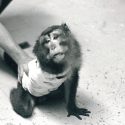
Like a bolt from the blue, our 2019 investigation revealed how two trainers were keeping bears: in nefarious prisons. Micha’s paws and airways had been eaten away by maggots, her body scarred from beatings she’d received in the past; there were also untreated lumps around Glasha’s eyes. What would have happened to Bony if, without our footage, he had been kept in these prison conditions? Élisabeth Borne, Minister for Ecological Transition at the time, was personally invested in the matter. Micha died after having experienced a few weeks of respite. What happened to Mina, the little Barbary macaque who was imprisoned in what seemed to be a mini dump site at the property? And the birds, several macaws and cockatoos among them, the donkeys, and the ponies?

At the time, we submitted multiple administrative appeals because, from our point of view, the Prefecture of Loir-et-Cher should ultimately take responsibility: namely ensuring the well-being of wild animals kept in captivity. How do you explain that the crimes unveiled at every veterinary examination for more than ten years have never been followed up with any sanctions?

On 15 April 2021 at 11am, three hearings will take place at the Orléans Administrative Court.

Request to withdraw various authorisations

The first is our request for the withdrawal of the certificates that verify that the trainers can keep and use wild animals, the cancellation of the opening order for the establishment belonging to the Bruneau-Poliakov couple, and the capture of animals. Without a response from the Prefecture of Loir-et-Cher, we pushed for their implicit denial to carry out these withdrawals. For us, there is no shadow of a doubt that the acts of cruelty and mistreatment exist.

However, for the Prefecture, the bears’ prison conditions, shown by our investigation, aren’t sufficient for them to remove the other animals, especially because the trainer duo are likely to be very attached to their animals; in other words, Micha, Bony and Glasha lived as sub-beings, but the Poliakovs had built palaces for the other animals elsewhere at their property… who can really believe that for a moment?

Wishing to proceed with an inspection in January 2020, the Prefecture’s services were denied access, but did not insist, despite being permitted by law to do so. Therefore, no one could say in what state Mina the little Barbary macaque is currently living, or the birds, or even if they are in good heath or still alive! Mina has been kept illegally, without authorisation, for over ten years. Is that the way the law is implemented when endangered animal species are concerned?

Request that Bony and Glasha should not be handed over to the trainers before their trial

We voluntarily became involved in the withdrawal procedure and the immediate and temporary care of Bony and Glasha (now called Franca), the two bears who survived Micha. Their care has been arranged by the Prefecture at the request of the Minister for Ecological Transition; one at the Alternative Wolf and Bear Park in the Black Forest in Germany and the other at L’Arche Animal Shelter in France. We want to make sure that they will never be given back to the Poliakovs. A mere doubt on the prison conditions would be sufficient for the Administrative Tribunal to prevent them being given back to the Bruneau-Poliakov couple between now and when the court rules on the charges against them.

Request that the authorities pay for their inaction and shortcomings

We have highlighted the serious shortcomings of the State committed by the Prefecture of Loir-et-Cher in their mission to protect wild animals kept by the Bruneau-Poliakov couple. For this we requested 50,000 euros in compensation for moral harm in November 2019. Since then, the Prefecture has confirmed receipt of our request and since 29 January 2020 we have pushed for their implicit denial to pay these damages. This will be the subject of the third hearing.

On 15 April in Orléans, all of the hearings that we have requested will take place so that the Prefecture can finally face up to their responsibilities. The power to protect wild captive animals sits with their department. For us, this responsibility has not been taken on correctly in the past and still now continues not to be.

The plight of Bony and Glasha is still hanging on these decisions; nothing has been resolved for Mina or the birds. Worse still, we don’t know what state they are in. We are now justified to expect that the actions of the State will be faultless.

In addition to these hearings, the trial of the couple themselves is scheduled at the criminal court on 12 May in Blois for severe abuse, acts of cruelty and mistreatment, and the care or maintenance of an animal in an environment that can cause suffering.

Translated from the French by Joely Justice

New investigation! Penned hunting infiltrated by One Voice

New investigation! Penned hunting infiltrated by One Voice

New investigation! Penned hunting infiltrated by One Voice
13.04.2021
France
New investigation! Penned hunting infiltrated by One Voice
Wildlife

Hunting animals in pens allows them no opportunity to escape. In fact they are shut in and have nowhere to escape to. Our investigators infiltrated the hunters in the winter of 2020-2021. Despite Covid-19 hunting parties continued. Euros poured into the coffers of the breeders, owners or tenants of enclosures. These are hunting reserves where clients pay by the day and/or per animal shot. The animals are slaughtered without pity, day after day, by groups of hunters for whose pleasure everything is laid on. We are urging the Ministry of Ecology to put an end to it.

Using the images taken during the winter season just ended by our investigators who had infiltrated the hunters, we can shed even more light on the extent of the horror suffered by the animals targeted by this merciless type of hunting, which even some hardened hunters disapprove of. One of these is the president of the National Federation of Hunters himself, Willy Schraen, who expresses some previously unheard of thoughts during filming by our undercover investigators. The horror of penned hunting has already been written about in the French media and by ASPAS, the first association to have unmasked it.

Muriel Arnal, Chair of One Voice, declares: « Penned hunting is canned hunting made in France! Our investigators who infiltrated the hunters saw them in pursuit of animals that were almost tame, unsurprisingly since humans raise them and feed them, only to sell them to the guns. The final betrayal! Pregnant sows are hunted down mercilessly. Roe deer, does, fallow deer flee in terror from the bullets. Orphaned piglets are left to certain death. Trap shooting using live animals ended more than a century ago because it was deemed to be shameful. We are asking the Ministry of Ecology for an immediately ban on penned hunting. »

Wild boar fœtuses emerge from the sows at the celebratory meal at the end of the drive

Humans raise them, release them in enclosures surrounded by walls or wire fences and organize hunts from which they can never come out alive. What our investigators heard is revealing.

“In any case, the animals are shut in. The aim is to satisfy everyone.”And: “There are enough fine wild boar in the enclosure to keep everyone happy”, and “If the tally this evening includes a pregnant sow weighing 130 kilos, it’s not a problem. It calls for a celebration. If she’s in the enclosure she’s there to be killed. Today all the sows are pregnant, so it goes without saying that if there is a sow that’s pregnant it’s not a problem. There’s no fine, no slaughter tax, nothing like that. It is your day, full stop.” Because “if there are any sows there, in the enclosure, it’s because we breeders don’t want them any more … So we have them killed.”

And in fact our investigators were able to film sows being cut up at the end of the day, immediately after being killed, their amniotic sacs intact and containing several fœtuses.

Not everyone is in favour of penned hunting

The organizers who stand in front of the board showing the tally for the day are not making a mistake in insisting: “No photos on the Internet, I don’t want any on Facebook. They also ask that faces not be shown either, on the orders of Willy Schraen, president of the National Federation of Hunters. These hunts and in particular the displaying of the corpses are not acceptable to the public at large, and quite rightly!

The hunters don’t even use the pretext of regulating numbers, they just kill purely for pleasure! These animals, who regard humans as sources of food, having been reared in or near the enclosure where they spend their last hour, are given no quarter.

The young ones, unable to look after themselves, are left to die

The young wander through the wood at random, alone, with no chance of surviving. Wandering about in search of their mothers, who have been killed, they will become dehydrated and will die in agony. Knowing how intelligent, aware and sensitive pigs are, how important family ties are to wild boar, provides a glimpse of the extent of the massacre.

An organizer explains: “At nightfall, what a noise those little ones make, oh!” “They are crying for their mothers.” And in the case of those who don’t find them, “I have some in the room over there, every three hours they have to be given a drink, you know, otherwise they die.”

An agonizing death for the babies.

A hard life for the dogs

At the beginning of the day one of the organizers warns, because it often happens: “Watch out for the dogs when they’re among the wild boar. You don’t just shoot anywhere, anything, anyhow.”

One of the hunters explains, about one of his dogs, who had previously had twelve stitches and had just been wounded in the leg: “That dachshund over there, as soon as he gets close to one he goes for it! Little fucker! The little ones can get their faces ripped off.” Transformed into weapons, they are used as tools or hunting accessories, just like rifles or camouflage jackets, put away after use and thrown away when they become useless.

After the drive they are shut up, squashed together in a dark trailer where the largest cannot even stand up.

The hunters who adapt the regulations to suit themselves

In the midst of the Covid pandemic no precautions are taken during the drives nor at mealtimes. No social distancing, no hand-washing … and the few masks one notices are, at best, worn under the chin. Finally, discussions about ways of contravening the curfew reveal how little attention is paid to the public authorities and to the general interest. They always expect special privileges.

To get penned hunting banned we have written to Barbara Pompili, the Minister of Ecology. Please sign our petition and let’s appeal to the Ministry! Urge them to put an end to it!

Translated from the French by Patricia Fairey

Penned hunting is like a lottery win!

Penned hunting is like a lottery win!

Penned hunting is like a lottery win!
13.04.2021
France
Penned hunting is like a lottery win!
Wildlife

There is hunting, its millions of victims, its devastated countryside. And there is worse: penned hunting. Animals that are fenced in cannot flee. It takes only a few hours and even less effort for their killers to have a big win. Those who like quick wins are 100% satisfied.

Do you know what penned hunting is? Our investigators were able to go behind the scenes. This very specific pastime consists in the serial killing of all sorts of animal that have no chance to escape. Trigger-happy hunters gather for the occasion on private property surrounded by fences and, in unison, strafe the wildlife caught in the trap.

Bloodbath guaranteed

On these properties everything is designed to guarantee the hunters a maximum of ‘trophies’. Concentrated on a few hectares, their prey have no alternative but to attempt in vain to flee and take their last breath backed up against a wall or wire fence more than two metres high. ASPAS was the first association to denounce this system . Amongst the main victims are ‘fur’, one of the terms used by the ONCFS (Office National de la Chasse et de la Faune Sauvage – National Office of Hunting and Wildlife), in other words those that can’t fly: rabbits, hares, does, red deer, fallow deer, mouflon, inter alia. And of course wild boar! You know, those public enemies number one that apparently destroy crops. For those fond of penned hunting there are never enough. They are even willing to spend astronomic amounts of money to feel the thrill of massacring them by any means possible: rifle, spear, pack of starving dogs…

Masters of their domain

Therefore anyone lucky enough to own a dwelling with a fully enclosed piece of land attached to it may, if in possession of a hunting permit and the required insurance, shoot anything that moves on it. For such people there are no quotas, no hunting plan nor hunting season to comply with for fur animals and no limit on feeding. They do whatever they want without breaking any rules! In law, mammals in an enclosure are deemed to be ‘res propria‘: ‘things belonging to a person‘. And if those persons want to kill them, they can go right ahead! They may even invite as many friends as they like to join in the carnage provided they too have valid permits. Destroying the wildlife is not a problem: the breeders are there to top it up. A simple prefectoral order, is sufficient to obtain the release of deer, rabbits, pheasants, ducks and partridges reared in captivity that will be used as the next targets.

It’s only one step from enclosures to enclosed hunting estates

Obviously one could reassure oneself by thinking that this type of practice is merely anecdotal. You don’t have to own a grand country house or even a house with a large piece of land attached to it: the law also caters for ‘poor’ hunters who own ‘only’ a small piece of land. They may, if they fence it properly, turn it into a ‘hunting enclosure’. There are no exemptions for them and they are subject, as are EPCCs (see box), to the opening and closing dates laid down in the regulations. In theory. Because how is it possible to monitor what really happens behind those walls, which are too high for anyone to climb over? In the opinion of Jean-Noël Rieffel, Regional Manager of the French Office for Biodiversity in Centre-Val de Loire, quoted in the newspaper La Montagne: « The right of the inspectors of the French Office for Biodiversity to enter hunting enclosures remains limited. » A very interesting, albeit not exhaustive, register gives details of almost 150 enclosures and hunting estates in France, thus providing some idea of how many there are. And how many corpses are there still to go? Please sign our petition!

Death can lead to big rewards

Many have smelled the money and are managing hunting enclosures for a living. In this case they are deemed to be EPCCs (établissements à caractère commercial en terrain clos – establishments of a commercial nature on enclosed land) and therefore can no longer claim exemption from regulatory hunting seasons. On the other hand, since the French Office of Biodiversity (OFB) was set up, amending the missions of the federations of hunters and strengthening environmental policy, they have had the ‘privilege’ of being allowed to release wild boar, which is prohibited in non-commercial hunting enclosures. The only constraint on these structures is not to exceed more than one hoofed animal per hectare, otherwise ‘the enclosure’ would no longer be an ‘enclosure’, legally speaking, and would be deemed to be a livestock farm. Hunting is prohibited on farms because it is deemed to be an ‘act of cruelty’. Thus, in the eyes of the law, the concept of ‘cruelty’ is measured in figures: the area of the piece of land and the number of animals on it. Never mind the wire fences, the wildlife shut up behind them, the bloodbath of victims. No doubt these are merely ‘details’.

Kludsky escaped French law and sent Dumba to Germany

Kludsky escaped French law and sent Dumba to Germany

Kludsky escaped French law and sent Dumba to Germany
02.04.2021
International
Kludsky escaped French law and sent Dumba to Germany
Exploitation for shows

Barely more than forty-eight hours after the publication of our article announcing that we were initiating new legal proceedings and that we would be going all the way, Dumba’s trainer took off abroad. We followed Dumba’s truck on 20 and 21 February to a zoo which exploits elephants in Germany. Our legal proceedings continue in France and we are initiating others in Germany.

Photo : Maimona Bakkioui – Facebook

Leaving at dawn on 20 February, Dumba was confined and driven more than a thousand kilometres almost without stopping, until reaching another country.

Circus workers make it their speciality to escape the law

We emphasize what we have been denouncing from the start: circus workers escape the law of one country to another, without letting it overly bother them.

But they don’t know us if they think they can get away with it that easily: we followed their truck until their final destination, a zoo-type park, run by circus workers, where the elephants were shown to the public and forced to do so in large numbers. In short, Kludsky the trainer fled France for Germany and abandoned Dumba – who was for sale, let us remember, and returned to Spain to be left alone. Well that is what she thought.

The legal proceedings in France have implications everywhere

Having been issued with her proficiency certificate in France, our legal action continues to get it removed from her. Even in Germany, she will therefore no longer be able to exploit Dumba.

New legal proceedings in Germany

We are initiating legal proceedings in Germany. Whichever country it is, Dumba should not have to be exploited. The day before she arrived, 30 centimetres of snow had fallen in the park.

New regulations are underway

In France, what is being prepared is the legalization of these animal parks kept by former circus workers with more flexible laws than zoos, allowing the animals to be exploited again until they die. It is unacceptable.

For Dumba and all other animals in the hands of circus trainers, we will go to the end of our fight.

Sign the petition for Dumba

Translated from the French by Sophie Martin

Endless agony for macaques in laboratories

Endless agony for macaques in laboratories

Endless agony for macaques in laboratories
30.03.2021
Europe
Endless agony for macaques in laboratories
Animal testing

Holes drilled into their skulls, force-fed drugs, eyes and tissues removed… Long-tailed macaques are subjected to barbaric experiments in European laboratories. First confined in breeding centres in Mauritius or Vietnam, they are then flown to France in the cargo holds of planes. Their final destination? The scalpel and death. One Voice is launching a petition to demand more transparency in research and the systematic replacement of animal experimentation with non-animal alternatives.

Free access to information on experiments

Details of research published online and in scientific journals carried out at European laboratories are chilling. For example, research involving long-tailed macaques kept at Covance Laboratories GmbH in Germany and Silabe-Adueis in France was published and can be accessed freely.

In this experiment, 24 macaques were killed just to remove their eyes to obtain anatomical data on a specific area of the retina called the fovea. The researcher state that only 24 eyes were used, so it is unclear what happened to the other 24 eyes No details were given. Were the macaques killed only for their eyes or were they used for other purposes? . But what we do know is that the macaques were killed deliberately, for obscure research purposes and after years of confinement, stress and pain.

Another experiment carried out at Covance in Germany, was published on this website.

There were at least 34 macaques, perhaps more, who underwent survival surgery on the operating table. Cannulae were inserted into their eyes, in order to cause the retina to detach and inject a test substance. All the animals were then killed to obtain the eyes.

In this same laboratory, researchers injected a test compound subcutaneously into pregnant adult females in order to study the effects on their infants. The infants were observed for about 10 months before being killed in order to obtain their tissues.

France at the heart of this trade

Forced to swallow drugs , injected with substances, having holes drilled in their skulls … the list of the horrors suffered by macaques used in experiments in European laboratories sends shivers down the spine, all the more so when we know how young the macaques used in experiments are and how much they need their mothers! It’s shameful that France is at the heart of this terrible trade!

The law is changing but what checks will be carried out ?

European law stipulates that primates used for scientific purposes should come exclusively from breeding establishments or colonies maintained with no introductions of animals taken from the wild. As from 10 November 2022 laboratories will therefore no longer be able to use them. Monkeys used in experiments will have to be second generation after capture. But what checks will be carried out ?

These young monkeys need us!

We maintain that the lack of transparency in the trade in monkeys used in experiments is unacceptable. Why are France and the Silabe establishment a regular staging post for the trade in monkeys?

Please sign our petition for total transparency about animals used in experiments, the financing of non-animal alternatives and the systematic and exclusive use of such alternatives where they exist!

Translated by Patricia Fairey

Charles Vinick, a man doing his bit for orcas

Charles Vinick, a man doing his bit for orcas

Charles Vinick, a man doing his bit for orcas
21.03.2021
International
Charles Vinick, a man doing his bit for orcas
Exploitation for shows

This environmentalist, a specialist in the marine world, was still young when heanswered the call of the sea and of orcas. Having had the opportunity to roam theoceans freely, he feels privileged in comparison with cetaceans held prisoner indolphinariums. Today he works for a better future for them. We have recorded histestimony, which is fascinating

The sea is where he feels most at home. For twenty-five years Charles Vinick roamed the oceans with Captain Cousteau and his son Jean-Michel. Alongside them, he encouraged exploration of the marine world. Subsequently his skills led him to carry out many missions, all of them dedicated to the sea and the creatures living in it.

A real expert

Amongst the many hats he has worn have been those of adviser to and cofounder of the Cousteau Centres; Vice-Chairman of the Institut Jean-Michel Cousteau and of the Ocean Futures Society, which have produced educational resources and films about the ocean and the environment; President and CEO of the Alliance to Protect Nantucket Sound; Chairman and CEO of two environmental technology societies, in Florida and Santa Barbara. Charles has also been Chairman and CEO of the Santa Barbara City College Foundation, director of training and development at TRW Inc. and executive director of adult education at the University of Southern California.

Founder of a sanctuary for captive cetaceans

Today, still full of boundless energy, Charles Vinick provides his services to the cetaceans suffering in dolphinariums. He sits on the boards of directors of Heal the Ocean and the Ocean Futures Society and in mid-2016 joined the Whale Sanctuary Project as executive director. The aim of this amazing project is to set up sanctuaries on the coasts of North America for orcas and belugas held captive by the leisure industry.

It’s the incredible members of the team he led who really did ‘Free Willy’

It’s an enormous challenge. Whereas numerous sanctuaries provide homes for terrestrial animals liberated from circuses or zoos, there is as yet nothing comparable for marine mammals. But Charles Vinick is no novice when it comes to rehabilitating former captive cetaceans. In 2019 he took part in the scientific expedition to save the orcas and belugas held in the Baie of Srednyaya, in Russia. We immediately answered the call to help him. It must be said that Charles acquired extraordinary experience with Keiko, the most famous male orca on the planet and better known by the name of Willy in the film Free Willy. It was he who accompanied the animal, who had been snatched from his family when very young, on the long road back to the wild. An astonishing adventure, stranger than fiction… Charles told us about it in detail in this interview, which is essential listening.

translated by Patricia Fairey MCIL

Glue-trap hunting: the Court of Justice of the European Union comes to the rescue of birds!

Glue-trap hunting: the Court of Justice of the European Union comes to the rescue of birds!

Glue-trap hunting: the Court of Justice of the European Union comes to the rescue of birds!
17.03.2021
Europe
Glue-trap hunting: the Court of Justice of the European Union comes to the rescue of birds!
Wildlife

We were at the Court of Justice of the European Union on Thursday, November 19, 2020 to hear the submissions of the assistant public prosecutor following our complaint to Europe as part of our appeals to the Council of State on the 2018 and 2019 glue-trap hunting in France. Today, Wednesday March 17, the European Court handed down its decision, and it goes our way: it supports the birds! They needed it so badly.

End of playtime for blackbird and thrush gluers!

A great victory! Following in the footsteps of Spain, Malta and Cyprus, where the tradition of glue-trap hunting was also firmly established, the European Court of Justice has ruled that glue-trap hunting must come to an end in France too, and not just by reducing the quota to zero.

According to the European Court of Justice, “A Member State cannot authorize a method of capturing birds which results in by-catches if it is likely to cause other than negligible damage to the species concerned. The traditional nature of a method of capturing birds, such as hunting with glue, is not in itself sufficient to establish that no other satisfactory solution can be substituted for it”.

“For the hunters who had fun gluing robins, blackbirds and song thrushes to eat them, it’s the end of playtime! This magnificent victory shows just how important it is never to give in to this lobby, which is so entrenched in its cruel and destructive practices. The fight for birds is not over, they remain threatened by other traditional hunts. We’ll be there! » Muriel Arnal, President of One Voice

As we’ve explained many times over the years, hunting with glue is cruel, because the birds are stuck to the branches where, in panic, they struggle, plucking feathers and breaking limbs. It is also non-selective, meaning that it traps all birds that land, and not just those of the species that the hunters want to capture to make them endure a life in captivity as decoy-birds.

A “cultural importance” that just doesn’t measure up

The Court did not follow the opinion of the assistant public prosecutor. For the European Court, It is very likely […] that the birds captured will suffer irreversible damage, the birdlime being, by its very nature, liable to damage the plumage of all the birds captured.

In this decision, the gluing process is clearly condemned. Regional tradition is therefore not in itself a criterion for derogating from the European Birds Directive. Capture with glue damages the plumage of the birds captured, and is therefore prohibited. The EU Court of Justice does not require certainty: the very fact that this hunting method can kill or cripple them is sufficient. In the end, the technique is condemned as much as the tradition.

We’ll soon be before the Council of State again

We said it was up to the hunters to prove that glue-trap hunting did not harm birds. In the end, the hunters’ argument that they were releasing birds of non-targeted species was swept aside… Because, in fact, glue does not make any selection between birds! So there is real hope for birds affected by other types of hunting, particularly traditional hunting!

Now it’s up to the Council of State, a national jurisdiction, to take a stand.

Read the press release from the Court of Justice of the European Union

In Gannat, MBR Farms plays cat and mouse at the expense of dogs for the purposes of animal testing

In Gannat, MBR Farms plays cat and mouse at the expense of dogs for the purposes of animal testing

In Gannat, MBR Farms plays cat and mouse at the expense of dogs for the purposes of animal testing
10.03.2021
Gannat
In Gannat, MBR Farms plays cat and mouse at the expense of dogs for the purposes of animal testing
Animal testing

In Gannat, a laboratory breeding farm, where experiments on dogs have also taken place, is looking to expand… even more. At the beginning of 2019, we lodged an appeal at the Clermont-Ferrand administrative court with our partner, FNE Allier. The case is still ongoing.

Gannat, in the department of Allier, along with many other French towns with 6,000 inhabitants, shares the hope of having a vibrant economy. Developing its business activities there is essential, even if it involves living animals paying a high price for it. But here like everywhere else, One Voice cannot accept that the legal rules are surpressed, especially when it concerns the fate of thousands of innocent dogs destined for experiments for so-called scientific purposes and for the benefit of merciless multinational businesses.

Area of what? Of lawlessness!

We had already fought against dog breeding in 1999. Moreover, we succeeded in saving four bitches purely considered and labelled a ‘product’ in this dog factory, where images had recently been unveiled by the organisation L214.

And in March 2019, we applied for a court order with France Nature Environnement Allier for the rescindment of a decree in which the town, at the beginning of 2019, allowed the company MBR Farms to demolish five buildings and build a new one for ‘industrial’ purposes.

The set-up is complicated: Envigo (ex-Harlan, global industrial giant of so-called animal laboratories and a stakeholder in MBR Farms) occupied delapidated buildings for the same activity located in Portes Occitanes Avenue, near to the Intermarché supermarket, to Point P, to Gedimat, to the local McDonald’s… In short, a commercial area when this type of activity had facilities classed as a risk to the environment and requires impact assessments for every extension, in this case 3,600 square metres more…

Playing cat and mouse with the law

The authorities are playing cat and mouse with the law here, a bit like in Mézilles. Their version is a tall story: when the Mayor says that ‘producing’ dogs for laboratories is an industrial activity, you can agree with her that the birth rate and the barbaric treatment of dogs alludes to industry. But in fact, can raising animals be exempt from the rules of animal welfare and environmental protection in force in the specialised fields in accordance with her own elected opinion?

It seems (a document has yet to be produced) that the local prefect had also given MBR Farms an impact assessment on this development, calling into question the noise pollution and the sewerage. But obviously, if it gets bigger, it will be better on all levels, because the Mayor guarantees that there will be no change to the volume of business despite the extension. We’ll see…

We have therefore challenged MBR Farms in every legal way possible about the legality of this extension of buildings to the administrative court of Clermont-Ferrand with FNE Allier. This extension is dedicated to the despicable practice involving the breeding of an assembly line of dogs to sell them to laboratories where they are tortured for experiments. No extra space should be given to this business! The case is still ongoing.

Sign our petition for total transparency on animal testing, financing alternative methods and the systematic and unique use of these when they exist!

Translated from the French by Sophie Martin

Silabe, an establishment within the University of Strasbourg, at the heart of the international trade in monkeys for animal experimentation

Silabe, an establishment within the University of Strasbourg, at the heart of the international trade in monkeys for animal experimentation

Silabe, an establishment within the University of Strasbourg, at the heart of the international trade in monkeys for animal experimentation
09.03.2021
France
Silabe, an establishment within the University of Strasbourg, at the heart of the international trade in monkeys for animal experimentation
Animal testing

One Voice has seen information according to which more than a thousand long-tailed macaques have been imported year after year and forwarded to our neighbours elsewhere in Europe.

Photo: Cruelty Free International/SOKO-Tierschutz

France at the heart of a secretive and cruel trade

For many years France has been, via the ‘Silabe Platform’, a staging post for – and moreover a place for experiments on – thousands of primates from Mauritius and Vietnam en route to laboratories in Germany, the United Kingdom and Italy, such as Accelera, Aptuit, Bayer AG, Covance and Merck, where they spend the rest of their sad lives subjected to experiments.

It is likely that some of the monkeys also undergo tests in France, after very probably arriving at Roissy in the holds of Air France planes. Silabe has already been at the heart of controversies, revelations, demonstrations and campaigns, in particular by other French associations, which had found themselves up against a brick wall[1].

Silabe used to be run by a private association benefiting from ministerial funds and controlled by the University of Strasbourg. It is now part of the University and takes the form of a national public educational establishment of a scientific, cultural and professional nature. The primates involved are often very young. Many of those from Mauritius are barely a year and a half old. Small vulnerable babies, weighing about two kilos are sent in ‘batches’, as cargo in transit crates, far from the nurturing and protection of their mothers. The length of the journeys and the conditions of transport are terribly distressing for the infant monkeys : stress, fear etc. And what is waiting for them? Being restrained on cold tiled laboratory benches, having holes cut or drilled into their skulls, electrodes planted into their brains, or having chemicals and drugs forced into their bodies, poisoning …. As monkeys are very valuable to researchers, the survivors are sometimes sold to other laboratories for yet more years of experiments. Finally, euthanasia or slaughter awaits them, with no glimpse of another life, no retirement.

A reduction in the number of animals used in research: utopia?

European law stipulates that primates used for scientific purposes should come exclusively from breeding establishments or colonies maintained with no introductions of animals taken from the wild; This applies as from 10 November 2022 for all the members of the EU, including France. It, therefore, strengthens the rules applying to the trade in monkeys. But who is going to monitor it, especially in the countries where the animals are captured and bred for export?

The European regulations also stipulate that fewer animal procedures must be carried out in research in general. But what is likely to happen?

The continuing lack of transparency

Moreover Silabe is only one stage in these transfers, among so many others. Year after year the figures for the use of animals in research in France stagnate at an unbelievable level! Looking into the issue there is an obvious lack of transparency.

Another question that needs to be answered : although the trade in primates from Vietnam and Mauritius to Europe is allowed, why is France in general and the Silabe platform in particular a staging post?

We have written to Frédérique Vidal, the Minister of Research, to bring this matter to her attention. We and our partner Action for Primates (United Kingdom) need your support! Please join us in writing a letter to the Embassies of Mauritius and Vietnam to bring an end to the exporting of monkeys to France for pointless experiments. And please sign our petition for total transparency about animals used in experiments, the financing of non-animal alternatives and the systematic and exclusive use of such alternatives where they exist!

[1] Campaigns and demonstrations

A new stage in our attempts to get Dumba out of the circus

A new stage in our attempts to get Dumba out of the circus

A new stage in our attempts to get Dumba out of the circus
17.02.2021
Gard
A new stage in our attempts to get Dumba out of the circus
Exploitation for shows

Given that the prosecutor of Alès seems to be telling us that we have no case in relation to Dumba, we are writing to the relevant authorities in order to set new procedures in motion. As with all the animals that we defend, we are doing everything we possibly can for her.

There are actually laws governing how humans treat wild animals held in captivity so it would be a good thing if legal professionals ensured that they were observed instead of hiding behind pretence and opaque expert opinions. In this case we are denouncing not just illegal but also immoral acts. We are not only militant activists but fighters again the – many – infringements of laws and regulations. Moreover we have brought to the case no fewer than six expert opinions, which agree with one another in attesting that Dumba shows numerous signs of suffering. Finally, images taken by journalists show that the trainer is contravening the regulations, in particular relating to the safety of the public.

Why come to a decision before reading the arguments? Why not judge on the facts?

A prosecutor who shows no signs of life

The prosecutor of Alès, to whom we addressed our complaint in January, did not respond to any of our requests. Therefore, in order to continue to defend Dumba whatever happens – it is observance of the rules that is making us proceed in this way – we wrote to him once again to remind him of our requests, namely the seizure of Dumba (or the duty to move her to a place of safety) and the withdrawal of her trainer’s certificate of competence. On 5 April we shall thus be able to take civil action or lodge a complaint with the Principal State Prosecutor. In other words, change up a gear.

A prefect challenged

We have also written officially to the Prefect of Gard to ask for the certificate of competence of the trainer Kludsky to be withdrawn and for the elephant to be removed, or for the operator of the circus to be issued with a notice to comply with an order to hand her over to a sanctuary. In fact the Prefect is supposed to guarantee the welfare of wild animals held in captivity on his territory.

Support from an influential international star

Touched by the images we took in January, Cher, a joint founder of the NGO Free The Wild, has written a letter to Barbara Pompili about our fight with FAADA on behalf of Dumba and asking her to offer her a peaceful retirement. We have made sure that a place is waiting for Dumba at the French sanctuary Elephant Haven. It is high time that animals who are suffering and being mistreated were helped by those responsible for them, not only by those who make it their mission to do so.

Unless we hear anything different from the Public Prosecutor’s Department in the meantime the new deadlines relating to Dumba will be in April. We will not abandon her. Attempting to get things moving is a long process and requires patience and tenacity. But we have plenty of both and will not give up. Ever.

translated by Patricia Fairey MCIL