The Saint-Avold deer: welcome to absurdity

The Saint-Avold deer: welcome to absurdity

The Saint-Avold deer: welcome to absurdity
24.01.2023
Moselle
The Saint-Avold deer: welcome to absurdity
Wildlife

The Moselle Prefect has authorised, on the same day, the killing of twenty deer and the introduction of twenty other deer a few metres further away. Far from the alleged ‘regulations’, the State has lost their mind, hunters are delighted, and animals pay the biggest price as always.

The town of Saint-Avold (Moselle) is home to the biggest American cemetery from the Second World War in Europe: a park measuring 46 hectares and largely wooded to the delight of several deer who have taken up residence there and spend time peacefully alongside fallen soldiers.

But these visitors are not welcome: in March 2022, the Moselle Prefect authorised the killing of thirty of them within the cemetery grounds. This was not enough to wipe them out: so on 17 January 2023, he allowed another massacre to slaughter twenty more deer.

To compensate these killings, a decree was signed on the same day to reintroduce twenty others, without a doubt from breeding farms, into the Saint-Avold national forest. This forest is only separated from the cemetery by a road which obviously will not stop roebucks, doe roe deer, and fawns. Be warned, however: if they cross it, the Prefect will jump at the chance to authorise a handful of lucky representatives to come and kill them among these tombstones.

Complaining about the damage caused by deer, killing them, then reintroducing deer in the same place: how far are they willing to go to satisfy a few peoples’ instinct to kill?

Additionally, do we need to remind the Moselle Prefect that alternatives to killing exist? These animals could be quite simply captured and released into the forest, as we do elsewhere in France. No need to make them suffer and die. Yet more proof of the total disinterest of State representatives for animals’ lives. To them, killing twenty individuals and reintroducing twenty others a few metres further away is the same as not killing any of them.

Let’s continue to demand a radical hunting reform to fight this absurdity!

Translated from the French by Joely Justice

Democratic Republic of the Congo: mountain gorillas are in danger!

Democratic Republic of the Congo: mountain gorillas are in danger!

Democratic Republic of the Congo: mountain gorillas are in danger!
24.01.2023
Congo
Democratic Republic of the Congo: mountain gorillas are in danger!
Wildlife

In an attempt to return to calm in the Democratic Republic of the Congo (DRC), the Congolese and Rwandan governments have asked for a rebel group to retreat to Mount Sabyinyo. The problem: it is the natural habitat of mountain gorillas, a species that is endemic and weak due to the numerous conflicts that have been shaking up the region for decades. Along with our on-site partner, the NGO Innovation pour le Développement et la Protection de l’Environnement [Innovation for the Development and Protection of the Environment] and around ten other organisations, we are worried about the danger weighing on the lives of these large primates. One Voice is co-signing a letter addressed to the relevant authorities.

Following the resumption of hostilities in 2022, the “coalition of non-governmental civil society organisations in the environmental, human rights, real estate, and town and country planning sectors” has already sent a letter to the DRC and Rwandan Presidents. In the mountain gorillas’ territory, in the South of the Virunga National Park, on the border between Uganda, Rwanda and the DRC, fights have broken out between Congolese armed forces and the M23 rebel group.

Now, while the governments of the two countries are telling the rebels to withdraw from the same territory, our concern is at its peak. In a new letter to authorities, in French, English, and Spanish, we are joining the collective: we fear that fighters arriving onto the mountain gorillas’ territory creates increased deforestation and pollution which could have serious consequences on their health. Added to these risks are those of poaching and trafficking of baby monkeys, as well as the spread of zoonoses between animals and humans. Finally, the behaviour of the gorillas, traumatised by weapons going off and the migratory movements that have been happening in their territory for months, could be used as a pretext for the systematic killing of these beings who are already so vulnerable. We cannot let this happen without reacting!

Since the profound commitment of scientist Dian Fossey in favour of these majestic primates, we know that mountain gorillas, far from the bad reputation that they’ve been given, are intelligent, sweet animals who are very tender, especially between members of the same family united within their group and are very playful. We have also known for decades that poaching and deforestation dangerously weaken their population which is already limited to the narrow geographical area in which they are still evolving freely, and this is why active protection of these individuals is still essential.

Faced with the danger weighing on mountain gorillas’ lives, and at the risk that the last of them could disappear before our eyes — and under what conditions? — One Voice has signed a letter, sent on Monday 23 January, calling for the protection of these victims in spite of human conflict.

Translated from the French by Joely Justice
Press conference at the Grenoble Chatipi for stray cats on 23 January 2023 at 10:45am

Press conference at the Grenoble Chatipi for stray cats on 23 January 2023 at 10:45am

Press conference at the Grenoble Chatipi for stray cats on 23 January 2023 at 10:45am
23.01.2023
Isère
Press conference at the Grenoble Chatipi for stray cats on 23 January 2023 at 10:45am
Domestic animals

One Voice, who has been fighting against feline straying for years, has implemented the educational Chatipi programme, which educates the population on cats in general and allows these felines with no human family to no longer suffer in misery. One Voice is also implementing three-way partnerships with town councils (or residential areas) and local associations to microchip and most importantly neuter homeless cats and release them if they cannot be adopted, while providing them with a wooden chalet for them to rehydrate themselves, eat, and take comfort. This is what has happened in Grenoble, where an agreement was signed between the town, Cosa Animalia, and One Voice. A press conference will take place on Monday 23 January at 10:45am.

The press conference on Monday 23 January will take place behind 48, quai de France in Grenoble (in front of the Chatipi) at 10:45am. It will happen in the presence of Sandra Krief, Town Councillor responsible for animal welfare, and Andréa Argémi, President of the local Cosa Animalia Association. Finally is Mathilde Perrot who is in charge of the Chatipi programme for One Voice and who will represent the association.

According to Sandra Krief, Town Councillor responsible for animal welfare in Grenoble:

«Street cats, just like us, have only one life that they hold onto as we do. We have created an urban environment that is extremely hostile to them. I believe that our duty is to naturally reintegrate them, protect them, and take care of them. And this is exactly the objective of the Chatipis in the town.»

According to Mathilde Perrot, Head of the Chatipi Programme for One Voice:

« Chatipi has the aim of helping cats by providing them with a shelter, care, and food, and neutering them. But the project also aims to make the population aware of the problem of feline straying which stems from individuals not getting their cats neutered. Every year, new kittens are born in the wild and are condemned to a completely miserable life with all of the problems that come along with it. It is dramatic. It is vital that people are made aware of this and that they get their cats neutered.»

According to Muriel Arnal, Founding President of One Voice:

«The number of unneutered cats abandoned on our streets is astronomical. It is easy to casually throw a cat out. And the management of our millennial companions is allocated under the ‘waste’ budget for towns. It is time for change!»

Chatipi: a lasting solution for the vicious circle of feline straying

Chatipi is a plan with the ethical aim of creating areas for stray cats in order to keep them safe while raising awareness among citizens of their suffering and needs. Around twenty projects are in place and almost as many are being developed. Several Chatipis have been established near schools or nursing homes, health centres, and hospitals (particularly in Pitié-Salpêtrière), not only to give cats safety but also to offer comfort to residents. Because One Voice’s goal is fundamentally to educate about cats.
In fact, we too often mistakenly describe these small felines as independent animals, when they are very affectionate, loyal, and dependent, which makes them vulnerable in the event of being abandoned.

Neutering must be habitual!

That being said, feline straying is not only caused by abandonment. This vicious circle begins with erroneous assumptions about cats, particularly that they have an intrinsic need to reproduce in order to be happy, which leads to their human families not always getting them neutered. Many cat births take place in the wild. In any case, these kittens, when they survive, are hit by hunger, cold, and illness. They are neither microchipped nor neutered, because their humans are sometimes not even aware of their existence. And so, litters only continue to multiply in these circumstances. Towns or drop-in centres must manage these individuals faced with this misfortune, which also has an impact on biodiversity. One Voice has, by the way, published its investigation footage in two pounds, one in Lot-et-Garonne, the other in Normandy, and is calling for awareness of the problem to be raised urgently by public services but also and primarily by the public themselves. Neutering cats must be part of the compulsory steps when we commit to taking one on.

Sharing out tasks and responsibilities

One Voice, who invented the Chatipi concept, provides the chalet and the cat flaps and is responsible for the feeding and veterinary fees (neutering, microchipping, tests) for the cats at the beginning of the operation as well as the educational board. The location and implementation of the concrete slab is left to the town. The local animal protection association manages the feeding and health monitoring of the cats long-term; Cosa Animalia has also promised to set up the chalet and to do the interior layout.

The One Voice site dedicated to the Chatipi programme gives lots of information on this educational programme on cats.

Sign the petition for an urgent plan for feline straying.

Translated from the French by Joely Justice

Huge success in the United States: it is no longer necessary to carry out tests on animals to develop medications

Huge success in the United States: it is no longer necessary to carry out tests on animals to develop medications

Huge success in the United States: it is no longer necessary to carry out tests on animals to develop medications
20.01.2023
The United States
Huge success in the United States: it is no longer necessary to carry out tests on animals to develop medications
Animal testing

For the first time in more than eighty years, a change in American law will allow testing of new medications without having to use animals, via modern methods based on humans. One Voice, with its German partner within the ECEAE, Doctors Against Animal Experiments, is delighted with this tremendous step and is calling on the EU, as well as Germany and France of course, to follow this example by developing and implementing a development strategy for medications suitable for humans without animal testing.

The new law, approved by Joe Biden at the end of December 2022, will allow the United States Food and Drug Administration (FDA) to approve new medications without the need for data resulting from animal testing. Formerly, pharmaceutical companies were required by law to test the safety and efficacy of their drug-candidates in several tests on animals by using as least two species, before being allowed to put them to the test in clinical trials on humans and patients.

«Various data clearly shows the failures of the obsolete animal testing system. On average, 92% of drug-candidates that pass all animal tests are then abandoned in human clinical trials, mainly because they do not work or they have secondary effects.» Dr Dilyana Filipova, Scientist at Doctors Against Animal Experiments

Animal testing is therefore no longer the only option to approve medications in the United States

Thanks to a new law, modern and relevant techniques for our species, such as mini human organs (‘organoids’), organs-on-a-chip, and computerised methods, can now also be used for regulation purposes in the United States in place of animal testing. Numerous ethical processes have already proven to be more precise and more reliable than tests on animals. A recent study has also shown the toxicity of several compounds on the liver with the help of human liver chips, while former experiments on animals had erroneously classified these same compounds as being harmless.

«Such examples highlight the importance of this legislative change, not only to save countless animals from horrific tests and atrocious deaths, but also to ensure better safety for patients.» Dr Dilyana Filipova

An openness to ethics but not a paradigm shift

Animal testing, however, is not banned by the new law and remains allowed as a possible testing method. Nevertheless, the fact that pharmaceutical businesses are no longer bound by law to carry out tests on animals and are free to use these precise procedures, suitable for humankind and without using animals, represents huge progress.

While the United States is introducing this modern legislation and turning to the future, certain tests on animals in the EU, and therefore also in France, are still required by law for the approval of medications. In Germany, the percentage of regulation animal tests is around 17%. This percentage has reached 31% in France.

Will the European Union make up for their tardiness?

One Voice, like its German partner, asked the European Commission to establish and immediately implement a progressive elimination strategy for animal testing, a defective system if ever there was one, as requested by more than one million people who have signed the Save Cruelty Free Cosmetics European Citizens’ Initiative (ECI).

«Europe must use the United States as a model and no longer carry out tests on animals for medications. If we want to develop better treatments and keep up with the global drug market, we must rely on the most modern, effective, reliable methods based on humans, and not on animal testing which has proven to be ineffective.» Dr Filipova

More information and sources:

Translated from the French by Joely Justice
Investigation into Finnish fur farms: let’s call for an end to the production and sale of fur in Europe!

Investigation into Finnish fur farms: let’s call for an end to the production and sale of fur in Europe!

Investigation into Finnish fur farms: let’s call for an end to the production and sale of fur in Europe!
20.01.2023
Europe
Investigation into Finnish fur farms: let’s call for an end to the production and sale of fur in Europe!
Fashion

Shocking footage showing fur-farmed foxes in Finland with weeping and swollen infected eyes and ears; injured and bloodied tails; and deformed, splayed feet has been released by One Voice partners from the FFA coalition: animal protection groups Oikeutta eläimille and Humane Society International/Europe. The footage also shows obese “monster foxes” with huge skin folds from selective breeding and baby foxes cannibalising their dead siblings.

The footage exposes the suffering of animals for fur fashion, even in a country like Finland where the fur trade boasts that almost 100% of fox fur farms are certified by the fur trade’s SAGA Furs assurance scheme. The scheme promises “the highest level of animal welfare” but the atrocious conditions documented show a different story. Fox fur originating from Finland is used by brands including Fendi, Yves Salomon, Woolrich, Ermanno Scervino and Max Mara.

The exposé comes as more than 1.2 million EU citizens so far have signed the EU-wide “Fur-Free Europe” European Citizens’ Initiative petition calling on the European Commission to ban the farming and sale of fur in the EU.

Finnish animal group Oikeutta eläimille filmed at six randomly selected fur farms in the Ostrobothnia region of western Finland between June and November 2022.

«The majority of Finns want to ban keeping animals in barren cages just for their fur, but our politicians have failed to bring an end to the cruelty. An EU-wide ban would help the animals also in other member countries, where the greed for money is valued over animal welfare.»Kristo Muurimaa, Oikeutta eläimille«Fur production in France has stopped thank to making the public aware, who we have reassured for years with the help of our investigations into mink farms in the country and, finally, with the November 2021 law that guaranteed that these breeding farms could not rise again from the ashes. In Finland, production is not banned; it is about time! The ban on the sale of fur in the whole of the European Union would allow it to maintain Europeans’ very clear refusal to play musical chairs with globalised production (like in Russia or China; the animals here will suffer just as much or even more).»Muriel Arnal, President of One Voice«It is completely unacceptable that millions of animals continue to suffer terribly for fur fashion across Europe. As this latest footage from supposedly high-welfare fur farms in Finland clearly demonstrates, these animals are subjected to miserable lives in tiny cages. Fur farm conditions are so grim that most consumers want nothing to do with fur, as evidenced by the enormous support for our European Citizens’ Initiative to ban fur farming and trade across the EU. Fourteen EU member states are already leading the way by having banned fur farming, indeed only a small number of countries, including Finland, allow this practice to continue to take place, and now it’s time for an EU-wide ban to consign this cruel trade to the history books once and for all.»Dr Joanna Swabe, senior director of public affairs at Humane Society International/Europe

Fur facts:

  • More than 100 million animals are killed for their fur every year worldwide—that is equivalent to three animals dying every second, just for their fur.
  • Fur farming has been banned in 19 European countries (14 of which are EU member states), including the Netherlands, Austria, Belgium, Czech Republic, Slovakia, Croatia, Slovenia, Luxembourg, Malta, Ireland, Estonia, France, Italy and most recently, on 22nd September 2022, Latvia. Political discussions on a ban are also underway in Romania, Lithuania, Spain and Poland. A further two countries (Switzerland and Germany) have implemented such strict regulations that fur farming has effectively ended, and three other countries (Denmark, Sweden and Hungary) have imposed measures that have ended the farming of certain species.
  • An increasing number of fashion designers and retailers are dropping fur cruelty. In the last few years alone, Canada Goose, Oscar de la Renta, Valentino, Gucci, Burberry, Versace, Chanel, Prada and other high-profile brands have announced fur-free policies.
  • The fur trade in Finland is in financial decline, with many fur farms closing down and some fur farmers in Europe diversifying or transitioning to other livelihoods such as solar panels, to secure their future.

Translated from the French by Joely Justice
Transparency for mouse lemurs: hearing on 17 January in Versailles

Transparency for mouse lemurs: hearing on 17 January in Versailles

Transparency for mouse lemurs: hearing on 17 January in Versailles
13.01.2023
Ile-de-France
Transparency for mouse lemurs: hearing on 17 January in Versailles
Animal testing

In Essonne, the staff from the Muséum national d’Histoire naturelle (MNHN) [French National History Museum] bred almost 500 grey mouse lemurs on which they led experiments. These small lemurs are subjected to awful abuse. On 17 January, at a hearing at the Versailles Administrative Tribunal, One Voice will ask in person to have access to documents relating to this breeding and non-human primate testing centre, to highlight these shameful practices.

In Madagascar, their native home, the grey mouse lemurs are victims of a loss of their habitat and are classified by the International Union for Conservation of Nature (IUCN) as a species whose population is in decline. Should we not be coming to their aid rather than adding to their suffering? Whether they are protected or not, nothing justifies these small lemurs with big eyes being abused. However, in a Parisian region, in Brunoy, they are used for experiments.

There are currently almost 500 to be locked up in what is, to our knowledge, the biggest breeding facility for mouse lemurs in the world, and this despite an expansion of the site’s laboratory activities still being planned. Closely linked to us due to being considered as the base of the primate line, while being small enough to still be easily handled, these small individuals make ideal victims for cynical researchers. It is from this large ‘stock’ that the members of the Centre national de la recherche scientifique (CNRS) [French National Centre for Scientific Research], but also those from the Museum, dug them out to lead their tests. The mouse lemurs are then at best left in darkness or subjected to an accelerated alternated day/night to shorten their lifespan, or at worst isolated and undernourished for several days before being decapitated in a barbaric machine and packed off in bits to Canada.

A strange mission for the MNHN, who boast about “raising awareness of the importance of biodiversity” and who are supposed “to provide scientific support to… the characterisation of the species’ conservation status”. Is it really necessary to remind the Museum that we cannot prevent their population from decreasing by cutting the heads off animals?

This umpteenth revolting example does nothing but reinforce our fight for the victims of animal testing, far too often forgotten about in current claims. We already organised a rally to demand the closure of the grey mouse lemur breeding farm on 9 October 2021. A year later, we will stop at nothing and expect to obtain information on what these little lemurs endure, how the authorities inspect the site, and how it functions ethically.

On Tuesday 17 January, at the Versailles Administrative Tribunal, we are giving a voice to mouse lemurs with the unfailing involvement of our consultants from the Géo Avocats law firm. So that the ordeal comes to an end for the lemurs used at the MNHN site, make some noise with us by signing our petition!

Translated from the French by Joely Justice

The Muller Circus is changing… But only by name. For the animals, nothing has changed!

The Muller Circus is changing… But only by name. For the animals, nothing has changed!

The Muller Circus is changing… But only by name. For the animals, nothing has changed!
11.01.2023
France
The Muller Circus is changing… But only by name. For the animals, nothing has changed!
Exploitation for shows

The Muller Circus is displaying a new name and is now presenting itself as ‘Cirque Zavatta’! A lick of paint out front will not be enough for us to forget either the confinement or the exploitation of the animals. We will continue to fight to free Jumbo and his companions, until they are sent to a sanctuary.

While the Muller Circus has received a little too much bad publicity, rather than changing and starting to an activity that does not exploit or train animals for example, they have changed their name! This is what we noticed a few days ago when, as if by magic, the stickers covering the circus performers’ lorries were adorned with the words ‘Cirque Zavatta’. A very practical way for this family to cover their tracks, with criminal charges piling up against them from illegal set-ups, incitement, violence towards activists, and death threats, as well as being a repeat offender of animal suffering. Who could be fooled?!

How can we forget Jumbo, whose existence boils down to rotting in a lorry-cage or basin, alone, for more than thirty years? How can we forget as well the all-day-long imprisonment of the monkeys and the tigers, who only escape boredom to perform in humiliating shows?

The Muller Circus is no longer welcome and they know it. No change of name or sticker will make us throw in the towel and give up our fight for the animals exploited. Their hell must come to an end!

Following the publication of this article, Franck Muller left us two voice messages on the Association’s Facebook page as follows:

Translated from the French by Joely Justice
One Voice is rallying throughout France to stop fur being sold in Europe!

One Voice is rallying throughout France to stop fur being sold in Europe!

One Voice is rallying throughout France to stop fur being sold in Europe!
11.01.2023
France
One Voice is rallying throughout France to stop fur being sold in Europe!
Fashion

One year after the closure of the last mink farm in France, and with it the end of fur production in our country, it is time to say farewell to this cruel industry in the whole of Europe!
Supported by One Voice, the European Citizens’ Initiative (ECI) for a ban on the production and marketing of fur in all member states has already reached a million signatures! The collection of European citizens’ signatures will end on 18 May; we must ensure that 500,000 additional people get involved for these animals.
One Voice is organising coordinated action in a dozen towns in France on the weekend of 14 and 15 January. They will also participate in their partners’ action in front of the Samaritaine [department store] in Paris, to put an end to this deadly fad in Europe.

Supported by One Voice, the European Citizens’ Initiative (ECI) for a ban on the production and marketing of fur in all member states has already reached a million signatures! The collection of European citizens’ signatures will end on 18 May; we must ensure that 500,000 additional people get involved for these animals.

One Voice is organising coordinated action in a dozen towns in France on the weekend of 14 and 15 January. They will also participate in their partners’ action in front of the Samaritaine [department store] in Paris, to put an end to this deadly fad in Europe.

Towns Event Address Time
04 Forcalquier https://www.facebook.com/events/525268119374214/ Place du Bourget 2:30pm to 4:30pm on 15 January
06 Nice https://www.facebook.com/events/2669284793207147 Place Massena 11am to 1pm on 14 January
10 Troyes https://www.facebook.com/events/968142997482937? 71 Rue Émile Zola 3:30pm to 5:30pm on 14 January
13 Aix-en-Provence https://www.facebook.com/events/676888010846599/ Allées de Provence 11am to 12pm on 28 January (note the change of date)
33 Bordeaux https://www.facebook.com/events/1362640897825211 Place de la Comédie 2:30pm to 5pm on 15 January
34 Montpellier https://www.facebook.com/events/2548597101957566/ Place de la Comédie 2:30pm to 4pm on 14 January
44 Nantes https://www.facebook.com/events/897997564704349/ Place du change 3:20pm to 5pm on 28 January
59 Lille https://www.facebook.com/events/692278982478913 Place Richebé 11:30am to 1pm on 14 January
64 Bayonne https://www.facebook.com/events/1560352084375762 Carreau des Halles 3:30pm to 5pm on 14 January
69 Lyon https://www.facebook.com/events/2418294038319216 Place St Jean 2:30pm to 5pm on 29 January
75 Paris: https://www.facebook.com/events/1163816727609309 Pont Neuf 3pm to 4:30pm on 14 January
80 Amiens https://www.facebook.com/events/699342655062772 Place René Goblet 1:30pm to 4pm on 28 January (note the change of date)


Translated from the French by Joely Justice
A dying fox, a walker threatened: will the ‘trapper’ soon be identified?

A dying fox, a walker threatened: will the ‘trapper’ soon be identified?

A dying fox, a walker threatened: will the ‘trapper’ soon be identified?
10.01.2023
France
A dying fox, a walker threatened: will the ‘trapper’ soon be identified?
Wildlife

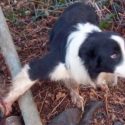
After having received a witness statement from a shocked walker, and faced with the initial lack of reaction from the authorities, we have intervened to bring the unacceptable behaviour of a fox trapper, who has openly threatened this whistle-blower and subjected a fox to particularly cruel acts before killing it, to their attention. While these cousins of dogs are victims of an unbearable persecution, we will remain fully committed so that the investigation will allow the suspect to be identified and brought to justice.

One Voice’s action, crucial to launch the investigation

At the beginning of December, during a walk during which she simply wanted to benefit from nature, a woman found herself face to face with a panicked, dying fox with its paw in a foot snare trap, undoubtedly for several hours. Looking to come to its aid, she was violently challenged by the trapper who did not hesitate to insult her before threatening her, gun in hand. Additional proof, if there is any need for it, of hunters’ feeling of total impunity. The walker had to resign herself and step aside. The man then fired a first bullet at the fox, without killing it… Was this to prolong its suffering and benefit for the longest time possible from his hobby? The poor animal had to endure a few long seconds before it was finally put out of its misery.

While the initial report to local police seemed to go unheeded, we intervened to report these particularly serious facts and to demand a quick response against these acts of cruelty.

This decisive action allowed some progress: at the start of January, supported by our local point of contact, the walker was interviewed at the police station. An investigation was launched on three counts: illegal trapping, threats, and acts of cruelty towards an animal. She will, hopefully, be able to identify the trapper so that he can answer for his actions.

One Voice fully committed for foxes

For many years, we have reported on the fate reserved for foxes in France. Classified nationally as a ‘species likely to cause damage’, they are perpetually massacred. They are the subject of the most cruel hunts: horse and hound hunting, night hunts, underground hunting with hounds. Hunters do not hesitate to attack foxes, held on the ground before being violently killed, sometimes with metal clamps on their heads.

Red foxes are sensitive and intelligent beings who, like all animals, deserve to be protected. Nothing can justify the persecution and massacring that they are victims of. Faced with repeated attacks by hunters to kill more and more animals by resorting to the most unbearable methods, we are repeating our appeal for a radical reform of hunting, and will continue to intervene whenever necessary to give foxes a voice. Together, let’s demand that foxes be removed from the list of species likely to cause damage (formerly ‘pests’).

Translated from the French by Joely Justice
Lack of safety in hunting: hunters 1, others 0

Lack of safety in hunting: hunters 1, others 0

Lack of safety in hunting: hunters 1, others 0
09.01.2023
Lack of safety in hunting: hunters 1, others 0

While 4 in 5 French people are favourable towards a ban on hunting on Sundays, the day when the largest number of accidents linked to this hobby are reported, the State prefers to strengthen the interests of a dangerously armed minority: an app-gadget to signal horse and hound hunts is not only anti-democratic, it is also to the advantage of hunters who will have their sense of ownership of nature and biodiversity reinforced.

Against the overwhelming majority of French people in favour of stopping hunting on a Sunday (78%*), the hunting lobby offers ridiculous gadgets and refuses any progression. And what is the State doing? It is listening to the lobby.

In response to the problem of a lack of safety linked to their hobby, hunters offer an app that is just as useless as it is dangerous. They are already struggling to put ‘hunting in progress’ signs up properly; we wonder how an app, with all the eventualities that this involves (having a smartphone, signal, etc.) could be shown to be effective.

With this tool, hunters would signal to walkers, urging them to avoid ‘danger bubbles’ — in reality these areas are much larger than indicated, given the range of weapons — and to head towards ‘safe’ zones.

But everything rings untrue:

  • There is no signal in many natural zones affected by hunting;
  • The app is not compulsory and will only relate to the hunts;
  • It assumes that all hunters and walkers have a smartphone, and that they would systematically think to go onto the app;
  • A single hunter could find themselves outside of the ‘danger bubble’ indicated;
  • Such a gadget gives a false impression of safety to walkers, and would above all give hunters a clear conscience, who would feel free from any constraints and responsibility: in the event of an accident, who would be responsible? Victims or hunters?
  • What would happen if a walker, in the middle of their hike, received an alert to signal that a hunt was about to start around them?

In reality, this app would do nothing but reinforce the dominance of hunters over nature and make this dangerous (or even deadly, for other people) ‘hobby’ legitimate. In summary, the message is “Clear off, we are hunting! ”.

Sundays without hunting was brought in in England in 1831, and nowadays in numerous other countries in Europe (the Netherlands, Switzerland, Spain, Italy, Portugal…) observing at least one national hunt-free day. But not in France, where the powerful hunting lobby has been imposing their diktat for decades, when they do not even represent 2% of the population.

In short, rather than restricting hunting, the government prefers to restrict the freedom of others: French people have no other choice than to zigzag between the ‘danger bubbles’, or to stay at home, as already recommended by the head of the Fédération nationale des chasseurs [National Federation of Hunters]… Did you say democracy?

Associations that have signed:
Animal Cross, ASPAS, Fondation Brigitte Bardot, Humanité & Biodiversité, LPO, One Voice, SFEPM, Stéphane Lamart, Un Jour Un Chasseur, WWF

*IFOP survey, December 2022

Translated from the French by Joely Justice