Traditional hunting: thousands of birds will be trapped in the Pyrénées-Atlantiques and in Landes

Traditional hunting: thousands of birds will be trapped in the Pyrénées-Atlantiques and in Landes

Traditional hunting: thousands of birds will be trapped in the Pyrénées-Atlantiques and in Landes
03.11.2023
France
Traditional hunting: thousands of birds will be trapped in the Pyrénées-Atlantiques and in Landes
Wildlife

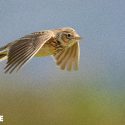
The Pau Administrative Tribunal has just rejected our two pleas and those by the LPO. Even though the State Council already considered the use of these devices to be illegal, shameful experiments paving the way for the return of hunting field larks with cages and nets was therefore able to continue in Landes and the Pyrénées-Atlantiques. Hunters’ vociferations before the Tribunal, after the suspension of the first three decrees in Ardennes, Lot-et-Garonne, and Gironde, were heard. Pathetic!

Whatever the result of these experiments may be, the government takes it for granted: if they once again authorise hunting next year, we will be there, as we have always been since 2018, to ensure that the law is being followed and, above all, to protect birds from hunters, who impatiently wait to be able to capture and kill thousands of field larks with their bare hands once again.

Translated from the French by Joely Justice

Hearing in Bordeaux on 7 November 2023 against Richard Mandral, the ‘hunting’ dog breeder from the Périgord

Hearing in Bordeaux on 7 November 2023 against Richard Mandral, the ‘hunting’ dog breeder from the Périgord

Hearing in Bordeaux on 7 November 2023 against Richard Mandral, the ‘hunting’ dog breeder from the Périgord
03.11.2023
Périgord
Hearing in Bordeaux on 7 November 2023 against Richard Mandral, the ‘hunting’ dog breeder from the Périgord
Domestic animals

On 7 November 2023 at 9:30am, One Voice will be at the Bordeaux Administrative Court of Appeal. There, we will be contesting the Administrative Tribunal’s refusal to force the Dordogne Prefect to seize Richard Mandral’s ‘hunting’ dogs. For these animals that have been mistreated for years, we are demanding that authorities’ inaction finally comes to an end.

Nothing, or almost nothing, has changed since our discovery of the Dordogne site where Mandral stored around a hundred ‘hunting’ dogs riddled with disease as though they were worthless tools, left at the mercy of the bad weather and boredom. The complaint filed for them in 2019 continues to be enriched with new elements, each more overwhelming than the last. In 2020, our rescue of sixteen animals kept by the breeder-hunter revealed that they were suffering from numerous health issues, to the point where their lives had been put in danger. As though this was not enough, the Departmental Directorate for the Protection of Populations (DDPP) also revealed irregularities during their checks. But the prefecture takes pleasure in doing nothing, preferring to blow hot air with ineffective approaches rather than taking real measures to protect the mistreated dogs that are right in front of their eyes. Following the Bordeaux Administrative Tribunal’s refusal to force the prefect to proceed with the protective removal of the animals, which we have been requesting for years, we have appealed.

We are asking for a new life for the victims of this hunter

Mandral has moved house, changing department. But we will not abandon the dogs subjected to the disgraceful treatment that they have been subjected to for years, chained up in the mud, shut into small vans, and so famished that some of them ended up eating the corpses of their companions who had not survived, as we revealed in our numerous investigations on site. The person responsible for this situation (known for having participated in the trafficking of dogs resold to laboratories in the 1980s), already sentenced in 2021 for not having his ‘kennel’ in order, must answer for his actions.

On 7 November at 9:30am at the Bordeaux Administrative Court of Appeal, we will be asking once again for the dogs to be taken away from this person who exploits them mercilessly. We are also still waiting for him to be tried for abandonment, acts of cruelty, and mistreatment committed by an owner.

Translated from the French by Joely Justice

We are asking for the complete cancellation of the decree listing species likely to cause damage before the courts and on the streets

We are asking for the complete cancellation of the decree listing species likely to cause damage before the courts and on the streets

We are asking for the complete cancellation of the decree listing species likely to cause damage before the courts and on the streets
31.10.2023
France
We are asking for the complete cancellation of the decree listing species likely to cause damage before the courts and on the streets
Wildlife

On 4 August 2023, the Ministry for the Ecological Transition published a new decree naming the list of ‘species likely to cause damage’. For the next three years, prefects in each department can authorise the trapping and slaughter of these targeted animals, even outside of hunting periods. We are asking the State Council to cancel this cynical law and we are rallying our volunteers in eighteen towns throughout the month of November.

Foxes, martens, weasels, stone martens, carrion crows, rooks, magpies, starlings, and jays… Named as ‘pests’ since 2016, the Ministry is now using the term ‘species likely to cause damage’ without this changing anything about the persecution that they are victims of. Targeted by a new ministerial decree valid for three years and created due to demands from agricultural and hunting lobbies, all of them risk being tracked, trapped, and massacred even outside of the hunting periods that are already authorised, in all departments where the prefects have given this gift to shooting enthusiasts who wish to practise their hobby all year round. Even though 71% of French people are in favour of a ban on trapping these animals according to our recent survey (Ipsos/One Voice Survey, October 2023).

We are referring to the State Council

We have attacked this law since it was published by filing an emergency interim proceeding, then, like other associations, a plea before the State Council. Today, we are continuing this momentum and reinforcing our initial request with an even more developed case file requesting a pure and simple cancellation of this law which rules that economic interests or human comfort take precedence over animals’ lives and biodiversity by de facto allowing hunting outside of the season and the continual trapping of the species concerned. In particular, our request targets around thirty cases* dependent of the species on a departmental level, and above all the pure and simple removal of foxes, rooks, and martens from the ministerial list of species likely to cause damage on a national level.

Throughout the month of November, we are organising coordinated action in around fifteen towns

We will be in Aix-en-Provence, Amiens, Gap, Limoges, Metz, Montpellier, Paris, and Troyes on the 11th, Bordeaux and Nice on the 12th, Bar-Le-Duc and Lille on the 18th, and in Nantes on the 25th, as well as in Angers, Falaise, La Rochelle, Rouen, and Strasbourg to defend these unwanted animals against the government’s destructive obsession (NB: check the event online before going).

The majority of you supported us in our fight during the public consultation. Continue to oppose these massacres of animals that populate our forests and our countryside along with us!

*One Voice’s requests for de-classification

  • Martens in the following departments: Aube, Aude, Haute-Garonne, Hautes-Pyrénées, Pyrénées-Orientales, Saône-et-Loire (6)
  • Stone martens: Ain, Allier, Landes, Morbihan, Vendée (5)
  • Weasels: Pas-de-Calais (the only department where the species is classified) (1)
  • Magpies: Ariège, Aveyron, Charente-Maritime, Gironde, Loiret, Maine-et-Loire, Mayenne, Morbihan, Tarn (9)
  • Carrion crows: Aveyron, Hautes-Alpes (2)
  • Jays: Corrèze, Tarn-et-Garonne (2)
  • Starlings: Corrèze, Eure, Gironde, Loiret, Meuse (5)

Translated from the French by Joely Justice

Traditional hunting in Gironde, Lot-et-Garonne, and Ardennes: the legal system suspends shameful trials!

Traditional hunting in Gironde, Lot-et-Garonne, and Ardennes: the legal system suspends shameful trials!

Traditional hunting in Gironde, Lot-et-Garonne, and Ardennes: the legal system suspends shameful trials!
27.10.2023
France
Traditional hunting in Gironde, Lot-et-Garonne, and Ardennes: the legal system suspends shameful trials!
Wildlife

We have just learnt that the Bordeaux and Châlons-en-Champagne Administrative Tribunals, which we referred to, have urgently suspended the decrees authorising the capture of thousands of birds using so-called ‘traditional’ methods in Gironde, Lot-et-Garonne, and Ardennes – for the latter department, the LPO has also filed an emergency interim proceeding.

It is a huge victory for the 3000 field larks (2000 in Gironde and 1000 in Lot-et-Garonne), the 500 lapwings, and 15 golden plovers in Ardennes who will not be trapped in hunters’ nets and cages! Under the cover of ‘scientific research’ the government was looking to revive traditional hunting in any way possible, despite overwhelming repeated victories at the State Council since 2018, with the support of the European Court of Justice who had criticised France.

Thanks to these decisions, we can hope more than ever that these types of cruel hunting will soon be nothing but a distant memory.

The Ministry for the Ecological Transition would be well advised to no longer try to revive these hunting methods. Instead of giving special favours to obtain a few votes or sending out scratch cards to save ‘wildlife’, they should be worrying about truly protecting the animals that live in our country.

Translated from the French by Joely Justice

‘Ethics committees’ in animal testing: they are (slowly) starting to listen to us

‘Ethics committees’ in animal testing: they are (slowly) starting to listen to us

‘Ethics committees’ in animal testing: they are (slowly) starting to listen to us
25.10.2023
France
‘Ethics committees’ in animal testing: they are (slowly) starting to listen to us
Animal testing

After an initial more than mixed business report in 2021, around twenty Institutional Animal Care and Use Committees (IACUCs) had to stop their activities: they had not been following regulations for ten years. While the CNREEA [French National Consultative Ethics Committee] is examining the issue, an idea that we already mentioned last year is starting to be taken seriously. One Voice would like to join this national body in the interest of animals.

After the rather timid view of CNREEA given in April 2022 regarding the conditions for approval for ethics committees, we sent an open letter to the president of this organisation. Without much success. The note from the viewpoint of public ethics on this subject was, incidentally, not met with much more resonance.

Ten years of illegal operation

We are quite rightly worried, as shown by the IACUC’s business report published a few months later revealing major failures with regard to regulations. More than twenty committees have even had to stop their activities in 2023, given that they had not been, for ten years, following the conditions of independence and impartiality that are theoretically necessary for their approval.

In 2023, more than a third of those left were ‘mono-institutions’, meaning that they were created and directed by a single institution (a university or business, for example), where the majority of the members comprising it came from. This once again undermines the conditions for approval – especially as 80 to 90% of these people were directly involved in animal testing.

How many animals have suffered during illegal experiments authorised thanks to these committees? In fact, no IACUC was legally approved before winter 2022. A situation that did not concern the Ministry of Research until now, who put their seal on all of the projects and boasted of the merits of the “ethical” assessment to the media to reassure them, specifically regarding electric shocks and the forced swimming test.

Are they starting to listen to us?

Fortunately, the national Committee seems to be progressing. In its recent meeting minutes, they talk about the works of Laurent Bègue and there is a profound and interesting remark from Raphaël Larrère. He even concludes that there are valid reasons to think, given the mental wealth of the animals exploited by laboratories, that “there is more to think about than just their ability to suffer”. Therefore, those who want to defend animals are right in saying that the “ethics” practised in animal testing are “insufficient”

Also a nice surprise: the CNREEA has been taking an interest in Independent Ethics Committees (IECs) since March, which are “often mentioned” (in particular by us). In fact, taking the example of these organisations (who assess research projects involving humans) would allow us to solve, in part, the lack of impartiality, independence, and competence of ethics committees in animal testing – which would undoubtedly avoid many animals’ suffering.

One Voice is applying

Even if the approach of putting an end to the use of animals by laboratories remains distant, this news is encouraging – as long as it is acted upon. It is with this perspective that One Voice applied to represent animals within the CNREEA at the start of the year.

The response from public powers is set to be before July 2024.

Translated from the French by Joely Justice

One Voice is bringing a civil case to the tribunal against a bird poacher in Montauban

One Voice is bringing a civil case to the tribunal against a bird poacher in Montauban

One Voice is bringing a civil case to the tribunal against a bird poacher in Montauban
25.10.2023
Tarn-et-Garonne One Voice is bringing a civil case to the tribunal against a bird poacher in Montauban
Wildlife

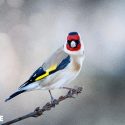
On 26 October at 9am, we will be at the Montauban legal tribunal for the blue tits, great tits, goldfinches, and blackcaps who are victims of a poacher that lives in the south of Tarn-et-Garonne. The man, not content with capturing and killing protected birds, resorted to illegal traditional hunting methods. We will be there once again against these cruel practices and for all the animals who continue to be a target of them.

It was a macabre spectacle that the agents from the French Office of Biodiversity (OFB) discovered during their search of this poacher’s home in Tarn-et-Garonne. There they found that seven goldfinches were being kept prisoner to attract other birds with their song, while twenty-three individuals from other protected species were found lifeless in traps. Their capture is performed in the trapper’s garden, where the victims, who cannot resist the calls of one of their own, have had the misfortune to land, only to find themselves trapped in nets or stuck to perches covered in glue. The distress and agony that these tits and blackcaps have to endure before they take their last breath is unimaginable.

Faced with a resurgence in traditional hunting, we are keeping the pressure on

As well as having been killed while belonging to a protected species, these birds have been killed using methods that are themselves prohibited. Have we forgotten that glue hunting was ruled illegal by the State Council in 2021, following a decision made by none other than the European Court of Justice? And that the French institution once again proved us right a few months later by suspending and cancelling ministerial decrees relating to traditional hunting several times following this, after the government’s stubbornness in relation to persecuting birds?

Obviously caring as little about justice as they do about animals, those killing these little birds stubbornly go out of their way to continue to use these methods again. To the point where the government has given them the gift of ‘experimentation’, intended to show that the use of cages, nets, and decoys would be well and truly selective, which would justify these killings happening again in their eyes.

Zero tolerance for poachers

We will not let either the attempts to revive traditional hunting or the slightest complacency regarding poachers lie. In September 2022, we already succeeded in getting a man who had killed and sold thousands of robins sentenced with a six-month suspended prison sentence and a €25,000 fine. In February 2023, a repeat offender had to defend their actions in front of the courts.

As a civil party in the trial, we will once again give a voice to all of the birds that were killed and will ask for the highest possible penalty for this massacre at the Montauban legal tribunal on Thursday 26 October.

Translated from the French by Joely Justice

The massacring of marmots and hares will continue in Savoie in 2023

The massacring of marmots and hares will continue in Savoie in 2023

The massacring of marmots and hares will continue in Savoie in 2023
24.10.2023
Savoie
The massacring of marmots and hares will continue in Savoie in 2023
Wildlife

Joint press release from: Association Justice Animaux Savoie (AJAS), ASPAS, Animal Cross, AVES, FNE Savoie, and One Voice.

On 24 October 2023, the Grenoble Administrative Tribunal decided not to suspend the prefectural decree authorising the hunting of marmots, mountain hares, and brown hares in Savoie. The Association Justice Animaux Savoie (AJAS), ASPAS, Animal Cross, AVES, FNE Savoie, and One Voice regret this decision that is based solely on a lack of urgency and on a more than dubious count of the numbers of these animals.

A process from a bygone era

Marmots and mountain hares are particularly threatened by global warming, tourism, and the growing urbanisation of natural areas. The mountain hare species is classified as ‘near-threatened’ by the IUCN and all of the science is unanimous in saying that the population of marmots has been in constant decline since the 1990s. However, at the Grenoble Tribunal, representatives from the Prefecture and the Departmental Federation of Hunters unanimously argued that everything was fine.

Their proof? An approximate estimate (the figure of 160,000 marmots was mentioned) and a document trying to prove that farmers had sprained their ankles by putting their feet in burrows and that marmots had gnawed on garden hoses. The lawyer from the Departmental Federation of Hunters even went so far as to talk about the “abundance” of marmots and to compare the (supposed) damage caused by the rodents at the Tignes golf course to rats in Paris… An uncouth attempt to leverage irrational fears sparked by the lawyer to create a bad reputation for marmots from nothing.

And yet, while there is no precise count of these animals to show that they are in good health, the Grenoble Tribunal has decided not to suspend the decree authorising the hunting of these two species. All of the scientific studies do, however, maintain that they are in decline…

And now?

Our associations will never give in. A hearing on the merits is still due to happen (the initial one is in several months) that will determine if the decree is well and truly legal. We will therefore continue to bring this case file before the jurisdictions concerned to demand an end to hunting marmots on a national level and to report this scandal to the public who must know about the persecution that these animals are subjected to. Our petition that has already collected almost 80,000 signatures will follow and shows the support that they have been given.

Translated from the French by Joely Justice

Share on

Ipsos survey for One Voice 2023. French people and hunting: the gap is increasing

Ipsos survey for One Voice 2023. French people and hunting: the gap is increasing

Ipsos survey for One Voice 2023. French people and hunting: the gap is increasing
24.10.2023
France
Ipsos survey for One Voice 2023. French people and hunting: the gap is increasing
Wildlife

One Voice has, in October 2023, published the fourth gauge of French people’s opinions regarding hunting, carried out by the Ipsos Institute* (the previous ones are dated 2018, 2021, and 2022). The percentage of French people declaring themselves in opposition of hunting has reached the highest ever seen (53%), which is an increase of five percent in one year. For the first time, the majority of people living in rural areas have said that they oppose hunting. Having been committed for almost thirty years to a single vision for animals, humans, and the planet, One Voice is delighted with this growing dislike between French people and hunting, born from an awareness of what this hobby is: a deadly problem. An analysis of the results.

Deploying a varied legal arsenal for animals…

One Voice (alone or with its partners) has recently won many legal victories against the State on a local and/or national level: the repeated suspension and cancellation of decrees for traditional and glue hunting, the one authorising the digging out of badgers in the period surrounding reproduction, and the protection of bears just to mention the main ones.

Among the cases in progress is the defence of protected species such as mountain Galliformes, but also the unloved: those species that are labelled as ‘likely to cause damage’ (ESOD in French).

… and humans

Guaranteeing safety for walkers and countryfolk in their entirety is also an essential consideration for the One Voice team (as it is for 89% of respondents to the survey who believe that hunting poses safety issues). Also, proceedings at the State Council have been initiated to ask the Prime Minister to do what is needed as quickly as possible. French people approve measures to ban or control hunting, specifically the implementation of an annual medical check with an eye test (93%), but also a ban on hunting for two days a week and during the school holidays (85%). Why not do this?

This survey allows us to objectify the population’s massive support for all of these fights.

Below, you can find the main lessons from the survey, and at the bottom of the page, the results in the form of a graph with a comparison of the results for previous measures for the issues concerned.


The main lessons

  • The percentage of French people declaring themselves in opposition of hunting has reached the highest ever seen (53%), which is an increase of five percent in one year. For the first time, the majority of people living in rural areas state that they are opposed to this practice.
  • Specifically, hunting is always associated with several negative views, in particular when it comes to safety for walkers (89% believe that it poses safety problems).
  • Despite this negative perception, French people continue to share certain arguments in favour of hunting and specifically the idea that it can have a useful role in controlling wildlife.
  • Critical of hunting, French people approve measures to ban or control it, specifically the implementation of an annual medical check with an eye test (93%), but also a ban on hunting for two days a week and during the school holidays (85%).

The share of people opposing hunting reaches an unprecedented level

After a slight decrease in 2022, the share of French people stating that they oppose hunting has reached its highest level (53%, of which 25% say that they are completely opposed to hunting). This proportion is 5 percent higher in relation to 2022. We have also seen a decrease in the number of respondents stating that they are indifferent to this issue (22%, down by 4%). For the first time, this opposition to hunting has become a majority among those living in rural towns (51%, an increase of 3%).

The perception gap between men and women on the subject of hunting has reduced this year. Although there are still more women who state that they are opposed to this practice (60% versus 45% of men), this proportion has remained relatively stable (increased by 1%) while the men’s has significantly increased (up by 8%).

Specifically, hunting is still associated with negative views

Hunting is still perceived by the vast majority of respondents (89%, up by 2 percent) to pose safety issues for walkers during their strolls in nature, with 58% even being completely in agreement with this idea.

This safety issue was experienced in concrete terms by a large number of French people. 74% of them also stated that they were already concerned by the possible presence of hunters while they were walking in the forest, and 73% have already avoided walking in the forest or in certain areas for fear of a hunting accident. This concern is experienced even more strongly for those residing near a hunting area (respectively 81% and 80%, an increase in relation to 2022).

At the same time, hunting is not considered to be a hobby like any other (64% do not believe that this is the case) and seven in ten French people associate it as a cruel practice (an increase of 5% in one year).

This negative perception is often shared by women, but a clear majority of men also believe that hunting poses safety issues and deem it a cruel practice. On the other hand, we see few differences between those living in rural and urban towns.

Hunting also represents a risk for the environment. For 82% of French people, the amount of lead generated by hunters’ shots is a significant threat to nature, with 39% even believing that it is a very significant threat. Young people are shown to be the most sensitive on this subject: 89% of those under 35 years old believe that it is a significant threat, versus 75% of those over 60 years old.

However, some arguments in favour of hunting are still subject to approval by French people

Although French people have a negative perception of hunting, they still agree with some arguments in its favour. First of all, they believe that it can have a useful role. 66% believe that it allows animal populations to be managed, and 60% believe that it allows ‘damage’ caused by wildlife to be limited.

Those residing in rural areas have more of tendency to find a useful role in hunting: 72% of them believe that it allows animal populations to be managed (versus 64% of those living in urban areas) and 67% believe that it allows ‘damage’ caused by wildlife to be limited (versus 58%).

Beyond this useful aspect, hunting is associated with a rural way of life by 62% of French people, with no big difference between urban and rural people: 65% of those living in rural areas share this idea versus 61% of those living in urban areas.

Measures aimed at supervising hunting are still largely voted for

With the majority in agreement with critical arguments regarding hunting, French people approve measures aiming for a better control of the practice by a large majority. The majority of them state that they are favourable towards the implementation of each measure, and for most of those people, a majority even state that they are completely for it.

The measure that was most voted for is the establishment of an annual medical check visit, with an eye test, for a hunting licence (93% are for, of which 72% are completely for), ahead of a ban on penned hunting (92%, of which 79% are completely for), and a ban on hunting in protected areas (91%, of which 70% are completely for). Regarding these three elements, we note an increase in agreement (respectively up by 1%, 13%, and 3% in relation to 2022).

Another measure that sparks approval by the vast majority of French people is a ban on hunting or trapping for two days per week and during the entirety of the school holidays (85% are for this, an increase of 4%, of which 59% are completely for it).

A ban on hunting with horses and hounds is also supported by the vast majority of respondents (83%, of which 61% are completely for it), just like the ban on hunting animals in their burrows (84%, of which 57% are completely for this), or breeding animals that are destined to be released for hunting (78%, of which 54% are completely for this).

The ban on exemptions allowing lethal shots on wolves or scaring shots on bears was approved by the majority of respondents (70% and 64% respectively), but in these two cases only a minority of respondents stated that they were completely against it (43% and 37%).

Beyond these different measures, a vast majority of French people are in agreement with the principle of banning hunting in regions that have suffered from drought this summer (87% are in agreement, of which 53% state that they are completely in agreement). Although those living in rural areas are mainly for, they show that they are less favourable of this ban than those living in urban areas (81% versus 89%).

* The Ipsos survey was carried out from 4 to 6 October 2023 with 1000 people, comprising a national representative sample of the French population aged from 18 to 75 years old. The group was asked via the Internet using Ipsos’ Access Panel Online (quota method: sex, age, profession of the person being questioned, urban area category, region).


Detailed results of the survey

Télécharger

Translated from the French by Joely Justice
Deadly floods in India: our veterinary team comes to the rescue of animals in distress

Deadly floods in India: our veterinary team comes to the rescue of animals in distress

Deadly floods in India: our veterinary team comes to the rescue of animals in distress
23.10.2023
India
Deadly floods in India: our veterinary team comes to the rescue of animals in distress
Domestic animals

On 4 October 2023, the overflowing of a lake led to significant floods in the Mangan district of Sikkim in the north-east of India. Torrents of water poured into several towns in the region and caused dozens of human deaths, destroyed houses and bridges, damaged roads… At the site, our rescue centre and clinic rallied to ensure the safety of animals that were themselves victims of this catastrophe.

In the towns engulfed in water, while the inhabitants tried to escape, many animals were swept away by the current or abandoned in the middle of the houses that had been ripped apart and the debris. The situation is critical for them too, especially given that the food supply is insufficient.

We provided first aid on the ground

Local feeders were relieved to see members of our Kalimpong-Darjeeling rescue centre arrive. From the day following the catastrophe, our team visited different towns affected to feed the dogs that were mad with hunger. There, they discovered a mother and her young, just four days old. After having benefited from the protection of an inhabitant who lived near the water’s edge, the family needed to be taken care of. So we took them to our rescue centre without delay.

In Rangpo, we also led a vaccination campaign against rabies, a fight that we have been leading since we first set ourselves up in the region. Many stray dogs received their first dose, while others were able to be treated for skin diseases. While they all gathered, once treated, around bowls full of food, we distributed creams and medications to the inhabitants to take care of their four-legged friends.

Our commitment in India goes back a long way

Our efforts do not stop there and the animals saved will be the subject of a follow-up by our team, whose fight is not new. At the start of the 2000s, chaperones based in Kalimpong had already been successful in putting an end to dogs being poisoned with strychnine, a cruel substance that leaves them in pain for hours before taking their lives through atrocious suffering. By eradicating rabies, they managed to silence the fear and violence that stray dogs instilled in those living in the region.

In 2002, we rolled this action out in the city of Darjeeling by buying some land and building a rescue centre and clinic there. Since, our Kalimpong-Darjeeling team has welcomed, cared for, and neutered thousands of dogs and taken charge of many cats that are victims of persecution. The majority of them have been adopted, while others have found their place alongside us and stayed there. We also go to the surrounding villages to vaccinate and treat the animals of residents who cannot come to us, while raising awareness about their protection.

In a period of crisis, we remain fully mobilised to give support and care to animals from north-east India. To fight for them alongside us, you can sponsor Ron, Luna, and Juno, who have found their safe haven in Darjeeling.

Translated from the French by Joely Justice

Traditional hunting: the government chooses to force their way through a hidden door

Traditional hunting: the government chooses to force their way through a hidden door

Traditional hunting: the government chooses to force their way through a hidden door
20.10.2023
France
Traditional hunting: the government chooses to force their way through a hidden door
Wildlife

We thought they had been buried once and for all, but the government has got their shovel out to give them a second chance. Since 2018, dozens of legal decisions have proven us right and have meant the massacring of hundreds of thousands of birds could have been avoided. But the government will stop at nothing to please hunters. Disguised as ‘scientific experiments’ (that do nothing to advance science, only hunting), they decided to pave the way for the return of cages, nets, and decoys in our countryside. While lapwings, golden plovers, and even field larks already spend their lives avoiding being shot, we will do all we can to get these decrees cancelled and so that this cruel hunting remains a relic of a bygone past.

Unbearable suffering for animals in the name of ‘tradition’

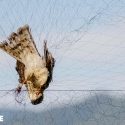
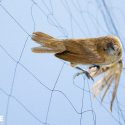
A hunter-trapper traps a small field lark that is struggling, hooking a small string around its leg or wing and shutting it into a cage before going into hiding. Then he pulls on the string. The pain makes the lark screech, it tries to escape but it is held fast by the trap. Hearing its cries, dozens of other larks – and other species – fly to its rescue. It is at that moment when the trap closes up: nets fall on both sides, trapping them all without distinction. The selected individuals are then killed one by one, methodically, and never mind if the others are injured in the process…

In the name of ‘tradition’, hunting with glue, cages, nets, or decoys was still authorised until recently. But that was without including our action (and that of the LPO, with whom we have fought alongside with the same perspective). Since 2021, One Voice has obtained a ruling by the European Union Court of Justice, followed by many rulings by the State Council, which have all proven us right: these types of hunting are quite simply against the ‘Birds’ Directive. Although glue hunting is nothing but a sad memory, the government is persisting and the legal battle continues for other types of hunting. In October 2022, the State Council urgently suspended the hunting of field larks with nets and cages in the south-west. We are awaiting the final ruling. And in May last year, they even insisted that the government revoke the 1989 decrees authorising the very principle of these hunts.

But the minister is clearly ready to do anything to please this lobby and does not hesitate to brush aside legal decisions from the highest of administrative authorities in the country to allow them to kill animals.

Hunters, these well-known ‘scientists’, are judge and jury!

To allow the killing of several thousand more birds, the government has, or will, launch an ‘experiment’ in five departments to show that these types of hunting are selective. And this even though, regarding net and cage hunting, the State Council has already settled the matter. And of course, these experiments will be led by… the departmental hunters’ federations. You are never served better than when it is by yourself, right! And they pride themselves on being great scientists too…

No need to be a specialist to clearly see that these experiments are only scientific in name. Led by hunters for hunters, this masquerade has a sole aim: to pave the way for the return of nets, decoys, and cages. In Ardennes, there are no less than 500 lapwings that will therefore be captured, and 15 golden plovers. In Lot-et-Garonne, 1000 field larks will end up in nets and cages. Three other departments (Gironde, Landes, and the Pyrénées-Atlantiques) are still to publish their decrees. We are planning to attack them too.

They will hide behind ‘science’, they will say that birds will not be killed, and they will allude to ‘tradition’. But no matter: we will always give these animals, and the 83% of French people who want these practices to disappear, (Ipsos/One Voice survey 2022) a voice against these barbaric types of hunting. We are attacking these decrees and will be at the Châlons-en-Champagne Administrative Tribunal on 26 October at 11:30am (for Ardennes)

Translated from the French by Joely Justice