Eleven animals seized from Kid Bauer in the Saint Léger Park: the investigation continues!

Eleven animals seized from Kid Bauer in the Saint Léger Park: the investigation continues!

Eleven animals seized from Kid Bauer in the Saint Léger Park: the investigation continues!
22.04.2022
Saint Leger
Eleven animals seized from Kid Bauer in the Saint Léger Park: the investigation continues!
Exploitation for shows

On Wednesday 20 April a confiscation took place at the Saint Léger Park as part of our complaint for mistreatment. An extensive inspection was arranged by legal authorities on the property and with staff and also carried out animal by animal with the help of veterinarians. We have organised for the animals seized to be cared for as an outcome of this inspection and entrusted to us.

We could not say anything about it on D-day, especially as nothing was guaranteed until the last minute. But now that the Beauvais public prosecutor’s department have spoken, we can tell you that eleven individuals have been seized and put under One Voice’s protection by the deputy public prosecutor who led operations. Two muntjacs (tiny deer), a porcupine, a swan, the two macaws (parrots), four tortoises, and the python left the Saint Léger Park as soon as the decision was made and the papers were signed.

Eleven animals are safe with our partners

Arriving on site in the refuge of our partners, the animals were first of all placed in quarantine. They will soon be able to get comfortable in much bigger and more secure enclosures than at the Saint Léger Park where, for example, the tortoises were frequently trampled on, as evidenced by the signs reading ‘do not step on the tortoises’ which we took photos of several times over the years, and there were low fences surrounding the space reserved for them. As for the swan, its wings were clipped which prevents it from flying away if it were to be attacked…

The animals still on the premises

The lions and tigers from this settled circus are subjected to training and must perform in shows each day that the park is open to visitors. Members of the public are invited to enter the wild cats’ cage… not to mention the tiger cubs exhibited and passed from one person to another at the end of the show… The lemurs as well, who were filmed a few months ago trying to climb on children, licking hands, risking being trampled on… We will never give up on them. And this is not a persecution of the park owners! We have nothing against them, but a settled circus cannot confine wild cats to a life in a lorry. Who can still believe that that is an acceptable habitat for them? It is clearly the animals who pay the price.

Either way, it is about a provisional placement. We will therefore obviously wait for the end of the investigation and to obtain the magistrate’s final decision, but we are confident for the future of these eleven animals. We will do everything we can for the others, whose futures remain uncertain, especially as the park is up for sale.

Translated from the French by Joely Justice
World Day for Laboratory Animals on 24 April: moving towards the end of animal testing in Europe

World Day for Laboratory Animals on 24 April: moving towards the end of animal testing in Europe

World Day for Laboratory Animals on 24 April: moving towards the end of animal testing in Europe
20.04.2022
France
World Day for Laboratory Animals on 24 April: moving towards the end of animal testing in Europe
Animal testing

A weekend of action and a website on the figures on animal testing on 24 April 2022 for World Day for Laboratory Animals.

One Voice is organising a weekend to raise awareness in the field, throughout France, on 23 and 24 April, for World Day for Laboratory Animals. On this occasion, our activists will interact with the public in a dozen towns and will encourage them to sign the SaveCrueltyFreeCosmetics European Citizens’ Initiative to reinforce the prohibition of testing cosmetics on animals in the European Union voted in nine years ago, and also to go further in putting an end to animal testing in the EU. And so that transparency takes precedence, we are publishing a visual representation on specific aspects of the figures on animal testing in France on a dedicated website.

Official figures are not so transparent…

According to official figures which have just been published, 1.6 million procedures were carried out on animals in France in 2020. There have therefore been less experiments than the previous year, but not less victims of animal testing despite that, because in 2020 the Covid epidemic led to absences in laboratories… and in these cases, the animals were killed. Yet in France, unlike almost all of Europe, the deaths of animals not experimented on have not been counted in animal testing figures.

A visualisation of the development of detailed figures by species on a dedicated website

The reuse of animals, severe pain, stress, etc. To help the general public to better understand the extent and the severity of animal testing, we have asked the Ministry of Higher Education, Research and Innovation to provide details of the annual declarations in order to genuinely improve transparency on the use of animals in laboratories in France. We will present the results in the form of an image to uncover and visualise the detailed figures and see their development as the years go by for the many species concerned.

Detailed figures website

Animal suffering in laboratories

The animals who are victims of these procedures spend their entire lives enclosed. It is nothing but bars, stress, terror, and suffering. They are used among other things for essential and applied research, as well as for toxicology testing.

According to Jeanne Mas, who will be there in Paris during our event on 23 April to testify to her solidarity with animals, this quotation from George Bernard Shaw resonates like no other:

«Atrocities are not less atrocious when they are happening in laboratories and when they are being called medical research.»

Yet two thirds of procedures involve significant suffering. Worse, almost 430,000 animals endure what we call ‘severe suffering’!

The parents or grandparents of many animals including primates are captured in the wild, transported in harmful conditions, and are destined for an existence of chain breeding with their young being systematically taken from them. Others are brought up in France (dogs from Mézilles and Gannat, mouse lemurs from the National Natural History Museum, fish), but many are from abroad (macaques from Mauritius or Indonesia… who can also pass through France via establishments like Silabe, linked to the University of Strasbourg). Some even come from zoos!

The law banning animal testing for cosmetics is in danger!

The ban on animal testing for cosmetics in the EU, voted in nine years ago after a long battle and an initial successful European Citizens’ Initiative (ECI), is in danger. The European Chemicals Agency (ECHA) lobby is underway and is questioning this decision.

A new European Citizens’ Initiative which goes further to be signed and shared

This is why we have taken part in a new ECI to salvage cosmetics without testing on animals, but more generally to just stop animal testing in the EU! And we are being supported by our representatives on a European level: just a few months ago, Members of the European Parliament spoke in an historic vote to gradually put an end to animal testing in the European Union. Thus, although France has just exceeded its minimum number of signatures as part of the SaveCrueltyFreeCosmetics ECI, more than a million are needed for the whole of the EU. We therefore must continue to sign and get as many European citizens as possible to sign this ECI!

Sign the SaveCrueltyFreeCosmetics ECI

Our activists are leading measures to raise awareness in the field throughout France

Our activists will be present in numerous towns on 23 and 24 April (unspecified, the action is taking place on 23/04). Take a look at the national event and those for each town below.

Note: the locations and dates may be changed up until the last minute (authorisation by prefectures, weather…). Refer to each of them; they will be updated in real time.

Department Town Facebook Event Place Date and Time
06 Nice https://www.facebook.com/events/254074546861420/ Promenade du Paillon Note: postponed to 30/04
10 Troyes https://www.facebook.com/events/1618991778466024 71, Rue Émile Zola Note: postponed to 30/04
33 Bordeaux https://www.facebook.com/events/559524238668117 Place de la Comédie 24 April 2pm to 5pm
34 Montpellier https://www.facebook.com/events/1165495784205266 Place de la Comédie Note: postponed to 07/05
44 Nantes https://www.facebook.com/events/678598936698710/ Place Royale 2pm to 3:30pm
61 Flers https://www.facebook.com/events/323247553239726/ Place Saint-Germain 10am to 11:30am
64 Anglet https://www.facebook.com/events/478513874013354 Esplanade des Gascons Note: postponed to 30/04
67 Strasbourg https://www.facebook.com/events/556268385699860/ Place du Corbeau 2:00pm to 4:00pm
69 Lyon https://www.facebook.com/events/1379938835802908 Place Saint-Jean Note: postponed to a later date
74 Annecy https://www.facebook.com/events/256747959925474 63, rue Carnot Note: postponed to 21/05
75 Paris https://www.facebook.com/events/5459245317442367/ Hôtel de ville 2:30pm to 4pm
76 Rouen https://www.facebook.com/events/542340967410545/ Place de la Cathédrale 2:00pm to 4:00pm

At work on social networks too

If you would also like to take part in World Day for Laboratory Animals but you are not able to travel, here are the posts that you can use (and adapt) at your leisure on your social networks throughout 24 April to get the ECI signed.

  • Today is #WorldDayforAnimalsinLaboratories! Did you know that more than one million experiments are done on rats in the EU in one year? Stop this cruelty by signing the European Citizens’ Initiative: http://savecrueltyfree.eu #EndAnimalTesting @onevoiceanimal #WorldDayforAnimalsinLaboratories
  • Animal testing in Europe must stop! 72% of EU Citizens would like to end this cruelty but the EU is turning a deaf ear. Let’s make this change! Sign for a cruelty-free EU: http://savecrueltyfree.eu #WorldDayforAnimalsinLaboratories #EndAnimalTesting @onevoiceanimal
  • It is time to put an end to animal testing in Europe! We need YOU to add your signature so that these barbaric practices stop in the EU. Sign today: http://savecrueltyfree.eu #WorldDayforAnimalsinLaboratories #EndAnimalTesting @onevoiceanimal
  • The animals need your help! Sign the European Citizens’ Initiative, join and share the campaign demanding that the EU puts an end to #AnimalTesting. To find out more: http://savecrueltyfree.eu #WorldDayforAnimalsinLaboratories #EndAnimalTesting @onevoiceanimal
  • Distribute widely! I am asking the EU to put an end to animal testing in Europe. Join me by sharing this post and by signing: http://savecrueltyfree.eu #WorldDayforAnimalsinLaboratories #EndAnimalTesting @onevoiceanimal
  • Animal testing is barbaric, costly, and ineffective. I am posting this message to show my support for a cruelty-free EU. Join me by signing and sharing http://savecrueltyfree.eu #WorldDayforAnimalsinLaboratories #EndAnimalTesting @onevoiceanimal
  • Throughout the EU, MILLIONS of animals are suffering from tests and experiments. Each signature counts for animals in Europe. Sign today to put an end to animal testing: http://savecrueltyfree.eu #WorldDayforAnimalsinLaboratories #EndAnimalTesting @onevoiceanimal
  • 5 million experiments done in the EU involve what legislation deems “serious or moderate suffering” for the animals that are victims. Join me for a cruelty-free EU by signing: http://savecrueltyfree.eu #WorldDayforAnimalsinLaboratories #EndAnimalTesting @onevoiceanimal
  • The countdown begins to put an end to #AnimalTesting in the EU! More than a million signatures are needed to stop tests on animals. Join me on #WorldDayforAnimalsinLaboratories: sign http://savecrueltyfree.eu! #EndAnimalTesting @onevoiceanimal #WorldDayforAnimalsinLaboratories
  • 11,194 experiments on primates in the space of just one year is 11,194 experiments too many. Today is #WorldDayforAnimalsinLaboratories. Will you join me for a cruelty-free EU? Please sign and share: http://savecrueltyfree.eu #EndAnimalTesting @onevoiceanimal #WorldDayforAnimalsinLaboratories

Translated from the French by Joely Justice
On 14 April on Flight 473, Air France transported 100 monkeys from Mauritius bound for a British laboratory

On 14 April on Flight 473, Air France transported 100 monkeys from Mauritius bound for a British laboratory

On 14 April on Flight 473, Air France transported 100 monkeys from Mauritius bound for a British laboratory
19.04.2022
Maurice
On 14 April on Flight 473, Air France transported 100 monkeys from Mauritius bound for a British laboratory
Animal testing

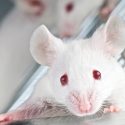
On 14 April at 6 o’clock in the morning, a passenger flight from Mauritius landed in Roissy, probably full of tourists coming back from their holidays on the idyllic island. What these passengers did not know was that 100 terrified monkeys were just beneath their feet in the hold.

On 14 April at 6 o’clock in the morning, Air France 473, an overnight passenger flight coming from Mauritius landed at Charles de Gaulle airport (CDG), probably full of tourists coming back from their holidays on the idyllic island. What these passengers did not know, while they were appreciating their comfort on the flight, was that 100 terrified monkeys were just beneath their feet in the hold. What a violent contrast between these holiday-makers and the imprisoned monkeys in crates. For the latter, the final destination was a British test laboratory in which they will endure the worst before certain death.

An eleven-hour fight before… a lab bench.

A concerned worker at Roissy airport warned Action for Primates and One Voice after having learnt the fate awaiting these long-tailed macaques shipped as cargo. From Paris, the monkeys were subjected to more hours of confinement in crates during their transportation to the United Kingdom. We suspect that they were transported by the German carrier Bin Air from France to the United Kingdom, arriving at Manchester Airport, a key destination for monkeys imported into the United Kingdom for the research and toxicity testing (poisoning) industry. The final destination for the monkeys was Labcorp (previously known as Covance) in Harrogate, a global research company specialising in pharmaceutical, chemical, and phytosanitary product testing.

A non-transparent and despicable trade

One Voice and Action for Primates have already revealed the secret and cruel world of the trade and transportation of monkeys into Europe to be used in laboratories and the role of Air France in the regular transportation of monkeys from Vietnam and Mauritius into Europe. The island of Mauritius is the main supplier of monkeys for European and American laboratories, exporting more than 14,000 of them in 2021. France is one of the countries at the heart of this cruel trade, with Silabe (Simian Laboratory Europe), a company based in Niederhausbergen, being used as a known stopover for importing hundreds of monkeys which are then sold to laboratories throughout Europe.

With widespread worry from the public, a good number of the main worldwide airline companies that once transported monkeys to laboratories — such as American Airlines, British Airways, United Airlines, South African Airways, Air China, China Airlines, Delta Airlines, Eva Air and Air Canada — have put an end to their involvement in this cruel enterprise. Other passenger and freight carriers have also declared their intention not to be implicated in this trade.

What awaits them…

Long-tailed macaques are the most used species of non-human primate in laboratories. The majority of individuals are used in tests to estimate the toxicity of medications and chemical products. In these ‘poisoning’ tests, the monkeys are given a substance by injection or by force-feeding to see the harmful effects on the animals. Still. Different species react differently to a medication or a chemical product and the toxicity tests cannot foresee the undesirable effects that humans will suffer. There will always be difficulties in making predictions between one species and another, and between laboratory experiments carefully controlled for the human condition and real situations in a human life.

Let’s act together for the macaques

Please join Action for Primates and One Voice in our appeal to Air France for them to stop transporting non-human primates and to join the many other airline companies who refuse to play a role in this cruel trade.

Send a message to (download message template here)
Anne Rigail, Managing Director: anne.rigail@airfrance.fr
Christophe Boucher, Executive Vice-President of Air France Cargo, chboucher@airfrance.fr
Frédéric Kahane, Group Director of Customer Loyalty for Air France, frederic.kahane@airfrance.fr

You can also write to Bin Air to ask for clarification on its role in transporting monkeys intended for research and urge them not to take part in the cruel worldwide trade of monkeys’ lives: cierpka@binair.eu and charter@binair.eu

Translated from the French by Joely Justice
Official opening of the Chatipi for stray cats in Chanteloup-les-Vignes on Saturday 9 April at 11am

Official opening of the Chatipi for stray cats in Chanteloup-les-Vignes on Saturday 9 April at 11am

Official opening of the Chatipi for stray cats in Chanteloup-les-Vignes on Saturday 9 April at 11am
07.04.2022
Chanteloup les Vignes
Official opening of the Chatipi for stray cats in Chanteloup-les-Vignes on Saturday 9 April at 11am
Domestic animals

One Voice, who has fought against feline straying for years, implements three-way partnerships with towns or drop-in centres and local associations to microchip and neuter homeless cats and release them, while finding them a wooden chalet for them to rehydrate themselves, eat, and take comfort. The official opening of the Chatipi will take place in Chanteloup-les-Vignes on Saturday 9 April at 11am.

© SOS Matous de Chanteloup

One Voice, who has fought against feline straying for years, implements three-way partnerships with towns or drop-in centres and local associations to microchip and neuter homeless cats and release them, while finding them a wooden chalet for them to rehydrate themselves, eat, and take comfort. This is therefore what has happened in Chanteloup-les-Vignes in the Yvelines region, where the local association ‘SOS Matous de Chanteloup’ [Tomcats in Chanteloup SOS] and the mayor have appealed to One Voice for them to take charge of the problem of stray cats in the town. The Chatipi programme allows cats without a human family to no longer suffer from deprivation. The official opening of the Chatipi will take place in Chanteloup-les-Vignes on Saturday 9 April at 11am.

The official opening will take place in front of the Chatipi on Saturday 9 April at 11am on Rue d’Arquelin, near the big top of the Compagnie des Contraires, in the presence of Sophie Chergui, president of the SOS Matous de Chanteloup Association, and local associations and councillors. Finally, Cindy Tucci, point of contact for the activist group Paris-Ile de France, will represent One Voice.

The website dedicated to the Chatipi programme was launched at the beginning of March and gives a lot of information on this educational programme advantageous to cats.

Chatipi: a lasting solution for the vicious circle of feline straying

Chatipi is a plan with the ethical aim of creating areas for stray cats in order to keep them safe while raising awareness among citizens of their suffering and needs. Around twenty are currently being developed. Several Chatipis have been established near residential care homes for the elderly, nursing homes, or hospitals to bring comfort to the residents, and close to schools as One Voice’s goal is fundamentally to teach about cats.
In fact, we too often mistakenly describe these small felines as independent animals, when they are very affectionate, loyal, and dependent, which makes them vulnerable in the event of being abandoned.

That being said, feline straying is not only caused by abandonment. This vicious circle begins with erroneous assumptions about cats, particularly that they have an intrinsic need to reproduce in order to be happy, which leads to their human families not always getting them neutered. Many cat births take place in the wild. In any case, these kittens, when they survive, are hit by hunger, cold, and illness. They are neither microchipped nor neutered, because their humans are sometimes not even aware that these kittens exist. And so litters only continue to multiply in these circumstances. Towns or drop-in centres must manage these individuals faced with this misfortune, which also has an impact on biodiversity.

Sharing out tasks and responsibilities in Chanteloup-les-Vignes

One Voice, who invented the Chatipi concept, provides the chalet and is responsible for the veterinary fees and for feeding around twenty cats at the beginning of the operation (neutering, microchipping, tests) as well as the educational board. The mayor built the concrete slab and, with the local association, carried out the assembly of the chalet and its layout. The local association will manage the trapping for neutering the cats and monitor their health. They will also ensure that they are fed and that the chalet is clean.

Translated from the French by Joely Justice
Share on

One Voice’s rescue mission for Ukraine’s cats

One Voice’s rescue mission for Ukraine’s cats

One Voice’s rescue mission for Ukraine’s cats
26.03.2022
One Voice’s rescue mission for Ukraine’s cats
Domestic animals

Since 24 February, our teams have been taking action alongside our Ukrainian partners within European and international coalitions that we are part of. Stunned by the start of the war but aware of the danger for the animals — who would inevitably suffer in shelters in the short-term, to a certain extent, from rationing or even starvation, in addition to the risk of bombing — we have offered our help immediately. And when our Ukrainian friends under attack accepted the help we were offering them, we were there.

In the first weeks, the violence of the combat very much moved those in France as it did everywhere throughout the European Union. The generosity of French people was in abundance. And we can see, as can everyone in the media, the exile of millions of Ukrainians, their animals in rucksacks, refusing to leave them behind, while in France the return of the good old days and the lifting of health restrictions raised fears of the first abandonments…

Drawing by Pascal Vaucher de la Croix and Chatal Teano for One Voice – Noé 103

During exchanges with our Ukrainian colleagues, we learnt that numerous monetary donations and donations in kind have been collected, but that their main problem was not either food or money, but transport from the Polish border to their locality in the middle of the country. We are desperate to be able to help them. The support group has been established: the ‘Animals from Ukraine Task Force’ was born, regrouping NGOs from all European countries including One Voice on behalf of France.

Three weeks after the start of the war, it was finally possible to go there to secure the sixty or so cats from the UAnimals refuge, and to prepare for the unexpected, inherent to these situations. We still need to find a place for these animals to stay. We have asked our refuge partners in France as well as abroad.

One month after the start of the war in Ukraine, the rescue mission can begin

So on Thursday 24 March at 8:30am, a call for help arrived: around sixty cats needed to be evacuated from Ukraine. We therefore chartered two vans with two drivers in each so that they could take over the driving and so that they did not have to stop along the way. All of these people were equipped with pet carriers, rehydrated food, towels, large-sized carriers in case they were needed for dogs… and a van with seven seats for potential refugees and their animals — a cause close to One Voice, built around harmony between human beings, animals, and the planet. By 2pm the team was on their way.

Was there a need to quarantine in each country that they travelled through? What would the legal requirements be? Where would the meeting point be? A large part of the logistics was settled before departing, but even so there were still some uncertainties.

On Friday, after thirty hours on the road, the vans arrived in Poland. Our six team members met up in the vicinity of Krakow, around 270 kilometres from the Ukrainian border leading to Lviv, to finish assessing the situation and to have a rest for a few hours before D-day.

Today, twenty cats have been saved!

So at the crack of dawn on Saturday morning, our team met on the border closest to Lviv, where the checkpoint in Budomierz, French firefighters, and numerous facilities gave them advice.

Particularly, that the donations that we had brought should be properly labelled, with many packages going off due to lack of transport from the Polish border into Ukraine, since the flow is mainly in the other direction. The equipment and food were therefore able to return to Lviv with our Ukrainian friends. On site, we were also informed that the refugees authorised to pass the border should have an official place to stay to be able to cross. The only people present were therefore waiting for their friends. But it was better to be prepared for any eventuality than to have to deny anyone our help.

In the morning, our contact in Germany confirmed that they could pick up a number of cats on the journey back to their delegation, allowing a shorter journey for the animals. The main van then entered Ukraine, heading to Lviv, to fetch around twenty cats from the camp; a human can only legally bring five of them back to Poland at once… At midday, they were in the van, in the safety of the other side of the border, with passports in order.

The first part of the team therefore took care of the cats and, as we publish this article, they are now on their way to Berlin. They should arrive late at night to begin their new life. The other part of the team is waiting until tomorrow when it might be possible to retrieve the other surviving cats to take them far away from the war, under more favourable conditions. We have also kept the transport carriers for the dogs. Anything to be reactive and deliver the most effective aid.

Translated from the French by Joely Justice