ba&sh’s animal welfare policy recognised by the Fur Free Retailer programme

ba&sh’s animal welfare policy recognised by the Fur Free Retailer programme

ba&sh’s animal welfare policy recognised by the Fur Free Retailer programme
21.06.2023
France
ba&sh’s animal welfare policy recognised by the Fur Free Retailer programme
Fashion

Paris, 21/06 – In line with its brand ethos and with expectations from its clients, ba&sh has had to consider developing a comprehensive animal welfare policy. Today, this commitment has been rewarded with recognition from the Fur Free Retailer Programme, the leading standard awarded to businesses making the choice to go fur-free.

«As the representative for the Fur Free Alliance in France, One Voice is delighted to see ba&sh join the cause. The brand thoroughly deserves to join the Fur Free Retailer Programme and we are proud to see that our fight for more ethical fashion and the end of fur is making progress in France and around the world!» Muriel Arnal, president of One Voice

ba&sh’s fight against animal fur with the Fur Free Alliance

A resolutely committed brand that, through its actions, promotes a more responsible textile sector, ba&sh and its teams have always taken the issue of animal welfare extremely seriously. Since 2019, ba&sh banned the use of fur in its collections on ethical grounds: techniques for obtaining fur inevitably involve animal suffering – whether this be captive animals (overcrowding leading to stress, infections, injuries, and even self-mutilation, etc.) or wild animals (violent trapping and capturing, painful killing, etc.) – and have a harmful impact on biodiversity and the environment.

The partnership with the Fur Free Alliance (FFA), represented in France by NGO One Voice, is a natural extension of the brand’s beliefs. The FFA, which is made up of NGOs from every continent, brings together companies calling for a world – and therefore a fashion industry – that is more respectful of the welfare and sensitivity of animals. Contractually, the award of the Fur Free Retailer label means that the brand solemnly commits not to sell any products containing animal fur.

Fur and beyond: ba&sh’s myriad commitments to animal welfare

This recognition of the brand’s stance against animal fur is part of ba&sh’s broader animal welfare policy. Reviewed and tested by NGO Four Paws, which defends animal rights with direct human influence, the policy includes – as well as the traditional ‘Five Freedoms’,[1] – several powerful actions such as banning the use of angora, down, and feathers, and banning the practice of mulesing (ba&sh is a signatory of the Four Paws Brand Letter of Intent). The brand has also set itself the target of sourcing 100% of its animal fibre from providers with certified animal welfare standards by 2025 (2027 for alpaca).

Finally, in April 2022, ba&sh supported the Fur Free Europe European Citizens’ Initiative (ECI), which aims to ban fur farms and the importation of fur products into the European Union, and which has gathered more than 1.7 million signatures of support from European citizens in less than a year. ba&sh contributed to the initiative by signing a joint letter from NGOs to the European Commission and promoted the ECI internally and on social media. The signatures are now in the process of being validated prior to submission to the EU institutions.

[1] Not to suffer from hunger and thirst, not to suffer from discomfort, not to suffer from pain, injuries, or illness, an ability to express natural behaviours, and not to experience fear or distress.

About One Voice

Founded in 1995 by Muriel Arnal with sponsorship from Théodore Monod, One Voice is a politically unbiased and independent French association. With more than 15,000 members, they actively campaign, in France and worldwide, to defend animals and their fundamental rights. They have represented the Fur Free Alliance in France for more than twenty years and manage the Fur Free Retailer Programme in the country. One Voice’s investigations into mink and angora rabbit breeding farms in France have allowed them to raise awareness of animal suffering among the public and policy makers and of the harmful impact of this industry on the environment as well as of the health risk that it creates (specifically linked to Covid-19). Finally, the association’s proceedings and its work with parliamentarians and authorities allowed a ban on wild animal fur farms in France in December 2021.

«From removing fur from our collections since 2019 and banning mulesing, to setting ourselves the goal of sourcing 100% of our wool from supply chains with certified animal welfare standards, ba&sh has demonstrated its commitment to prioritising the comfort and happiness of animals. Today, we are honoured to become a “Fur Free Retailer”, an achievement that motivates us to persevere with our commitment to promote animal welfare alongside our partners One Voice and Four Paws.» Pierre-Arnaud Grenade, ba&sh CEO

About ba&sh

ba&sh was established in 2003, contracting the first names of its founders Barbara Boccara & Sharon Krief, accompanied by Dan Arrouas and the Vog Group. The women’s fashion brand is brought to life by a bold spirit of sisterhood, the cornerstone of its ‘born collective’ identity. Pioneered by ‘smart-fashion’, ba&sh is at the forefront of innovation in its sector and with its responsible commitments. The brand is present in more than 40 countries, notably in Europe, China, and North America, with almost 300 shops contributing to its success. In 2015, the acquisition of funds of L Catterton and the Arnault Group was accompanied with a record international expansion, supported by a multi-directional and digital roll-out led by Pierre-Arnaud Grenade, brand CEO, reaching 254 million euros in revenue in 2021, an increase of 22% since 2019. In May 2022, ba&sh welcomed the acquisition of French funds HLD alongside historical shareholders and the management team to pursue its ambitious development.

«The Fur Free Alliance is delighted that ba&sh, a French company already committed to an ethical business approach, has confirmed their commitment through recognition by the Fur Free Retailer Programme, supported by our international coalition aiming to stop the production and sale of fur worldwide.» Joh Vinding, President of the Fur Free Alliance Office

About Fur Free Alliance

Fur Free Alliance is an international coalition made up of more than 50 animal rights organisations based in more than 35 countries worldwide who work collaboratively to put an end to the breeding and trapping of animals for fur, using completely peaceful means.

«Four Paws has worked hand in hand with ba&sh to develop its animal welfare policy, which has now been explicitly endorsed by the Fur Free Retailer Programme. Animal rights and welfare are demanding and ongoing battles that require a strong commitment from companies, and we are thrilled to see that ba&sh is taking this issue so seriously!» Jessica Medcalf, animal welfare and textiles programme manager at Four Paws

About Four Paws

Founded in 1988, Four Paws focuses on stray cats and dogs as well as companion animals, animals in production, and wild animals living in inappropriate conditions or in disaster or conflict zones. With sustainable campaigns and projects, such as its own shelters, Four Paws offers animals in distress swift aid and long-term protection.

Translated from the French by Joely Justice
In court to save 16,000 Western jackdaws in Côtes-d’Armor and Finistère: hearing on 22 June in Rennes

In court to save 16,000 Western jackdaws in Côtes-d’Armor and Finistère: hearing on 22 June in Rennes

In court to save 16,000 Western jackdaws in Côtes-d’Armor and Finistère: hearing on 22 June in Rennes
20.06.2023
In court to save 16,000 Western jackdaws in Côtes-d’Armor and Finistère: hearing on 22 June in Rennes
Wildlife

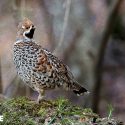
At the end of May, the Côtes-d’Armor and Finistère Prefectures published two decrees, each authorising the killing of 8000 Western jackdaws in the months to come. To stop this planned massacre on these birds that are relentlessly targeted, we are asking for an urgent suspension of these decrees, and eventually the cancellation of these delusional authorisations. The hearing will take place on 22 June at 10am at the Rennes Administrative Tribunal.

The young are doomed

As if the death of thousands of individuals targeted was not enough, these decrees also threaten young jackdaws that are still dependent on their parents during this nesting and rearing period. Alone in their nest, they are condemned to die of hunger without their protectors having returned, lying somewhere after having been killed by being shot mid-air or having succumbed to a trap…

A permanent fight

The persecution of these jackdaws is not new in the west of France. In spring 2022, we had already attacked four prefectural decrees authorising the killing of more than 27,000 birds. Thanks to our legal action, the three laws issued in Brittany were suspended and the majority of the animals were spared.

To prevent more carnage among Western jackdaws in Côtes d’Armor and Finistère, we will speak in favour of an urgent suspension of the prefectural decrees for them at the hearing which will take place on 22 June 2023 at 10am at the Rennes Administrative Tribunal.

Translated from the French by Joely Justice

An advantageous decision for 160 ibex in Bargy!

An advantageous decision for 160 ibex in Bargy!

An advantageous decision for 160 ibex in Bargy!
15.06.2023
An advantageous decision for 160 ibex in Bargy!
Wildlife

The Grenoble Administrative Tribunal has finally just published its ruling, 9 days after the 6 June hearing: we have, alongside our partners, obtained an urgent suspension on the Haute-Savoie Prefectural decree! Shooting ibex without prior health testing can no longer be carried out. The 160 ibex who would have been slaughtered ‘on sight’ (at the rate of 20 per year until 2030) in the Bargy mountain ranges without our action will finally have their lives saved. An advantageous decision that confirms the futility of undistinguished slaughtering without prior testing.

For years, under pressure from a few farmers and local elected representatives, the Haute-Savoie Prefect has authorised the slaughter of ibex on the sly without prior announcement, arguing that this would curb bovine brucellosis. However, no testing was carried out ahead of time to verify whether the ibex were actually carriers of this disease. Tests were carried out after they had been killed. The result: in 2022, out of the 61 ibex killed, only 3 of them were unwell.

Together with Animal Cross, the French Association for the Protection of Wild Animals, AVES France, France Nature Environnement Auvergne-Rhône-Alpes, FNE Haute-Savoie, and the French League for the Protection of Birds [LPO] we have therefore asked the Grenoble Administrative Tribunal to urgently suspend the Haute-Savoie Prefect’s decree of 17 March 2022 that authorised a massacre, even though the ibex species is supposed to be protected!

Wild animals are disappearing before our very eyes and the State still infringes on their protection

This year, the prefecture made various changes with relation to the Prefectural decrees of 2019 and 2022 that we have also had suspended. The outcome was therefore not known in advance.

During the hearing, the urgent applications judge put forward the complexity and the technical nature of the case file. On this occasion, there was a verbal sparring match lasting more than two hours between us and the Prefecture. Our lawyer, from the Thouy Avocats office, valiantly defended the ibex and responded argument by argument to the nonsense put forward by prefecture officials.

A rational decision in favour of ibex

We are therefore more than relieved to state once again that the Grenoble Administrative Tribunal has made a decision in favour of animals. The magistrate also relied on the opinion of the French Agency for Food, Environmental and Occupational Health and Safety (ANSES) who highlighted the “now very low” rate of seroprevalence as well as the benefits of regularly testing animals. In other words: testing then euthanising condemned individuals with a view to relieving them of the disease, not shooting them in a heap and noting it later…

For now, shooting without prior health testing can no longer be practised in Haute-Savoie. A well-deserved respite once again for these fine climbers that are so vulnerable.

Translated from the French by Joely Justice

Animals classified as species likely to cause damage: hunters’ black list

Animals classified as species likely to cause damage: hunters’ black list

Animals classified as species likely to cause damage: hunters’ black list
15.06.2023
Animals classified as species likely to cause damage: hunters’ black list
Wildlife

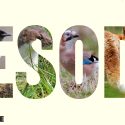
They were considered as ‘pests’. Nowadays they are a ‘species likely to cause damage’. Grouped under this label, as unfair as it is scandalous, foxes, martens, jays, and many other animals trying to survive in our threatened natural spaces are on death row. We will not let it happen.

A massacre is brewing in the hushed prefecture corridors. From the end of the summer, a new ministerial decree will come into force. A long black and white list of those condemned as a species likely to cause damage will be written in each department in France. With this law, numerous animals will be hunted down, trapped, and continuously exterminated all year long, outside of the periods that have already been authorised. This classification, concocted every three years by trappers, wolf hunters, and State representatives, is nothing but an outright extension of the right to kill being granted to hunters during the ‘normal’ opening season for hunting.

Species likely to cause damage: environmental nonsense

The term ‘pest’, toned down in the French with the use of an acronym [ESOD: Espèces Susceptibles d’Occasionner des Dégâts], is nonsense. In the wild, good and evil do not exist. And biodiversity, to be in a good state, needs everyone. Every animal has its place here. In one year, a single fox can eat between 3900 and 6300 rodents, which are lovers of agricultural crops. Foxes are health agents and also prevent the propagation of Lyme disease, carried by ticks. Yes, foxes play the role of a natural regulator, much more respectful of the environment than the spreading of polluting chemical products.

A death sentence played out in advance

But the real aim of this abominable list is to please the hunting lobby. They are involved at all stages of its development. Given by prefects at the Ministry of the Ecological Transition, the classification as a species likely to cause damage firstly passes through each Departmental Commission for Hunting and Wildlife, which gives its opinion or makes its own classification requests. What about animal welfare associations? Scientific opinions? Checks on the ground? There is nothing to support the validity of this arbitrary list, established on a simple declaration. The animals therefore have no one to defend them. No chance of getting out alive. Their fate is played out in advance.

We are fighting, department by department

To counter this decree, we have already been working for months on end. Legal experts dedicated to the issue are again contacting prefectures every day to obtain documents. As usual, administrations are dragging things out or not even responding. We are therefore forced to refer to the Committee for Access to Administrative Documents [Commission d’Accès aux Documents Administratifs (CADA)]. We know these time-consuming proceedings well. But we are belligerent. Each document received is analysed. We are checking every loophole, every inconsistency. To implement a counter-attack, we have also called on naturalists and we are relying on scientific studies and investigating on site, alongside our contacts on the ground.

‘Pests’, as they call them, are living, sensitive, intelligent beings. They all have their place within already weakened ecosystems. Do they have to perish, shot at point-blank range or trapped in vile cages, strangled, mutilated, in a state of unbearable stress? We oppose this with all our power.

participate in the public consultation

Translated from the French by Joely Justice
Peace for badgers this summer in fourteen departments!

Peace for badgers this summer in fourteen departments!

Peace for badgers this summer in fourteen departments!
15.06.2023
Peace for badgers this summer in fourteen departments!
Wildlife

This year, in fourteen departments, badgers and their families will be left in peace in spring and summer. The decisions returned by administrative tribunals have just confirmed the arguments that we have been putting forward for years and have opened new perspectives in the fight to abolish underground hunting with hounds. Although a few judges still refuse to state the illegality of this type of hunting as being among one of the cruellest, the movement set in motion can only grow in the months and years to come.

Unprecedented for badgers and their cubs!

For several weeks, there have been a flurry of victories for badgers! In eighteen departments, we have attacked the opening of additional periods for underground hunting with hounds in spring and summer before the courts. The most recent suspensions to date: in Aube and Meuse, and in Loiret and Eure-et-Loir, where judges have swept away hunters’ and prefectures’ arguments.

These are added to the ten departments where the tribunals have said stop. Yes, badger cubs are dependant on their parents at this time of the year! Yes, underground hunting with hounds will inevitably lead to the young being killed if it is authorised in spring and summer in addition to the season when it is already allowed!

The Amiens Tribunal was not mistaken when qualifying this fatal hobby as ‘blind hunting’. And some jurisdictions have gone even further. The Poitiers Tribunal has also confirmed that which we have been stating for a long time: badgers must be considered as ‘young’ for quite some time, until they reach sexual maturity, and not, as stated by Prefectures whose laws are often blown up by hunting federations, until they are weaned (because it is only food!).

Thanks to the administrative proceedings urgently filed and pleaded, almost three thousand individuals will have their lives saved in the months to come. The young can grow peacefully without the fear of hunters’ shovels, guns, and knives.

… and a few defeats that raise questions

In Lyon (for the Rhône and Loire decrees), Bordeaux (Lot-et-Garonne), and Nantes (Vendée), urgent applications judges have decided to choose to take the opposite position to their colleagues in Limoges, Pau, Toulouse, Clermont-Ferrand, Caen, Amiens, Châlons-en-Champagne, and Nancy, however. And their decisions are (sadly) full of lessons.

For Vendée, the Nantes Administrative Tribunal indicated to us that for them, hunting with hounds does not pose a problem with regard to animal suffering because hunters would use ‘non-invasive pliers’ (as if that changes anything about the disastrous outcome of such a hunt) and, the cherry on the cake, that they can decide not to kill the animals that they have dragged out of the setts! All while admitting that those who will not benefit from this preferential treatment could be killed with a bladed weapon. Who could understand this?

When it comes to the Bordeaux Tribunal’s decision for Lot-et-Garonne, they surprised us because it looked exactly the same as the one returned a few days before by the Lyon one… Of course: the document header was that of the Lyon Administrative Tribunal! Corrected a few days later, this copy and paste nevertheless remains very concerning regarding the way in which rejection decisions are made by judges, given that they are not even written on a case-by-case basis.

Our fight for badgers is far from over

With FNE, the LPO, and Animal Cross, we have attacked Savoie’s decree: the hearing is on 16 June at 9:30am at the Grenoble Administrative Tribunal.
For Haute-Loire, AVES is joining this coalition and the hearing will take place on 20 June at 9:30am in Clermont-Ferrand.
For Aisne, along with AVES once again, we will defend the badgers on 16 June at 9:30am in Amiens.
Finally, we will be present alone in Dijon on 23 June at 2:15pm for Saône-et-Loire.

With a view to protecting badgers and for a ban on underground hunting with hounds thanks to a radical reform on hunting (progress that you can support by signing our petitions), we will continue to fight on local, national, and international levels.

With your help, we will pursue our legal attack as completely and thoroughly as necessary. Thanks to your support, we will not let it happen and we will fight until the end for badgers!

I support One Voice’s fight for badgers

Translated from the French by Joely Justice
One Voice continues its fight against bear scaring: hearing on 16 June 2023 at the State Council

One Voice continues its fight against bear scaring: hearing on 16 June 2023 at the State Council

One Voice continues its fight against bear scaring: hearing on 16 June 2023 at the State Council
15.06.2023
One Voice continues its fight against bear scaring: hearing on 16 June 2023 at the State Council
Wildlife

Off the back of a grand slam that we won last year against prefectural decrees authorising bear scaring in the Pyrenees, we will be at the State Council on 16 June at 2pm to ask for the cancellation of the ministerial decree of 20 June 2022 that authorises the implementation of such measures on a departmental level.

Photo: Collectif Hope

In August 2022, we were successful in getting all of the decrees set by the Ariège Prefecture to authorise scaring shots against brown bears, who are trying to somehow to survive in the Pyrenees, suspended, despite constant threats of poaching. To have the illegality of these laws recognised at the source, we have also attacked the one which they all stem from: the ministerial decree of 20 June 2022.

Violent measures cancelled more and more often

On 16 June 2023 at the hearing, we will ask for the cancellation of this decree before the State Council. Seeing as we managed to get the 2019 and 2020 ones partially cancelled, and also the one of 31 May 2021 to which it is similar, there is good reason for this. These publications allow prefectures to authorise sound effect shots that are very violent for these animals that are few in number in our mountains. For eight long months, bears are at the mercy of these detonations that push them out of their territory, can inflict auditory injuries, and risk separating the mothers from their young… if they have not already had their pregnancy terminated by the stress caused by this constant harassment.

Persecution from the ministry that is supposed to protect them must stop

In recent years, the legal system has proven us right by declaring laws attacking bears as illegal one after the other. While judges have started being sensitive to our arguments, the Ministry of the Ecological Transition itself blindly pursues its persecution policy against ursine populations in our country.

Our rallying for these animals remains more relevant than ever. We hope that the State Council will send another strong signal against these absurd scares by cancelling the 2022 ministerial decree in turn, then the one of 4 May 2023, which has not been urgently suspended despite our request but which could still be declared illegal.

To protect bears from shots threatening them relentlessly, we will face the Ministry at the State Council on 16 June at 2pm.

Translated from the French by Joely Justice
Hunting during lockdown: special privileges for hunters were illegal

Hunting during lockdown: special privileges for hunters were illegal

Hunting during lockdown: special privileges for hunters were illegal
15.06.2023
Hunting during lockdown: special privileges for hunters were illegal
Wildlife

During lockdown, the country came to a halt, but special privileges for hunters did not stop. Throughout the long months, even in the most isolated places, it was impossible to leave the house without proof as to why. But in several departments, prefects agreed to exemptions for hunters so that they could devote themselves to their ‘hobby’ despite health restrictions. The Nantes Administrative Tribunal has just ruled in One Voice’s favour against these authorisations, which were actually illegal, in Maine-et-Loire and Loire-Atlantique.

In 2021, to cope with the COVID-19 epidemic, authorities declared a generalised re-lockdown throughout the country. For several weeks, those living in towns gradually rediscovered birdsong. Although health restrictions may have been a guarantee of peace for animals in urban areas since the first lockdown, those in our countrysides have not had a moment of respite
on their side. While the decree of 29 October 2020 banned “gatherings, meetings, or activities” of more than six people, prefects from numerous departments thus issued decrees to authorise hunting despite all of this. And hunters, disgruntled that we have put a spanner in the works, has even had us attacked by the legal system!

Lockdown: a bargain to (illegally) authorise hunting

In Loire-Atlantique, seven species are classified as ‘likely to cause damage’. They can be trapped all year round and killed with guns outside of the hunting season, until 31 March or even until 10 June. In Maine-et-Loire, wood pigeons were also part of this macabre list. Pursued everywhere, for as long as possible, such is the sad fate of animals arbitrarily declared as ‘pests’.

As if this was not enough, prefects in these two departments took advantage of health restrictions to allow hunters to put these animals to death with time limit, even beyond 10 June! The reason cited? As always, damage. And, as always, there is not a shred of evidence of this so-called damage.

They did not stop there. In Loire-Atlantique, the Prefect has gone further and has even ordered great cormorants to be killed. They are a protected species? Never mind! In any case, by the time the courts decide, the animals would long be dead. And in fact, that is what happened.

Animals who should never have been slaughtered

The killing of these individuals was illegal; as the court put it bluntly: “the administration has not produced any evidence to establish that these species would be likely to cause damage in autumn 2020” to justify them being killed. New proof, if any is needed, of the totally grotesque character of the designation of animals that are so-called ‘pests’.

On the subject of great cormorants, the court was even more harsh: not only did the Prefect absolutely not show why killing them would be necessary, but he did not provide a shred of proof of the reality of this damage.

These cancellations have left a bitter taste since they were imposed several years after the killing of these animals. But today it is undisputable: foxes, beech martens, Mustelidae, rooks, carrion crows, Eurasian magpies, starlings, wood pigeons, and great cormorants from these departments should never have been killed during this period. We were right to rebel against these abusive authorisations and to fight until the end to bring them justice.

Translated from the French by Joely Justice
Fur: more than 1,500,000 signatures to put an end to this industry in Europe!

Fur: more than 1,500,000 signatures to put an end to this industry in Europe!

Fur: more than 1,500,000 signatures to put an end to this industry in Europe!
14.06.2023
Fur: more than 1,500,000 signatures to put an end to this industry in Europe!
Fashion

The fight against fur has taken a decisive turn. The Fur Free Europe European Citizens’ Initiative (ECI) has been undertaken to ban the production, importation, and marketing of fur in the European Union. The signatures of 1,502,319 citizens have been validated. This is a movement that seems to be being echoed on a global level, since a bill has just been presented in the United States to put an end to breeding mink on American soil due to health risks.

Fur farms: places of misery

Minks are territorial animals. In breeding farms, they are enclosed with several in each minuscule mesh cage with no access to water and they show their discontent by developing self-mutilation and often cannibalistic behaviours.

Whether its the horror that the animals are subjected to or the soil pollution and the health hazards that these breeding farms cause, they must be banned throughout the European Union.

A victorious fight which will have taken years in France

Thanks to our repeated investigations into mink breeding farms in France published in 2017, 2019, and 2020 and presented to European parliamentarians, we have repeatedly alerted the public to the conditions in fur farms.
We have also written to the prefects concerned and to the Ministry for the Ecological Transition. This work, led relentlessly, has ultimately allowed a ban on all farms breeding wild animals for their fur in our country.

Fur farms: hotbeds for contamination

At the start of the Covid-19 pandemic, we had confirmation that breeding farms were dangerous reservoirs for variants
because of potential vectors of mutations of the virus transmissible to humans due to a lack of hygiene, cramped conditions, and the proximity of the cages. This has led to the slaughter of millions of mink, particularly in Denmark and the Netherlands, and even in France. We have launched a petition addressed to G20 members to ask for the urgent closure of all European breeding farms and warned the AgriPêche [Agriculture-Fishing] Council on this subject, who have not moved one bit on this issue.

Others take their responsibilities much more seriously: this is exactly what was proposed today by an American democrat after the confirmation of the outbreaks of SARS-CoV-2 (COVID-19) in 18 breeding farms in the United States. Its bill was just filed scarcely a few days ago and intends to ban fur farms within a year by leaning on the issues of public health that they represent.

Prevent production from being relocated

The whole point of this European Initiative is to extend the ban obtained in France at the end of 2021 to all member countries, as remains to be done in Finland, Lithuania, and Romania. But it is also to avoid production being moved abroad, for example to China. We must therefore fight to obtain a ban on importations and marketing of fur in any member State.

With the validation of the signature stage having finished, it goes to the European Commission!

The Fur Free Europe ECI, led by Eurogroup for Animals and supported by One Voice and its partners from the Fur Free Alliance, has just had more than one and a half million European Citizens’ signatures validated, who are thus supporting this request. They are therefore part of a process of participating in democracy in favour of animals, which really gives hope!

To get the production, importation, and marketing of fur banned in the European Union, we must meet with members of the European Commission before the start of the summer. And thus, we can be heard by the European Parliament from next October and obtain a definitive response from the Commission before 2024.

Translated from the French by Joely Justice

Before the courts and closer to the public, we are rallying for Inouk, Moana, Wikie, and Keijo the orcas

Before the courts and closer to the public, we are rallying for Inouk, Moana, Wikie, and Keijo the orcas

Before the courts and closer to the public, we are rallying for Inouk, Moana, Wikie, and Keijo the orcas
13.06.2023
Before the courts and closer to the public, we are rallying for Inouk, Moana, Wikie, and Keijo the orcas
Exploitation for shows

To prevent the transfer of Inouk, Moana, Wikie, and Keijo from Marineland Antibes to a water park in Japan where they would be exploited until their last breath, we are coming together in Antibes on 17 June. On 19 June at 10am, we will ask once again for an independent expert on the state of the pools and the health of Inouk and Moana. A gathering will be organised before the hearing, in front of the Aix-en-Provence Court of Appeal.

Since the cancellation of the ‘dolphinarium’ decree in January 2018, which planned for the inevitable closure of these establishments, we have been fighting relentlessly for a new law to be published to put an end to the exploitation of these cetaceans. Far from listening to our requests, the State preferred to turn a blind eye to the hell inflicted on them. The law against animal mistreatment passed in November 2021 failed to make any real commitment to grant them a dignified retirement.

At the end of 2019, we stood against Marineland’s intention to send French orcas to China
where there is no law to protect animals. Three years later, the park has not given up on condemning them to endless exploitation… this time in Japan. We are asking for this decision to be thrown out (obviously facilitated by the Ministry of Ecology) and we will once again go before the courts to demand an independent expert for Moana and Inouk in particular, as well as for the establishments.

Mayors, MPs and MEPs: we are calling on elected representatives at all levels

To come to the rescue of ‘our’ orcas, we have been calling on elected representatives for a long time. Contacted by Christian Estrosi via our mediator, the dolphinarium assured him that they did not intend to make a transfer to China “in 2020”. This clarification says it all… the MEP Caroline Roose, who has been present at a number of our actions in Antibes over the years, is herself clearly committed along with us for Inouk, Moana, Wikie, and Keijo. And that is not all! Having met several times, the President of the animal rights group at the National Assembly, Carinne Vignon, gave her full support for our sanctuary project and our campaign for the four captive orcas by taking the initiative to write to the Secretary of State in charge of Ecology, Bérangère Couillard. We are also keeping in touch with the services for the Ministry for the Ecological Condition on the (non) implementation of the implementing decrees for the law voted in in November 2021.

We are demanding retirement for the French orcas!

Thanks to our work in Nova Scotia with our friends from Whale Sanctuary Project who are international specialists in cetaceans, we are proposing an alternative that would allow orcas to experience something other than obedience in exchange for a few dead fish or a life spent fretting in a pool.

From this perspective, our door is open to discussion with Marineland (or Parques Reunidos) and also with the Ministry for the Ecological Transition.

For Inouk, Moana, Wikie, and Keijo, we will never give up on this matter. On 17 June at 2:30pm, we are gathering in front of the dolphinarium and on 19 June before the Aix-en-Provence Court of Appeal to stop them from being sent to Japan. The hearing that will take place there to demand an independent expert will start at 10am. Join us there and sign our petition !

Translated from the French by Joely Justice
Wolf defence associations respond to the Bourgogne-Franche-Comté farmers’ lobby

Wolf defence associations respond to the Bourgogne-Franche-Comté farmers’ lobby

Wolf defence associations respond to the Bourgogne-Franche-Comté farmers’ lobby
08.06.2023
Wolf defence associations respond to the Bourgogne-Franche-Comté farmers’ lobby
Wildlife

On 26 May 2023, the Regional Chamber of Agriculture of Bourgogne-Franche-Comté, three of the main agricultural syndicates in the region (FRSEA, JA, CR), and around ten other organisations published a press release entitled “Farmers or wolves: the Government must choose”. Through this, the authors intend to convince the French State to authorise a more systematic appeal for shooting wolves, under the pretext that cohabitation with the large predator would be impossible, all while touting the alleged benefits of a production-driven agricultural model that is partly responsible for the current ecological and climatic crisis. Such statements clearly have no scientific foundation and, through this document, we intend to re-establish a few facts.

No, defence shots are not “the most effective way to ensure the protection of herds”

On the contrary, studies have shown that defence shots, risking de-structuring the packs, often lead to more attacks, the opposite effect of what was intended. Numerous alternative measures to these shots could be implemented and have proven themselves in many countries, such as in Switzerland with the surveillance of herds proposed by Oppal. On the French side of the Jura mountains, its counterparts FERUS and Vigie Jura have just launched their programme which has received a very favourable reception from the general public. On FERUS’ side, more than 70 eco-volunteers have come forward and, after a training course, are ready to work with willing farmers.

Other means to consider naturally include fences (of sufficient height and voltage), and herd protection dogs, but also assistant shepherds trained in agricultural schools (a proposition recently submitted to the Ministry of Agriculture), anti-wolf collars, etc. Rather than claiming the right to be able to kill wolves more easily, shouldn’t the authors of this press release ask the State to deign to subsidise some of these measures in a more preventative and systematic way for all types of farmers (sheep, goats, and obviously cattle)? It is indeed incomprehensible, and profoundly unfair for farmers, for it to be any other way.

No, unlike large predators such as wolves and lynxes, true “forest doctors” responsible for the health of ecosystems, extensive farming is not in fact “noteworthy for the biodiversity that it generates”

While organic farming, sustainable and based on agroecology promoted by the Farmers Confederation, is effectively able to benefit from ecosystems, unfortunately, it is far from being mainstream in France. It is clear that our region is no exception to that rule unfortunately.

According to a 2020 study from the University of Bourgogne-Franche-Comté, local livestock is primarily responsible for the eutrophication of water courses, themselves being the cause of piscicultural deaths. Partly linked to waste from cheese-making and the excessive spreading of fertilisers, this phenomenon is not the only one to cause a problem. The destruction of hedges, erosion of forests, excessive and premature cutting of pastures harmful to birds and pollinating insects, the destruction of rocky outcrops by rock-breakers, etc., are also sadly commonplace in the region.

Ultimately, farming as it is mainly practised in the region, however extensive it may be, fundamentally remains to be production-driven farming. Far from being a vector for biodiversity, it is undoubtedly among those responsible for the extensive erosion of living nature, not sparing our country. In light of these phenomena and at a time when a WWF study shows global farming itself to be responsible for a 60% loss in land-based biodiversity, to say otherwise would be to show remarkable cynicism.

No, production-driven farming, once again a large majority in the region, is by definition incapable of “harmoniously and respectfully shaping and developing our country”

Furthermore, it is absolutely unnecessary for the maintenance of open spaces. These, like the animal and plant species that live there, existed long before the arrival of cattle. They could be perfectly maintained by sustainable farming, as well as by wild ungulates which we could, in the presence of their natural predators, decide to hunt less. This would also allow wolves to have more prey, and therefore be less tempted to resort to livestock.

Why not assume that the agricultural model that dominates the region, driven by the race for profit, in reality only aims to respond to the insatiable appetite of the global population for farmed products (meat, cheese, etc.), of which scientists recommend reducing our consumption? Moreover, did the Court of Audit not just recommend that France reduce the size of cattle herds to respect its climate commitments? Finally, how can one claim that regional farming is intended to “guarantee food sovereignty” when a significant part of its production continues to be exported to the United States?

No, cohabitation between wolves and livestock, rid of its productivist tendencies, is not “genuinely impossible”

Although far from always being obvious, here it is not a question of denying that the loss of animals can indeed be traumatic for their owners and this is a reality in a number of countries where wolves have never disappeared (Spain, Italy, etc.). This is also the case in France, including in Bourgogne-Franche-Comté, where men and women are committed to working on this by implementing the required protection methods.

The problems that farmers in our region face (international competition, droughts, erosion of biodiversity, etc.) are more profound than the necessity to cohabit with wolves. Is it not time to tackle this rather than pointing the finger at an animal that often serves as the perfect scapegoat?

Be that as it may, the canine has continued to develop since its return to France at the start of the 1990s. It will continue to do so as long as it has the necessary habitats and resources at its disposition. No offence to some, this is excellent news for the preservation of ecosystems endangered by human activities. The sooner we admit this and stop maintaining the untruths brought into question here, the sooner we can act and move forward towards cohabitation that benefits wolves, farmers, and everyone.

Translated from the French by Joely Justice