Valentin’s last voyage

Valentin’s last voyage

Valentin’s last voyage
11.02.2016
France
Valentin’s last voyage
Exploitation for shows

Valentin was born on the 13th of February 1996 in the confines of a pool, no place for an orca. He would die there on the 12th of October 2015, at the age of 19, having never left Marineland, Antibes.

Birth

The orcas circle nervously in the pool. Shouka and Kim, as well as Sharkane, the Godmother, who is supervising the birth and who will soon guide the child to the surface. First the tailfin, followed by the body, little by little from Freya’s stomach. In a cloud of blood, Valentin enters the world. He discovers the tiny universe in which he will live for his for his whole life: the concrete walls, the turbulent, chlorine tasting water, the noise. And above the water, he sees buildings, stands and humans walking around. Walls everywhere. The orca basin as it was in 1996 is now home to the dolphins. Five inmates are contained there. First of all, Freya has to teach her son not to injure himself on the concrete walls, and to learn how to break his momentum so as not to hit the walls whilst playing. Nothing prepares a cetacean, even one born in captivity, to live in a tank.

Training

At six months, Valentin takes part in his first shows, swimming under his mother and nursing to the background noise of clapping. When weaned at the age of one, he quickly learns from the trainers that if he has to work if he wants fish. He must be disciplined and not play around during the show. He also has to accept the separation from his mother, isolated in another basin. Little Prince Valentin becomes very popular, with a fan club and a Facebook page. Teenagers exchange his best photos annotated with hearts. We easily recognise his beauty spot to the right of his throat.

Sorrow

Val is the second orca to be born in Marineland after Shouka, Sharkane’s daughter, her oldest of three years and his playmate. He is also the first surviving child of Freya, who was thought to be infertile because of previous x-ray treatment. Before Val, she had given birth to her first stillborn in March 1991, then a second in 1993. After Val’s birth, she would go on to lose three more children, in 2001 and 2003. So you can imagine how much she loves and protects her son. After her last miscarriage, an already unwell Freya drops into a depression. Floating away from the others, she doesn’t participate in the shows anymore, and no longer obeys the trainers. She comes up occasionally and hits her head against the windows of the main pool, again and again, consumed by sadness.

Valentin takes this all in, and suffers to see his mother in pain. She had already been hit hard by the departure of her adored half-sister Shouka in 2002. The young orca had been sent to Vallejo in the United States, where she would live on her own for ten years. As for Valentin, he begins to exhibit stereotypical displacement behaviour which he will repeat for the rest of his life: his stomach in the air, hitting his forehead against the sides of his pool next to the « trainers cave ».

Grief

Upon Freya’s death in June 2015, Valentin’s world would collapse once again. His mother was the last orca caught by Marineland. Constantly ill during her short life, she had visible scars from x-rays on her side. A « heart-attack, » declared Marineland, but Freya had other reasons to die. Leaving behind a bewildered little family in her wake, unguided having lost their matriarch, it is a terrible shock for the five surviving members. But Marineland has no time to let them grieve for Freya, putting on a show the very same evening, to « distract » them from their sorrow and to not lose clients. Valentin however, is not « distracted » by the show, nor by any future show. A feeling of emptiness and abandonment takes hold that only the son loved by a orca can understand.

A brutal change in power relations takes place within the walls of the basin: Freya now dead, Val is no longer the protected little prince. His social status collapses and he finds himself in front of his nagging half-sister in charge of two children, and his shy half-brother, Inouk. Tensions build and fights erupt. Freya is no longer there to keep order. By summer 2015, Valentin is a shadow, floating motionless on his own in a corner of the chemical blue pool. Around Val, a fairground atmosphere: incessant music, the noise of visitors, food odours and lighting until late at night. Valentin doesn’t listen any longer, he hardly moves anymore.

Death

The days go by. The temperature increases. Then suddenly, the sky opens. Heavy rain falls on the region. Marineland is submerged by mud and dirt and the basin waters become yellowy brown. The survivors are closed off into a small lateral basin to protect them from the infected water. They fight and they bite each other. Wikie falls ill and is isolated. Is Valentin still alive? Did he not survive seeing the collapse of his family? Has he swallowed something toxic? Has he been injured by a stand chair catapulted by the wind? Have his injuries become infected? Did he die during the flooding? We know nothing.

On Monday the 12th of October, Marineland management publish a brief press release: « Marineland is extremely sad to announce the death today at 12.00 of Valentin, an orca born in the park », adding two days later: « The first physical examination of Valentin, who died a few days ago, shows an intestinal torsion like that which can occur in a horse or a dog ». But orcas are not dogs, and twisted intestines caused by stress don’t happen to them at sea.

Every day, they travel an average of 160km and dive to depths of more than 100 metres. Valentin only completed one short journey in his short life, from Marineland Antibes to the knackery. An enormous crane lifted his body from the crib that had become his grave, as it had done for many others before him. Since the opening in 1970 of Marineland, Antibes, nine other adults have died young, on top of all the miscarriages. Calypso died at 11 years of age, Clovis at 4, Kim at 14, Betty at 13, Kim2 at 27, Sharkane at 23, Tanouk at 14, and Freya at 32. The average age of a wild orca is between 50 and 80 years old. Granny, the matriarch of J Pod has reached 104 years of age. Valentin, he only made it to 19…

If his parents had not been captured, today Valentin would be a wonderful male cutting through the waves in the Iceland sea with his big straight fin. He would swim alongside his mother, still alive with her life ahead of her, and with all of his brothers, sisters, uncles and aunts. He would hunt herring, play, have many close friends in other tribes, and have some children here and there. Every day, his life would be a new adventure in the icy fjord water. But man had decided otherwise. Valentin spent his life in a dungeon, his stomach ravaged by ulcers, his chin cut from rubbing against the concrete tanks, and his backfin drooping over time.
This is not how orcas live.

Open a dolphinarium: the strange idea of Beauval Zoo

Open a dolphinarium: the strange idea of Beauval Zoo

Open a dolphinarium: the strange idea of Beauval Zoo
10.02.2016
France
Open a dolphinarium: the strange idea of Beauval Zoo
Exploitation for shows

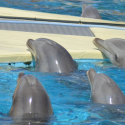
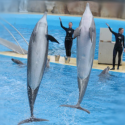
All French dolphin aquariums, ‘dolphinariums’, were opened last century. However, since then the « Blackfish effect » has opened the public’s eyes to the suffering experience by captive cetaceans.

All French dolphin aquariums, ‘dolphinariums’, were opened last century. However, since then the « Blackfish effect » has opened the public’s eyes to the suffering experience by captive cetaceans. In the United States, Gabriela Cowperthwaite’s documentary has had an impact, worrying SeaWorld shareholders with the financial losses resulting from the revelations. As their American counterpart, Marineland Antibes finds itself restricted to offering « educational » shows and defending itself from this « slander » by posting videos. There is a lot to suggest that these media strategies won’t save the Antibes park from the same financial fate as SeaWorld.

Two independent companies are attempting with caution to breakout with dolphinarium projects. Amnéville Zoo in North Eastern France has already been singed by the general outburst following their project. Beauval Zoo remains cautious. The sudden interest seen on the web at the idea requires them to justify themselves.

In a message published on its Facebook page, the zoo defended their project: « Modern zoos invest permanently in internationally managed rearing and breeding programmes. The success of these programmes is frequently confirmed by increased birth-rates. In the case of dolphins, the European population in animal parks is continually increasing; 34 males and 21 females have been born between 2009 and 2014. »

It is impossible to verify these figures. There is no inventory of captive cetaceans at a European level comparable to the Marine Mammal Inventory Report established by the American government, which is very disappointing. However, the deaths announced in the press show us that captive cetaceans rarely live longer than twenty years. The in-breeding and strange living conditions reduce their physical and psychological resistance and dramatically reduce their life expectancy. The announced extinction of the captive population will sooner or later force the dolphinariums to recapture dolphins or to « save » new « deaf » orcas like Morgan.

If artificial insemination programmes are already doubtful for elephants or great apes, they obviously don’t make sense for cetaceans. The species Tursiops Truncates (common bottlenose dolphin), living in these aquariums is not in danger, according to the UCN. Captive breeding only serves to renew stocks of these show animals. None of them are ever put back into the sea.

The zoo continues to assert: « We unconditionally support the ban of any capture of wild dolphins. Likewise, we strongly condemn the acts that have taken place in the Japanese bay of Taiji ». Good, but in announcing its intention to open a dolphinarium–in the distant future, it specifies–Beauval Zoo is sending out a clear signal to developing countries: « Open marine parks! This industry makes money! ».

Don’t forget that this attraction dates from another century. It no longer corresponds to public sensitivity, morals, or scientific interest. We don’t reduce non-human beings to slavery, these beings who have self-awareness, have cultures and dialects and a sophisticated social life, but who above all have moral and emotional qualities which humanity should be jealous of.

Keeping cetaceans in captivity isn’t really the ‘done-thing anymore’, it’s out of fashion.

Last minute change. Beauval Zoo has given up its dolphin aquarium. In the last few months, One Voice has not given up putting on the pressure? It’s a great victory!

The abolition is happening! Keep fighting for the closure of French dolphin aquariums, sign the petition!

Celebrate Valentine’s Day without sacrificing animals!

Celebrate Valentine’s Day without sacrificing animals!

Celebrate Valentine’s Day without sacrificing animals!
09.02.2016
France
Celebrate Valentine’s Day without sacrificing animals!
Animal testing

Despite the 2013 European ban on exploiting animals for cosmetic testing, France refuses to monitor and regulate the corporations that continue to perform these experiments with impunity. Yet luckily, the One Voice label makes identifying ethically fabricated products easier than ever.

When will France jump on the « cruelty-free » bandwagon?

European regulation has had little effect on motivating French laboratories to change their stance on animal testing. Without penalties or other incentivizing measures in place, companies have no reason to change their routine practices.

The One Voice Label

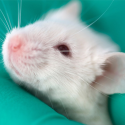
Rabbits and rodents are the animals most frequently victim to experimentation. Even if the existing laws are not enforced and laboratories maintain outdated methods, alternative solutions do exist. The blue and orange One Voice label clearly marks products that have not been tested on animals—and they are even vegan!

Give compassion!

For Valentine’s Day this year, Melvita renewed its certification with One Voice’s label initiative. They offer a wide range of products to choose from, including those for both men and women, skin treatments, and perfumes.

One Voice wishes you an ethical Valentine’s Day!

Dog torturer receives exemplary prison sentence

Dog torturer receives exemplary prison sentence

Dog torturer receives exemplary prison sentence
08.02.2016
Canada
Dog torturer receives exemplary prison sentence
Domestic animals

Justice has been served for « Justice, » the aptly named dog who was discovered tied up and abandoned to die. The judge ruled that the culprit be registered in a DNA database for criminals, based on the conviction that a strong link exists between violence against animals and humans.

Rescued in the nick of time

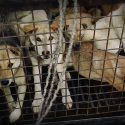
At the back of a shopping center in Windsor, Ontario (Canada), a small dog, approximately seven years old, was left for dead. His snout was tightly bound with tape, along with his legs and neck. Luckily, a passerby spotted him, saving him from suffocation. When he was released, he was so weak that he could barely stand upright. Fortunately, the local organization Windsor/Essex County Humane Society was able to care for him during his recovery.

An exemplary judgment

Once the culprit was found during the investigation, a lawsuit ensued. The judge who handled the case condemned the offender to the maximum sentence: two years in prison and three years probation, along with a twenty-five year ban on owning animals. Additionally, he ordered that the animal torturer be registered in the national DNA database: it is widely known that criminals often start off as animal abusers. (read our article on the subject here).

And in France?

Abusive individuals target animals and humans alike, showing a lack of respect for all life, regardless of species. There is no exception to this rule in France: in Griffin’s case, the offender both hit his girlfriend and set her cat on fire.

Currently, convicted or suspected criminals are registered in a national DNA database (FNAEG) managed by the Ministry of Justice. One Voice has insisted that the Minister of Justice include animal abusers in these records in order to prevent crimes against people.

To support our campaign, sign and sign and spread our petition our petition!

South of Africa: One Voice investigates the trophy hunting

South of Africa: One Voice investigates the trophy hunting

South of Africa: One Voice investigates the trophy hunting
06.02.2016
South Africa
South of Africa: One Voice investigates the trophy hunting
Wildlife

One Voice fights to convince the international community to protect the last wild lions on the planet and end the suffering of lions in captivity. We reckon that these animals should be classified as high priority in Annex 1 of CITES, so as to put an end to all types of trade in them.

In 2015 One Voice investigators uncovered the suffering of lions in South African breeding centres. Held in cramped paddocks, they are often kept alone or forced to live alongside other cat species. Babies are torn from their mother within an hour of birth. Compelled to produce up to five litters every two years, captive lionesses are treated as mere breeding machines. The cubs are used for tourist photos. When they reach the age of three years and are less easy to control, they are sold to hunting businesses which go as far as to drug them to make them easy to stalk and kill.

In February 2015 the European Union introduced measures requiring member states to grant import licences for hunting trophies for six species, including African lions. One Voice considers these measures insufficient to protect these animals. We are putting pressure on politicians to get a total ban at European level on importing « trophies » and lion body parts. We also campaign against all forms of trophy hunting and urge tourists travelling to Africa to only take part in ethical activities.

One Voice works too to end animal abuse in French circuses. Plenty of countries have already implemented such a ban. However hundreds of circuses still roam our nation, and lions are the most common wild animal there.

Several years ago One Voice oversaw the freeing of three lions—Shada, Djunka and Nalla—who had spent their entire lives shut away in a circus caravan in the Dordogne. Kept isolated in tiny compartments measuring 1.83 m x 1.83 m, they were used as breeders. Their young were also taken away to be sold. Thanks to One Voice and the Born Free Foundation, these three lions were relocated to a sanctuary in South Africa.

Dozens of cows die of hunger

Dozens of cows die of hunger

Dozens of cows die of hunger
05.02.2016
France
Dozens of cows die of hunger
Other campaign or multi-campaigns of One Voice

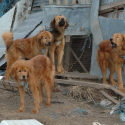
Eight years ago, One Voice discovered dozens of cows dying of hunger and thirst on a property owned by the « B. brothers. » Following a seven year legal battle, they were eventually tried in court on the 5th of February this year.

The case

The B brothers may have been isolated from society, but were certainly not poor. According to psychiatric reports, they are mentally stable and able to be held responsible for their own actions, yet they were clearly disinterested in the wellbeing of their animals, who they were keeping solely to gain EU subsidies. They were even unable to recall the size of their herd, which according to investigators, could be estimated between 700-800 animals on 400-500 hectares of land. It was clear they placed no value on the lives of these beings, leaving them to die in excruciating pain, without food or water, when there was hay available. Neighbours testified to having heard their cries. In June and December of 2008, several corpses were discovered. But in February 2009, thirty-seven cows were found dead in the freezing cold, some hidden under tarpaulins. Identification was made possible using a helicopter. Twenty-six survivors were rescued from the brink of death and transferred to our partner, OABA.

The evidence

Farmers receive government subsidies for living animals, but also when they die. In 2007, the B brothers received 175,000 euros in bonuses and CAP subsidies (totaling a quarter of the region’s grants) for essentially leaving their livestock to perish. The discovery of bones on the property indicated that this neglect had been going on for some time. The investigating judge also revealed insufficient account charges, indicating that the brothers were embezzling the funds they received from the government to care for their animals. Additionally, the police discovered that some animal passports had « gone missing. »

For an exemplary judgment!

One Voice acted as civil prosecutors in the April 2009 proceedings, in which the brothers were charged for serious abuse, cruelty to domestic animals, and for detaining corpses. They lost the first trial in October 2009, as well as the appeal in September 2010. In June 2012 One Voice again took them to court in a new trial requesting that the brothers be banned from owning animals, which they achieved accompanied by a prison sentence for each of them and a fine. But the case was overruled. One Voice then appealed and managed overturn the judgement, invalidating any attempts to resubmit the facts of the case and publishing the arrests in the criminal records and information bulletin. However, the appeal court announced their final judgement in favour of the brothers, so we are now fighting a civil case instead.

Food supplements go cruelty-free!

Food supplements go cruelty-free!

Food supplements go cruelty-free!
04.02.2016
France
Food supplements go cruelty-free!
Animal testing

The brand Catalyons has made history by adopting the One Voice label! Now, for the first time ever, their vitamins and other dietary supplements are certified « free from animal experimentation » vegan, and/or organic.

A major first step

Catalyons’ decision to adopt cruelty-free labeling marks a highly anticipated first step in the fight for consumer rights/corporate transparency in France. Animal testing is still routine practice in the food supplement sector, although most consumers have no idea what goes on behind closed doors. Fortified foods and dietary supplements that extol consumer health benefits are almost always tested on animals, increasing profits for the animal experimentation lobby. Yet Catalyons has proved that ethical alternatives are both viable and accessible.

Brand engagement

The One Voice certification process requires real dedication on behalf of complying businesses. In order to obtain a label, One Voice asks that companies prove their commitment to cruelty-free practices at every step along the supply chain. After a thorough assessment, One Voice awarded its label to a series of Catalyons products, ranging from vitamins, food supplements (for humans and animals), and cosmetics. The blue label indicates that products have not been tested on animals and are free of animal by-products, while the orange label certifies that products are organic.

Support the movement

Animal-testing procedures that have become commonplace for the food industry can be easily replaced with more innovative techniques. Furthermore, consumers have the right to make well-informed decisions that reflect their convictions and consequentially influence supply and demand. Spread the word!

One Voice suggests that you to write to your favorite brand telling them that you would like to see them change their practices; let us know and we will support your efforts. Let’s continue encouraging companies like Catalyons to make strides toward a more ethical future.

Together, we can end animal testing!

Griffin: burned alive and thrown out of a window

Griffin: burned alive and thrown out of a window

Griffin: burned alive and thrown out of a window
01.02.2016
France
Griffin: burned alive and thrown out of a window
Domestic animals

Abusers are capable of causing undue pain to both animals and humans alike. Griffin lost his life at the hands of such unspeakable violence, while his human companion’s safety was also jeopardized. The only redeeming part of this story is that their tortuter was eventually tried in court.

Griffin’s human companion had been having relationship issues for some time when she decided to take action into her own hands and end things once and for all. However, her boyfriend had anger issues that she could not have foreseen. Unfortunately, Griffin became caught up in his attempt seek to vengeance. The boyfriend threatened to set fire to the cat unless she agreed to hand over her phone. When she did not comply, he doused Griffin in rubbing alcohol and approached him with a lighter. In this moment, words became reality. Griffin’s fur caught on fire.

The terror and pain Griffin endured did not stop there. In an effort to hide under the couch, Griffin set fire to the entire apartment. In response, the boyfriend grabbed him, hurling him out the window. The girlfriend was helpless; all she could do was call her ex-husband for help. Both of the owner and her ex-husband were subjected physical violence until the authorities arrived and intervened. Violence is blind and does not discriminate with regards to species.

The concerned neighbors, who were awakened by his cries of pain, took Griffin immediately to a veterinarian. But the damage was already done. After one and half hours of agony, the veterinarian had no choice other than to euthanize him.

One Voice appeared as the civil party in the trial that took place on February 1, 2016 in Nice. Griffin’s torturer was sentenced to two years in prison, a six-month suspended sentence with probation, and a lifetime ban on owning animals. He appealed the decision.

Rather than separating the human case from the animal during the legal proceedings, One Voice request that a single public prosecutor review the entire incidents. We believe that in order to strengthen the case against cruelty, the link between animal abuse and human violence should be recognized and every species treated equally under the law.

To support our campaig and spread our petition

Nepal: the land of sacrifice

Nepal: the land of sacrifice

Nepal: the land of sacrifice
20.01.2016
Nepal
Nepal: the land of sacrifice
Other campaign or multi-campaigns of One Voice

Within Nepal’s rich tapestry of cultural traditions, violent rituals have managed to endure despite the disapproval of most of the urban Hindu population.

Cruel traditions and superstitions

Gadhimai is the goddess of power. For the last 300 years, over 2 million people have gathered every 5 years to either participate in or view the sacrifice of thousands of animals–in 2009 alone, 250,000 were slaughtered and nearly 20,000 buffaloes were beheaded with swords. However, as a result of a collaborative effort between France and Nepal, which stemmed from a partnership between One Voice and AWNN, the number has decreased to 3256 in 2014. Furthermore, temple authorities have announced that as of 2019, Gadhimai will no longer be celebrated with blood letting. This is a huge victory and inspires hope that we can put an end to other cruel traditions that persist in Nepal. For instance, during the Khokana celebration, a five or six month old goat is thrown into a pond by young unarmed men and is skinned alive with their teeth. Although only one animal is killed, these victims endure unimaginable suffering leading up to their deaths. Superstitions also engender animal cruelty. For example, in 2013 the Nepal Football Association (ANFA) sacrificed five animals just to bring good luck for the South Asian championship. This sort of senseless cruelty should be illegal in 21st century.

Large-scale entertainment

Even though the bloodshed that took place during Gadhimai will soon be a distant memory, other similar rituals endure in temples and even in some public spaces throughout the year. In a discourse largely dominated by the religious authorities, we hope to open a dialogue that incorporates alternatives to violence. All clans, ethnic groups, and sometimes even the government and the army are involved in sacrifices. Once a year, for the Dashain celebration, both civilians and the military kill hundreds of thousands of goats, cows, ducks, and chickens throughout the country. Some rituals, such as the Navadurga dance, require drinking blood directly from the jugular of the animals as their necks are slit. This barbarity extends beyond religious rituals. Animals are also abused for the sake of entertainment in Nepal: polo is still frequently played on the backs of elephants, and snake charmers and bear tamers are easy to come by.

Far-reaching consequences

These mass sacrifices pose significant risks to people. But even more serious are the consequences of trivializing animal cruelty. Studies conducted by the Link indicate that insensitivity towards living beings is normalized from a very young age. Much like the Buddhist scriptures, Hindu texts advocate for compassion towards animals and certainly do not promote animal sacrifices. Instead, these barbaric traditions are perpetuated by those who exploit superstitious beliefs for profit. For a country that endorses democratic, egalitarian, and modern values, it is essential that laws are put into place to outlaw archaic forms of brutality towards animals.

PCBs threatens extinction of killer whales in Europe

PCBs threatens extinction of killer whales in Europe

PCBs threatens extinction of killer whales in Europe
18.01.2016
Europe
PCBs threatens extinction of killer whales in Europe
Natural habitat

Ban Polychlorinated Biphenyls (PCBs) and polybrominated diphenyl ethers (PBDEs) have been banned worldwide since 1986 and pose a serious threat to cetaceans in Europe.

According to a study published on January 14th 2016 in Scientific Reports, blue and white dolphins and European killer whales have the highest concentrations of PCBs in their fat in the world. The researchers who conducted the study say that these massive concentrations are likely to ultimately lead to the decline of these populations.

Products since 1929, polychlorinated biphenyls have been used in flame retardants and coolants or insulation as well as in many types of plastics. But when PCBs were found to cause serious health problems in both human and non-human animals, they were eventually banned. Unfortunately, such products do not break down so quickly. The PCBs or Parylene’s that impregnated the sediments were transported by the streams to the sea. They still persist there.

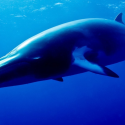
As super-predators placed at the very top of the marine food chain, killer whales are particularly threatened by this pollution. They eat the flesh of polluted prey, which themselves feed on contaminated prey. In doing so, killer whales accumulate large quantities of PCBs and PBDEs, which are transmitted through breastfeeding.

These products severely affect thyroid function and vitamin A metabolism. They also interfere with neurological and reproductive development and immune function. Because PCBs are fat soluble, they can accumulate at extremely high levels in marine mammals with a high fat mass.

During research, they were levels of PCBs present in fats that were analysed in 1000 cetaceans, whales, orcas, dolphins and porpoises.

Porpoises are the only species that does not show record levels. On the other hand, the researchers were surprised to find that the concentration rate was the same for both males and females, whereas the latter should have got rid of excess PCBs when they were breastfeeding.

Their long life span and their position as superior marine predators make orcas and dolphins particularly vulnerable to the accumulation of PCBs in their bodies.

In this regard, Paul Jepson, a member of the London Zoological Society and author of the study, said the situation was worrying: « We believe that there is a very high risk of extinction for orcas in the industrialized regions of Europe. »

What about the future of another super-predator infinitely more ferocious and voracious than the orca, namely the human being? Is the survival of this species also threatened, as it eats so many fish and in some countries even devours the flesh of cetaceans? Paul Jepson’s study does not say anything…

References