Kenzo was killed with blows from a club!

Kenzo was killed with blows from a club!

Kenzo was killed with blows from a club!
20.02.2018
Kenzo was killed with blows from a club!
Domestic animals

An ordeal of unrecognisable violence. Kenzo, a little cat who loved to walk in his garden, lost his life in late January under the blows from the neighbour’s son-in-law.

Kenzo shared for eleven years a life with a discreet couple, this tiny cat barley just two kilos.

On Monday morning, Kenzo’s owner hears a noise coming from the hedgerow adjoining the two properties, ranting accompanied by the barking of the neighbour’s dog. The owner leaves his house and approaches the hedge. He sees his neighbour hitting the hedge with sticks. Asking the neighbour what was happening, he gets a vague answer from him even though he seems to be moving away.

A few minutes later, with a bad feeling, Kenzo’s family returns to the hedge, the neighbour is back, continually hitting something. In reply to their questions, he answers that it is a rabbit that he is hitting. It is then that they see this individual dispose of Kenzo onto a pile of wood while holding it by the tail.

When eventually arriving at the vets nothing could be done to save Kenzo, whose head had almost exploded under the blows. The next day, the murder weapon will disappear up in smoke, burned along with the rest of the pile of wood…

The neighbour was relentless when he was hitting Kenzo with his club and of this under the barking of his dog, the same barking that usually drove him away. But yesterday, he could not escape the cruelty of this man. A few minutes of stalking and brutality that probably must have seemed like hours…

Our lawyer immediately filed a complaint for acts of cruelty on behalf of One Voice, SPA Loire Atlantique, and the family of Kenzo that we provide our support. For Kenzo, justice will pass.

One Voice’s fight for Samba

One Voice’s fight for Samba

One Voice’s fight for Samba
20.02.2018
One Voice’s fight for Samba
Exploitation for shows

For the last 15 years, One Voice has been fighting for the release of the elephant Samba (or Tania), who after being captured in Kenya, was incessantly exploited in circuses. Through tireless advocacy work, One Voice hopes to grant her the dignity she deserves with a peaceful retirement.

2002: A sad encounter

Today Samba is 15 years old. Yet, she was just a baby when poachers captured her in Kenya after killing her parents. Soon after, she was sold to a trainer who used a whip to force her into submission: a One Voice investigator captured images of her being made to walk on her knees and pretending to die at the sound of a gunshot. The images are now being used as part of a campaign against exploiting animals in circuses.

2003: Abuse and crying children

On May 20, 2003, Samba’s trainer physically punished her for refusing to fake her own death during a performance in the Gard region of France. Luckily a group of children in the audience begged him to stop and their mother immediately notified One Voice.

On May 23rd, the association filed a complaint for cruelty, demanded that Samba be withdrawn from the circus and placed in a more suitable location where she could socialize with other elephants. The ministry, the prefecture, and veterinary services all were alerted to her situation. Muriel Arnal wrote to the President of the Republic Jacques Chirac and the minister of Agriculture who claimed that Samba did not appear to be mistreated. In response, One Voice began distributing broadcasting petitions-cards in June.

On September 10, the association organized an assembly in Paris attended by the elephant specialist, Professor Pierre Pfeffer. 40,000 petitions-cards were then delivered to the Department of Ecology. Helmut Pechlaner and Harald Schwammer, veterinarians specializing in elephants, were contacted to provide their objective opinions regarding the unnatural stunts Samba was forced to perform: “(…) such positions could injure joints and intervertebral discs in adult elephants, as well as crack their nails. As for the balance exercises, those can cause mobility issues in the elbow and knee joints.” With all of this evidence-based support, One Voice was finally able to launch a press campaign.

2004: Samba becomes Tania

When the circus took on a new name, Samba’s name also changed to Tania. At this same time, pressure from the authorities’ campaign and public mobilization intenisified.

In January, One Voice published a report on circus elephants, focusing especially on Samba’s case. The “Samba kit” which contained posters, badges, flyers was also made available to activists.

In June, One Voice organized a huge demonstration in Marseille in an attempt to challenge the Prefect of Bouches-du-Rhône, where the circus was registered. Animal rights organizations such as GAIA, Animaux en Péril, Association Stéphane Lamart, and important figures such as veterinarian Marie-Claude Bomsel and director/producer Jacques Perrin, were present. Nevertheless, the prefect refused to open discussions with One Voice.

Over the course of the summer, supporters sent out letters to all the representatives and senators of France, several of whom are involved in the departments of Agriculture and Ecology and the Ministry of Justice. Additionally, we contacted all of the mayors who presided over seaside resort towns and informed them of the dire situation animals like Samba faced in circuses. However, One Voice’s pleas remained unanswered.

In October, One Voice bought out pages in weekly newspapers and used images from our November investigation to alert the public to Samba’s plight.

2005: Things go south for Samba

Dr. John Knight, a veterinary consultant, specialist in animal welfare, and the author of our report “Wellness and safety in circuses”, wrote up an extensive report on Samba, concluding three years of research and investigation. His findings indicate that Samaba’s vital needs are not being met: she remains completely emaciated and dehydrated. In August, the report was submitted to the Ministry of Ecology and then made public in November.

2006: Samba waits

One Voice’s investigators continued to keep track of Samba. Another captive elephant in France named Vicky was released, creating an opportunity to refocus public attention on Samba.

2007: Demonstration in front of Ministry of Ecology

On September 12, Claire Daveu, the Deputy Chief of Staff at the Ministry of Ecology, received Muriel Arnal and Daniel Turner who gave him the 128,000 petition cards that they had collected since the beginning of the campaign. For the occasion, a demonstration was organized outside of the Ministry: 6000 leaflets describing Samba’s story were distributed by activists.

2008: The action continues

Information tables were set up in many cities in an effort to raise awareness about animal exploitation in circuses: the campaign slogan read “Do not abaondon Samba”.

2010: The Committee’s launch

One Voice set up a committee for Samba, and all other enslaved elephants, with the goal of ending elephant exploitation in shows. A chart on elephant sentience (only available in french) was published and disseminated to the public to raise awareness concerning the repercussions of confinement and isolation. In August, a yearlong campaign was launched. Additionally, One Voice led a circle of silence in Paris and sent letters to the Ministry of Ecology and Max Aucante, Samba’s trainer, as well as European deputies Lionel Luca, Muriel Marland-Militello, and Perrin Geneviève Gaillard, asking for their support which they willingly granted.

2011: Silent mobilization for Samba

By June 2011, the campaign was in full swing. Lots of letters were sent and the campaign received the support of many members of parliament. Max Aucante, Samba’s trainer, could not be tracked down.

In August 2011, another circle of silence was organized for Samba in Strasbourg. It was a huge success and created an opportunity to distribute more petition-cards demanding Samba’s release.

2012: Samba situation goes from bad to worse

One Voice attempted to call attention to Samba’s plight by publishing booklet that compares a life in the wild versus one in captivity, aimed at children and students. It features unnerving photos captured by our investigator in March: Samba appears very thin and has trouble moving.

2013: The drama

On September 8th, 2013, Samba escaped from the circus installed in Lizy-sur-Ourcq (77) and accidentally killed a man. While the incident was tragic, it is not uncommon or surprising for animals to act out violently when they are desparate: her living conditions are a far cry from meeting minimal welfare and safety criteria. Soon after, One Voice finds a sanctuary in the wild for Samba.

2014: A disappointing trial

However the court trial following the episode spared Samba but did not liberate her, meaning her trainer will continue to exploit her. Soon after, One Voice published a report (only available in french) regarding the fate of circus elephants. Despite the fact that she has performed in 8 allegedly reputable locations across France, none of the detention facilities meet the bare minimum for welfare standards. This of course means that both the safety of the elephants and the audience are still at stake.

2017: An unprecedented procedure

In early May 2017, One Voice applied to the Comptroller General of places of deprivation of liberty for the transfer of Samba, four other elephants and a hippopotamus, due to the unworthy conditions of her detention. However, this independent authority ruled that the animals were not concerned by these protection measures.

One Voice will not give up the fight. Our investigators still keep track of Samba and our activists continue to distribute the booklet telling her story.

Our ongoing legal actions to release wild animals from circuses

Our ongoing legal actions to release wild animals from circuses

Our ongoing legal actions to release wild animals from circuses
20.02.2018
Our ongoing legal actions to release wild animals from circuses
Exploitation for shows

One Voice is more than ever determined to end the slavery of wild animals in circuses. Already engaged in actions on the ground, One Voice increases the administrative and legal steps to follow-up on animal’s cases against the circuses and their illegal actions. Here are our most recent actions.

Every day, One Voice asks the competent authorities for many documents: prefectural control reports, prefectural authorizations, capacity certificates, accident registers, etc. But it regularly runs into a wall of silence, forcing One Voice to summon the Commission of Access for the administrative documents and to enforce the right to communicate and try to obtain the requested documents.

We lodged a complaint of ill-treatment against the circus William ZAVATA, while he was parading with his felines on April 28th , 2016, in the commune of Creutzwald and using a truck with a loud speaker, which is contrary to Article 17 of the decree of 2011 on the conditions of detention of wild animals in circuses. The complaint was forwarded to the public prosecutor for the Republic of Paris, then filed for lack of sufficient evidence on October 20th2016 by letter of November 2nd 2016. One Voice requested a copy of the investigation file and it turned out that the file only contained our complaint …

On May 19th 2016, a complaint of ill-treatment was lodged against the La piste aux étoiles circus during the occasion of the grand parade using sound at the Boeuf Villé Carnival. The latter took place Sunday April 3rd 2016 in the town of Montlucon, with camels, dromedaries and elephants on trailers. This complaint has also been closed.

On May 12th 2017, One Voice asked the agriculture and environment ministers to rescind the 2011 decree on animal holding in circuses. The request is still being processed and if One Voice does not get an answer, the Council of State will be seized before September 12th.

The Controller for places of deprivation of liberty was seized at the beginning of May for a request for transfer of the elephants Lechmee, Kamala, Mina, Maya and Samba and a hippopotamus Jumbo, due to the unsuitable conditions of their detention. This independent authority however considered that the animals were not covered by these protective measures.

An application for interim relief was also filed to free Lechmee, Kamala and Mina, but the judge of the Toulouse Administrative Court dismissed the request on 22nd May 2017, considering that the laws protecting animals could not be considered as fundamental freedoms…

At the same time, One Voice brought to the Departmental Population Protection Directorate claims aiming at cancelling the opening permits for the owners holding Samba, Maya, Lechmee, Kamala, Mina and Jumbo. Without any answer, appeals will be brought to the administrative courts with effect from 12th July 2017, based on the superior interests of the animals and their ability in respect of sensitivity / sentient capacity.

An application for a referred suspension will also be made for Jumbo and Lechmee, Kamala and Mina, for whom the conditions of detention are contrary to the 2011 decree.

A complaint of ill-treatment was also filed against the circus holding Jumbo on May 17th2017 with the prosecutor of Valencia. This complaint is still being processed.

And to discover our actions and past victories, uncover the history of a fight conducted for 18 years!

Tuesday, February 20th 2018, One Voice will plead twice to the Nantes Criminal Court for two animals, victims of violent humans

Tuesday, February 20th 2018, One Voice will plead twice to the Nantes Criminal Court for two animals, victims of violent humans

Tuesday, February 20th 2018, One Voice will plead twice to the Nantes Criminal Court for two animals, victims of violent humans
19.02.2018
Nantes
Tuesday, February 20th 2018, One Voice will plead twice to the Nantes Criminal Court for two animals, victims of violent humans
Domestic animals

One Voice will plead at the Nantes Correctional Court on 20th February 2018 at 8:30 am and again at 2 pm, for two trials against humans who have committed violence towards animals.

Acts of cruelty towards a young bitch

Last year, 13-month-old Teky was freed from the yoke of her violent human, following an offence (February 4th, 2017). Shouting, hanging by the leash, repeated kicking, all before being dragged for several meters behind a bike and in front of a witness! He tried to minimize his actions and showed no awareness of his cruelty.

One Voice complained about acts of cruelty to a domestic animal, and will also intervene on behalf of the SPA44 that took care of the cross-bred Spaniel-Papillon. The hearing is scheduled at 8:30 am, and the case is argued by Agathe Halkovich.

Acts of a zoophilic nature towards a heifer

On October 18th 2017, alerted by his dog, the owner of a dairy farm surprised a convicted offender who had sex with a three-month-old heifer. She was in a state of great vulnerability, trapped in the barn without her mother or anyone to protect her.

In this case, the animal has not been treated as a real victim: no visit to a veterinarian to assess the lesions and accredit the thesis of sexual abuse … We do not even know his name. Here, all the ambiguity of the status of the animal is recognized, which is recognized as a sentient being while remaining considered as an object. The suspect denies the facts. His belt had been found on the farm some time before.

One Voice filed a complaint against the individual. The hearing will take place at 2.00 pm, and the case is argued by a legal professional Arielle Moreau.

Muriel Arnal, president and founder of One Voice says:

« Today, the civil code states that animals are sentient beings, yet before the law they remain objects, and we see an upsurge of violence against them. Property, products, their well-being is flouted and also their ability to suffer, to feel emotions, is denied or even minimized. This is why for seven years, the One Voice Zoé Cell, both a legal entity, investigative and rescuer, is fighting to fight against the trivialization of cruelty and not let these crimes go unpunished. »

Share on

Wild animals in circuses, One Voice answers to the SNVEL

Wild animals in circuses, One Voice answers to the SNVEL

Wild animals in circuses, One Voice answers to the SNVEL
15.02.2018
Wild animals in circuses, One Voice answers to the SNVEL
Exploitation for shows

The One Voice association was questioned in a written forum by the National Union of Professional Veterinarians (SNVEL) published on February 8th, 2018 in la Dépêche Vétérinaire1 (The veterinarian dispatch).

It is thus stated that the purpose of the One Voice Association’s approach, by seeking the opinions of the national veterinary authorities on the issue of the presence of wild animals in travelling circuses, The SNVEL would be opposed to this type of objection.

In this regard, the SNVEL states that it does not share the view that the presence of wild animals in the shows would necessarily be associated with mistreatment.

It is clear from the reading of this communiqué, SNVEL voluntarily avoided answering the specific question posed to it by the One Voice association, which is the presence of wild animals in travelling shows.

As a group of veterinarians and thus of animal health professionals, the union can hardly go against the opinions expressed by its own European and national authorities, by the zoos themselves, or by independent scientific experts.

The association One Voice is also curious to know the scientific criteria on which the SNVEL has based its opinion relating to the adaptation of a wild animal to this itinerant spectacle. Professors Jo Dornin, Steven Harris and Heather Pickett portray the life of animals in circuses as “lives that are not worth living”.

More worryingly still, the SNVEL declares itself opposed to this group of individuals belonging to that of the wild species in their natural environment, because of the threat that this group would pose to the wild species. They don’t even question the harmful consequences that such unnatural exhibitions can have in terms of public awareness and education.

One Voice therefore urges SNVEL to assume the responsibilities incumbent upon it in this fight for the preservation of species and the cessation of all forms of violence on these sentient beings and to the common heritage of our planet.

1 « La brêve » – L’instantané N°41 du vendredi 9 Février 2018 de la Dépêche Vétérinaire


Photo credit Jo-Anne McArthur/One Voice


Share on

Three abandoned dogs on a balcony finish by devouring each other, we press charges

Three abandoned dogs on a balcony finish by devouring each other, we press charges

Three abandoned dogs on a balcony finish by devouring each other, we press charges
15.02.2018
Three abandoned dogs on a balcony finish by devouring each other, we press charges
Domestic animals

Three dogs on the balcony, three cats in the apartment. A sick cat, all the dogs were starving. Their abusive humans, in the background illegal farming, let the worst happen: one of the dogs was attacked by the other two. He lost his life. Through the reporting of a neighbour and an association, the remaining animals were saved. One Voice sent its Zoe Cell to rescue the dogs and cats then lodged a complaint for acts of cruelty.

The gendarmes, warned by a neighbour, arrived in the middle of a dog fight and backed off, abandoning the animals. For a whole week after the incident, the animals remained at the mercy of the four human owners who had put them in this situation!

The association that had alerted us moved heaven and earth: insisting with the services of the DDPP, the City Hall and gendarmes, video footage and witnesses. All this in support, so that these animals could be removed as soon as possible before we warned the owners. The Amstaff Passion Association had enabled the intervention and removal of the animals.

This Thursday February 8thin the morning, the five animals, all covered with fleas (a dog Cani Corso and a puppy crossed staff and Shar Pei, as well as three cats including a sick kitten), were saved. These poor animals have suffered a hellish ordeal: lack of care, undernourished, kept out in winter …we couldn’t paint a darker image. The videos that testify to this arouse in us anger and sadness, anger against these humans, sadness for the unbearable suffering endured by these animals.

It is more than likely that the dogs were used by the woman and the three men living in the apartment to secretly run a breeding and animal trafficking business. Maybe even these animals were stolen. The investigation will reveal this.

We will be in any case with them to obtain justice for the dog who lost his life, and for the other animals, pushed to the limits by these humans without mercy.

Adobe Stock illustration photo

It’s time to recognize the status of people and the rights of elephants

It’s time to recognize the status of people and the rights of elephants

It’s time to recognize the status of people and the rights of elephants
12.02.2018
United States It’s time to recognize the status of people and the rights of elephants
Exploitation for shows

The first legal action of the Nonhuman Rights Project for elephant rights concerns the individual stories of Beulah, Karen, and Minnie: from the day that humans had snatched them from nature to the day they ended up in a traveling circus in Connecticut. But the procedure also concerns the centuries-old history of the possession of captive elephants. Here’s a summary, and how NhRP, with the help of One Voice who is leading the fight in France and working to change this.

For more than 200 years, Americans have held captive members of one of the most cognitive and emotionally complex animals: elephants.

In 1796, an elephant named Old Bet was imported from India to the United States, where it was purchased by Hackaliah Bailey, founder of Barnum & Bailey Circus. The main attraction, she will be transported across the country until her death, at 20, probably killed by a fanatic. At the time of her capture, she was two years old. She would have spent her days exploring India’s rainforests with other elephants, especially her mother, and then growing up and helping to ward off threats by assuming her responsibilities for the welfare of the herd.

Today, the life stories of nearly 300 captive elephants in the United States, and nearly 20,000 in the world, are not very different from those of Old Bet and the many other elephants who, faced with bullets and ankus, had no choice but to follow in her footsteps.

Elephants are not just objects

This is because elephants, like all non-human animals are not less legal “objects” than they were two decades after the signing of the Declaration of Independence. As elephant advocates have realized, the elephants’ own interests – their freedom in the first place – are not taken into account in the courts or in legislation, because currently, and for whatever reason, they have no legal rights. Under existing animal welfare laws, we can buy and sell them, deprive them of a social group, physically compel them to entertain us, transport them to any country to serve our interests, and expose them to concrete and steel enclosures that look nothing like their natural habitat.

The intelligence and sensitivity of elephants

Thanks, in particular to the long-term scientific study of the behaviour of elephants and their social groups, we know a great deal more about who they are: their self-awareness, problem solving skills and use of tools. They have their own identity, they remember the past and plan for the future, show empathy for other beings (not just other elephants), and mourn their dead – among other qualities and abilities. But our legal systems have not yet incorporated this level of knowledge we have of them.

An unprecedented action for elephants’ rights

On November 13th, the Nonhuman Rights Project filed the first-ever petition for a writ of Habeas Corpus for captive elephants. Our elephant clients are Beulah, Karen and Minnie, who have worked for decades in circuses and traveling fairs and are currently held captive by the Connecticut Commerford Zoo.

Armed with legal arguments and affidavits carefully crafted by prominent elephant scientists, we are asking the Connecticut common law courts to recognize the non-human legal personality of Beulah, Karen and Minnie and the fundamental right to freedom of as self-aware and autonomous beings and as such, to order their immediate release into a suitable sanctuary. The Performing Animal Welfare Society (PAWS), respected around the world, has already agreed to offer them a place in a sanctuary upon release.

Our depositors include:

  • Lucy Bates (Honorary Researcher, School of Psychology and Neuroscience, University of St Andrews)
  • Richard Byrne (Research Professor, School of Psychology and Neuroscience, Centre for Social Learning and Cognitive Development, University of St Andrews)
  • Ed Stewart (President and Co-Founder, Performing Animal Welfare Society)
  • Karen McComb (Professor of Animal Behaviour and Cognition, University of Sussex)
  • Dr. Cynthia Moss, (Program and Trust Director, Amboseli Trust for Elephants)
  • Joyce Poole (Co-Founder and Co-Director, Elephant Voices).

Added to the selection of affidavits is the video ethnography belonging to experts on wild elephants, to reinforce the injustice that deprives our clients of their physical freedom.

For the recognition of the fundamental rights of all elephants

Like Old Bet, Beulah, Karen and Minnie have spent most of their lives entertaining humans. But their stories must not end like hers. As potentially the first elephants to have legally recognized basic rights, they could even allow other elephants to follow in their footsteps – not in a circus tent or zoo, but in a sanctuary where their abilities and rights to live independently will be respected and encouraged.

One Voice is collaborating with the NonHuman Rights Project. This publication is a translation of Lauren Choplin’s article.

Nosey, the elephant finally free from the circus

Nosey, the elephant finally free from the circus

Nosey, the elephant finally free from the circus
10.02.2018
United States Nosey, the elephant finally free from the circus
Exploitation for shows

The final judgment fell Wednesday January 23rd 2018, after decades of exploitation by a circus, Nosey, the 35 year old Africa elephant for which several animal welfare associations have been fighting for since 2004 is finally safe.

In early November, an Alabama judge decided to entrust Nosey to The Elephant Sanctuary in Tennessee, the largest sanctuary in the United States for elephants. It is now official, Nosey will be able to stay there, finally free to move as it sees fit, to rest, at its own pace, according to its choices, in the company of other elephants, and in a vast natural space.

Nosey’s former owners are accused of cruelty and negligence. They have just appealed against the judgment against them.

The fight for Nosey has been long, 14 years! However, there has been no lack of evidence: malnutrition, dehydration, stereotypy, skin infections, osteoarthritis … Nosey was also shackled and forced to stand in her own body waste, a potential source of serious infection.

The appalling living conditions suffered by Nosey are reminiscent of what we know about Maya. “The chain that’s shackled to her feet causing leg pains, unable to walk, and forced to stay in one place in her own droppings, the front legs positioned under her body and the need to lean against things to relieve the pressure on the feet, this type of constant swaying headshaking … her emaciated head and body, poor access to water, a truck without light…”

Petitions, gatherings, complaints, reports, photos, videos, the search for personalities to plead her cause to the elected officials, a campaign of tweets for her … everything that has been done for Nosey is being done for Maya, the same as we also do for Jumbo, Lechmee, Mina, Kamala, and for all the other animals that are exhibited, transported, exploited, stressed by this way of life which is forced on them and is not suitable for their well-being and the needs of their species.

This victory for Nosey makes us extremely happy. To see it now free only reinforces our determination so that these animals held in the circuses in France are released to sanctuaries, and that they can also taste freedom which is due to them.


Photo recognition: The Elephant Sanctuary in Tennessee, all rights reserved.

Japan wants to kill more whales!

Japan wants to kill more whales!

Japan wants to kill more whales!
09.02.2018
Japan
Japan wants to kill more whales!
Wildlife

Shinzo Abe, the Japanese Prime Minister, revives the controversy on whaling. By advocating commercial fishing and allocating new credits, the Japanese government leader defies the international community.

Recently, in response to a parliamentary question on whaling, the Japanese head of government unveiled a real battery of harpoons … Shinzo Abe has indeed announced morecetacean specimens for commercial purposes and direct support to the fleet of Japanese whaling ships, in particular to replace or renovate her flagship, the Nisshin Maru.

Doubletalk

We know that whaling has never really stopped in the land of the rising sun. In 2014, the International Court of Justice ordered the archipelago to end its regular hunting campaigns in the waters of Antarctica. Repeatedly called to order by the International Whaling Commission (IWC), Japan continued this activity under the guise of fishing for scientific purposes, while being a signatory for the moratorium on hunting. This doubletalk has fizzled out: Japan now asserts its right to commercial fishing for cetaceans, even if they are already in danger.

By responding favourably to the demands of Japan’s Fisheries Agency headed by Takato Maki, the prime minister is adopting a nationalist stance that defies the international community and all environmental NGOs. A sitting position on the traditional aspect of this type of fishing, flattering the conservative electorate of Shinzo Abe.

A real battle of the sea

The Japanese whaling fleet is large, very well equipped, including military-grade satellites. Very committed to the surveillance of these activities, the NGO Sea Shepherd, struggles to intervene with its own fleet in the immensity of the Southern Ocean. In the Australian Whale Sanctuary, where all whaling is prohibited, Japanese factory ships harvest Minke whales, of which 333 are killed each year in the name of a “science”. No one can account for it exactly.

If the Australian government, the first concerned by the integrity of its territorial waters, seems conciliatory with one of its major economic partners in the region, the position of the Japanese government generates a public outcry, and promises serious discussions in future negotiations of the IWC next September.

This naval battle on the outer reaches of the planet is endangering thousands of cetaceans, who are all already in danger, and threatening the global ecosystems. One Voice also strongly condemns the Japanese government’s position of identity, a country where the whale is no longer such a popular dish and the defence of the environment is progressing.

One Voice summoned to a tribunal by the circus who wants to take away the right to defend the elephant Maya

One Voice summoned to a tribunal by the circus who wants to take away the right to defend the elephant Maya

One Voice summoned to a tribunal by the circus who wants to take away the right to defend the elephant Maya
08.02.2018
One Voice summoned to a tribunal by the circus who wants to take away the right to defend the elephant Maya
Exploitation for shows

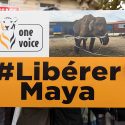
The circus that is holding and exploiting the elephant Maya urgently summons One Voice, arguing the case of a damaged reputation and drop in attendance. On February 13th, 2018 at 1:30 pm the hearing will take place at the Tribunal de Grande Instance in Strasbourg. By this procedure, the circus hopes to prevent One Voice from continuing to publicly defend Maya. However, it is part of the mission of the association to show its suffering, which is not going to be abandoned.

The circus wants to forbid One Voice from speaking and acting on behalf of Maya. Their wish: to silence her defenders. As for the circus, Maya is “in perfect health.”

This family therefore requires the removal of the #JusticePourMaya (Justice for Maya) petition signed by more than 115,000 people, as well as all Facebook articles, tweets and publications from the One Voice websites and pages. Thus, any use of photographs of Maya -taken by the association-, leaflets or signs talking about her would not be allowed anymore.

They have even demanded the court to ban One Voice from organizing demonstrations or rallies for her.

The demands of this private enterprise are almost limitless, as they go so far as to force the animal rights society as an act of contrition by demanding a public apology.

Under the pretext of an alleged loss of profit, and a loss of image, the circus wants to continue to exploit this elephant captured in Asia and held captivity for more than 40 years, and is clearly suffering. Her incessant repetitive swinging should have alerted her “keepers”, also, her deformed posture does not match that of a healthy elephant and her emaciated body is not just a sign of old age.

Muriel Arnal, president-founder of One Voice is shocked by such requests:

“Maya has not been seen alive since November by our investigators who have searched everywhere, and now the circus dares to attack us.” In order to know that she is alive, our lawyer contacted the circus whose only answer was that the owner was not allowed by his clients to give us news. Today our concern is deeply worrying. Is Maya still alive? If she is doing so well as the circus claims, why are they hiding her? We will eventually find out the truth, and those responsible will have to answer for what happened to her.”

Carte des cirques sans animaux

Télécharger Share on